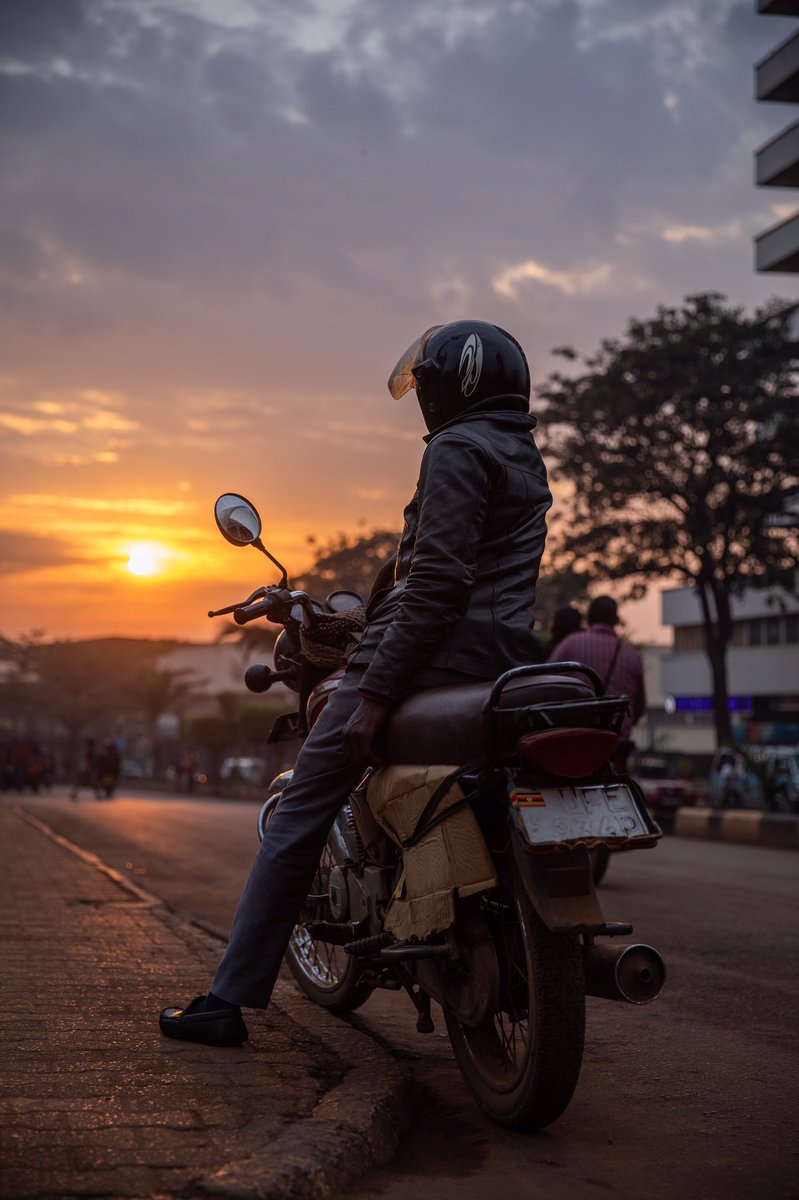
Let me repeat this clearly and again. The moment you step out of your house, your office, or your market stall, you enter a road network filled with variables you cannot control. In that environment, your safety depends entirely on the state’s ability to manage those variables. This is precisely why the global road safety framework is built on the Safe Systems approach which is an approach that requires government to control and coordinate every element of the system, not blame individuals for outcomes they cannot influence.
The Safe Systems Approach starts from one non‑negotiable principle: Human beings will make mistakes which means the system must be designed so those mistakes do not become fatal.
Uganda’s bus crashes happen because the system allows predictable human errors to escalate into mass‑casualty events
1. System Design Control: the real root cause
Uganda’s highways are narrow, undivided, and lack forgiving features. This means:
⏩️No median barriers → a single overtaking mistake becomes a head‑on collision.
⏩️No shoulder recovery space → buses veer off the road and roll over.
⏩️No speed‑calming infrastructure → buses travel at 100–120 km/h on roads designed for 60–80 km/h.
⏩️No protected overtaking zones → drivers must guess when it is safe.
In Safe Systems logic, this is the primary failure.
Drivers are operating in an environment where one mistake = mass death.
2. Safe Vehicles: buses are not engineered for crash survival. Ugandan buses often lack:
⏩️Electronic stability control
⏩️Rollover protection
⏩️Seatbelts
⏩️Crash‑worthy structures
A Safe System assumes crashes will happen so vehicles must absorb energy and protect occupants. Uganda’s fleet does not.
3. Safe Road Users: predictable human behaviour, not “bad drivers”. Careless overtaking and speeding dominate crash statistics because:
⏩️Drivers are pressured by owners to arrive faster.
⏩️Night travel is incentivised by business models.
⏩️Enforcement is sporadic and easily bypassed.
Safe Systems treats this as normal human behaviour under pressure, not moral failure. The system must anticipate it and neutralise its consequences.
4. Post‑Crash Response: deaths occur because rescue is slow. Many bus crashes become fatal because:
⏩️Ambulances arrive late or not at all.
⏩️Victims are transported in pickups or taxis.
⏩️Trauma care capacity is limited.
Safe Systems requires rapid, professional post‑crash care to prevent survivable injuries from becoming deaths.
Synthesis: What actually causes bus crashes in Uganda?
Under Safe Systems, the cause is not drivers. The cause is a system that guarantees driver mistakes will lead to fatalities.
Uganda’s bus crashes are the predictable outcome of:
⏩️High‑speed buses
⏩️On narrow, unforgiving roads
⏩️With weak enforcement
⏩️In poorly crash‑worthy vehicles
⏩️At night
⏩️With slow emergency response
This is why the same crash patterns repeat every time, year after year without anyone taking full responsibility. FOR GOD AND MY COUNTRY.
At a time of global turmoil and great challenge, we look for signs of hope in the everyday.
To Irish people and friends of Ireland everywhere, we wish you a very happy St Patrick’s Day!
Lá Fhéile Pádraig sona daoibh.
🧠 "Keep Thinking" Prize - TARA by Kyeyune Kazibwe
A dashcam-to-economic-appraisal pipeline that turns road footage into infrastructure investment recommendations.
Tested on an actual road under construction in Uganda.
Kampala Drainage and the “White Man Fix” Myth.
=======
Kampala’s drainage crisis is not a race problem. It’s a culture and systems problem. As Peter Drucker reminds us, culture eats strategy for breakfast. In our case, it has already eaten the budget, the drawings, the supervision, and the maintenance schedule.
Competence is not a passport. I’ve worked with teams from everywhere. Excellence follows clear goals, protected roles, firm rules, and the right tools. When leaders can’t define success, even the best engineer becomes a spectator.
Here is our real issue:
=======
1. No shared definition of success. What does a “good” rainy day look like in hours to clear, flood depth, and blocked inlets percentage?
2. Technical autonomy is weak. Engineers are second-guessed by politics and procurement games.
3. Maintenance is unfunded and undisciplined. We build, then abandon. Silt wins.
4. Civic behaviour lags. Garbage in drains is still treated as “someone else’s problem.”
What works is simple, practical, and local:
1. Set service levels. For every 50 mm storm, target a maximum water depth and a clearance time. Publish it.
2. Protect wayleaves. Zero compromise on encroachments. Relocate, compensate, and keep channels free.
3. Fund O&M. Ring-fence an annual maintenance budget with monthly targets for silt removed, inlets cleaned, culverts desilted.
4. Give engineers the wheel. Technical unit with decision rights, tenure security, and direct reporting on KPIs.
5. Data beats drama. Live dashboards of blocked inlets, response times, and hotspots. Weekly summaries to the public.
6. Enforce behaviour. Fines for dumping, incentives for clean fronts, community contracts for routine clearing.
If you put a brilliant person in a broken system, the system wins. If you put an average person in a disciplined system, the system wins. Kampala doesn’t need a saviour. Kampala needs a system.
Let’s retire the colonial reflex. Trust Ugandan professionals, empower them, and hold all of us accountable to measurable outcomes. That’s how drains stay open, streets stay passable, and a city grows up.
Let me even return to kamoli and focus on protecting my gains.
Uganda is a small country and with a high-speed rail system i could live in Kasese and commute daily to Kampala
i could depart at 6am, arrive in the city by 7:30 or 8am, work a full day
catch the 5pm early kickoff with nepo babies at Kyadi, then board an 8pm train and reach Kasese by 10pm
just in time for obundu, sombe, and solid lovingos with madam later in the night
yet, we remain stuck in a pre-industrial, almost medieval reality, dazzled by the insatiable need for cars to solve our infrastructure issues
our lack of imagination condemns us to crowd into the chaos of Kampala, competing for space and sanity in a dirty and suffocating cbd
The most consequential yet ignored factor with the EPS was the failure to differentiate between Spot and Travel speeds. The system used the former to issue fines yet ideally travel speed is a more accurate measure to determine if a motorist is driving above the speed limit.
A serious government would FIRST carry out genuine stakeholder consultation before developing and implementing such a policy.
Ours shoots first, in bad faith and for the profit of nefarious and corrupt actors, and then slightly backpedals after backlash.
#StoptheMoneyHeist
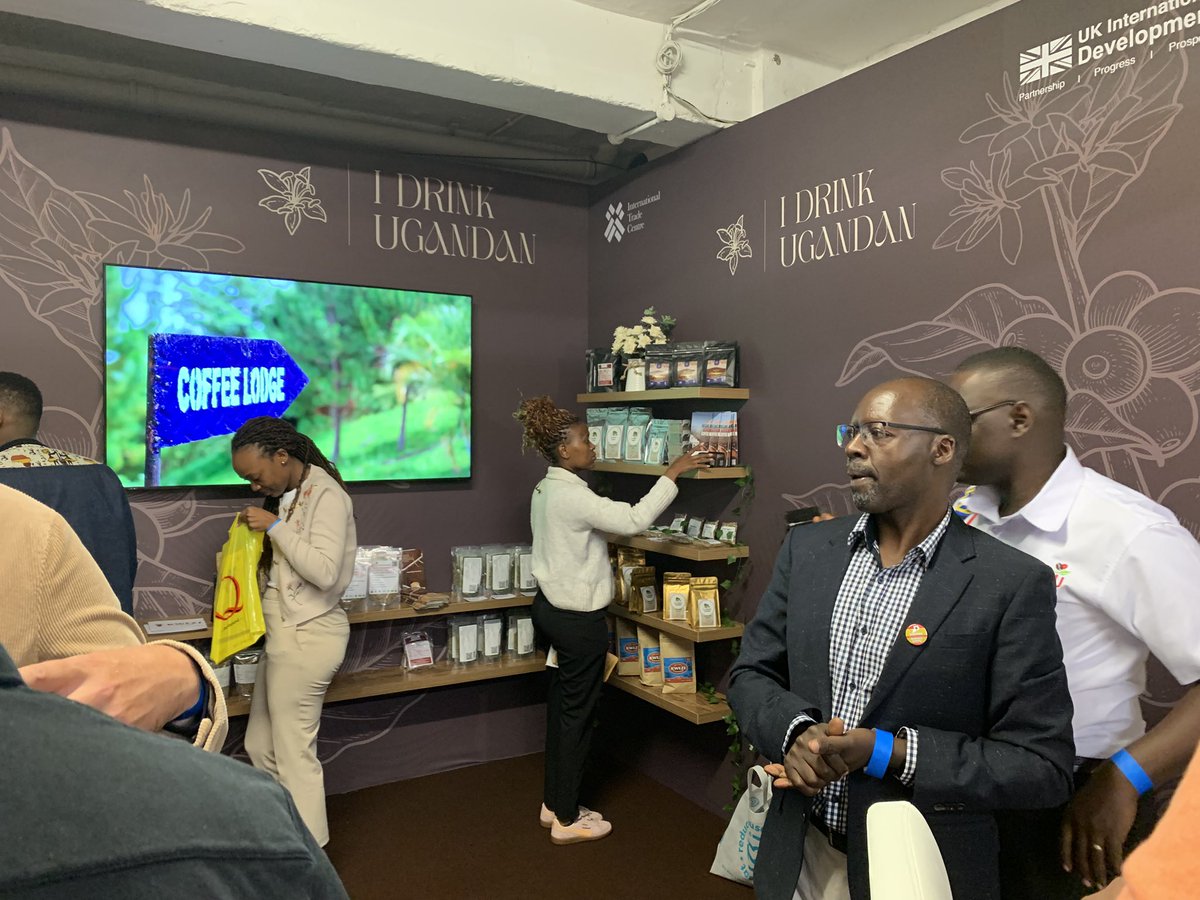
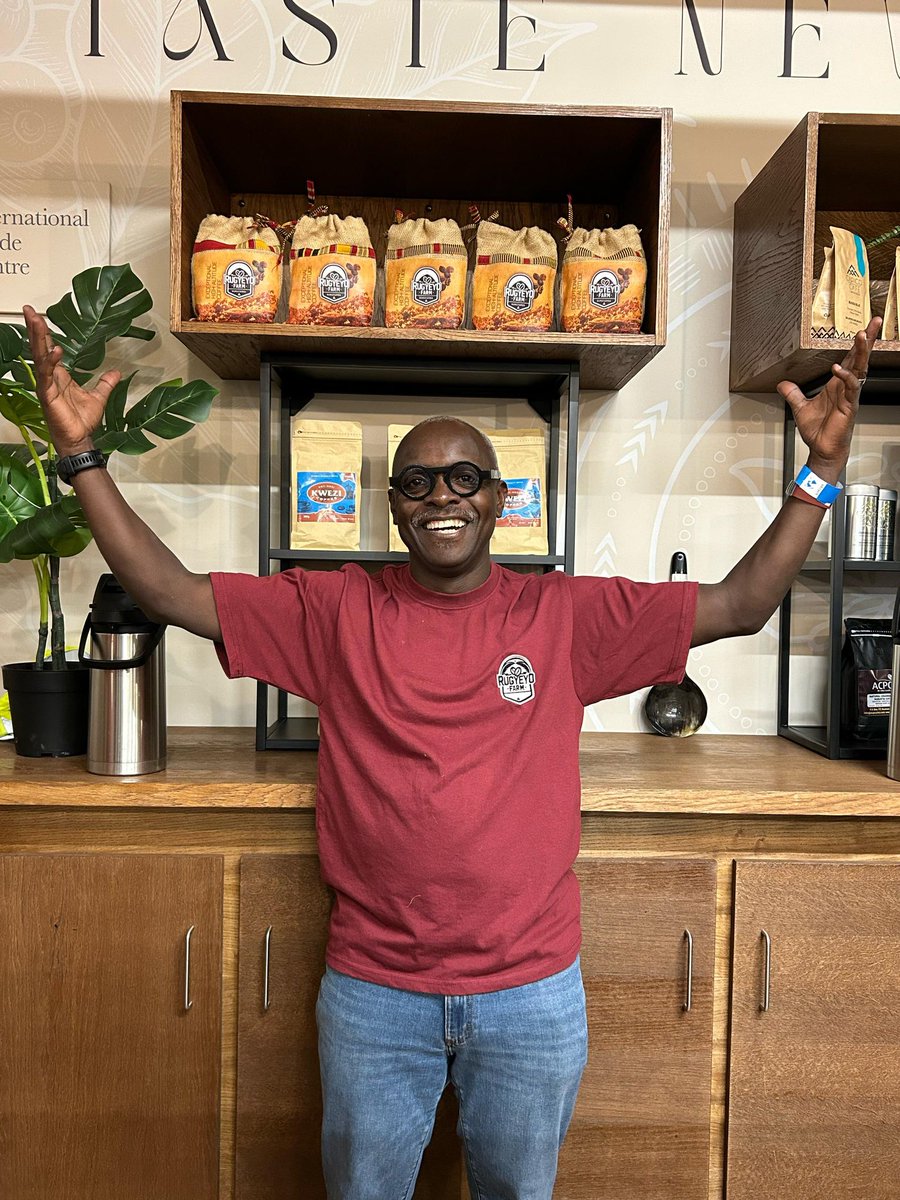
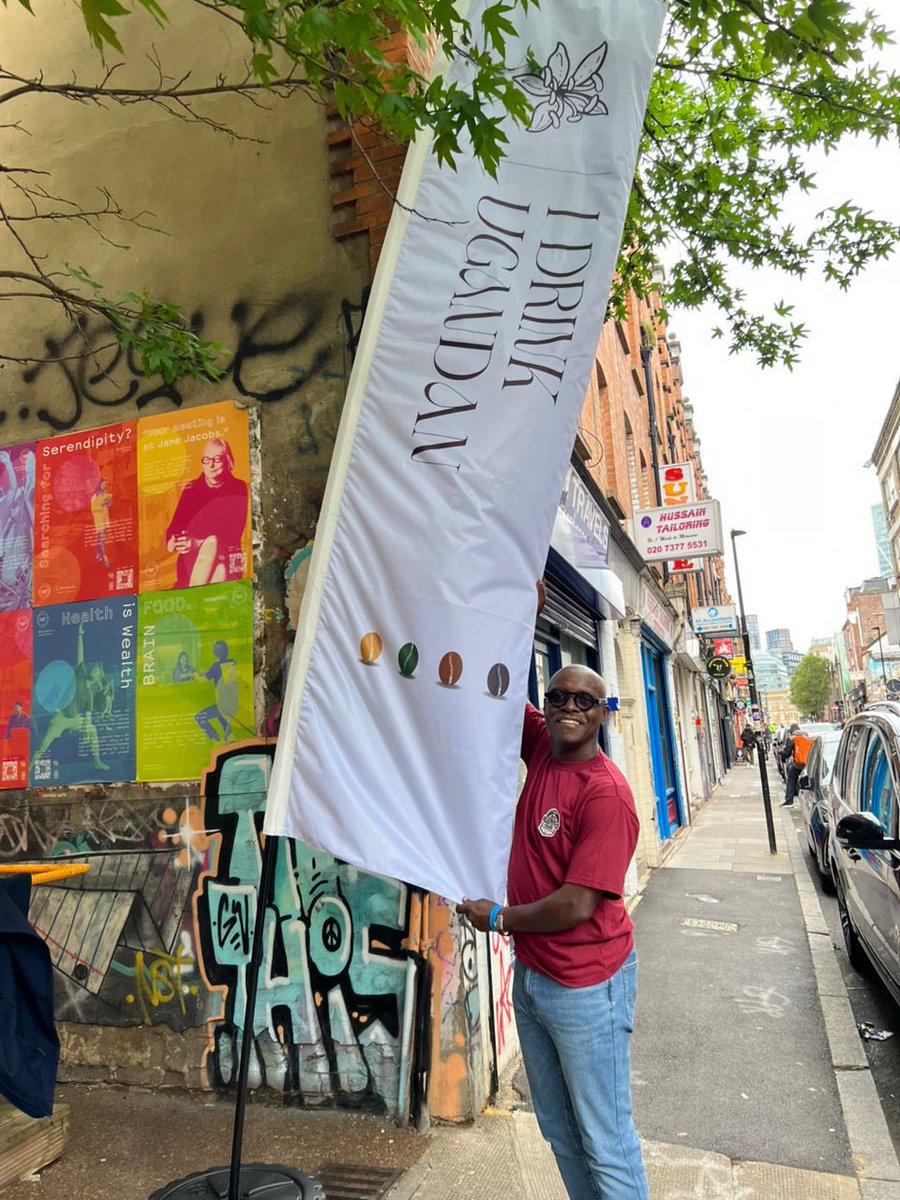
#UGCoffeeinLondon
Day One in our booth at the @LdnCoffeeFest & we got importers & roasters that came by to talk about sourcing from Uganda. Our partners @UKinUganda & @ITCnews got us to think about a new & novel way to trade coffee:CONSOLIDATION. They challenged us to look beyond the volumes aggregation game & instead consolidate our modest amounts into one export, share delivery costs & meet the foreign markets consumer where they are with their quality. This will take us into the high value specialty segment & the mid level roaster buyers willing to pay a bit more. This is the new approach to cooperation in this business. Our partners then put together a Ugandan evening where we met key importers who sampled the cupping of our coffee. It was a day well spent.
PS: do me a favor & spread this word. We are getting noticed & it is working. It is all we ask🙏
Residents of all ages in a small Michigan community helped a local bookshop move each of its 9,100 books — one by one — to a new storefront about a block away.
Dear @KCCAUG I am running out of ways to campaign for functional public transport but consider these two;
1. More than a million engines getting in and out of the city everyday affects air quality
2. More than a million decision makers infront of engines increases accidents
@Rwenyena@Spartakussug@CanaryMugume Digital Determinism is real and if the State has most of its digital content secretly managed by their rivals. They can actually feed them a civil war without knowing it.
Alex Iwobi has been spreading festive cheer in east London by opening up his own temporary shop.
The Fulham and Nigeria star has been giving out free food, including turkeys, to local residents struggling to pay for their Christmas dinner.
Oh - one last thing. A few days after she gave me her initial thoughts and approach - I asked her to tell me what she wanted to be paid for this work, now that she knew the scope and my expectations.
Her response - “I don’t know…. Maybe you can tell me what you can pay”
This broke my heart guys! Here’s a really talented young lady with salable skills, and she has no idea what those skills are worth. I insisted that she comes up with a figure — asked that she takes her time and comes back to me.
She then went ahead and did some research— and in what seemed like a really uncomfortable conversation on her side, tried to communicate a figure she thought would work. For the quality of work she already was doing— it still didn’t make sense to me. We then agreed on a figure that I thought was a fair value for the work.
We are breaking these young people guys— we need to do more to create opportunities for them to flourish.
🚨 ⚠️ Be Road Safety Alert!
Festive Season Road Safety Directives by the Minister of Works and Transport @GenWamala.
a) All buses whose journeys are beyond 300km shall not have return journeys within 24hours. Only buses with valid route charts and valid PSV licences shall be allowed to operate.
b) No school bus shall be allowed or any private vehicle that is not authorised by the Ministry to carry passengers for hire shall be allowed to operate.
c) All bus drivers shall possess valid Driving Licences and Driver Badges at all times while driving. A photo of the Driver shall be displayed in the bus.
d) The Traffic Police to step up enforcement across the country through the festive season with a focus on keeping the road safe.
#RoadSafetyUg
@PoliceUg@ROSACUg@lrsinitiative
Sunday is when we keep updating our side gigs. I have been roasting for over 20+ years and I love it.
Here is a tip if you want to have the perfect roast. Everything staying succulent and of course tasty.
Volvo posted a 3 min and 46 second ad on Instagram, shot by Hoyte Van Hoytema, the cinematographer of Interstellar and Oppenheimer.
It goes against every single rule you can think about as a social lead. Length. Format. Over-produced.
Every comment under the ad said it immediately put Volvo in their consideration set. It's fucking fantastic.