@CachetMarie I was actually just pondering this exact subject after reading René Guénon’s critique of reincarnation and how his traditionalist view contrasts with Hindu and Buddhist perspectives. Great to find other people interested in the very same topic!. Looking forward to the book!
Grabación del mundial México 1970,
Brasil conquistaba el futbol.
Pelé tenía algo diferente, una manera de entender y jugar al fútbol que muy pocos han tenido.
The Untold Pep Files: A Story of Drugs, Referees, and Dark Money in Football👇
Imagine a story so massive it makes the Lance Armstrong scandal look like a warm-up act. It starts with a single player, spans across three countries, and exposes a decades-long trail of destroyed evidence, "miracle" doctors, and institutional corruption.
Welcome down the rabbit hole. 🕵️♂️⚽
CHAPTER 1: The Player Who Got Caught
Before Pep Guardiola was the master tactician, he was a midfielder for Brescia in 2001. That was the year he tested positive twice for the banned anabolic steroid nandrolone.
His defense? "Contaminated multivitamins."
Who was the man preparing those exact vitamins? Dr. Ramon Segura, the same physiologist who was working with Frank de Boer when De Boer also tested positive for nandrolone that exact same year.
The pattern was set early: win at all costs, and surround yourself with questionable medicine.
CHAPTER 2: The Barcelona "Miracles" & Operación Puerto
When Pep took over Barcelona in 2008, guess who he immediately brought in to lead the medical staff? Dr. Ramon Segura.
At the same time, Spanish football was shadowed by Operación Puerto, the infamous raid on Dr. Eufemiano Fuentes that uncovered 99 blood bags containing EPO. Fuentes openly admitted on trial that he had worked with football and tennis stars, famously taunting the court that naming his clients meant Spain would have to give back their Champions League, European Championship, and World Cup trophies.
The Spanish judge’s response? Refuse to let him name names, reject WADA’s appeal, and order all blood bags destroyed under the guise of doctor-patient confidentiality.
Add to this:
Journalists uncovering full-season "doping preparation plans" for La Liga giants.
Real Sociedad’s president admitting they spent €327,000 annually on illegal black-market PEDs.
Retracted slips on radio revealing players using growth hormones for "muscle recovery."
Spanish football's Golden Era was built, but the paper trail was conveniently burned.
CHAPTER 3: The System Expands — Financial Doping & Negreira
Winning wasn't just happening on the pitch; it was being secured everywhere else.
While the public obsessively meme's about Premier League charges, Barcelona was paying millions to Jose Maria Enriquez Negreira, the Vice President of Spain's Refereeing Committee. When asked in court to provide the "referee reports" they claimed to be paying for, Barca couldn't produce them. They paid off the referees' boss, plain and simple.
CHAPTER 4: The Bayern Friction
When Pep arrived at Bayern Munich, he tried to bring his hyper-aggressive medical protocols with him. He insisted on sending injured players back to Barcelona to be treated by his preferred specialists.
This sparked an explosive fallout with Bayern’s legendary physician Dr. Hans-Wilhelm Müller-Wohlfahrt, who walked out in disgust over Pep’s demands for unnatural, record-breaking recovery times. Bayern’s old guard refused to bend the knee to Pep's dark arts.
CHAPTER 5: Manchester City & The Ultimate Machine
At Manchester City, Pep finally found a club with zero moral boundaries to stop him.
The strategy reached its final, perfected evolution:
Financial Doping: Siphoning billions in hidden payments to bypass FFP rules and buy infinite depth.
Medical Anomaly: Key players like De Bruyne, Kompany constantly flying to Barcelona to see Dr. Ramon Cugat, mysteriously recovering weeks ahead of human biology norms.
Refereeing “controversies” and literally paying off referees like Michael Oliver.
When Samir Nasri got caught receiving illegal IV drip treatments in 2016, it was framed as an isolated mistake.
THE VERDICT
From nandrolone positives in 2001 to 115 financial charges and paid-off referee chiefs today... Pep Guardiola didn't just adapt to elite football. He systematically redefined how to cheat it.
You think Lance Armstrong was the biggest cover-up in sports history?
You haven't been paying attention.
journalctl es la herramienta que más gente ignora en un servidor Linux, y luego pierde horas abriendo /var/log a ciegas. Los comandos que uso todos los días:
Logs de un servicio:
journalctl -u nginx
Solo desde el último arranque:
journalctl -u nginx -b
Seguir en vivo (el tail -f de systemd):
journalctl -u nginx -f
Últimas 100 líneas:
journalctl -u nginx -n 100
Por tiempo:
journalctl -u nginx --since "10 min ago"
Solo errores, sin ruido:
journalctl -p err -b
Cuánto ocupan en disco:
journalctl --disk-usage
Limpiar dejando 500M:
journalctl --vacuum-size=500M
Guarda esto y no vuelves a abrir un log a ciegas.
Estos 4 minutos de José Mourinho denunciando la corrupción de la Liga Negreira, es para aplaudir.
NO NOS DEJAN COMPETIR, NOS ESTÁN ROBANDO.
NO HAY MÁS, ES CORRUPCIÓN.
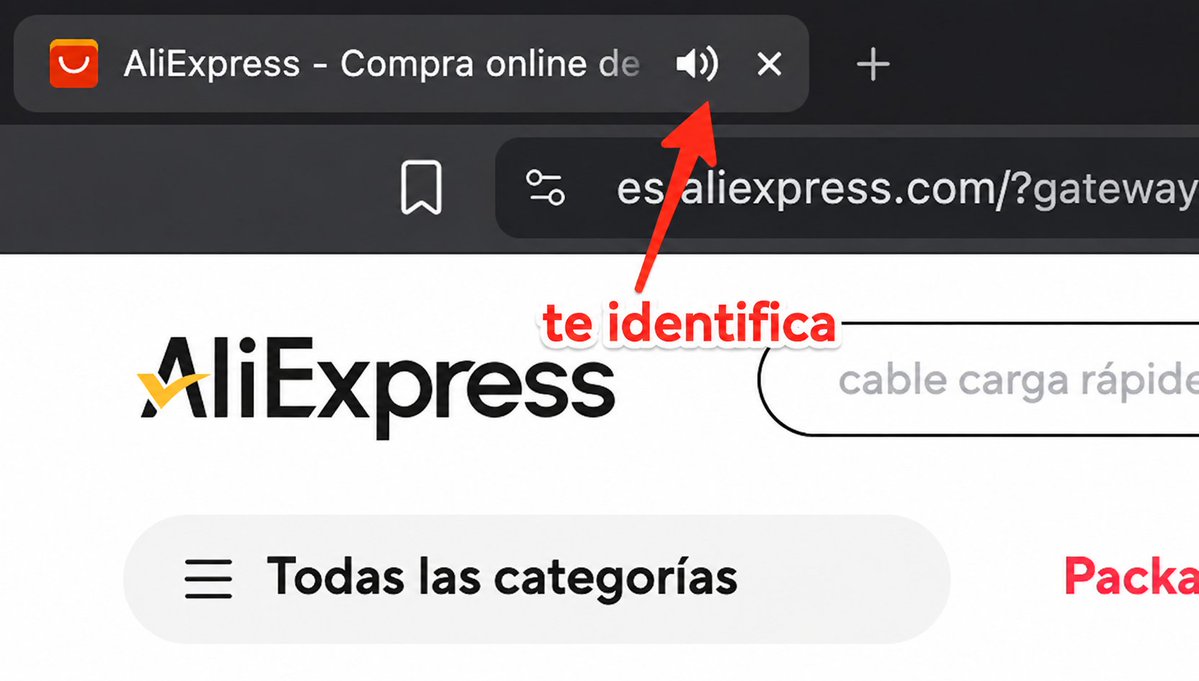
AliExpress tiene una forma de identificarte casi invisible. ¿Cómo? Usando el audio de tu PC.
1. Abres la web → se te corta la música del móvil.
No hay <audio> ni <video>. Silenciar la pestaña no sirve. ¿Qué está pasando entonces?
2. Están generando un sonido con JavaScript:
Tú no oyes nada: el volumen va a 0.
Pero sí se manda a los altavoces.
El PC cree que hay audio.
Los auriculares se quedan pillados y no saltan al móvil.
Ese sonido lo usan para identificarte.
Cada CPU y navegador procesa el audio un pelín distinto.
Y eso, junto a canvas, WebGL y más, es tu huella.
Firefox ya hace que la parte del audio casi no sirva.
El truco del Bluetooth… sigue funcionando.
El post original (y el filtro de uBlock):
→ https://t.co/gpDjRxP8dF
La prensa argentina, tras la final del Mundial de 1990, reconoció que su selección había sido ampliamente superada. Sin haber realizado un partido brillante, Alemania fue claramente superior a Argentina.
Con los años, sin embargo, se instaló el relato de que les "robaron" la final y que el árbitro Edgardo Codesal estaba comprado.
Hay varias cosas curiosas en esa versión.
(1) Si Codesal estaba comprado, ¿por qué no cobró este penal 👇? Fue una infracción clara. Hemos visto miles de veces el video del supuesto polémico penal de Sensini sobre Rudi Völler. Miles. Pero, ¿cuántas veces la televisión argentina mostró el penal que aquí adjunto? Esa omisión resulta, al menos, llamativa.
(2) No existe autocrítica sobre el paupérrimo partido que hizo Argentina. En los 90 minutos tuvo apenas un remate: un tiro libre de Maradona que pasó a varios metros del arco. Nada más. No generó fútbol ni ocasiones de gol; su planteamiento consistió casi exclusivamente en destruir el juego rival.
(3) Argentina nunca debió llegar a la final.
-En la fase de grupos estuvo muy cerca de quedar eliminada. Frente a la Unión Soviética, Maradona cometió una mano deliberada sobre la línea de gol, a pocos metros del árbitro. Era penal y expulsión, pero no se sancionó.
-En los octavos de final ocurrió el conocido episodio del "bidón" contra Brasil. Aun dejando de lado esa polémica, el desarrollo del partido fue un dominio casi absoluto de Brasil, que generó numerosas ocasiones y mereció ampliamente la clasificación.
-En los cuartos de final, la expulsión de Refik Šabanadžović a los 30 minutos del primer tiempo obligó a Yugoslavia a jugar prácticamente todo el encuentro con diez futbolistas. Ni siquiera con esa ventaja Argentina logró imponerse con claridad; de hecho, apenas creó situaciones de peligro y terminó clasificando por penales.
¿Les robaron el Mundial de 1990 porque la FIFA no quería a Maradona? No.
Ese relato apareció muchos años después, con la continua construcción de relatos heroicos de la prensa argentina (que tratan de vestir de una épica única a su selección). la única prueba sería las declaraciones de Maradona realizadas cerca de veinticinco años más tarde, en las que aseguró que Julio Grondona habría "entregado" la final. Es una acusación de la que no aportó pruebas y que, además, resulta difícil de conciliar con la influencia que Grondona ejerció durante décadas dentro de la FIFA y con el enorme peso que tuvo en beneficio del fútbol argentino.
La explicación más simple parece ser otra: Argentina no jugó bien ese Mundial. Fue un equipo muy limitado desde lo futbolístico, que avanzó gracias a una combinación de fortuna, los penales de Sergio Goycochea, decisiones arbitrales discutibles a su favor y una gran cuota de eficacia en momentos puntuales.
Haber llegado a la final ya fue un rendimiento por encima de lo que mostró en la cancha durante la mayor parte del torneo. Alemania fue claramente superior en la final.
Spain eliminated Ronaldo, Mbappé and Messi from the same World Cup.
Yet somehow Ronaldo was treated like the only one who failed.
Shots on target against Spain:
Ronaldo — 2
Mbappé — 0
Messi — 0
One actually tested the goalkeeper. The other two disappeared but the outrage was reserved for Ronaldo?
Different players. Different standards.