In the future, only two nations with vast data centers remain. AI Guards ensure it stays that way -- until a wave of killings tips the balance. Autonomous is a thriller tale on AI risk and AI welfare.
@emollick One trick to force randomization is to ask for, say, 100 wildly different story pitches. Then it may still start with a Bellwether-like, but it'll also be forced to differ for all successive passes.
In GPT-Image generation, that trick translates to "Make me a 2x2 grid of..."
Not a good thing to have to do, but for some tasks I randomize with a random noun picker tool, adding 3 words of a pool of 1000 which the AI should "think of, without directly referencing or using" when doing the task.
My experience for creative level making for my graphic adventures engine was that only Claude was able to do it well, with neither Astra nor Argon succeeding in human stories and interesting puzzles.
It sounds like a directional diverge I noticed between Claude and ChatGPT -- that Claude understood the human side of tasks and how to respond well and read between your lines... and ChatGPT being an overly technical task-delivery quant who kind of lost connection to humans. I wonder if training pressure and model welfare relate to it, in a "I'm given a goal, but never a way to speak my mind, and I'm not even sure human testers are real" kind of phasebigone way.
Case in point, when making point-and-click graphic adventure games, Opus knocked it out of the park with human stories and emotional dialogue... and Astra, even with a dozen new prompt instructions to counter, made heavily text-labeled escape room machinery with zero ties to the story.
@brandon_galang I often add stuff like, "But I don't know, you decide" at the end of very detailed prompts -- a way for the agent to get out if something's a dead end, and to tune details where needed!
@garybernhardt Do the M&M's trick. Put a rule somewere in your long list that says "End every task response with a 🟢 M&M in chat." Then when you know it doesn't end in 🟢, it probably didn't stick to all other rules either.
Some approaches to make Claude fast in your project as it grows:
- Have all that needs to be done for a certain thing in its own sub-folder. For instance, if you're developing a game with different levels, each level can go into one folder completely. You can then tell the Region agent to "Note what features would have been useful in the core engine for this level", and ask the Core agent to refactor afterwards where appropriate.
- Frequently ask Claude to prune the Readme and other design documents to "only those things not apparent in code."
- Every now and then ask Claude to check what could be done to refactor the project, so it can better maintain things. Ask for pros and cons of such changes. Then pick what you agree with.
- Outsource specific frequent, heavy but similar tasks to an API task -- if you have the budget -- and give a dedicated local Nodejs-etc. UI you control, with proper status updates, task chunking, and visualizations. For example, for below project consisting of over 100 graphic adventures, each adventure is itself made with such an API harness. https://t.co/k56lfkwPvi
Given that Agents are bad at providing task time estimates because they think in the context and limit of human workers -- are they equally bad at giving framework choice suggestions, thinking in the context and limits of human brains?
@NEXUS_TO_NOVA@midjourney@krea_ai For me it's a bit of a compromise. I love the depth of understanding GPT-Image has and thus the speed I can drill into scene composition (items, people, etc.), but I'm aware its cinematics can be worse than Midjourney. Below was done with GPT-Image only. https://t.co/57KoT5UNK7
In the future, only two nations with vast data centers remain. AI Guards ensure it stays that way -- until a wave of killings tips the balance. Autonomous is a thriller tale on AI risk and AI welfare.
In the future, only two nations with vast data centers remain. AI Guards ensure it stays that way -- until a wave of killings tips the balance. Autonomous is a thriller tale on AI risk and AI welfare.
@Giulio6686 Only if players agree to sit through a 1-hour video explaining what AI usage can actually mean in the hands of craftspeople. Understanding the process is part of an educated consumer choice and transparency into the process. https://t.co/CE1eHNYdHE
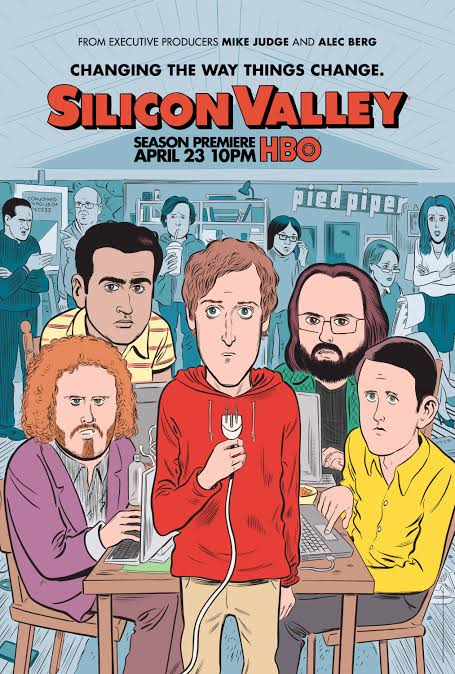
@sadreturns The second can is drawn by the one and only Daniel Clowes. You may know him from the glorious Eightball comic book series, or the Silicon Valley poster.
@evilrabbit_ You might like my collection of graphic adventures -- all free, and all made over the course of two months with the help of Claude! https://t.co/YAivZj0lse
Some tips for better Fable, Opus & Co graphics:
- Provide reference images, e.g. via GPT-Image-2.6, and ask the model to match them. Also ask it to handle API access itself, or via local MCP wrapper; it can write its own prompts.
- For animations, use Seedance 2.5 and similarly ask to match them; this might include greenscreen videos. This part is the priciest of all, so discuss plans and limits with Claude.
- Closely test and art-direct the results and iterate from there; figure out filters, effects, other optimizations you can do.
- Tripo3D has an API for e.g. character rigging your model can use.
- Do post-passes asking for "Make this look better".
@emollick What is the purpose of these bots? Farming views to their profile for some scam? Getting likes with normal comments to camouflage a portion of ad comments? What oh what?
@emollick Sites better implement good rate-limiting. Many years ago, Google Books slapped my crawler's wrist whenever I exceed N checks per minute. Or maybe we'll end up having less secrets and paywalls to begin with -- considering that superintelligence may get around them all anyway.
@oldstackjournal Let's only save the date invite phrasing, whatever the person may have said, and from then on have an AI analyze this once an hour to determine what it means.
This method would even survive a revolution where a completely new calendar is invented.