What do I write about here?
Regulatory nutrition.
Food Trends.
Food safety regulation.
Labeling & claims.
Trade and market access in Latin America.
This profile connects law, food science and business strategy.
If you’re a lawyer, part of the food industry, or work in food science — and want to understand how regulation shapes products, markets and risk — you’re in the right place.
I analyze global regulatory trends and how they develop, influence or materialize in LATAM.
Views are my own.
#FoodLaw #RegulatoryAffairs #FoodSafety #RegulatoryTrends #FoodIndustry
The latest U.S. statement on regulatory sovereignty sends an important signal: health risk decisions affecting Americans should be determined by U.S. agencies based on their own scientific assessments.
For those of us in Food Law and regulatory affairs, this is a development worth watching closely.
#FoodLaw #RegulatoryAffairs #RiskAssessment #FoodSafety #PublicHealth
https://t.co/UPea6LNsyc
📽️ | For over 60 years #Codex standards have protected health & facilitated trade.
👉 Codex standards...
🔸 are a basis for legislation
🔸provide benchmarks for trade
🔸inform food control systems
🔸reduce spread of foodborne illness
📙 Learn more 👇
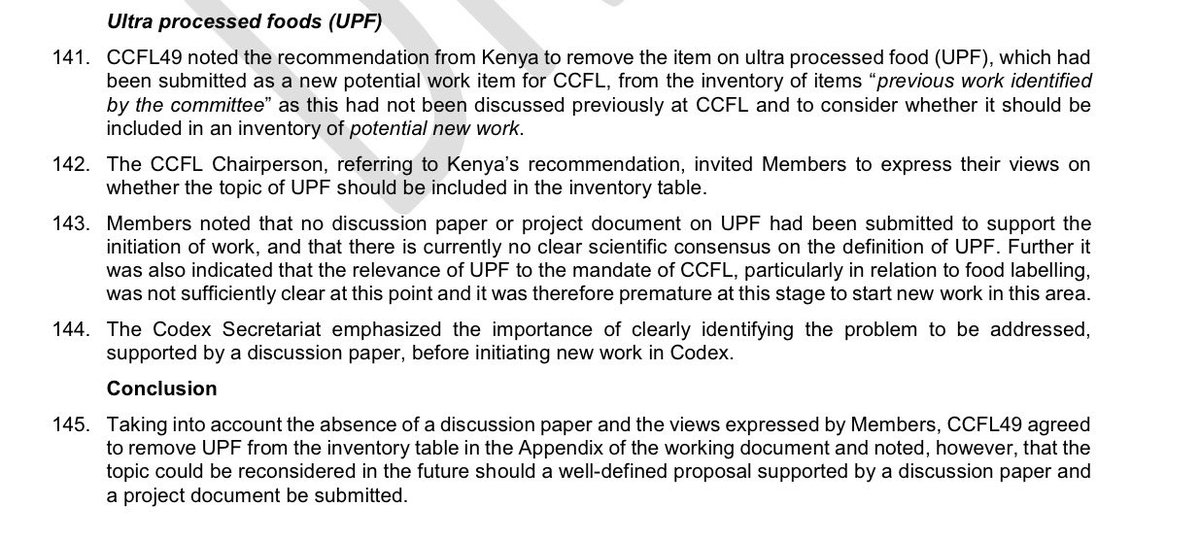
Codex has just made a decision on ultra-processed foods. And the decision was not to decide. At its 49th session in Ottawa, the Codex Alimentarius Committee on Food Labelling removed UPFs from its agenda. The reason: lack of scientific consensus on their definition.
This does not mean a pause. It means each country will regulate on its own (or should they?)
And it is already happening. Colombia is actively discussing how to regulate and label UPFs. Chile is also moving forward with its own criteria. A company operating across multiple LATAM markets could end up facing different definitions, requirements, and compliance risks in each jurisdiction simultaneously.
For legal and regulatory affairs teams, this is the most challenging scenario: different rules, different timelines, and different interpretations across markets where the same products circulate.
The absence of an international standard is a clear signal that UPF regulation will be built market by market.
#FoodLaw #UPF #UltraProcessedFoods #CodexAlimentarius #FoodRegulation #LATAM #RegulatoryAffairs #FoodPolicy #FoodIndustry #Labeling #Compliance #InternationalTrade
Europe's food security depends on fertilisers.
With this Action Plan, we are investing in a stronger European fertiliser industry, supporting European farmers and accelerating innovation in sustainable, home-grown solutions.
Securing the future of farming in Europe.
https://t.co/whS42SUt4a
Codex CCFL49 decided to remove ultra-processed foods (UPF) from its inventory of potential new work on food labelling.
Key points raised during the discussion:
• no scientific consensus on the definition of UPF;
• no discussion paper supporting the proposal; and
• uncertainty on how UPF fits within Codex food labelling work.
Interesting development as several countries continue advancing UPF-related regulations despite the lack of international harmonization.
#FoodLaw #UPF #Codex #FoodLabeling #RegulatoryAffairs
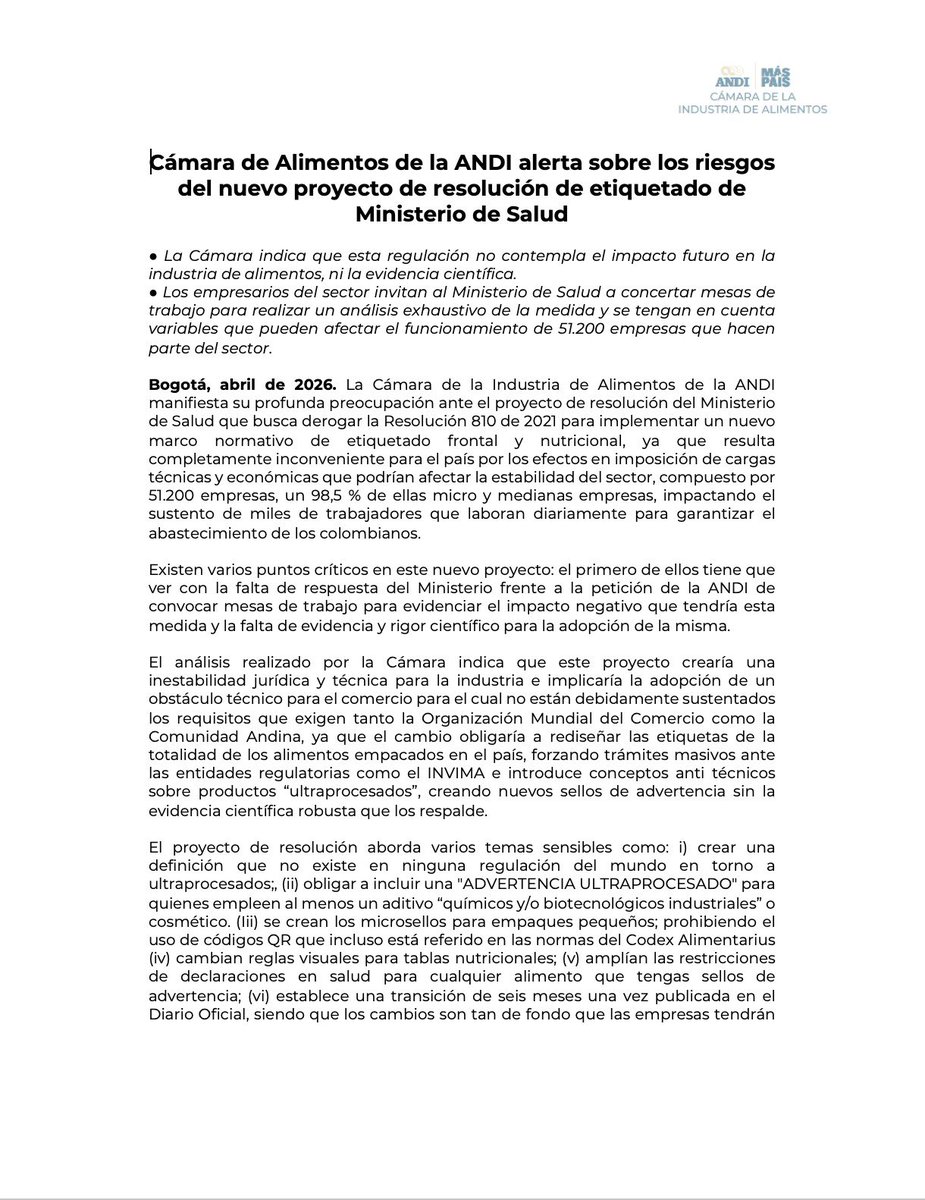
Colombia ya cuenta con una definición regulatoria de alimentos "Ultraprocesados" desde el 2023, la cual es parte del régimen de "impuestos Saludables". Ahora se presenta un nuevo proyecto regulatorio con una nueva definición, adicional y no necesariamente consistente con esa definición. #colombia #Regulación #alimentos
Entró en vigencia el nuevo impuesto saludable a los alimentos ultra procesados y bebidas azucaradas, con el fin de incentivar hábitos saludables en la población colombiana. Este es uno de los avances y logros del gobierno nacional en pro de la prevención y cuidado de la salud.
Más información 👇🏼 https://t.co/pFvRKOVIZE
Colombia opens a new front in front-of-pack labelling: the Ministry of Health has launched a public consultation to amend Resolution 810 (2021) and introduce a warning label for ultra-processed foods (UPFs)—even for products that comply with nutrient thresholds.
The proposal goes beyond the current model (sugar, sodium, fats) by targeting the degree of processing and presence of UPF ingredients.
Key issue: the UPF definition in the proposal differs from the one used in the Health Taxes Law, raising potential interpretative and implementation challenges.
Important debates ahead: scientific basis, regulatory coherence, and proportionality.
#FoodLaw #UPF #FOPLabelling #FoodRegulation #Colombia
Colombia abre un nuevo frente en etiquetado frontal: el Ministerio de Salud puso en consulta pública un proyecto para modificar la resolución 810 de 2021 sobre Etiquetado Frontal Nutricional, e incorporar un sello de advertencia para alimentos ultra procesados (UPF), incluso en productos que ya cumplen con límites de nutrientes críticos.
La propuesta va más allá del modelo actual (azúcar, sodio y grasas) y plantea regular también el grado de procesamiento y la presencia de ingredientes UPF.
Un punto clave: la definición de UPF en la propuesta no coincide con la utilizada en la Ley de Impuestos Saludables, lo que podría generar fricciones interpretativas y desafíos de implementación.
Se anticipan debates relevantes: sustento científico, coherencia regulatoria y proporcionalidad.
#FoodLaw #UPF #EtiquetadoFrontal #RegulaciónAlimentaria #Colombia
Researchers analyzed how four major food processing classification systems (including the NOVA “ultra-processed” definition) differ in categorizing foods and how those differences may influence nutrition research, public health, and policy. #foodsafety
👉https://t.co/HlpMK5l3eu
How are #GLP1 drugs reshaping grocery demand? As appetites shrink, consumers are shifting to smaller, nutrient-dense, high-protein foods—creating new opportunities for dairy & CPG innovation.
Full Story: https://t.co/sh0CkDsOxh
#FoodIndustry#FoodNews#HealthNews#Innovation
Between the ultra-processed food debate and the rise of GLP-1 drugs, we’re treating symptoms—not the system.
The system needs a reset: fewer labels, more focus on outcomes (actual health impact).
#UPF#GLP1#FoodLaw#FoodPolicy#UltraProcessedFoods
Worth a read!
Drawing on experiences from across Latin America & the Caribbean, this publication shares practical lessons and strategies to boost productivity while reducing environmental impact in livestock systems.
Read in ES ➡️ https://t.co/3S0JNosdVr
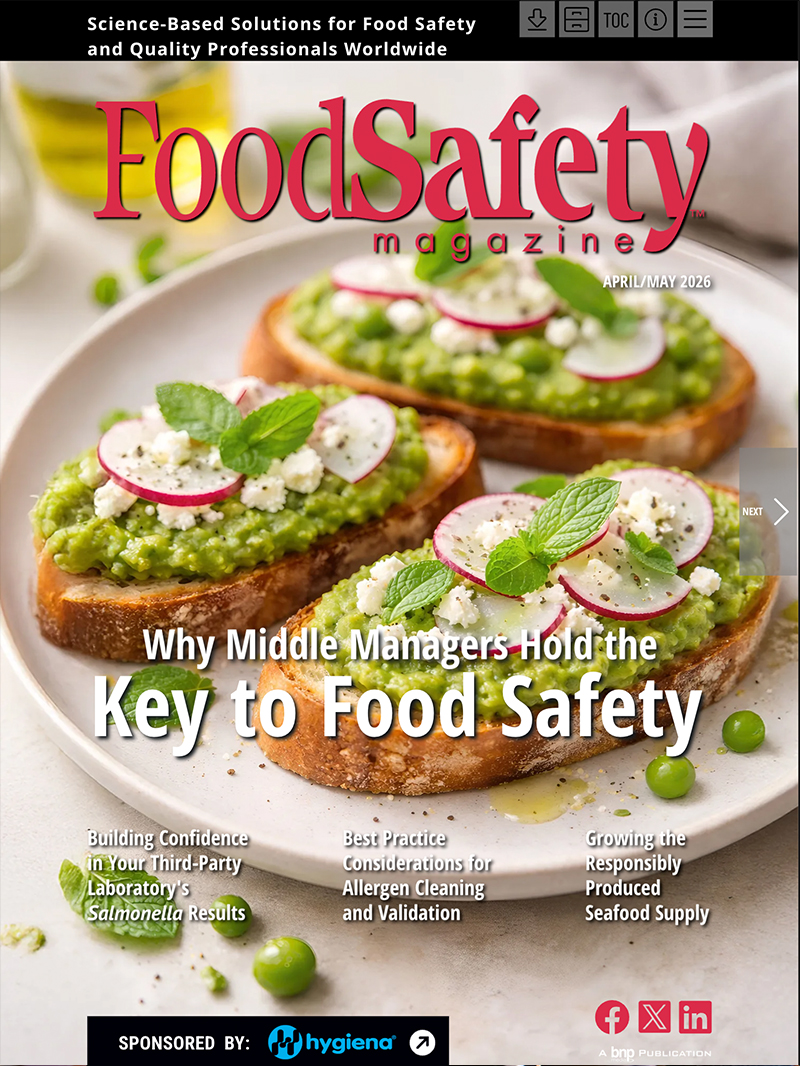
Spring into the April/May '26 issue of #FoodSafetyMagazine! Featuring stories on the importance of middle management, third-party Salmonella testing, allergen cleaning and validation, responsibly produced seafood, and much more!
👉 Get your FREE issue: https://t.co/vovo31oAnj
Costa Rica might join the trend of taxing food in the name of public health — Colombia already has.
Health taxes are gaining ground across LATAM.
But the real question isn’t adoption—it’s design:
→ Do they actually change consumption?
→ Are they aligned with nutritional science?
→ Who ends up paying the price?
Good policy goes beyond intent.
#FoodLaw #LATAM #HealthPolicy #TaxPolicy
https://t.co/JwAIJGOsPV
Interesting to see Yuka gaining traction beyond Europe — now even mentioned by Robert F. Kennedy Jr. on the The Joe Rogan Experience.
Apps that “score” food products based on nutrition, additives, and perceived health risks are increasingly shaping consumer perception — sometimes more than regulation itself.
From a Food Law perspective, this raises key questions:
• Who sets the criteria?
• How transparent are the methodologies?
• Could these tools conflict with science-based regulatory frameworks?
• What is their impact on labeling regimes and brand liability?
We may be entering a phase where private digital scoring systems coexist — or compete — with official labeling regulations.
That tension is worth watching.
#FoodLaw #FoodRegulation #Labeling #ConsumerProtection #DigitalHealth #LATAM
Is Yuka the future of food labeling? The mobile app’s users scan bar codes on food products to see a score from 1 to 100, based on nutrition, additives and organic status. RFK Jr. uses it. https://t.co/9e220nvixu
Also covered in last week's Food Safety Five newsreel were studies on allergen recovery from environmental swabs and cross-contamination risks of shared frying oil, as well as an EU proposal to harmonize PAL requirements. #foodsafety
👀 Full episode: https://t.co/ayt6u8VeOb
Food Law is no longer a niche — it’s becoming essential for the food industry in Latin America.
I had the opportunity to share some thoughts on:
• Why Food Law matters today
• The growing regulatory complexity in LATAM
• The need for specialized legal advice in areas like food safety, labeling, trade & compliance
Thanks to @industryreviews for the invitation.
🔗 https://t.co/WQ8iFjjn7c
#FoodLaw #Regulatory #FoodSafety #LATAM #LegalInnovation #AgriFood #Compliance
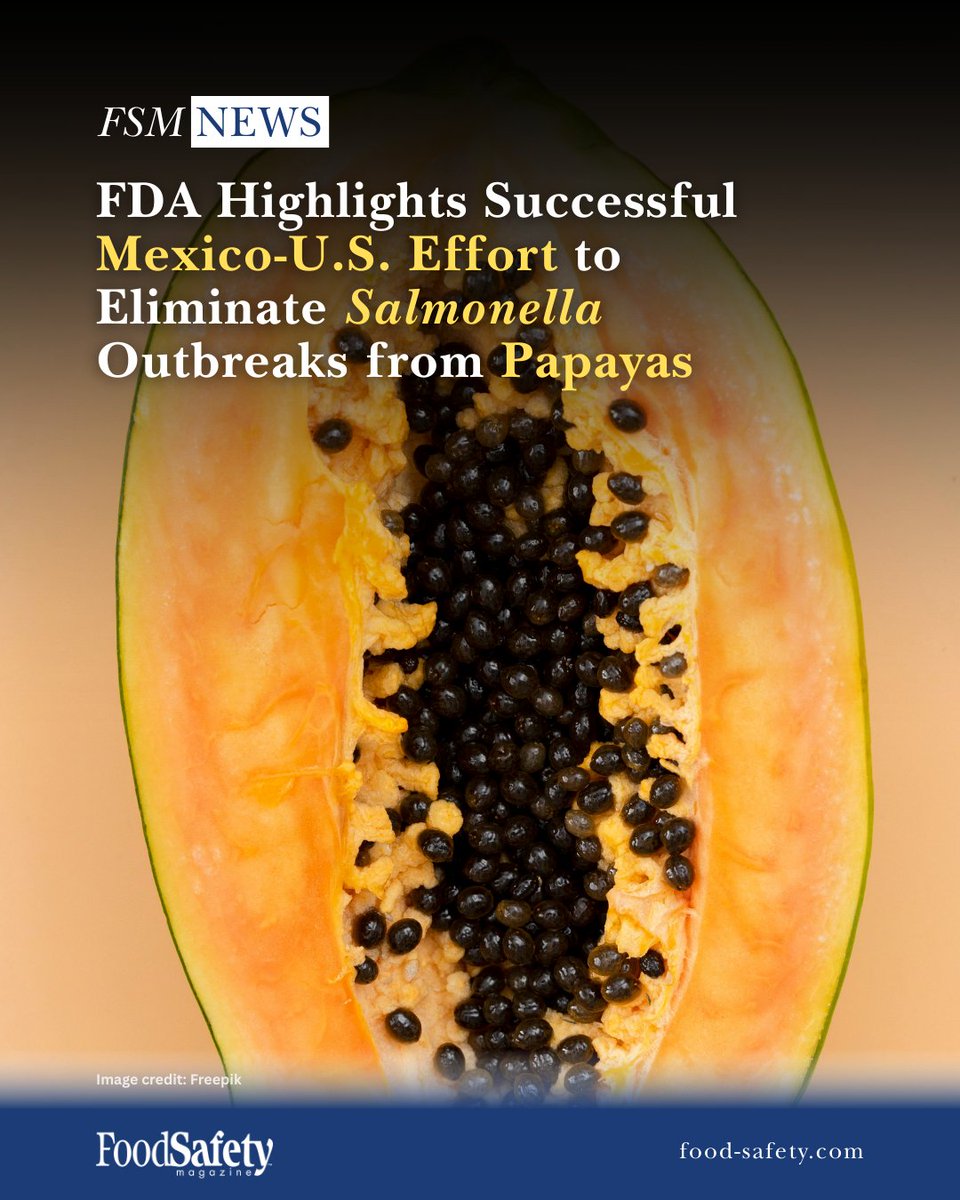
No U.S. Salmonella outbreaks linked to Mexican papayas have been identified since 2020 thanks to collaborative efforts between the countries. The case study could serve as a framework for other commodities and global supply chains. #foodsafety
👉 https://t.co/yDApuzagJJ