For 15 years, I did what every logical professional is told to do. I climbed the ranks of Salesforce and Tableau, leading marketing campaigns by numbers, logic, and spreadsheets.
But I was completely blind. By following conventional logic, I missed the layers of uncertainty, randomness, and opportunity that actually dictate reality.
My turning point came when I started studying 'mentors' who understood risk and randomness:
▪️ Nassim Taleb and Zorba the Greek forced me to stop calculating and pursue an organic rhythm of life.
▪️Rory Sutherland taught me that many challenges require psycho-logic—a degree of irrationality, absurdity, and bravery.
▪️The Odyssey showed me how to apply ancient Greek hospitality (Xenia) to modern marketing.
▪️Tail-Risk Philosophy reshaped how I view investing, moving past surrealist fantasies of speculation and toward building asymmetric hedges.
If we allow our careers, businesses, and lives to be run by purely logical rules, we will only ever yield entirely predictable, mediocre outcomes.
My collection of writings is a blueprint designed to help you wipe away learned abstractions and embrace the spirit of the "odd number"—the mindset that refuses to accept the world as it is, but wishes to change it and push it further.
The Marketer as Mentor: An Introduction to John-Paul Rantac.
Read the full manifesto and explore the catalog of my work below ⬇️
In his interview with @AndrewNeil, @andrewrsorkin notes the human story behind the 1929 financial crash.
He's completely right; most investors misread why the crash was inevitable because they look at data instead of mass psychology. The 1929 crash wasn't just an economic collapse—it was a masterclass in surrealism and human delusion.
I built a breakdown decoding the psychological mechanics of the Great Crash and the seductive fantasy of speculation.
Read my full analysis to see the parallels between 1929 and 2026: https://t.co/CWhaR5iWRQ
"If only I could take a cloth and wipe out all I have learnt, all I have seen and heard, and go to Zorba’s school and start the great, the real alphabet! I should learn to run, to wrestle, to swim, to ride horses, to row, to drive a car, to fire a rifle. I should fill my soul with flesh. I should fill my flesh with soul." - Zorba the Greek, Nikos Kazantzakis
I recently visited the battle-scarred Arkadi Monastery in Crete—a symbol of Greek freedom and resistance. It's history teaches us about sacrifice, struggle, hope and how to awaken our ancestral spirit.
In 1866, hundreds of Cretan freedom fighters were besieged in the Arkadi Monastery by their Ottoman colonisers. Faced with certain capture, they made the ultimate sacrifice: they blew up their own gunpowder magazine, choosing destruction over submission.
The 'bullet tree' at Arkadi still has an Ottoman slug lodged in its wood. It is a physical reminder of the heroism of the Greek resistance. St Michael stands as an archetype of the spiritual warrior that the Cretan's would emulate.
This sacrifical act was a loud awakening for people across Europe to recognise the trials that the Ottomans subjected the Cretans to. It is a powerful symbol of the Greek spirit against the occupation of their land.
I also discovered The Greek Spirit whilst reading Zorba The Greek. Nikos Kazantzakis' masterpiece teaches us to awaken our ancestral spirit, conquer our passions, and trade square logic for organic living.
It is a book for those who seeks passion and irrationality in life as opposed to a life of square logic. The wisdom of Zorba can help you smash the scales, take the plunge, and conquer one’s passion.
I’ve broken down the core principles of the Greek Spirit in this article below 👇
@megha_lilly Totally agree. Reading the history and stories of the place you're visiting significantly increase your enjoyment. Right now I'm in Palermo; after reading The Leopard before I arrived I can understand the historic context of the art and architecture of Sicily.
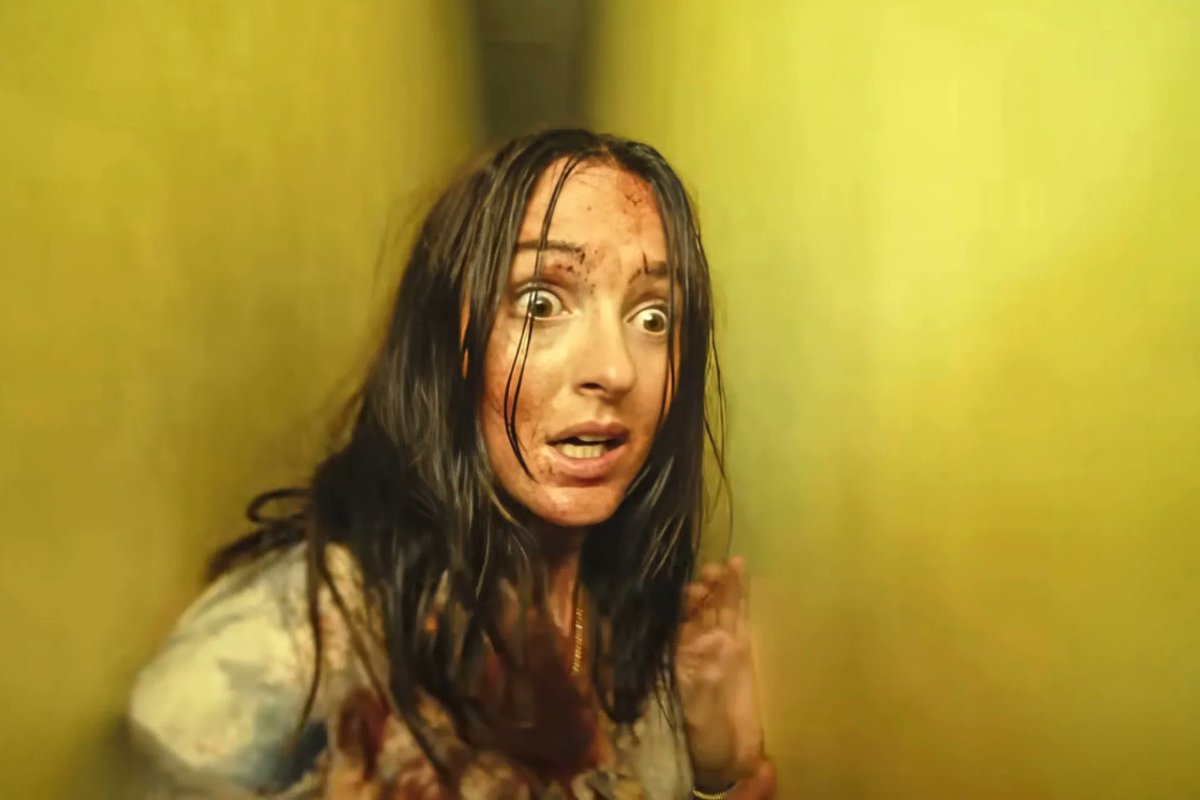
#Backrooms has been a massive hit because it's 'unfathomed'—it's one of those movies that take the risk of throwing down a gauntlet to the reasoning mind. Explain me if you can or dare. After watching the film, we cannot honestly say that we know what it meant. The greatest pleasure we can get from a story only comes when the attempt to explain it away has been thwarted.
#Backrooms producer James Wans says director Kane Parsons was only 16 years old when they first met about the film. (Parsons brought his dad to the meeting).
“We didn’t realize until we reached out that Kane was still in high school,” Wan admits.
Parsons, now 20, is the youngest filmmaker in history to have a film top box office charts.
https://t.co/mVxz18wvJm
Backrooms has been a massive hit because it's 'unfathomed'—it's one of those movies that take the risk of throwing down a gauntlet to the reasoning mind. Explain me if you can or dare. After watching the film, we cannot honestly say that we know what it meant. The greatest pleasure we can get from a story only comes when the attempt to explain it away has been thwarted.
Over the past 11 years, I’ve designed and executed nearly 1K webinars for tech giants like Salesforce and Tableau. I know exactly what scales, what fails, and what commands the attention of an audience.
The brutal truth? Most B2B webinars are a waste of corporate capital. Marketing teams routinely choke the funnel with irrelevant content that optimise for calendar vanity over actual sales success.
I've decided to open-source the exact blueprint to help marketers maximise their webinar architecture.
My bluebrint covers:
• Why product updates only work for market incumbents (and why challengers must pivot to problem/solution frameworks)
• How to weaponise analytics platforms like Tableau for hyper-specific behavioral data segmentation
• Why email remains the king of distribution—provided you drop the jargon and speak the native tongue
• Stop spraying and praying with templated, sanitised corporate noise
The Physics of the Tech Webinar: 12 Hard Rules from a Decade in Marketing—read the blueprint below ⬇️
#marketing #webinar #tech
For 15 years, I did what every logical professional is told to do. I climbed the ranks of Salesforce and Tableau, leading marketing campaigns by numbers, logic, and spreadsheets.
But I was completely blind. By following conventional logic, I missed the layers of uncertainty, randomness, and opportunity that actually dictate reality.
My turning point came when I started studying 'mentors' who understood risk and randomness:
▪️ Nassim Taleb and Zorba the Greek forced me to stop calculating and pursue an organic rhythm of life.
▪️Rory Sutherland taught me that many challenges require psycho-logic—a degree of irrationality, absurdity, and bravery.
▪️The Odyssey showed me how to apply ancient Greek hospitality (Xenia) to modern marketing.
▪️Tail-Risk Philosophy reshaped how I view investing, moving past surrealist fantasies of speculation and toward building asymmetric hedges.
If we allow our careers, businesses, and lives to be run by purely logical rules, we will only ever yield entirely predictable, mediocre outcomes.
My collection of writings is a blueprint designed to help you wipe away learned abstractions and embrace the spirit of the "odd number"—the mindset that refuses to accept the world as it is, but wishes to change it and push it further.
The Marketer as Mentor: An Introduction to John-Paul Rantac.
Read the full manifesto and explore the catalog of my work below ⬇️
@tferriss Timing is everything in deciding what to focus on. As said by the great writer Nikos Kazantzakis, "we should not hurry, we should not be impatient, but we should confidently obey the eternal rhythm."
The stock market is rallying upon a US/Iran peace deal but it's too late. The damage to the global economy has been done and the risks are real—we are at the precipice of a major reversal.
How does an investor prepare for the coming crash? The answer is The Poseidon Hedge—a safe haven risk mitigation strategy for financial storms.
Investing isn't arithmetic; it’s geometric. Returns are multiplicative through time, meaning a single 'zero' sinks your entire fleet.
In The Poseidon Hedge, I use ancient maritime strategy and Mark Spitznagel’s Safe Haven framework to break down asymmetric tail-risk.
A Phoenician merchant completes 99 perfect voyages, compounding his wealth. On the 100th, Poseidon strikes. Because he reinvested everything into growth, the storm drags his entire capital to the ocean floor.
To survive a financial tempest, you need a lifeline with explosive convexity. Allocating a small cost during calm seas to deep OTM puts, gold, or T-bills ensures that when competitors drown, your position explodes 10x or 100x—giving you the dry powder to buy the harbor at a deep discount.
Survival depends on how you manage the storm, not how fast you sail in the sun. Protect the left tail to compound uninterrupted.
Read the full breakdown below👇
#MarketVolatility #johnpaulrantac
If you want to protect yourself from the coming crash, you can read 'The 1929 Stock Market Crash: Decoding the Surrealist Fantasy': https://t.co/JjKHUx93oY
The S&P 500 is at a record high yet Warren Buffett's Berkshire Hathaway sits on a record $397B in cash.
What's happenning?
We're experincing a similar economic bubble as the great stock market crash of 1929
Let me decode the 'surrealist fantasy' of 1929 that created the greatest crash in history.🧵
As the “surrealist fantasy” of 1929 evaporated, Gresham’s Law took hold: bad stocks drove out the good. In a crisis, the greatest threat is not the falling price of your assets, but the disappearance of liquidity as buyers flee.