2779 years ago today the city of Rome was founded. The Roman kingdom, and it’s first King Romulus began what would be thousands of years of Roman history.
Over two millennia later I post about it every single day.
Roma Invicta!
Ancient Greeks and Romans regarded milk as a transformative substance that conferred power and destiny.
In Greek mythology, the Milky Way was formed when Hera, while asleep, inadvertently spilled her milk after pushing away the infant Heracles (Hercules). This act made him immortal and symbolized milk as a life-giving force (Bertola, 2009).
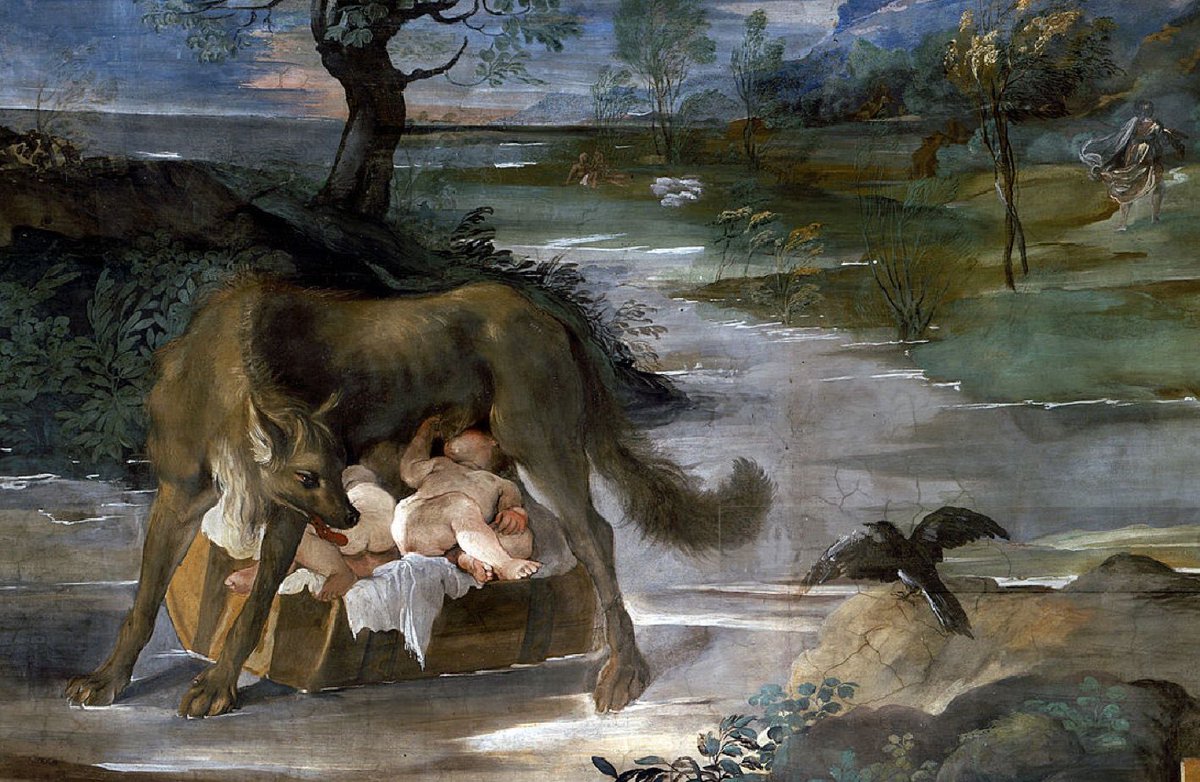
In Roman mythology, milk was crucial in the story of Romulus and Remus, who were saved by a she-wolf (Lupa) after being abandoned. The twins’ survival and suckling from the she-wolf were seen as divine omens, suggesting that they gained her ferocity, which justified Rome’s power and expansion (Penniman, 2017). Interestingly, the names Romulus, Remus, and Roma are linked to the Latin word "ruma," meaning "breast."
In both cases, milk serves as a life-enhancing substance for heroes.
Makes sense why Ray Peat believes that milk is a litmus test for our biological capacity to thrive. Regaining milk tolerance is a sign of a healing metabolism.
El derecho internacional no existe como pretenden hoy tantos foristas indignados por la liberación de Venezuela. El derecho internacional público es la voluntad política de los estados y se fija en base al que más fuerza y habilidad tiene, estableciendo por la fuerza las normas para los demás, las que se escriben en un papel y se estudian en la Facultad para que parezcan algo serio, obligatorio, universal y permanente.
Marco Polo reaches Kublai Khan's court in 1275 expecting exotic spices. What he documents is the most extensive dairy culture in history.
The question everyone asks: how do Mongol armies move without supply lines?
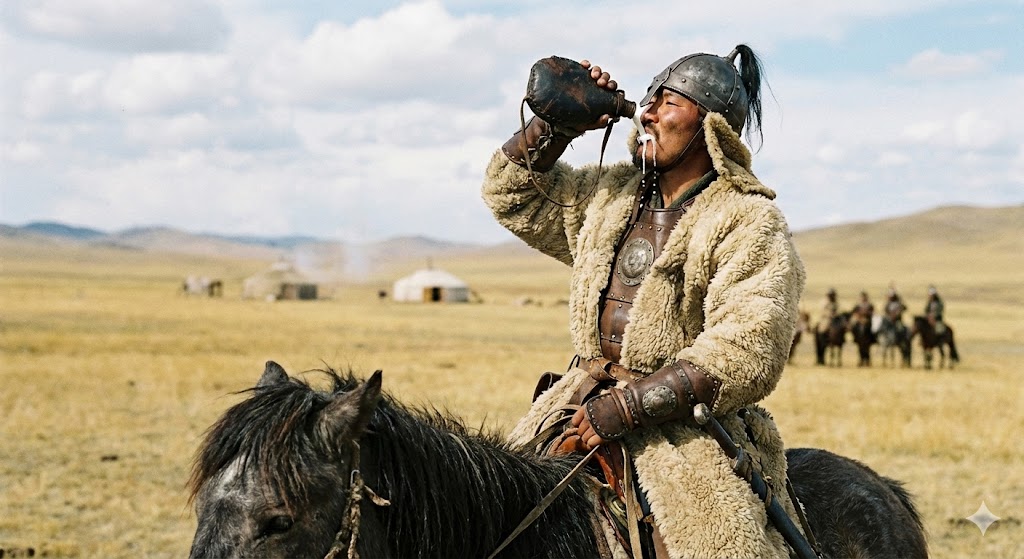
Polo's answer: Each soldier carries leather flasks for milk and travels with horses. The horses are mobile dairy factories.
Polo writes: "When going on distant expedition they take no gear except two leather bottles for milk and a little earthenware pot for meat. In great urgency they ride ten days without lighting fire or taking meal. They sustain themselves on the blood of their horses, opening a vein and drinking till satisfied, then staunching it."
But blood-drinking was emergency rations. The standard was kumis - fermented mare's milk.
Fresh mare's milk in leather bags, stirred 1,000 times, fermented 1-2 days. Result: slightly alcoholic, vitamin-rich, shelf-stable for weeks.
A warrior consumed 2-3 liters daily. That's 1,000-1,500 calories from fermented dairy alone. Add dried meat and you have complete nutrition requiring no cooking, no supply lines, consumable while riding.
European armies needed baggage trains. Flour, grain, salt meat, wine, cooking equipment. Had to stop to prepare food, find water, rest regularly.
Mongols covered 60-80 miles daily consistently. European armies: 15-20 on good days.
When Mongols invaded Hungary in 1241, Hungarian chronicles describe them as covering distance that seemed impossible. The difference wasn't horses - it was drinking provisions while riding.
Friar William of Rubruck, 1253: "Their drink is mare's milk prepared to taste like white wine, called kumis. They sit all day around the bag whilst someone stirs it with a stick."
Everyone from Khan to shepherd drank kumis and ate meat daily. No Mongol peasant class living on grain.
Rubruck describes Mongol men as "broad-faced, moderate stature but very sturdy build" with exceptional teeth despite constant fermented dairy.
His European companions eating bread and dried rations: tooth decay, scurvy, digestive issues.
Modern analysis of kumis: complete food. Protein, fat, vitamin C from fermentation, B vitamins, calcium, probiotics, enough calories to fuel 60 miles on horseback.
The Mongol Empire controlled 16% of Earth's land. Built on fermented horse milk and dried meat.
No agriculture. No bread. No vegetables. Just dairy and meat.
They conquered the world because of it.