If you can’t do your job without AI, you don’t deserve the job. If you can’t write a book without AI, you’re not a writer. If you can’t earn a degree without AI, you don’t deserve that degree. If AI did it for you, then you didn’t do it.
Harsh reminder:
Shuhei Yoshida, the previous Head of Playstation, cared a lot about the customer. He was the one who made sure the PS4 had physical shareable discs that you could lend to friends or buy/sell used.
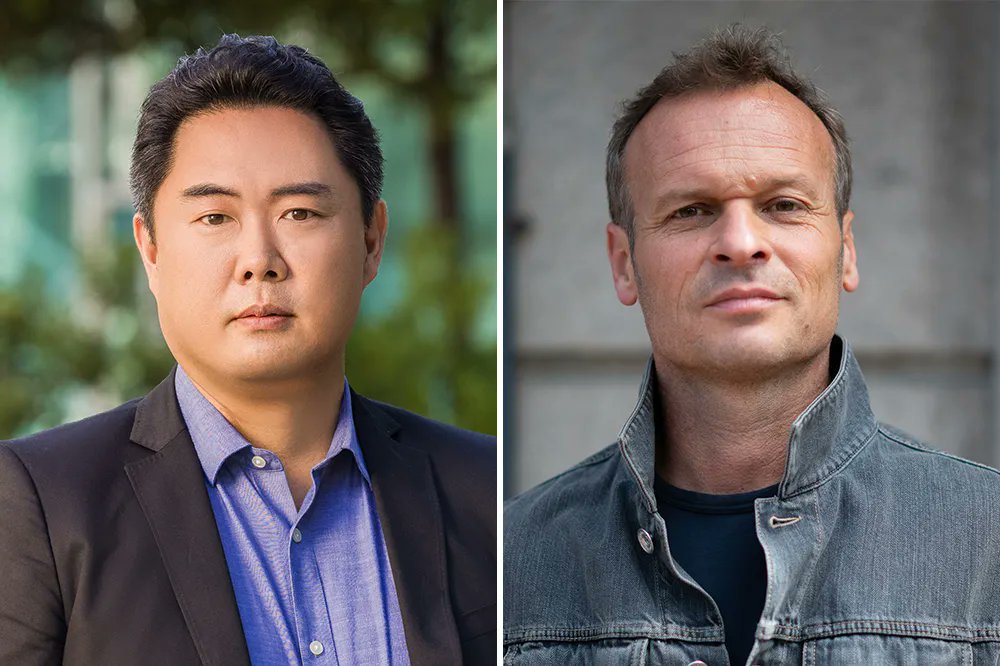
Then one day, the then President and CEO of Sony Interactive Entertainment Jim Ryan kicked Shuhei Yoshida out of the position of Head of PlayStation in 2019 because Yoshida disagreed with his direction for the company.
In hindsight, Jim Ryan’s “direction” became Playstation’s obsession with live service. Yoshida presumably told Ryan that it was a bad idea, and turns out, it was.
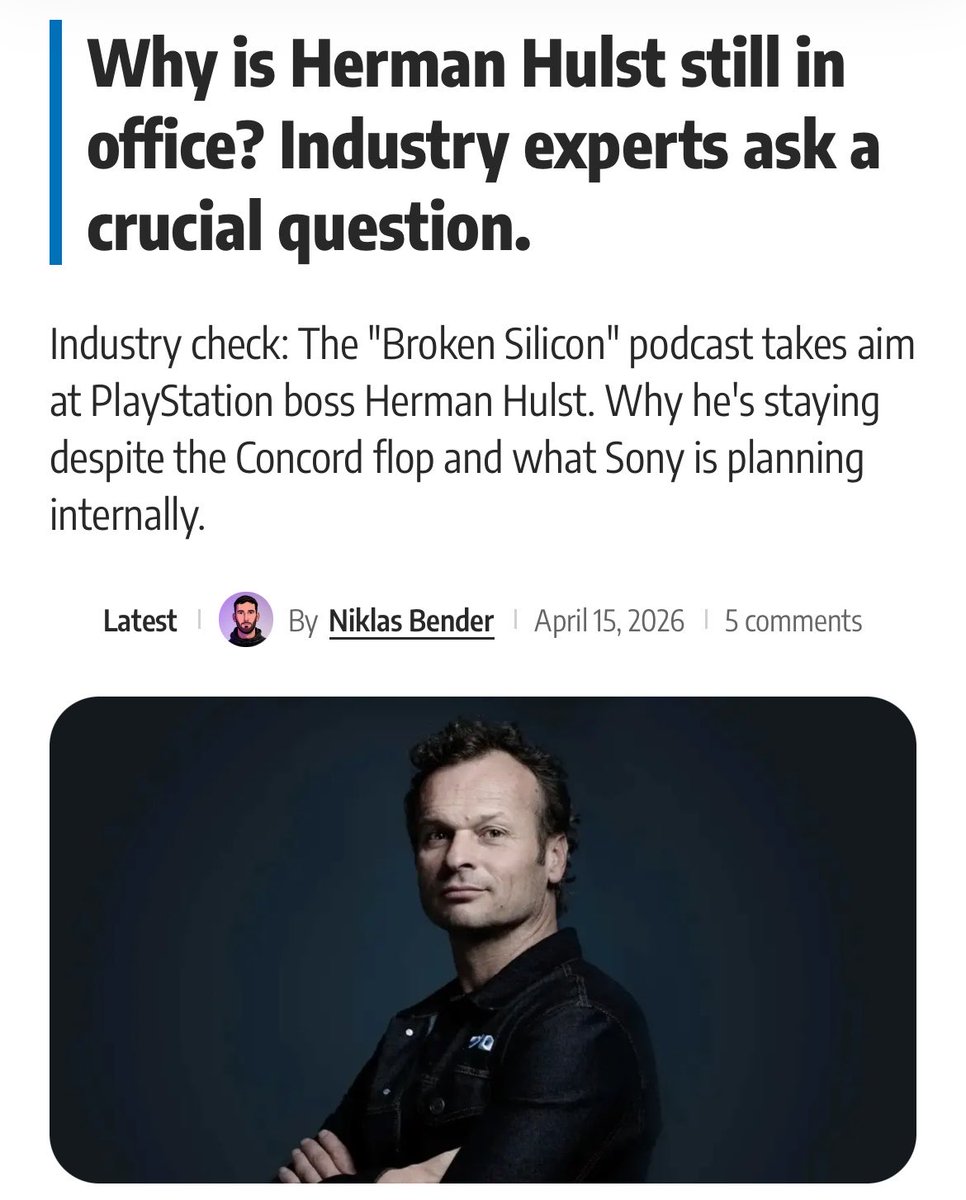
With Shuhei Yoshida gone, Hermen Hulst took his place.
After that, Playstation changed - the gutting of Sony Japan Studios in 2021, censorship of Japanese games ramped up, the live service, and the increase in consumer-hostile decisions such as PSN+ price hikes, removing games and movies from your library…
And now the decision to abandon physical discs by 2028.
When you look back at what made Playstation start to rot, it always started when Sony Interactive Entertainment moved its operations to California…and having leadership who want to do everything in their power to get rid of what made Playstation special.
You will never get another Shadow of the Colossus, another Bloodborne or a Gravity Rush - and you have people like Jim Ryan and Hermen Hulst to thank for it.
PLEASE READ AND UNDERSTAND:
We have to talk about the physical vs digital data, A LOT of people still buy Physical games on PS5.
More than you think, like WAY MORE! Please read and understand what Sony is doing it trying to FORCE DIGITAL games! IMO this should not even be legal:
- FY2025 Full Year (Apr 2025 – Mar 2026) = the digital to physical split was 78%/22%.
But this does NOT tell the whole story. Because this is all games sold, not all games that have physical copies and digital! So majority of the 78/22 split don't even have physical, let's look at some real numbers from leaks and stats we have:
From Insomniac Leak:
- God of War Ragnarök: 76% Physical / 24% Digital
- Lego Star Wars: The Skywalker Saga: 63% Physical / 37% Digital
- Astro Bot: 55% Physical / 45% Digital
- Marvel’s Spider-Man 2: 54% Physical / 46% Digital
- Assassin's Creed Mirage: 49% Physical / 51% Digital
- Resident Evil 4 Remake: 45% Physical / 55% Digital
- Hogwarts Legacy: 44% Physical / 56% Digital
- Star Wars Jedi: Survivor: 40% Physical / 60% Digital
UK / Europe Retail Data (GSD – 2023/2024):
- Astro Bot: 55% Physical (UK) / and 60% Physical (Europe) – 2024
- Marvel’s Spider-Man 2: 54% Physical (UK) – 2023
- Assassin's Creed Mirage: 49% Physical (UK) – 2023
- Hogwarts Legacy: 45% Physical (UK) – 2023
- Resident Evil 4 Remake: 45% Physical (UK) – 2023
- Horizon Forbidden West: 51% Physical (UK) – 2022
People still buy a lot of physical games on PS5, especially when it's SINGLE PLAYER GAMES. When it's more mp then it goes down to more digital. But please don't just listen to the 78%/22% split, those numbers are overall numbers and don't represent the full story AS YOU CAN CLEARLY SEE!
Because it's not a fair comparison since all games don't have a physical copy or eventually stop printing it. They are trying to paint a narrative to control prices and take ownership from you, that is the truth and spread it!
Seen several quote #PlayStation's 78% digital full game sales, thus omitting important context.
That figure includes countless digital only releases, from back catalogue to indie games etc. Even Capcom revealed 84% of its sales were "older catalog titles", many of which are only available digitally.
So using such data is somewhat misleading.
To gauge REAL physical demand you need to look at splits of games that released both physical AND digital only. Thanks to the Insomniac leaks, we have such data on PS first party games.
Playstation Physical / Digital splits
Sackboy - 77% / 23%
R&C Rift Apart - 76% / 24%
Ghost of Tsushima DC - 71% / 29%
Demon's Souls - 70% / 30%
Miles Morales - 66% / 34%
Spider-Man - 66% / 34%
Returnal - 61% / 39%
The Last of Us 2 - 61% / 39%
Ghost of Tsushima - 51% / 49%
MLB The Show 21 - 39% / 61%
So per Sony's own internal data, 31/33 first party games from their chart sold more PHYSICAL than they did digital.
Uncharted 4 actually has an insane 83% physical split.
Granted it only covers through to a few months into 2022, but we can see from other more recent data, things haven't drastically changed. For example GSD data shows ~60% of Astro Bot sales across Europe were physical.
So what skews revenue and data more digital, beyond digital only releases and platforms? The answer is games with LIVE SERVICE components, especially multiplatform ones.
As you can see from Sony's internal data, MLB has the highest digital split, and it's a live service game.
Generally the highly popular live service or annualised games such as Call of Duty, NBA 2K, FIFA etc, have higher digital splits, as gamers are constantly launching them (often daily) and don't want to be constantly switching discs, thus skewing digital/physical splits.
It's very different to single player games which are shorter and have different play and consumer trends. So again, context matters.
Then there's a MASSIVE audience of gamers that aren't even accounted for in any of this data; the countless consumers that buy and sell used physical games, because they simply can't afford as many new games, but still buy/own consoles, accessories, games, services etc. Everything from poor parents, kids etc.
Ultimately, the data rejects the notion physical is dead or meaningless, even if digital accounts for the overall lionshare of revenue/sales, especially when you look at things with the proper context and/or focus on single player tentpole games, which is PlayStation's bread and butter.
Keep in mind platforms make a 15% licensing fee from third parties on physical games, while they get a 30% cut on digital.
Likewise first party lose a 30% cut to retailers on physical, while they keep all of the revenue on digital.
As I said before, this move to kill physical is more about PlayStation trying to make far more profit and squeeze away the last remnants of consumer ownership, control, flexibility and resale, and could have greater negative market ramifications.
A Japanese immunologist spent 20 years proving that the chemicals trees release into the air walk into your bloodstream, hunt down your stress hormones, and arm your immune system in ways no therapist or pharmaceutical has ever matched, and most of the data has been sitting in Japanese medical journals for two decades waiting to be translated.
His name is Qing Li.
He is a clinical professor at Nippon Medical School in Tokyo and the president of the Japanese Society of Forest Medicine. The Japanese government has been funding his research since 2004, and the body of work he has produced is the reason forest bathing is now an officially prescribed clinical therapy in Japan and Korea.
The story actually starts in 1982, when the Japanese Ministry of Agriculture, Forestry and Fisheries coined the term shinrin-yoku to describe the practice of slow, mindful walking in a forest. They did it for a practical reason.
Japan was urbanizing fast, stress-related illness was climbing, and the country had thousands of square kilometers of forest sitting unused. The idea was to give people a reason to walk into the trees... They had no idea what was actually happening to the human body during those walks until Qing Li ran the first proper experiment in 2005.
He took twelve healthy adult men on a three-day, two-night trip to a forest park. They walked for a few hours each day. Nothing strenuous. No prescribed routes or breathing exercises. They simply walked slowly through the trees, breathing the air, looking at the forest.
Li drew blood and urine samples before the trip, on the second day, on the third day, on day seven after returning home, and again on day thirty.
The numbers that came back from the lab were not what anyone expected.
The activity of a specific type of immune cell called the natural killer cell, which is the cell your body uses to hunt down cancer cells and virus-infected cells before they can spread, had jumped by roughly 50 percent during the forest trip. The actual number of natural killer cells circulating in the bloodstream had increased significantly.
Three different anti-cancer proteins that those cells produce, called perforin, granzymes, and granulysin, had all risen sharply. And the effect did not disappear when the men went home. The immune boost was still measurable on day seven and was still partially present on day thirty.
Two hours a day in a forest had upgraded the immune system for a full month.
Li ran the same experiment with women a year later and found nearly identical results. Then he ran it with a control group who took a three-day trip through an urban area with the same amount of walking, the same hotel quality, and the same diet.
The urban group showed no measurable change in natural killer cell activity at all. The forest was doing the work, not the vacation.
The mechanism turned out to be a class of airborne molecules called phytoncides. Trees produce these compounds to defend themselves against insects, bacteria, and fungi. Pine, cedar, oak, and cypress trees release them in particularly large amounts, especially in warmer weather and after rainfall.
When you walk through a forest, you are inhaling those molecules into your lungs and absorbing them through your skin, and once inside your body they appear to directly stimulate the production and activity of the very immune cells Li was measuring in his lab.
Roughly 50 percent of the health benefit of a forest walk, according to Li's data, comes from the chemistry of the air itself. The other half comes from what the forest is doing to your nervous system.
This is where it stops being only about the immune system and starts being about stress.
A separate Japanese research team measured cortisol, the body's main stress hormone, in 84 participants across 35 different forest sites. They drew samples before and after a 30-minute walk in each forest and compared them to control walks in matched urban environments. The cortisol levels of the people who walked in the forest were lower than the cortisol levels of the people who walked in the city by a significant margin. Their heart rates were lower. Their blood pressure was lower.
The activity of their parasympathetic nervous system, which is the part responsible for rest and recovery, had gone up. The activity of their sympathetic nervous system, which is the part that drives fight or flight, had gone down.
Then a researcher at the University of Michigan named MaryCarol Hunter ran the cleanest version of this experiment ever done. She recruited participants from a city and told them to take a nature pill three times a week for eight weeks.
They were free to choose the time, the place, and the duration of the nature experience, as long as it was outside, in daylight, and free of phones, conversations, and aerobic exercise. They sent her saliva samples before and after each session so she could measure cortisol changes accurately and rule out the normal daily drop in stress hormones that happens to everyone.
The result was that participants experienced a 21.3 percent drop in cortisol per hour spent in nature, with the biggest payoff happening between minutes 20 and 30 of the walk.
After that, the cortisol kept dropping, but more slowly. The threshold dose for measurable stress relief was just 20 minutes outside in something that looked and felt like nature.
What none of this means is that nature is a substitute for therapy or for medication when someone genuinely needs them. Therapy treats different things than a walk does, and Li himself has been careful in interviews to call forest bathing a complementary intervention rather than a replacement for clinical care.
But what the research has settled is that the human body has a physiological response to being among trees that operates on the same biological systems modern medicine is trying to reach with drugs and clinical protocols, and that response is fast, measurable, and free.
The strangest part of Li's work is the implication he keeps repeating in interviews. The average person now spends more than 90 percent of their life indoors. Their cortisol stays elevated. Their natural killer cells stay sluggish.
Their parasympathetic nervous system rarely gets a chance to take over. The system that was tuned by millions of years of life under a canopy of trees is being asked to run permanently inside a box made of drywall and screens.
Your body has not forgotten what it is supposed to do in a forest. It is waiting for you to walk into one.
Nobody warned us the World Cup was going to solve Korea’s birth rate crisis.
All this Korea 🇰🇷 - Mexico 🇲🇽 love is beautiful.
A lot of kimchi is ending up in tacos tonight.
Nine months from now, Seoul is going to have a baby boom.
And somehow, every single one of them will be Filipino.
Nobody wants a city on Mars. Nobody wants AI in every app. Nobody wants a robot butler. Nobody wants data centers everywhere. Nobody wants flying cars or humanoid robots. We want clean water, we want bees to survive, and we want a habitable planet.
Elon vowed to cure world hunger if the World Food Program could outline a plan to do so for 6 billion. They did, and Elon did absolutely nothing, and has become the world's first trillionaire.
This man also systematically dismantled the US' foreign aid programs after this time. So not only did he not fulfil his promise, he actually deprived millions more of food, emergency healthcare and other life saving supports.
With less than .5% of his net worth he could save 10s of millions, real human lives.
He spends his days shitposting on Twitter and he was even stupid enough to tank his companies in valuation by literal 100s of billions just to call some guy a pedo, and people applaud him.
We shouldn't live in a world where millions die of hunger while others have more money than most countries. Humans have their priorities screwed up.
It's quite funny that this dude's historic wealth might be the most persuasive blackpilling possible on capitalism, and yet the socialist warriors do not take advantage of the opportunity.
Let me explain. His wealth is fundamentally disconnected from personal merit or direct labor. He is the CEO of three companies and in the C-suite at many others. There is simply no possibility whatsoever that he works the hours expected of such positions and that the little personal labor he dedicates to them represents the the incredible wealth he has extracted from them.
Moreover, there are several, well-documented claims from insiders that they have to handle or buffer his erratic behavior, and that the executives that actually do the work are relieved when he gets hyperfocused on another company and leaves them alone. What work he does when he is hyperfocused consists mostly, according to insiders, as extreme micromanagement. He self-describes himself as a "nano-manager," and his official biographer talks about his hyper-critical "demon mode." There is a pretty reasonable argument to be made that his presence harms these companies, rather than helps them.
This is only boosted by how many expensive, high-profile lawsuits his companies have been embroiled in by his public remarks, nonstop posting, and refusal to abide by financial disclosure deadlines. How he treats his employees and unilaterally fires people without cause also causes employment lawsuits.
Substantively, his companies also benefit from him lying to the market to cause speculation and government subsidies won by quid pro quo behavior that would have, in better times, been considered criminal. Musk causes Tesla and SpaceX to consistently lie about its products, and he is never punished enough to offset the personal benefit he gets from the market or subsidies by such lying.
His wealth is an illusion driven by retail investor enthusiasm based on these lies, market expectations based on his lies and the fact that he has yet to seriously pay for lying, and pay packages approved by boards stacked with flunkies that cannot articulate how he can possibly do enough work as the CEO of three companies and executive of half a dozen others to justify his intensely bloated pay packages. He receives that pay even when his companies are not profitable, which has led to constant shareholder lawsuits.
If there was a poster boy of American Capitalism, it is him. He represents everything wrong with the reality of how the system works, and how lying and anticompetitive behavior is not adequately curbed.