What if I told you some random 23 year old dude addicted to markets spent 1.5+ years building exactly this so you didn't have to waste any more time outside the loop?
Code TRIAL for 50% off your first month 👇
https://t.co/OeuUu1ibp4
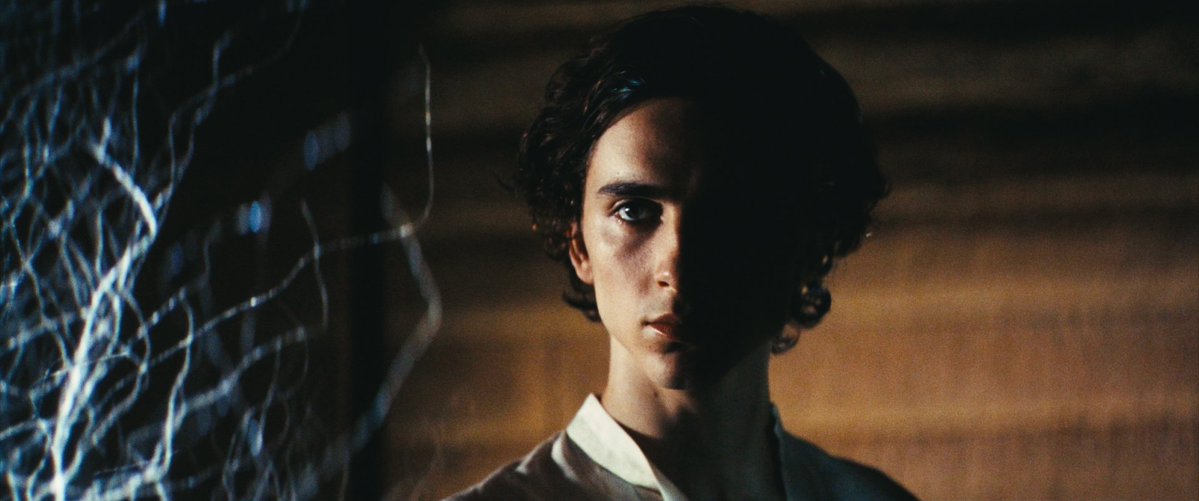
I’ve seen THE ODYSSEY in IMAX 70MM and I also saw this DUNE footage today…
I swear anyone who sees both next week back to back will simply evaporate. It will be like when the giant squid shows up in WATCHMEN.
I fear we can’t handle this much cinema.
When people say "put your phone in another room," they're applying a 1990s willpower model to a 2024 neuroscience problem.
Why?
You're fighting a dopamine architecture that was engineered by thousands of the smartest behavioral psychologists, data scientists, and reinforcement learning specialists alive — people who spent their entire careers studying how to make a rat press a lever until it dies.
In the 1950s, James Olds and Peter Milner implanted electrodes into the brains of rats that stimulated the nucleus accumbens — the same dopamine center your phone activates.
The rats could press a lever to trigger the electrode. They pressed it until they collapsed from exhaustion. They chose it over food, over water, over s@x, over survival. The stimulation wasn't delivering pleasure. It was delivering *wanting*. An endless loop of anticipation with no satisfaction, no completion signal, no "enough."
Your phone does the same thing through software.
Every pull-to-refresh is a slot machine lever. The variable reward schedule — sometimes you get a like, sometimes nothing, sometimes a flood of notifications — is the single most addictive reinforcement pattern behavioral science has ever identified. Casinos have used it for decades. Social media perfected it. And because the reward is social validation — something your brain literally processes through the same opioid circuits as physical touch and belonging — the craving embeds deeper than any gambling addiction ever could. You're not addicted to a screen. You're addicted to the neurochemical simulation of being loved.
Putting the phone in another room doesn't interrupt this loop. Your prefrontal cortex — the part of the brain responsible for impulse control and long-term planning — is already compromised. Chronic phone use measurably reduces grey matter volume in the prefrontal cortex over time. The exact same structural degradation found in substance addicts. Your ability to resist the craving is being eroded by the craving itself. Every year you scroll, the "no" muscle in your brain gets physically smaller.
And the craving doesn't need the phone present to fire.
This is what most people miss entirely.
Addiction neuroscience has known for decades that cravings are triggered by *cues*, not by the substance itself. An alcoholic doesn't need a drink in front of them to feel the pull. A sound, a time of day, a feeling of boredom, a micro-moment of social anxiety — any of these can trigger a dopamine spike that initiates the seeking behavior. Your phone trained your brain to associate hundreds of daily micro-cues with the reward of checking it. Sitting at a red light. A pause in conversation. Waking up. Feeling any emotion above or below a narrow band of "neutral."
The cue fires. The dopamine spikes. The wanting floods in. The phone being in another room just adds twelve seconds of delay before you go get it. The neurochemical cascade already happened. You already lost.
So what does "the fix is biological" actually mean?
It means you have to rebuild the dopamine system itself — not manage the behavior around it.
Dopamine has a baseline. Think of it like water level in a tank. Every time you get a hit — a notification, a scroll session, a like — the water spikes above baseline and then crashes *below* it afterward. The brain compensates for the spike by downregulating receptors. This is called opponent process theory. The pleasure response gets weaker. The pain/craving response after it gets stronger. Over months and years, your baseline dopamine drops.
Everything that isn't a phone feels grey, flat, uninteresting. Books feel slow. Conversations feel boring. Nature feels pointless. You haven't lost your attention span. You've chemically lowered the floor of what your brain registers as worth paying attention to.
The biological fix is a dopamine reset — and it works the same way it works for any addiction.
You need extended periods of low-stimulation living. Long walks without audio. Sitting without input. Meals without screens. Conversations without checking. Sleep without the phone as the last and first thing you see. The first 7 to 14 days feel genuinely terrible because your baseline is cratered and nothing produces enough signal to feel rewarding. Your brain is screaming for the lever. This is withdrawal. Real, measurable, neurochemical withdrawal with documented increases in cortisol and anxiety.
But around week two or three, something shifts. Dopamine receptors begin to upregulate. Baseline rises. And suddenly a cup of coffee on a quiet morning feels like something again. A conversation holds your attention. A paragraph in a book pulls you forward instead of feeling like sandpaper on your focus. You didn't learn discipline. Your brain physically rebuilt the receptor density that makes ordinary life register as interesting.
The people who seem to have "incredible willpower" around screens almost always have one thing in common — high baseline dopamine from lifestyle factors. Deep sleep, intense physical exercise, cold exposure, genuine social bonds, time in nature, creative work that produces flow states. These activities don't spike dopamine the way your phone does. They raise the *floor*. They make the baseline higher so the craving signal from your phone doesn't tower over everything else in your experiential landscape.
You don't beat phone addiction by hiding the phone.
You beat it by making your biology so rich that the phone becomes the least interesting thing in the room.
That's a project measured in months, not hacks. But it's the only one that actually works, because you're not fighting a screen. You're fighting a nervous system that was deliberately, methodically, and brilliantly trained to betray you.
And the people who trained it made $200 billion last year doing so.
Google's CEO:
"Any solo developer with Claude can now outcompete a 10-person Google team."
He's right.
But 90% of developers using Claude daily are starting from zero every session.
No stack context. No memory. No behavior rules.
Claude is smart. But without a proper system prompt it's like hiring a genius with amnesia.
Every. Single. Session.
$975 wasted per developer every week on context rebuilding alone.
The fix is not a better model.
It is these copy-paste system prompts that turn Claude into an expert before you type your first message.
Full list below ↓
Bookmark this. Use it today.
🚨 A SENIOR ANTHROPIC ENGINEER JUST DROPPED AN 11-PAGE PDF ON LOOP ENGINEERING.
The core shift: stop prompting the agent. Build the system that prompts it.
Inside the autonomous loop:
- Discover → Finds its own work (failing CI, open issues).
- Isolate → Uses separate git worktrees to prevent collisions.
- Verify → A second agent reviews the work. (Never let agents self-grade).
- Persist → Writes to disk, not temporary context windows.
- Schedule → Runs automatically on a timer.
This is a great framework for building more reliable agentic systems
link to the guide below.
Read it, then check out this ace article on Loop Engineering by @akshay_pachaar 👇