Rich Hickey’s “Simple Made Easy” deeply resonates with me, reminding us that ignoring complexity always slows us down in the long run.
Nubank was lucky to have his mind shaping their engineering team!
Check it out his talk if you haven't already: https://t.co/0duQ5Uzeb4
$NU's co-founder and former CTO Edward Wible, alongside Distinguished Engineer Lucas Cavalcanti, recently broke down insights into the structural architecture that allowed the digital bank to scale.
As Cavalcanti noted from his prior industry experience, most traditional bank tech stacks age like milk. While Nubank's founding team initially wrote some early services in Ruby back in 2013 due to familiarity, they quickly hit scaling bottlenecks from the global interpreter lock and an immature library ecosystem. But the realization came from studying large system failures. The root cause of accidental complexity in massive codebases is mutable state and side effects. If you are building a retail bank that will eventually handle hundreds of millions of transactions, the database cannot just overwrite historical context.
This is where Nu made an early, contrarian bet that became their strength. To avoid building a legacy system that would eventually rot, they anchored their core using Clojure as their backend language and Datomic as their database. Because Clojure runs on the JVM, it gave them instant access to decades of battle-tested Java libraries. This allowed the engineering team to focus entirely on business logic rather than building basic infrastructure from scratch. And then there is Datomic. When data changes in Datomic, it does not overwrite the old data. It appends the new state, preserving the complete history of prior states.
For a heavily regulated financial institution, this immutable database is the holy grail. It creates a native, unalterable audit trail. Engineers, regulators, and auditors can rely on this database to view immutable snapshots of the ledger at any exact moment in time. It natively solves the hardest parts of double-entry accounting and allows engineers to replay chronological transactions to recover from errors without data corruption. This tech advantage was so critical to their compounding growth that Nubank outright acquired Cognitect, the creators of Clojure and Datomic, to help secure their moat.
Today, this architecture processes hundreds of millions of transactions a day across one of the world's most active payment networks. Nu operates with horizontal read scalability that allows machine learning and analytics to run in real-time without breaking production systems. The tech stack is the structural advantage driving their unit economics, allowing them to ship products to over 130M people with nearly zero friction.
my life changed the moment an old mentor told me this:
“stopping your worst habit would change your life way faster than starting your best habit…
fix the leak before filling the bucket.”
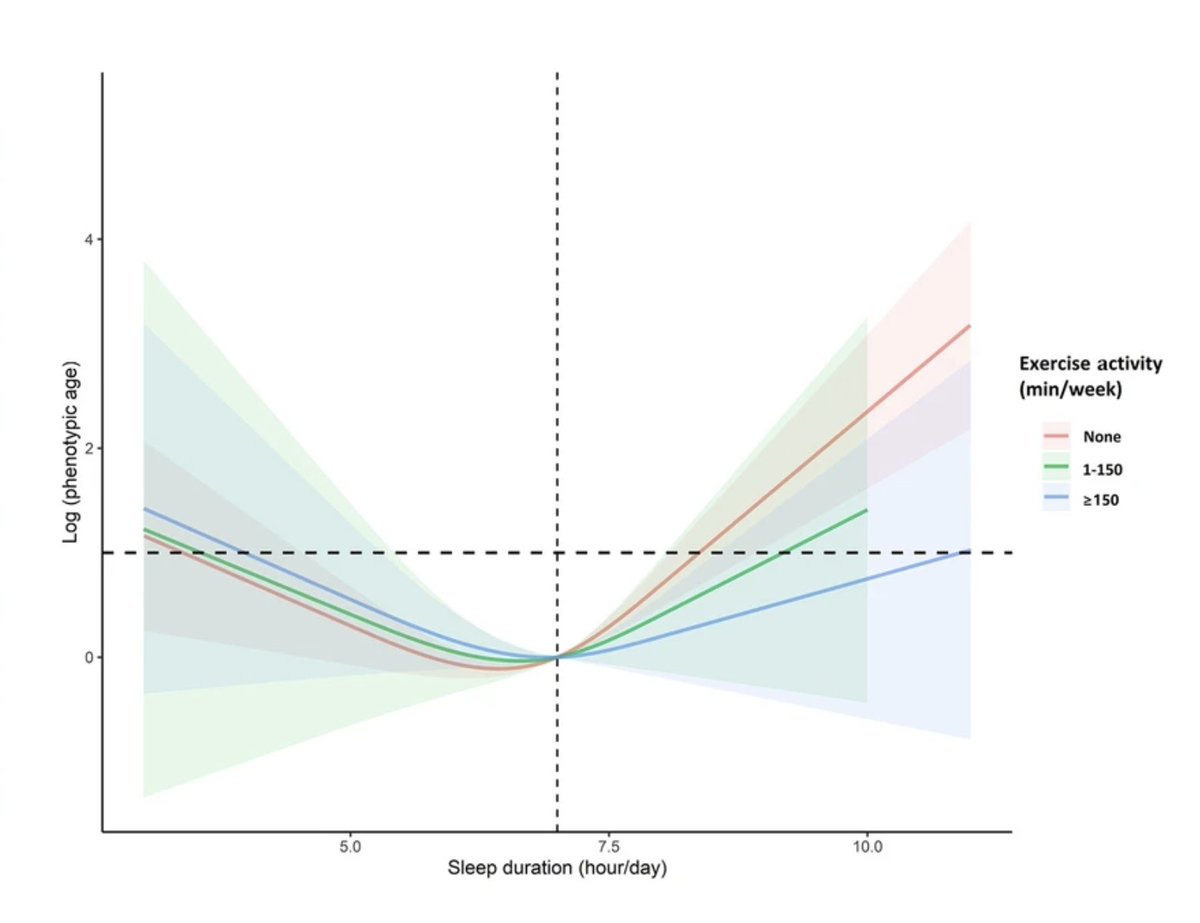
Regular exercise is linked to slower biological aging - but only in people sleeping 7+ hours.
People who slept under 6 hours and exercised actually aged faster.
Tao is pointing at something the neuroscience makes very clear.
When you struggle through a problem, your hippocampus encodes that information through a process called retrieval practice. You’re forcing the brain to reconstruct the answer from incomplete cues. That reconstruction strengthens the synaptic connections. The more difficult the retrieval, the stronger the encoding.
When you get the answer handed to you, different circuitry activates. You get a recognition signal, not a retrieval signal. Recognition feels like learning. It isn’t. The information passes through working memory and dissipates within minutes.
This is why students who re-read notes perform worse than students who close the book and try to recall what they read. Same time spent. Opposite outcomes.
The “lifting weights” framing is neurologically precise. Resistance creates adaptation. Remove the resistance, remove the adaptation signal.
Population data shows this playing out. IQ scores rose about 3 points per decade through most of the 20th century. That trend reversed in Norway, Denmark, Finland, and France starting in the 1990s. Norwegian conscript data shows a 7-point decline per generation after the mid-1970s birth cohorts. The researchers traced it to environmental factors within families, not genetics.
The timing tracks with tools that eliminated cognitive friction. Calculators. GPS. Search engines. Each one removed a category of effortful retrieval.
AI compresses all of these into one interface.
The protocol here isn’t abstinence. It’s sequencing. Struggle first. Attempt retrieval before you have access to the answer. Make errors. Correct them. Then use the tool to verify or extend.
Tao is describing responsible use as choosing when to think. That’s the intervention point. Delay the offload until the encoding has occurred.
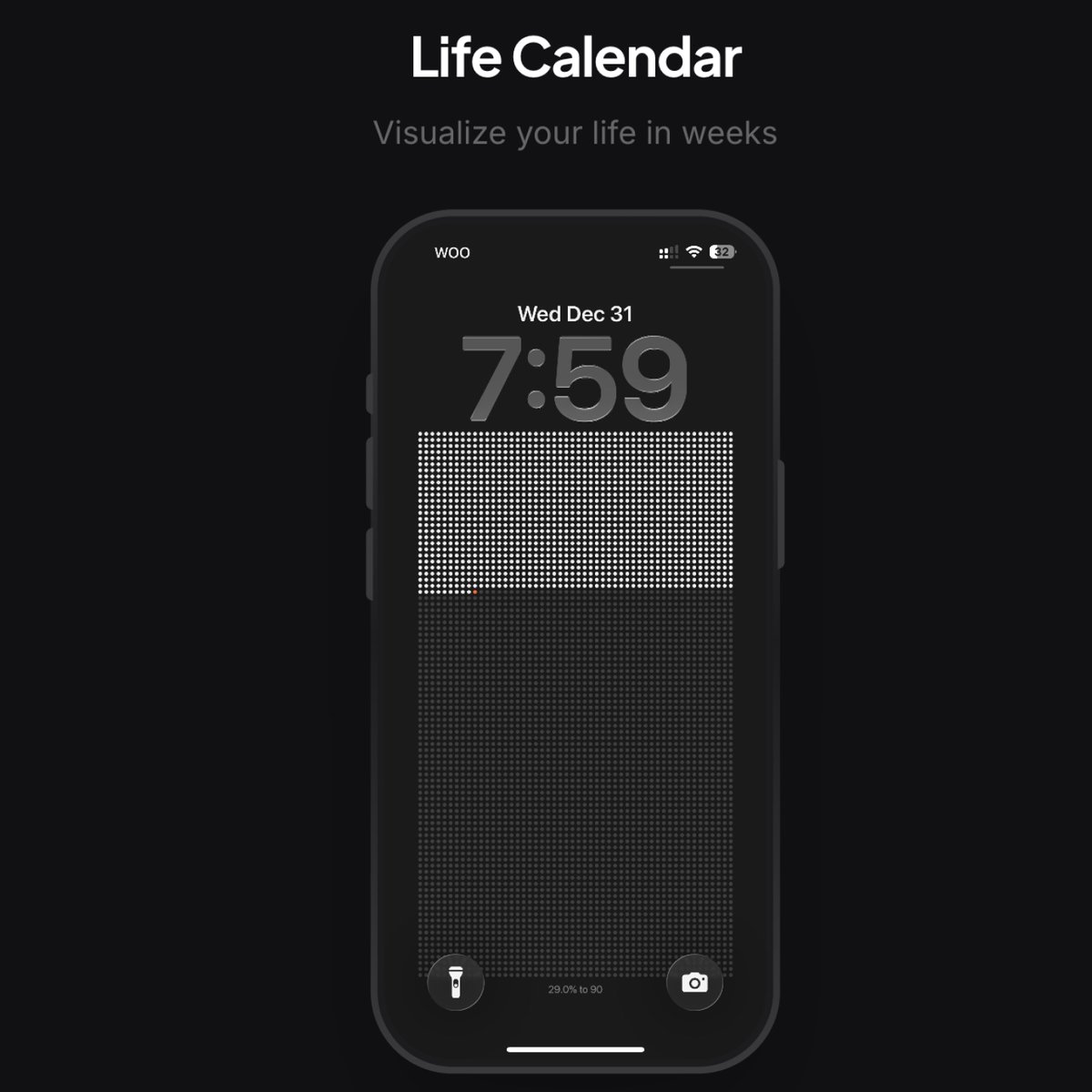
A week ago I launched https://t.co/1QiYTQy7VJ to make it easier to track your life and year progress directly on your iPhone lock screen.
I didn’t expect what happened next.
Since then, 1M+ people have visited the site, and thousands have changed their iPhone lock screens to a life or year calendar.
The lock screen is a surprisingly intimate space in someone’s life, so I feel incredibly lucky to have built something that lives there.
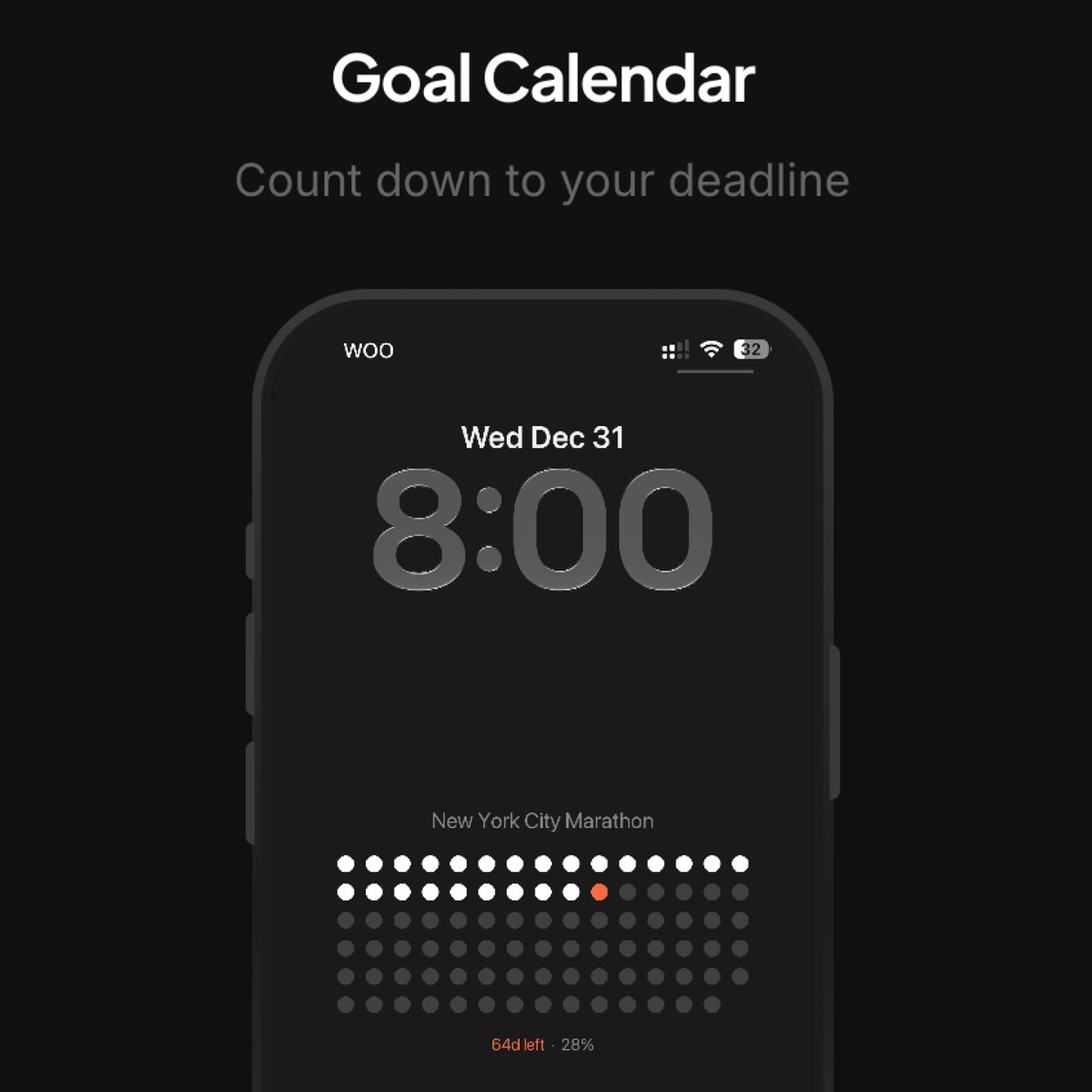
One thing users kept asking for was a way to set a specific goal and count down to it.
"I’m training for a marathon"
"I have an important date coming up"
We've just added that feature.If you’ve set goals for the new year, give it a try 🙂
A few things I enjoyed reading as we head into the new year
Dan Wang’s Annual Letter:
These are always great, but I appreciated this one even more after reading his book Breakneck this year. Which you should also do if you haven’t. Lots of great insights on how China and the US are deploying AI, and some descriptions of SF/SV that had me laughing out loud
https://t.co/IktbUpJUQ3
Seth Klarman: How Warren Buffett Did It
What’s to say? One of the greats writing about the G.O.A.T.
https://t.co/1yssuuablU
The Terminalist: Asymmetry is all you need
This is an absolutely wonderful history of information markets, from harvest season in the Middle Ages, to today, to future implications in the dawn of AI
https://t.co/c4EDiPFRg0
A few days ago I shared a life calendar I built: your entire life, shown as weeks on your iPhone lock screen.
A lot of people asked for it, so here it is: https://t.co/SzHnRJn2dB
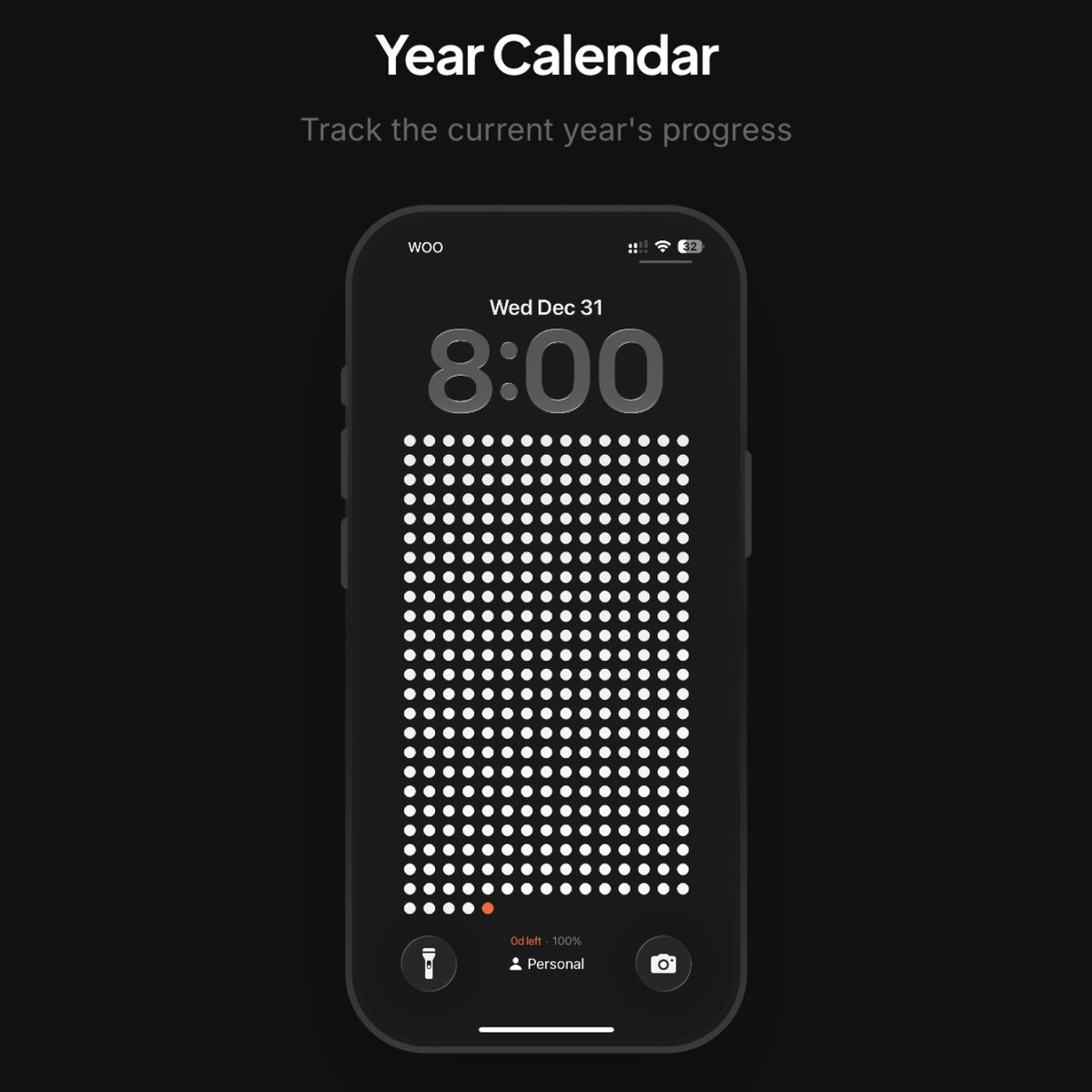
I also added a yearly view to visualize the progress of the current year.
Happy New Year 🎉
Loved it
At HDFC Tech innovators 2025, Deepak Parekh revealed the hard truths every founder must hear – about discipline, customers, governance and building startups that endure beyond hype.
Few truths that can cut through the noise trends, valuations and funding cycles:
1. If You Don’t Win Customers, You Don’t Win Anything. Investors may fund you, but only customers can sustain you.
2. Founders who are obsessed with valuation before value are building on sand.
3. Outrun Your Burn – Or Your Burn will Outrun You. Growing headcount, spending to “buy scale,” and chasing vanity growth are relics of an old era.
4. Execution – not expenditure – is the new metric.
5. Tough Fundraising Is Good for You. Scarcity, sharpens founders. It forces tough decisions. It replaces wishful thinking with clarity.
6. Never Fear Hiring People Smarter Than You. Institutions are built by leaders who elevate themselves through exceptional teams, not those who seek comfort in competence below them.
7. Governance Is Not Baggage – It’s a Shield. In an era of rapid scale and increasing scrutiny, governance has become a competitive advantage. Great companies don’t hide their books; they take pride in them.
8. Build a Life Worth More Than Your Net Worth. Companies rise and fall – but the founder behind them must remain grounded, balanced, and purpose-driven.
( WhatsApp forward)
As a parent, I think this video has taught me something useful.
I recommend that you should try it on your kids, too.
I have also shared it with my wife.
Credit: joe_drummer_boy on IG.
Elon: I think Google is gonna be pretty valuable in the future. They've laid the groundwork for an immense amount of value creation from an AI standpoint. Nvidia is obvious at this point.
https://t.co/xNX2n2hdJ3
@buccocapital They’re great at quickly adapting to new tech and frameworks that scale for UX… Dust.js, React, Async patterns, etc.,
This video has always inspired me, we can judge from videos like this.
https://t.co/U0xq1yzhFH
Jensen Huang: “The best career advice I got was from a gardener”
“Very few people know this but I don’t wear a watch,” Nvidia founder Jensen Huang begins. “And the reason I don’t wear a watch is because now is the most important time. Just dedicate yourself to now.”
Jensen explains by telling a story:
“The best career advice I got was from a gardener. I was on a family trip in Kyoto, and we went to the temple that had the largest moss collection in the world . . . All of the moss is perfect, and every species of the world’s moss is there. It was a hot summer day — anybody who’s been to Kyoto knows how incredibly hot it is during the summer — and my family walked by this old man who was squatted down working on the moss with a bamboo tweezer. His bamboo basket was nearly empty with only two or three small pieces of dead moss.”
“What are you doing?” Jensen asked the old man.
“I am taking care of my garden,” the old man replied.
The old man told Jensen that he has been working on the garden for almost 30 years.
“But this garden is so big and your tweezer and basket are so small. How can you take care of the whole garden?” Jensen asked.
“I have plenty of time,” said the old man.
Jensen reflects:
“That’s the best career advice I can give you. Most of the time I wait for things to come to me. I’m rarely chasing things. I don’t have a watch. I’m focused on now. I’m enjoying my job. I’m the longest-running tech CEO in the world . . . Dedicate yourself to learning all the time, doing the best possible work you can, and leave everything on the field. By the time I go to bed I’m exhausted, and I’m happy about my day because I did everything I could . . . You’ll be surprised. I’m not at all ambitious. I don’t aspire to do more. I aspire to do better at what I’m currently doing. I’m not reaching for more. I wait for the world to come to me.“
He continues:
“People who know me also know that Nvidia doesn’t have a long-term strategy. We have no long-term plan. Our definition of a long-term plan is, ‘What are we doing today?’ . . . You have plenty of time. Enjoy your work. Do the best you possibly can. Just keep learning every day, and good things will come to you.”
The 👍 emoji is the swiss army knife of emojis, the glue that holds society intact, the safety valve that prevents monosyllabic asocial people from going full axe murderer on interminable conversationalists. Affirmative enough to sound like a yes, ambiguous enough to bail later.
Couldn't agree more with Linus here. Making your code running as fast as possible (or just faster than someone's else code) is the best feeling you can get from programming
The issue that it is extremely hard to find the project that will pay you for instruction level efficiency
Get one small win. One of the best pieces of advice from Seneca was actually pretty simple. “Each day,” he told Lucilius, you should “acquire something that will fortify you against poverty, against death, indeed against other misfortunes, as well.” One gain per day. That’s it.