.@MSiokos ‘just under 50 teachers from (now) 20 schools 😇. “Using tier 2 and 3 vocabulary for purposeful writing” PL Day 2 w/ @jrossbridge Adapt, enhance (or NoT, and start from scratch) Units of work: be critical. How ‘explicit’ are the units in teaching writing?#tesoloz#vocab
IF the expectation is to use the (Eng) units of work, THEN you (must) know our texts as this helps with selecting vocabulary to teach and WHY? And what about grammar? Well… vocab and grammar are NOT inseparable. Ever. #tesoloz#vocabed#writing
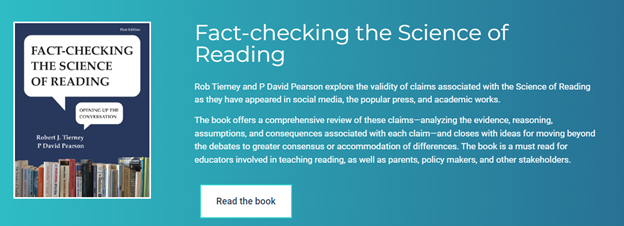
Fact-checking the Science of Reading
ob Tierney and P David Pearson explore the validity of claims associated with the Science of Reading as they have appeared in social media, the popular press, and academic works. https://t.co/AqTVG2OYBC
...as educators, we must stay informed by reading and critiquing current reading research. However, we should also be aware that the research has not identified a singular approach to the teaching of reading that can be applied to all children. https://t.co/6Y671gJ0I4
My posting of the Dr. George Hruby Video part two will be delayed until next week.
In the meantime, I suggest everyone check out the new FREE book from Pearson and Tierney.
📷
The book analyzes the evidence around ten claims made by some SOR advocates and finds that research does not support those claims. Especially look at Claim #8 on page 88 about neuroscience research. I think you’ll find that the chapter about that claim reinforces what Dr. Hruby had to say in Part One of his videos.
Use this link to access the website. LINK. Scroll down to read the book.
Our view, as academic linguists, is that part of the reason why so many children do not experience joy in reading is the excessive focus on synthetic phonics in early education. https://t.co/LuLHXKTGOl
Teachers deserve to...read research and study their own students and their teaching, audit their instructional practices and then design professional learning experiences that work for themselves and curricula that work for their students.
@LucyCalkins https://t.co/91cgW6o0Dy
If you missed Grammar and Teaching, don't worry as Grammar, Language and Literacy starts Tuesday 19 March, 4pm AEDT. Just attend the five sessions and enjoy. No tasks or readings just knowledge and ideas for the classroom. https://t.co/LNtIfpBxHf
It's not too late to sign up for Grammar and Teaching. Week 1 of 12 weeks begins tomorrow at 4pm AEDT. Would love to see those wanting quality professional learning to learn about language and designing learning for the classroom. https://t.co/cwF2iUogqI
Grammar and Teaching starts again this Thursday 14 March, 4pm (AEDT). https://t.co/cwF2iUogqI Join us for 12 weeks of investigating how language works and applying to the classroom. Let me know if you have any questions. https://t.co/adbIwm9RUY
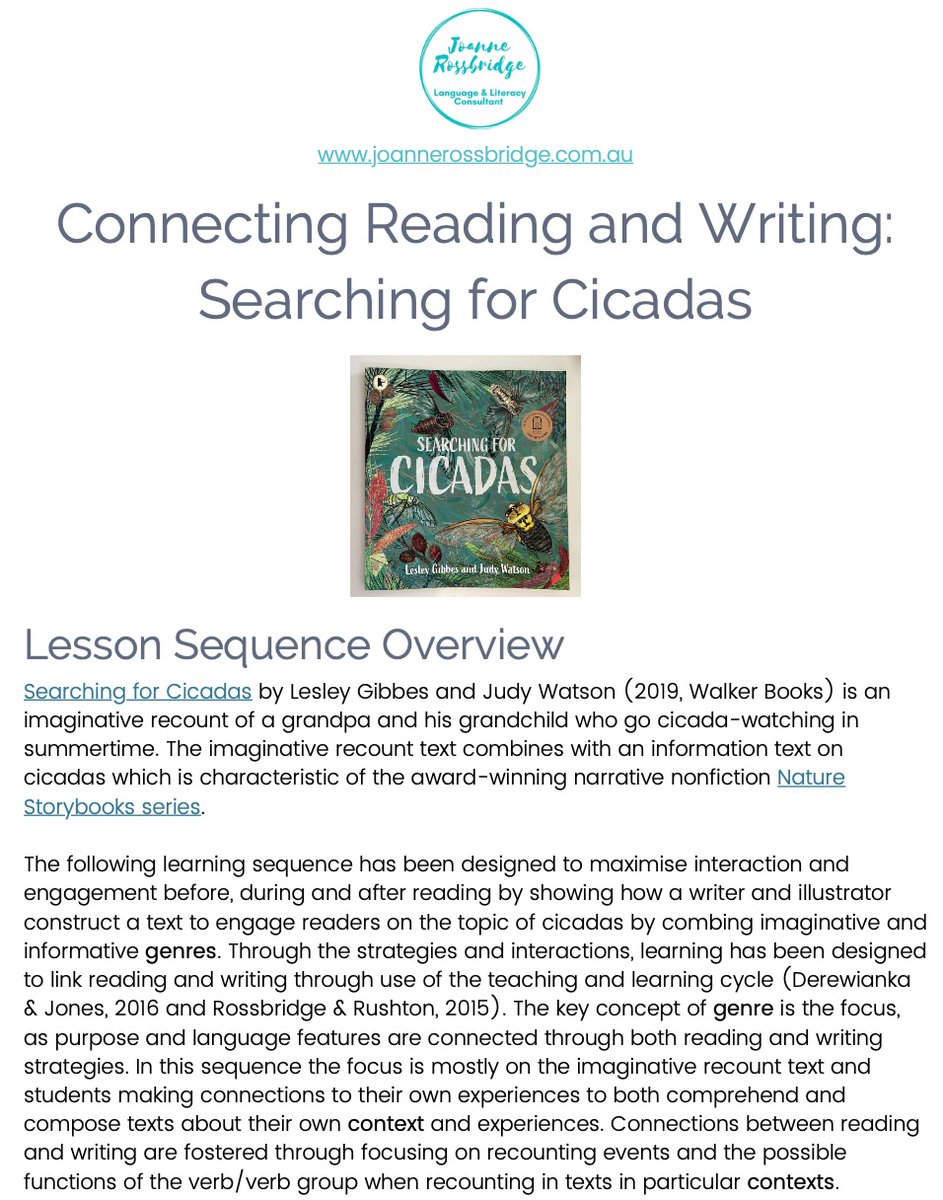
I've added a brand new teaching sequence connecting reading and writing. Record downloads! Hope it's useful for starting off the school year. https://t.co/Xd8co1TCFg Much more on the resources page! https://t.co/UWiokEA6uz
Looking back at the 2022 Literature Symposium: all free on the FFLL website. Why is literature so important in our lives and in literacy learning?
https://t.co/4tHzommlqd
“There is little or no empirical evidence that systematic phonics leads to better reading outcomes” (p. 703). Bowers, 2020: Ed Psyh. Rev. an analysis of 12 meta-analyses: https://t.co/k8rick6hL5
The 2022 Symposium has new videos:The NT ACTA video highlighting the importance of Engaging multilingual students through literature; The FFLL video Why is literature so important in our lives and literacy learning by First Nations author, artist and activist Bronwyn Bancroft.
I’m passionate about this referendum because it is about time we recognised our Indigenous heritage & culture as foundational to who we are as Australians, and because I know that a Voice will be key to better policies and programs in health, education & employment.
#Yes23
I am not clear what the Science of Reading is. If it is a science, we would expect a set of testable hypotheses. I request that Sof R supporters list these hypotheses and the studies that test them and provide links to free downloads.
Supporters of the “Science of Reading” say that it is supported by research. They never give details. Why not supply links for free downloads to the research studies?
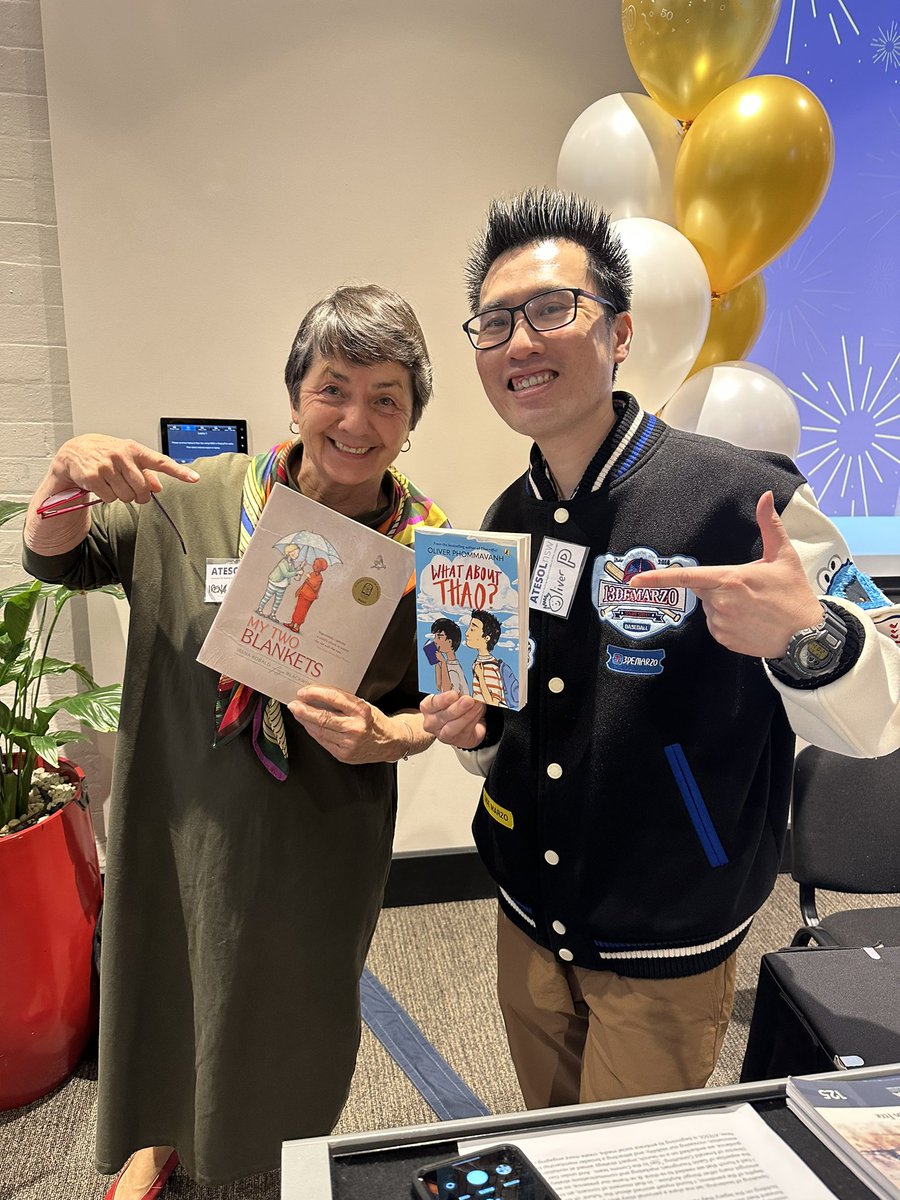
@TESOLoz@TeachersFed@Sojournaleditor@jrossbridge Authors @oliverwinfree & Irena Kobald didn’t disappoint. Great messages of valuing being multilingual & ensuring e/one ‘belongs’ and included. Music 🎶 to our ears! TY Oli & Irena!