Jack Dorsey just published something that should be required reading for every founder.
The premise: the org chart needs to be replaced entirely. And the argument starts 2,000 years ago.
For thousands of years, every organization on earth has run on the same logic the Roman Army invented.
Small teams report to a leader → Leaders report to managers → Managers report to executives.
The whole structure exists for one reason: to route information up and down the chain.
That's it. The whole system exists to solve a bandwidth problem.
Jack's argument is simple: AI solves it better.
Block built what they call a "world model" - a continuously updated picture of everything happening across the company. Every decision. Every customer. Every transaction. Every bottleneck. In real time.
No status update needed. No weekly sync. No manager to translate what's happening on the ground into language the executive can understand.
When the world model carries the information, you don't need the layers.
So they eliminated them.
Block now runs on three roles:
Individual contributors who build.
DRIs who own specific outcomes for a fixed period.
Player-coaches who develop people while still doing the work themselves.
No middle layer. The system handles coordination. The humans handle the work.
I've coached thousands of founders. The number one problem is always the same: information latency.
By the time a problem surfaces from your front line to leadership, it's already compounded. By the time a decision travels back down, the damage is done.
That lag costs you deals, people, and momentum. And most founders accept it as the price of scale.
Block is trying to prove you don't have to anymore.
I think they're right.
Because the hierarchy was never the point - it was just the best tool we had. The moment something better exists, the layers eventually collapse.
This is either the biggest structural shift since the 1850s - or it breaks at scale like everything else before it.
Either way - every founder should be asking the same question: how much of your org exists just to route information?
If the answer is "most of it" - that's your problem. And your opportunity.
-DM
AI Darwinism: The survival-of-the-most-adaptive era of business, when intelligence accelerates the pace of change that advantage shifts from size and speed to learning velocity and reinvention.
It rewards those that evolve their operating model by combining human judgment and creativity with machine agency, redesigning work to move faster in learning and execution.
#adaptordie
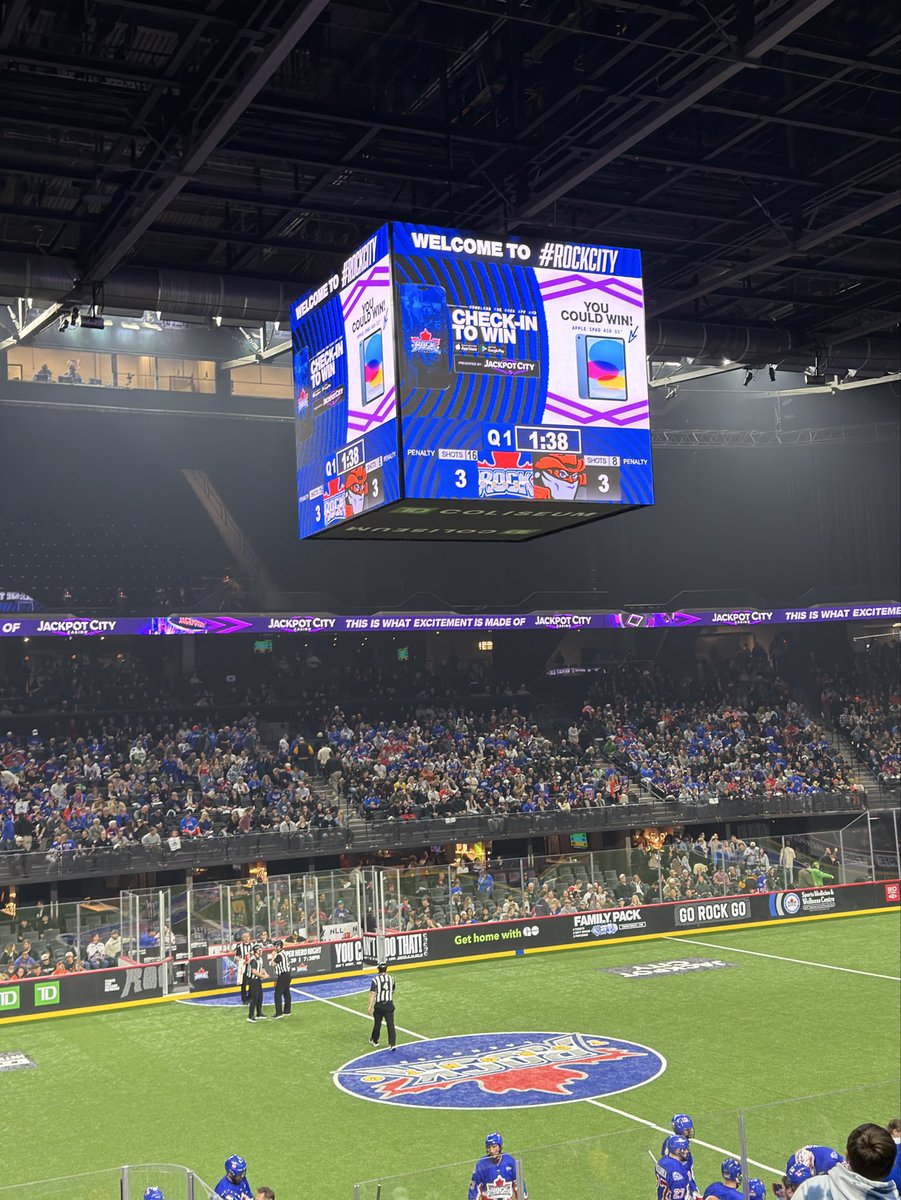
The shot clock person at @TorontoRockLax is so off.
@BuffaloBandits shoot on own net and they put four shots up.
Missed about 8 shots on @TorontoRockLax
They obviously never played net and do not understand save percentage.
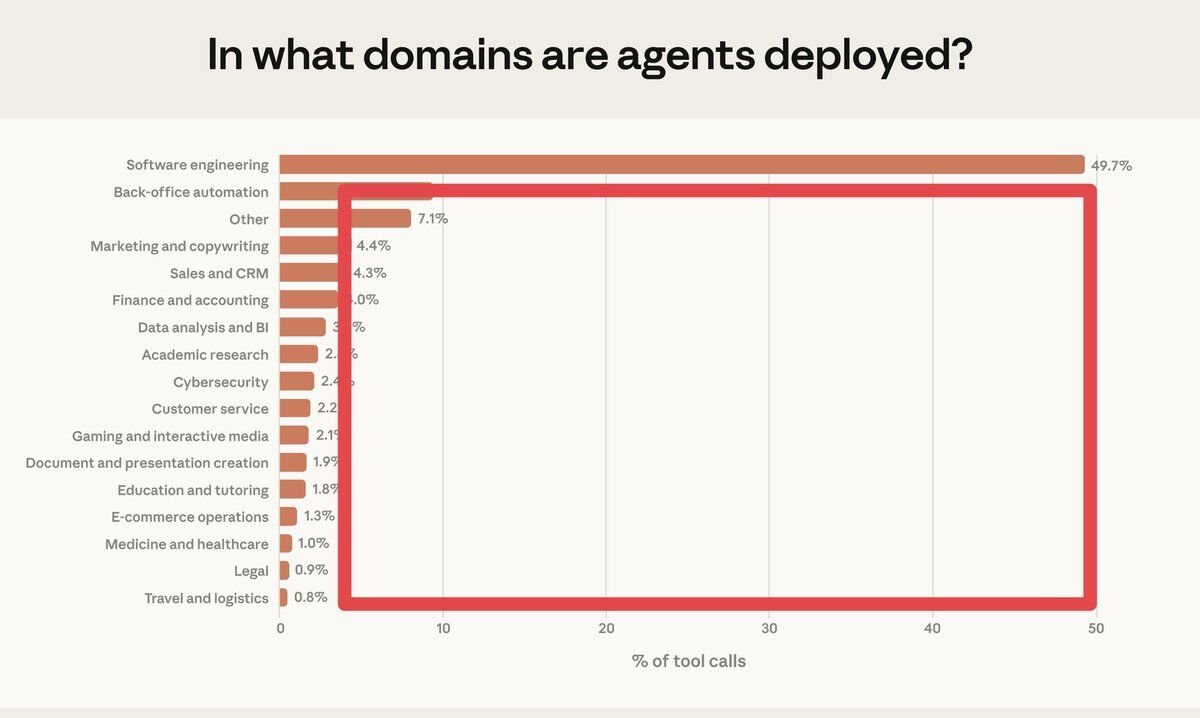
Software engineering accounts for nearly 50% of all AI agent tool calls. Healthcare, legal, finance, and a dozen other verticals are barely touched, each under 5%. That's a hundred AI unicorns waiting to be built.
https://t.co/cdJnGqsjHM
Thoughts on Team Canada at World Juniors:
There's been a lot of discourse today about Canada's performance after bowing out to Czechia again. I've read a lot about roster construction, team toughness, how players were used during the tournament, and other things related to the team's inability to get the job done.
These things may have been an issue, but reality is the problem runs way deeper.
Here is the biggest thing that people aren't talking about:
Canada has WAY fewer youth boys playing hockey than it did a decade ago.
Looking at Hockey Canada registration and membership data, it's mind-boggling to see the numbers.
And the numbers in the biggest provinces (Ontario and Quebec) are especially egregious.
So why is this happening? Hockey is Canada's sport. It shouldn't be like this.
It's what we hear every day from families all over North America:
Costs are too high. It's professionalized at too young of an age. The stress of the youth hockey experience is too much for kids and families.
Community programs have been replaced by for-profit entities leading to higher costs and more pressure. Development has been replaced by super teams and rogue/outlaw leagues outside of Hockey Canada even before kids are 8 years old. At the older ages, hockey academies have become what families believe is the only way their kids will make it - shelling out INSANE amounts of money to send their kids to do so.
Ontario just got rid of residency rules which will only lead to less accountability and more club-hopping than there already was in the nation's craziest and biggest youth hockey market.
The reason why Canada was the hockey superpower for so long is because it was part of the fabric of the country. There was such a pride and passion for the game and what the game meant to the flag. There was such a sense of playing the game for something bigger than yourself.
Now rather than playing for the love of the game, hockey in Canada is like a job for many of these kids in the environment they're being put in. It's less about pride and passion and more about the path to making it. When in all honesty, it's the pride and passion for the game that is the biggest consistency in the kids that do end up making it.
If Canada wants to restore its hockey dominance, it better take a long look in the mirror at the grassroots and what is going on in youth hockey. If you have tens of thousands of fewer boys playing the game, you should probably look at that first. The bigger your pool of athletes, the more elite athletes you can develop.
"As many as possible, for as long as possible, in the best environment possible". That has to be the guiding principle.
There's a lot of great people in Canada doing incredible things for the game, but the system itself is fundamentally broken. If Hockey Canada is serious about getting back to the top, it has to start at the bottom.
23% report their organizations are scaling an agentic AI system(expanding the deployment and adoption of the technology within a least one business function), and an additional 39% say they have begun experimenting with AI agents.
Most are scaling agents in 1 or 2 functions. In any given business function, no more than 10% say their organizations are scaling AI agents.
Paul Fletchers from @AvivaCanada nails it about the issue of knowledge transfer in the insurance industry.
“It takes seven years to become a brain surgeon but ten years to be considered a senior underwriter.
🎤 drop
Need to use AI , learning management systems , prompt engineering to get u/w up to speed faster. #ibaocon2025 @IBAOntario
Great to see all the hard work the industry is doing at CSIO is making a difference. I have been honoured to work with CSIO for last six years through my involvement with @IBACanada
And serving on the @CSIO#innotech and #governance subcommittees.
Great to see brokers , companies and BMS vendors working to improve connectivity.
CSIO is honoured to be recognized with the Applied Systems 2025 Pinnacle Award.
This award reflects CSIO's commitment to driving connectivity & digital innovation in the P&C broker channel through our trusted Data Standards & technology solutions.
#AppliedNet2025#InsurTech
@OurLeafsNation Leafs 1–13 in clinching games
Ottawa 0-7 when down 3-1 in a series
WHO wins this series ?
Who is going to improve some nasty stats.
Disappointing game for Leaf fans.
#LeafsForever#leafnation
It is not the heat its the humidity. Its not the cliche by the person saying it.
Not the company account executive it is the lack of hiring and training they did not get from their insurance company to track real data and have suggestions or ideas how to improve things. This rep is checking a box to get a bonus and covering their behind with results (looking after themselves)
When you asked the company AE ? what ideas they had for retention when they cancelled all your accounts what ideas did they have ?
What was your retention rate they figured out for you this year given the list of accounts they knew they where cancelling. A good rep would have had this ready and looked at your retention after this was factored in vs looking at traditional numbers.
This US Carrier needs to do a better job.
Curiosity revenue = be careful your product does not becomes someone else’s feature . Lot of one idea or one hit wonders . We are in a big country of hype to use and 80’s one hit wonder band reference .
Brokers and agents do not need any siloed solutions or one hit wonders that do not talk to each other . Need APi integration. Some cool AI companies trying to provide integration or data orchestration . We will see how they make out
The "8 hours of sleep" rule is based on ZERO evidence.
Ancient humans slept in two distinct phases, not one long stretch.
Here's the shocking truth about how you should really be sleeping:
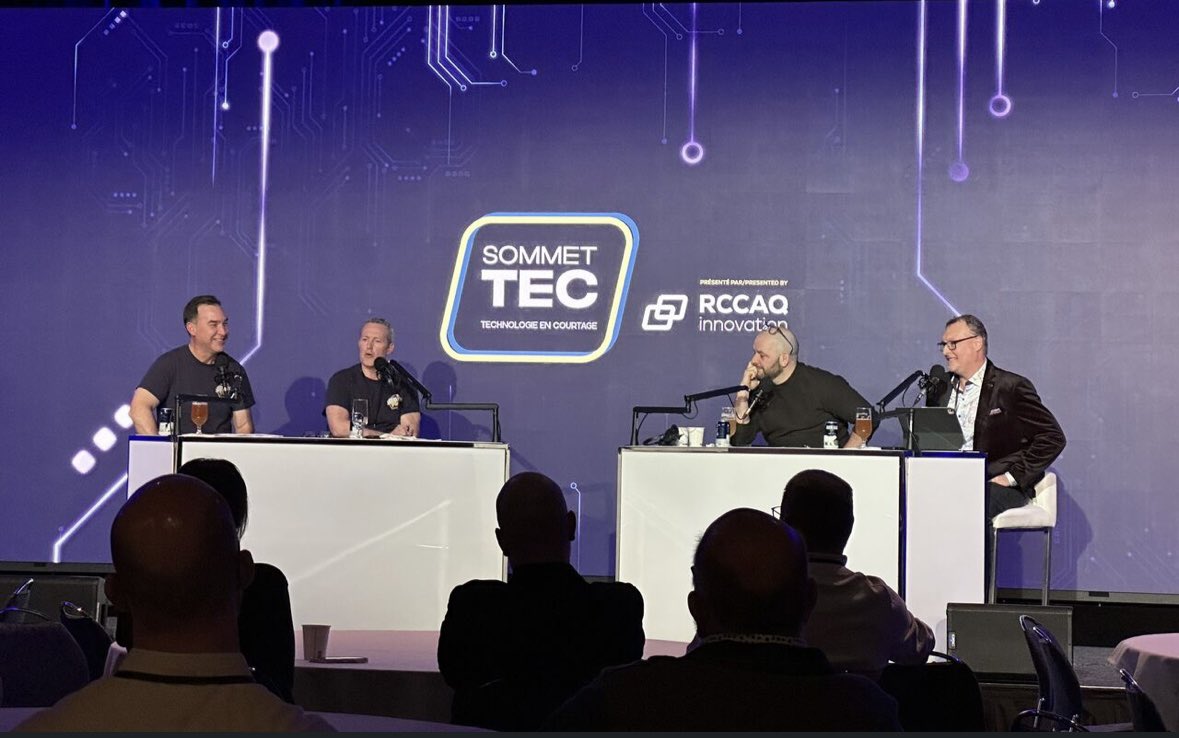
Super honoured to do our first Digital Insurance Pint Podcast live in front of 200 awesome brokers at RCCAQ innovation at #sommetech2025 in Montreal.
Our team of Tom Reid Adam Mitchell Steve Earle and myself explored the following items on this episode.
Transformative role of AI in enhancing brokerage operations and customer experience in a rapidly changing world.
We discussed the importance of leveraging data as a competitive advantage highlighting the need for brokers to clean and utilize both structured and unstructured data.
We shared AI tools we are using and we gave Steve Earle a brief therapy session on AI technology over whelm and much much more. Think big , start small , learn fast Steve.
Super cool the RRCAQ team had beers for our session to make it 100 percent authentic.
I am a big fan of how the Quebec brokers are coming together to build technology together.
Love the work the team at RCCAQ innovation is doing to help brokers adapt to a changing world.
With AI we do not have 20 years like we did to digitize our business we have 20 minutes.
As I stated the key formula to future proof brokerages is AI + humans = superbrokers. (Augmentation)
Always great to have dinner with our good friend @SherifGemayel from Trufla and reminisce on our journey together and how we are working to change our industry. Great to see so many great industry people and vendors.
Merci aux courtiers du RCCAQ.
@regroupment des cabinets de courtage d’asurance du Quebec .
#DigitalInsurance #Insurtech #Brokerage #AI #Innovation #PodcastInsights
Your action plan:
1. Build for the AI-first world
2. Learn AI infrastructure fundamentals
3. Focus on industry-specific problems
4. Learn skills that can't be replaced or automated
The next decade of wealth creation starts now.
There is a new crop of insurtech that realize they do not understand the agent broker landscape and they want to work with Agents.
The smart ones join @101WestonLabs and work with agent advisor and get real insight.
They learn how their product can solve a problem in the agent world and how to develop unique selling propositions.
They let agents become angel investors and thus helps connect their products with other key agents who make it better. It is Waze vs garmen GPS approach. More users and feed back helps the product morph.
Technology and AI needs to done with agents not too agents.
I know five or ten key agents that either advise and or invest and the startups that are smart enough to have and agent in the loop from the ground flower win.
The key with insurtech is they must replace a task or jobs at cheaper price point. Their product must improve productivity , efficiency , have an ROI , make things easier and better for clients.
Taking your personal lines buying experience is not going to cut it.
The future is Agent + AI = super agent.
How can the insurtech help fill the missing middle which is how we connect the two together ?
@bradleyflowers@ParadisoPresent