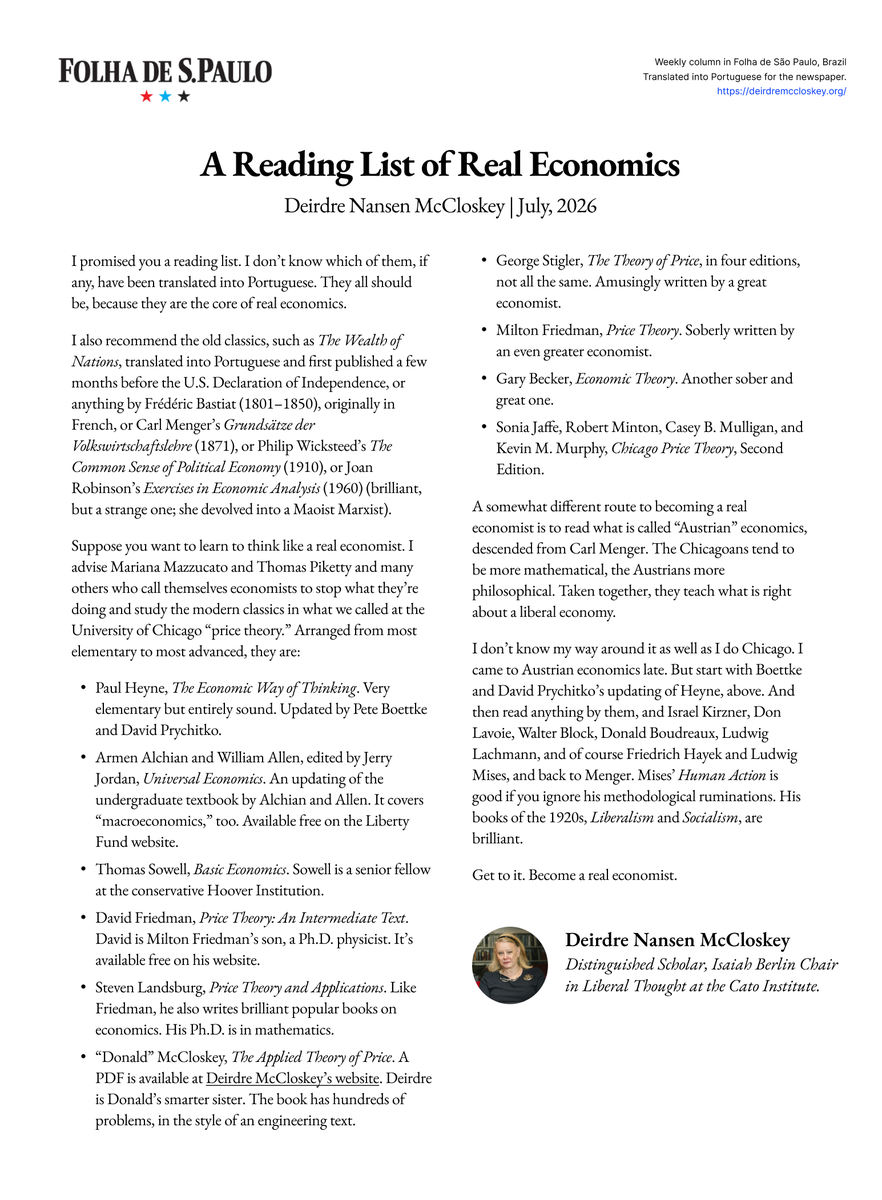
I promised you a reading list.
I recommend the old classics, such as The Wealth of Nations, first published a few months before the U.S. Declaration of Independence, or anything by Frédéric Bastiat (1801–1850), originally in French, or Carl Menger’s Grundsätze der Volkswirtschaftslehre (1871), or Philip Wicksteed’s The Common Sense of Political Economy (1910), or Joan Robinson’s Exercises in Economic Analysis (1960) (brilliant, but a strange one; she devolved into a Maoist Marxist).
Also, study the modern classics in what we called at the University of Chicago “price theory.” Below, I list them from most elementary to most advanced.
A somewhat different route to becoming a real economist is to read what is called “Austrian” economics, descended from Carl Menger.
The Chicagoans tend to be more mathematical, the Austrians more philosophical.
Taken together, they teach what is right about a liberal economy.
My latest column for @folha
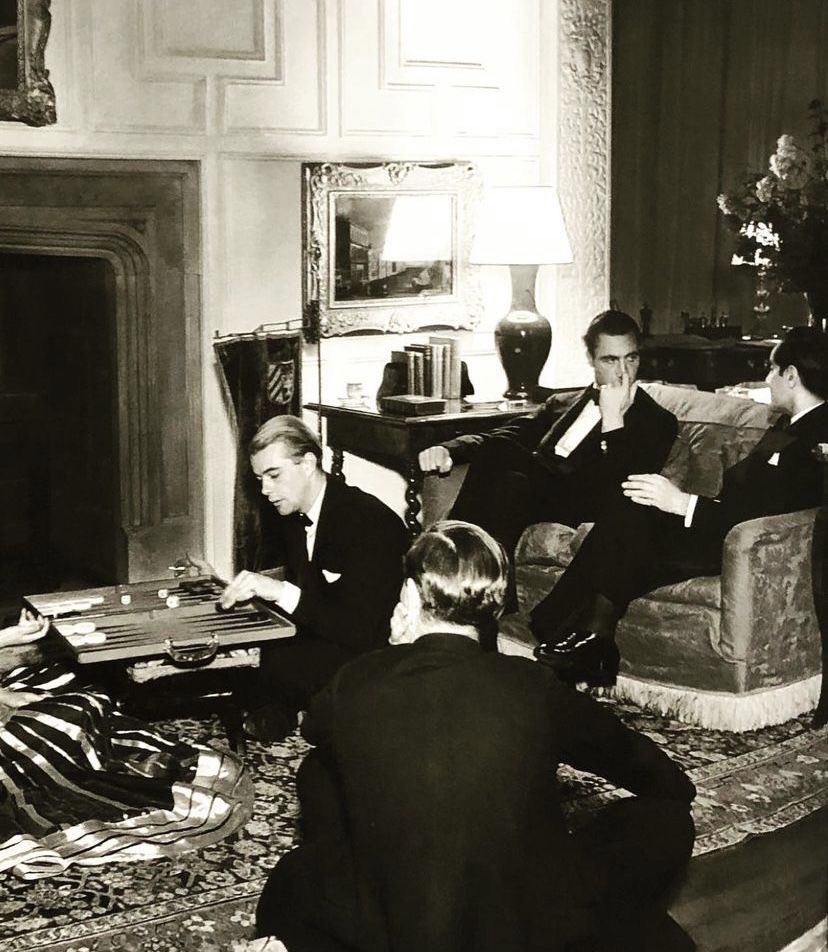
You, a sensitive young man, will stay up late and read great works of literature with a lovely foid asleep in your bed as you scribble schizo thoughts onto paper until the sky turns purple and your eyelids shut
It has been less than four years, since ChatGPT made its public debut, but talk of AI has taken over business, investing and even personal conversations. The AI debate, though, has gone off the tracks as people talk past each other and distractions about. My attempt to make sense of it all: https://t.co/SHJe0emQy4