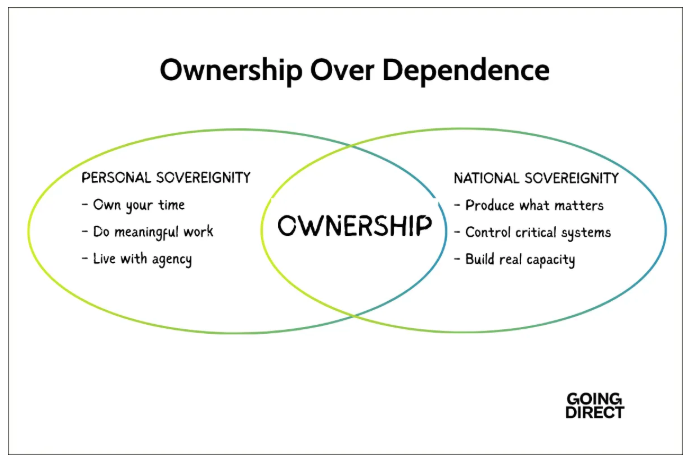
ownership will be increasingly the only path to true freedom for both citizens + nations. need companies decentralized by design, with business models and ownership structures that create owners, not dependents.
Franchising has quietly made countless Americans rich . In the AI era, running a franchise looks a lot more appealing to people who want to do something more than B2B SaaS.
→ 1/8 American businesses is a franchise.
→ 250,000 owners. 9 million jobs. ~3% of GDP.
→ Corporate path reliability looks totally uncertain.
Ambitious people haven't always taken the model seriously, but it is the most underrated vehicle for building real wealth in America, and for becoming a great entrepreneur with a huge support network.
https://t.co/FnX3kjKPaq
technology is collapsing the cost of independence. effective storytelling + making people care will be critical for anyone looking to earn that independence. had @jayacunzo on the pod at Going Direct.
one of most fun + valuable conversations to date. full pod up later this week
Unfortunately, I completely agree that the United States of America is rapidly descending into all-out conflict between left and right.
The Luigi left, Kirk killers, anti-Tesla terrorists, and Altman attackers are already in shoot-on-sight mode against conservatives, libertarians, and technologists. The right isn’t there yet; they’re called reactionaries because they only react, so they’re always one cycle behind. Thus, the left has already started shooting while the right is still “only” mirroring the lawfare of last decade’s left. But anyone can see how incandescently angry the American right is getting, so one can expect them to mirror leftist tactics eventually, just as J6 followed BLM.
A problem then arises. You see, when communists and nationalists duke it out, technologists tend to be hated by both sides…and tend to leave.
That’s what happened in Europe. In the early 1900s, Europe was the undisputed center of science. But then the far left rose to power in Russia, and in response arose a far right in Germany, and then those two psychotic factions blew each other up and took much of Europe with them.
The result was that scientists with options left. Shown below is the graph of Nobel prizes. Science used to be centered in Europe when America was still a relative backwater…renowned for cranking out widgets but not much else.
Then, as Europe tore itself apart, the smart scientists (and capitalists) simply left for America. Many had no choice; you just couldn’t be a Russian capitalist in the Soviet Union or a Jewish scientist in Nazi Germany, no matter how many years your family might have been in the country.
Passionate protestations of ideological loyalty and everlasting patriotism didn’t matter. At best the enemy classes and races were unbanked and denaturalized; at worst they were simply killed.
And arguably, all of that — the communism, the nationalism, the wars — all of that arose from the disruption wrought by the Industrial Revolution. We might anticipate similar levels of disruption from the Information Revolution.
If so, if America is torn between Democrats and Republicans, or Wokes and MAGAs, or whatever factions succeed them, it’s just not going to be a good place for technological progress. Instead, progress will decentralize to other locations around the world, as it did before.
i was surprised to learn about all the middlemen in the online ad industry. talked shop with @simonowens on all things media and where the business of content is heading.
full pod up later this week at Going Direct
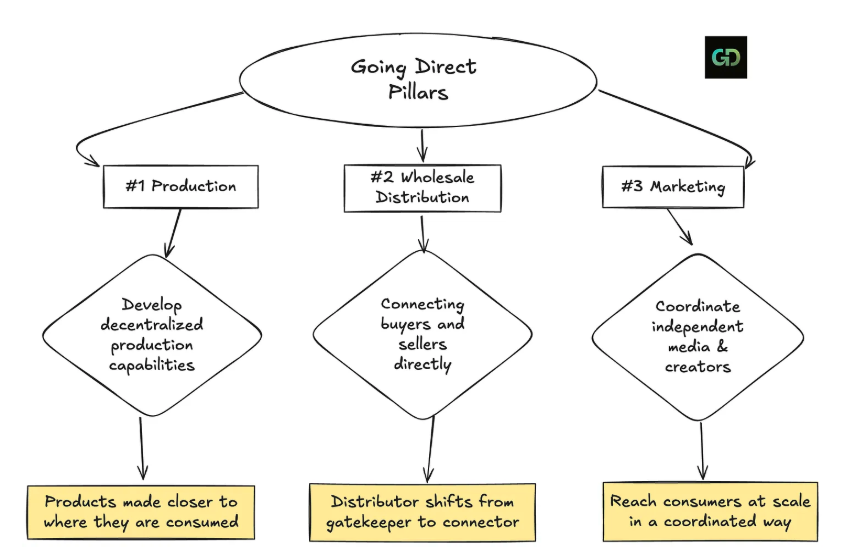
automation + software + cheap modular hardware are shrinking the minimum efficient scale of production. i want to see us use this for more decentralization.
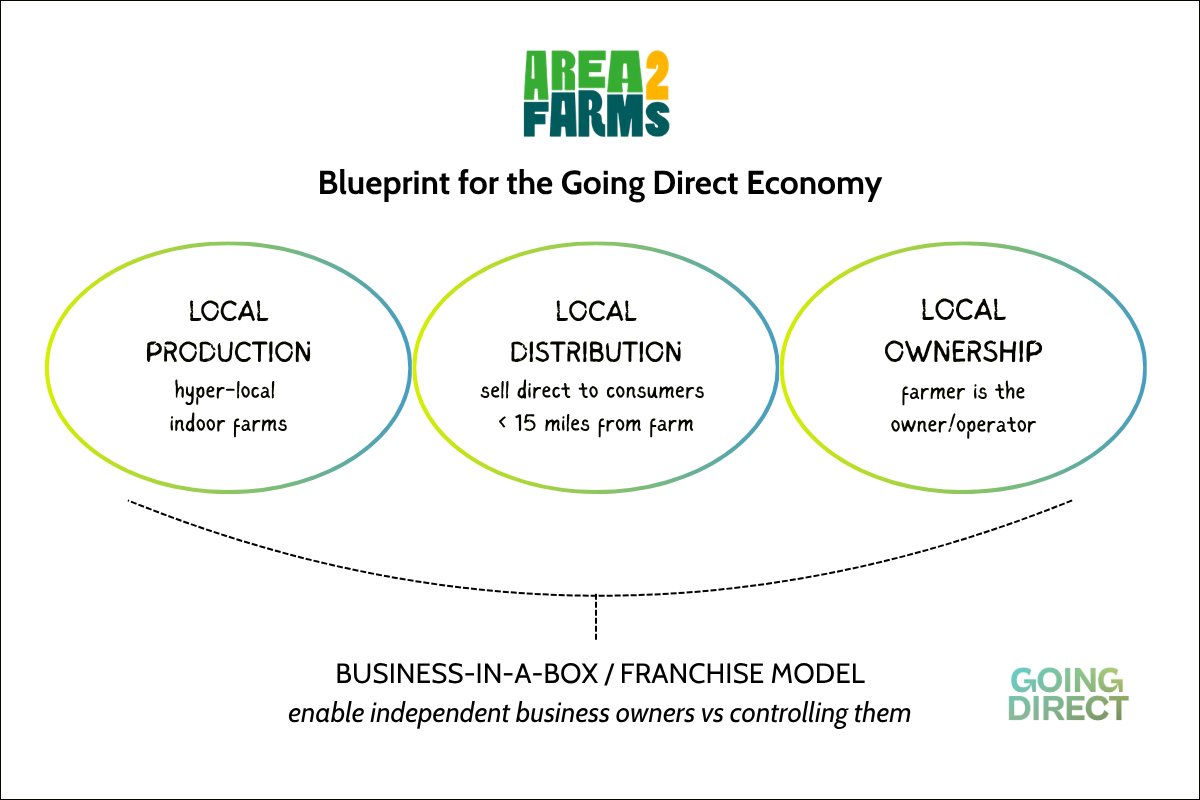
blueprint for the going direct economy:
local production + direct distribution + independent business ownership
pay attention to what @orenfalkowitz and @Area2Farms are building for America.
Me: “Most underrated social platform”
@bmorrissey : LinkedIn. A bit deplorable and full of desperation, but stil everyone is on it.
Me: 🤔
It was fun having him on the Going Direct pod to talk about the decentralization of media. a few insights he dropped below: