🚨👮♂️ BREAKING NEWS: The City of Cape Town has officially declared an intergovernmental dispute with the Acting Minister of Police, over his failure to extend investigation powers to Cape Town Metro Police Officers.
We have tried every collaborative effort to get successive Ministers of Police to do this. Many, including this one, have made supportive noises. But nothing has come of it. We can wait no longer.
Our communities live in daily fear of gang, gun, and drug crime. ❌ SAPS need the help of our officers to build winning dockets, so we can catch and convict more criminals.
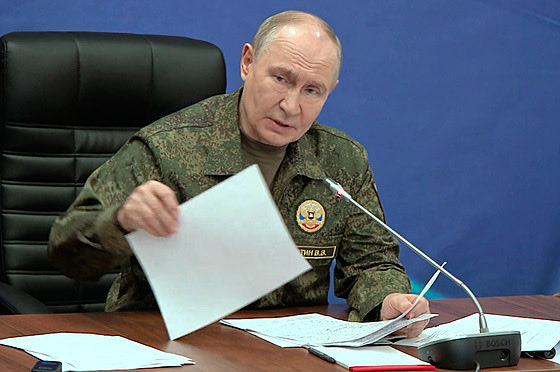
The Kremlin just admitted what we already knew: their "special operation" was never about Donbas. They want the entire country. General Sobolev in the State Duma just killed any hope of ending the war this year, openly saying they need to reach Ukraine's western borders and will likely require fresh mobilization in autumn.
Translation: Russia is preparing for another meat wave because their imperial project demands total conquest, not peace. Every Western voice still pushing "negotiations" with this regime is simply laundering Moscow's demand for surrender. Ukraine's path remains unchanged: build the drone army, deepen sanctions bite, and give them the only language they understand on the battlefield.
Here's why everyone is celebrating the collapse of Media24 and why now, more than ever, the public needs a public body to represent and defend individuals against mainstream media and the unfair power and influence it holds.
Video Link: https://t.co/KyOpvi6Utt
WATCH: Learn more about the irregular water tanker tenders awarded by Johannesburg Water that we wrote about earlier this year. It’s because of these irregularities that we’ve been advocating for procurement reform – including our challenge in the Constitutional Court.
https://t.co/9KPSxkXgfo
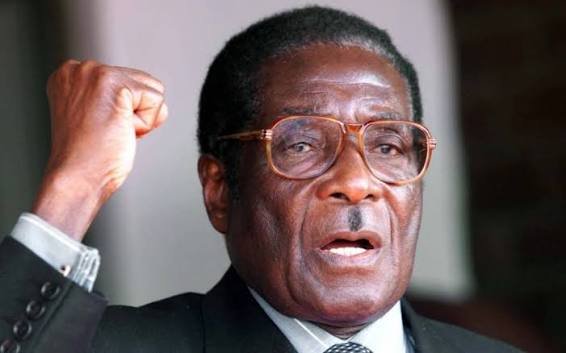
Mugabe practically wrote the invitation for Zimbabwe's sanctions, reaping the predictable harvest of his own political ideology.
The political economy of Zimbabwe's collapse under Robert Mugabe is far from a series of accidental missteps, the catastrophe was the logical outcome of a regime prioritizing its own survival over macroeconomic reality, using populist radicalization to mask state failure.
The Fast-Track Land Reform Programme, initiated in 2000, was not merely a domestic policy shift; it was a unilateral breach of international law.
The state targeted agricultural enterprises protected under Bilateral Investment Promotion and Protection Agreement. By seizing assets tied to European governments, banks, and sovereign investors, the Mugabe regime did not just expropriate land, it defaulted on international treaties where the Zimbabwean government was a direct signatory.
When a state invalidates its own deeds and signatures, it destroys the foundational element of capital investment, predictability.
The banking sector collapsed because land, the primary collateral of the economy, was stripped of its commercial value overnight.
Sanctions were triggered by the overt, violent optics of state autocracy.
Following the emergence of the Movement for Democratic Change in 1999, the ruling ZANU-PF pivoted to a strategy of physical liquidation.
The 2000 and 2002 elections, followed by the horrors of the 2008 presidential run-off, saw systematic campaigns of torture, abductions, and state sanctioned murder against opposition activists.
To justify this domestic terror, the regime weaponised highly charged anti-Western and racialised rhetoric.
By framing domestic democratic opposition as a "Western neo-colonial proxy," Mugabe attempted to normalise gross human rights abuses under the banner of pan-African liberation.
There is a profound historical irony in the regime's response to the resulting restrictions. The Zimbabwe Democracy and Economic Recovery Act (ZDERA), passed by the US Congress in 2001, along with targeted EU measures in 2002, were framed by Harare as an imperialist siege.
In reality, the regime used these sanctions as a political shield. Isolation was not an unwanted byproduct; it was a desired ecosystem. In an isolated, closed economy, a ruling elite can easily cartelise remaining resources, manage shortages to reward cronies, and blame foreign actors for the inevitable hyperinflation that peaked in 2008.
The trajectory of contemporary South Africa features deeply unsettling echoes of early 2000s Zimbabwe.
When populist factions within the political landscape agitate for Expropriation Without Compensation and lean heavily into racialised economic scapegoating, they are playing with the exact same variables that ruined Zimbabwe.
Global capital is entirely unsentimental.
If Pretoria codifies the erosion of property rights or allows ideological solidarity to override constitutional law, the international system will respond identically.
The path from populist applause to structural sanctions, capital flight, and systemic collapse is remarkably short.
Penny Sparrow was convicted of crimen injuria and hate speech for posting a racist comment on Facebook comparing Black beachgoers in Durban to monkeys.
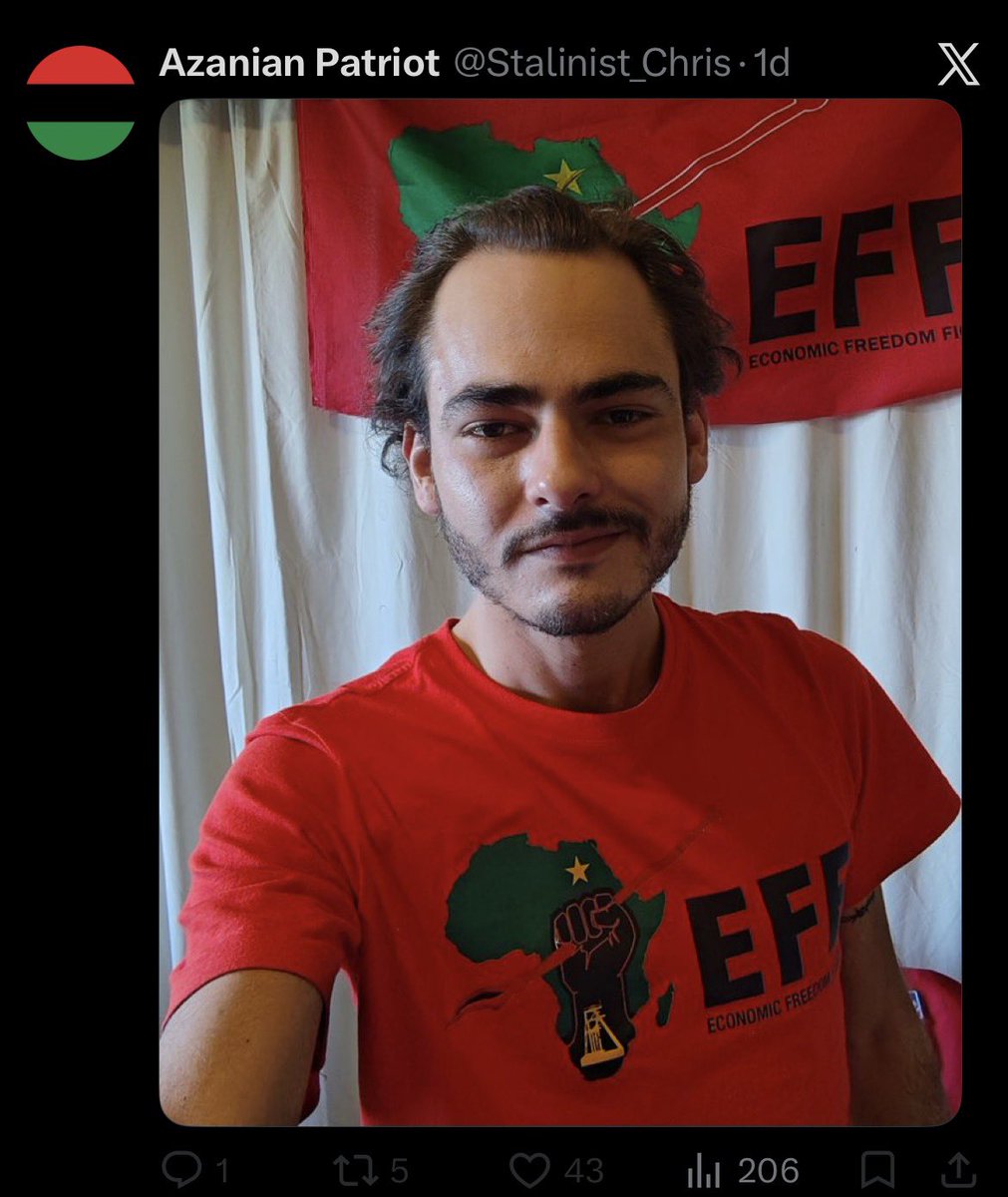
@EFFSouthAfrica member @Stalinist_Chris puts a racist post on X comparing white people in Orania to monkeys.
@SAHRCommission, how is this different from the Penny Sparrow case?
Why are you silent on this?
The EU should give Russia five hard deadlines to end the war.
Miss a deadline? Lose 20% of frozen assets to Ukraine. Five misses, 100% transferred.
Make aggression cost them in real-time
It’s NO surprise Airbnb is losing revenue. Once the price matches a hotel, the value disappears. I’d rather have daily housekeeping, room service, and a front desk than a chore list and a cleaning fee.
The High Court in Cape Town is hearing legal challenges to the Expropriation Act brought by AfriForum and the Democratic Alliance. The Economic Freedom Fighters wants land ownership in the country to be completely revamped, arguing for all land to be nationalised. Tune in to #eNCA #DStv403.
The Great Lockdown Records Cover-Up: When Ministers Play Hide-and-Seek with Court Orders
South Africa faced one of the world’s harshest COVID lockdowns. Tobacco and alcohol were banned. The economy was kneecapped. Millions of jobs vanished. Small businesses were crushed. Nkosazana Dlamini-Zuma signed the disaster declarations.
Years later the government still withholds full decision-making records. Sakeliga has pursued them for nearly six years. Court orders have been ignored or only partially met. Ministers change; the files remain locked.
This is not mere foot-dragging. It shows how power avoids accountability for painful, controversial and economically damaging decisions.
Timeline
December 2020: Sakeliga files a PAIA request for all reports, deliberations, advice, emails and minutes behind the state of disaster, its extensions and lockdown rules. Refused.
August 2021: Sakeliga approaches the Pretoria High Court.
9 November 2022: Court orders full disclosure. Deadline set.
December 2022: Only a thin index of public documents and some tobacco-ban papers arrives. Key deliberative records are missing. Sakeliga alleges contempt.
January 2023: Contempt process begins; jail is possible.
March 2023: Cabinet reshuffle. Thembi Nkadimeng replaces Dlamini-Zuma at COGTA. Proceedings pause.
2023–early 2024: Stonewalling continues. Both the new minister and Dlamini-Zuma (personally) are joined in the contempt application.
January 2024: Formal High Court contempt application filed.
September–October 2024: Case becomes opposed. Government claims records cannot be fully located because the former minister acted. Dlamini-Zuma files a two-page affidavit claiming compliance. Sakeliga rejects it.
2025: Case still in progress under new minister Velenkosini Hlabisa, also joined personally. Critical 2020 extension records remain outstanding.
August 2026: Nearly six years after the PAIA request and almost four years after the court order, the full deliberative record is still not public.
Accountability delayed is accountability denied. When the state can make life-altering decisions in secret and treat court orders as optional, something is broken. Sakeliga continues to push. The people who lost livelihoods deserve the paper trail.
@Sakeliga@DlaminiZuma@GovernmentZA@OUTASA@Abramjee
The Durban Regional Court has sentenced 53-year-old Khanyisile Casianna Gumede to an effective 18 years’ direct imprisonment for defrauding SARS of more than R3.7 million through fraudulent VAT refund claims and money laundering. Her company, GG Catering and General Services CC, received a wholly suspended R2 million fine.
The NPA said the conviction highlights the successful collaboration between the NPA, SARS and SAPS in tackling tax fraud and protecting the country’s revenue.
Gayton Mckenzie says he’s an ambitious guy and blowing 31 million to take 150 of his friends to the World Cup is nothing. What a disgrace! Blowing taxpayers money to act like a big man. A classless criminal. Punish this corrupt mob at the polls. They’re simply just scum!
@coulterculture It’s truly tragic how European governments are really struggling to meet the high-end hospitality expectations of all these newly arrived doctors, engineers, and nuclear physicists.
@Shunyaa00 Send them home; they can’t contribute to society. We heard the migrants say, “No TV, no food; I’m cold” Maybe they should learn to wipe their own backside.