⚡️ Massive Update Just Dropped: Phase 2.0 for Kling AI!
🎥 KLING 2.0 Master for video generation, 🖼️ KOLORS 2.0 for image generation, 🎮 Multi-Elements Editor, 🎨 Image Editing & Restyle...
Kling AI 2.0 is all about empowering creators to bring meaningful stories to life — with powerful tools and greater creative freedom!
From Vision to Screen — Made Possible by Creators Like YOU
Latest updates available NOW at https://t.co/LRDr1KT0q6
Next.js 15.3: useLinkStatus
Define inline feedback to show while navigations complete.
Tip:
• Avoid an unnecessary flicker of pending UI on fast loads by adding an initial animation delay (e.g. 100ms) and fading in from 0 opacity.
UI/UX Designers, if you're looking for a quick way to calculate the perfect border radius for your next UI design project, I've got a formula for you
Bookmark it for later 💜
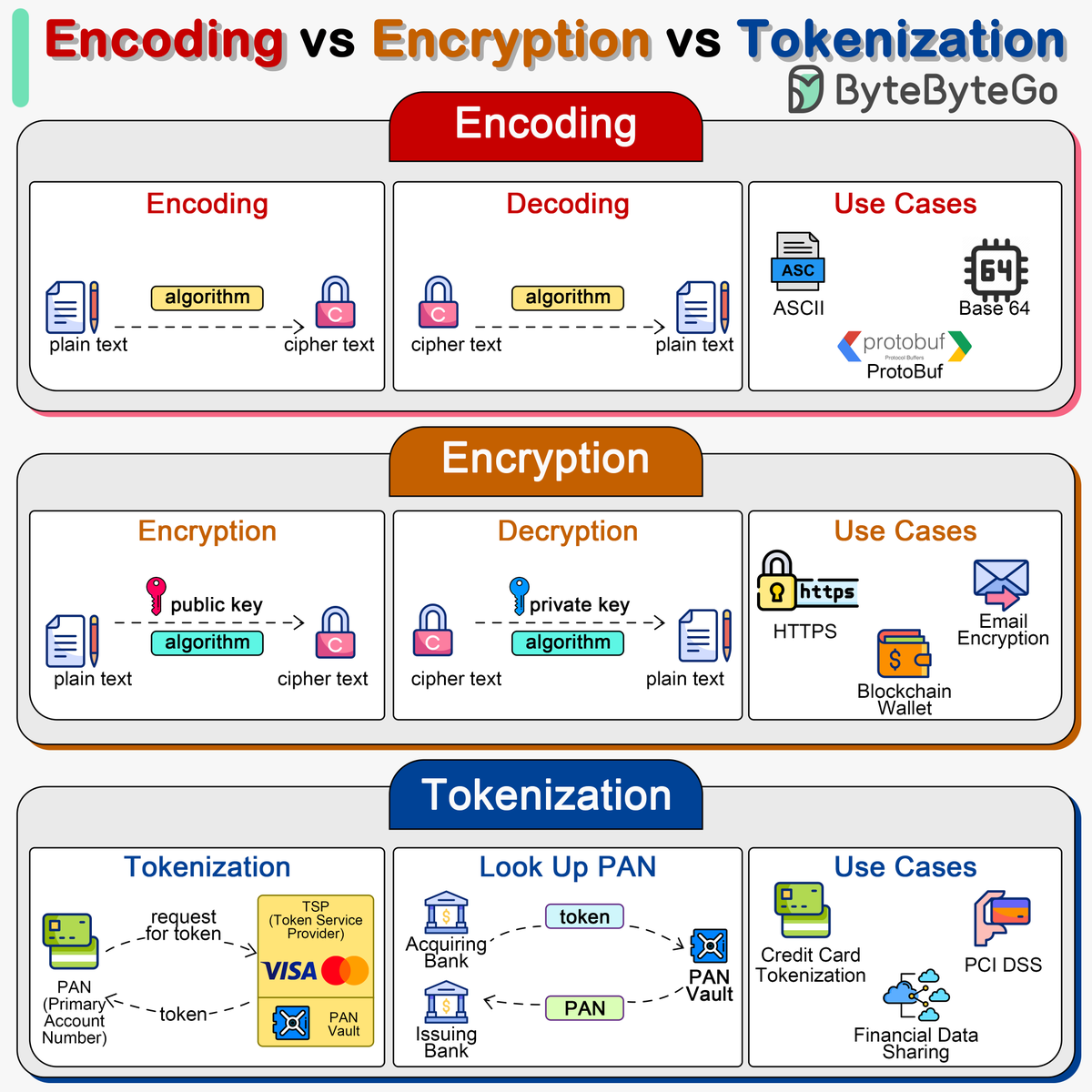
Encoding vs Encryption vs Tokenization.
Encoding, encryption, and tokenization are three distinct processes that handle data in different ways for various purposes, including data transmission, security, and compliance.
In system designs, we need to select the right approach for handling sensitive information.
🔹 Encoding
Encoding converts data into a different format using a scheme that can be easily reversed. Examples include Base64 encoding, which encodes binary data into ASCII characters, making it easier to transmit data over media that are designed to deal with textual data.
Encoding is not meant for securing data. The encoded data can be easily decoded using the same scheme without the need for a key.
🔹 Encryption
Encryption involves complex algorithms that use keys for transforming data. Encryption can be symmetric (using the same key for encryption and decryption) or asymmetric (using a public key for encryption and a private key for decryption).
Encryption is designed to protect data confidentiality by transforming readable data (plaintext) into an unreadable format (ciphertext) using an algorithm and a secret key. Only those with the correct key can decrypt and access the original data.
🔹 Tokenization
Tokenization is the process of substituting sensitive data with non-sensitive placeholders called tokens. The mapping between the original data and the token is stored securely in a token vault. These tokens can be used in various systems and processes without exposing the original data, reducing the risk of data breaches.
Tokenization is often used for protecting credit card information, personal identification numbers, and other sensitive data. Tokenization is highly secure, as the tokens do not contain any part of the original data and thus cannot be reverse-engineered to reveal the original data. It is particularly useful for compliance with regulations like PCI DSS.
--
Subscribe to our weekly newsletter to get a Free System Design PDF (158 pages): https://t.co/FIzCeaWsZV
🚀 Yi-Coder is open-sourced!
The 'Small but Mighty' LLM offers SOTA coding performance under 10B parameters. Excel in code editing, completion, debugging, and math reasoning.
✅ 2 sizes: 9B & 1.5B (Chat & Base)
✅ 128K context length
✅ Support 52 programming languages
Explore it now👇
https://t.co/YYA0nReMn4
#YiCoder #01AI #LLMs #OpenSource