Paleoclimate scientist, Academy of Finland research fellow, Docent at Univ. of Helsinki. Side gig as non-fiction author ("Viisi maailmanloppua", Gaudeamus 2021)
@mhmck Michael, I get why you think this is funny, but it's dubious humour from a Finnish angle. It's a recurring theme in Russian propaganda that Finland is a threat and wants that land back. But Finland only wants to be left alone and exercise its legal rights as a sovereign country.
At American Geophysical Union conference in Washington DC with @GeoHelsinkiUni colleagues PhD student Liva Trasune, master student Elli Kiiski, and Dr. @FrederikSchenk (who took the picture). Joined by Dr. Sebastian Wagner of the Helmholtz Centre. #ArcticAvenue@SuomenAkatemia
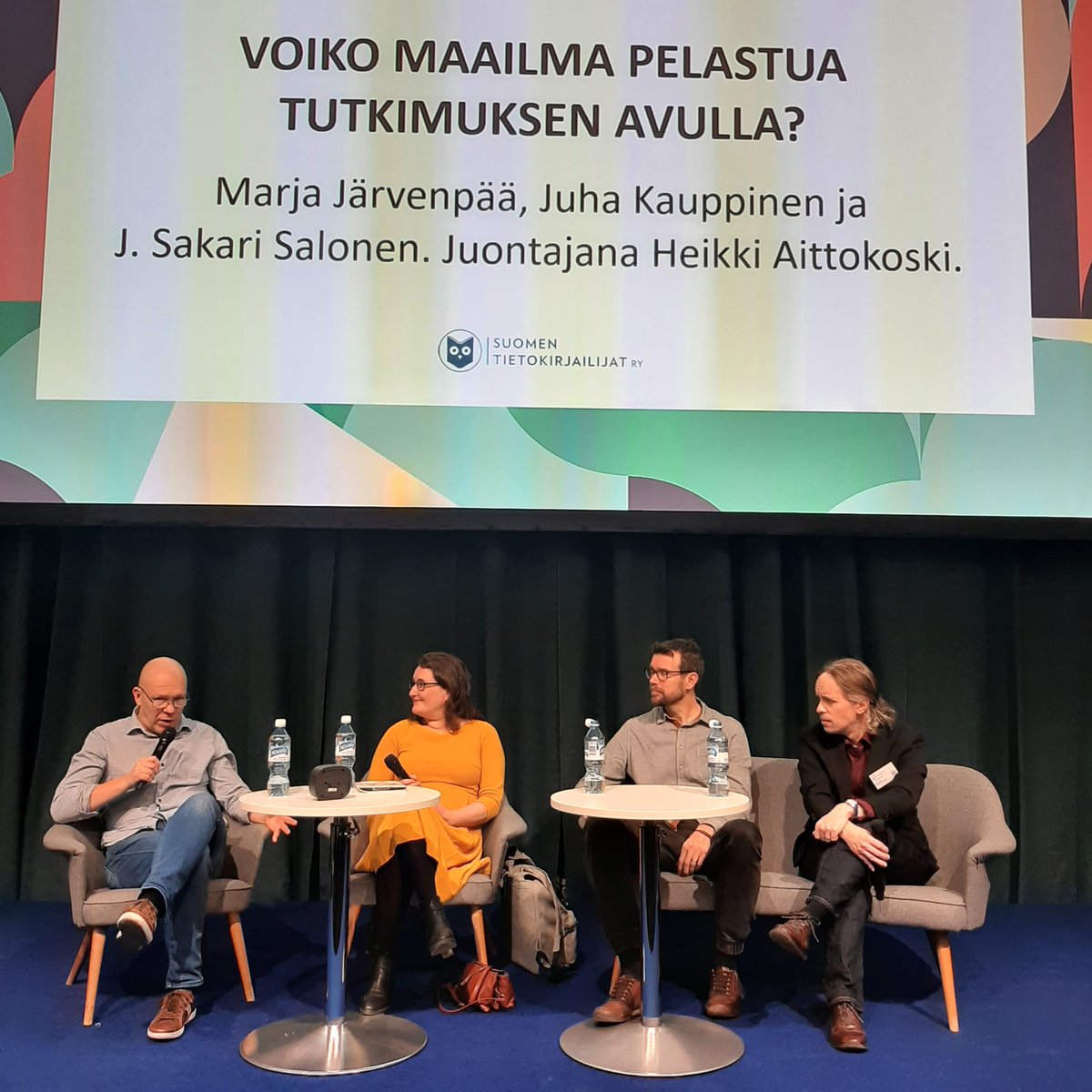
Mitkä ovat tieteen mahdollisuudet maailman pelastamisessa? Tutkitun tiedon merkityksestä puhuvat @JarvenpaaMarja, Juha Kauppinen ja @js_salonen Helsingin Kirjamessuilla 24.10. klo 12.00 Kruununhaka-lavalla. @HeikkiAitto juontaa.
https://t.co/75DFakACYj @KirjamessutHKI
Kävin Henry Tikkasen (@HenryOssian) mainion Tiedetripin vieraana juttelemassa Euroopan kaukaisesta esihistoriasta ja kadonneesta maailmasta. https://t.co/xM3biztxO6
We have a new paper out, discussing a fascinating fossil and ancient DNA record from the Värriö strict reserve in NE Finland. Interesting early-Holocene climate shifts and vegetation development! @NiinaKuosmanen@FrederikSchenk@PalaeoPete and many others. https://t.co/QKu3R81wqs
@hykka@OsmoSoininvaara ...nuo kaikki olivat oikeita havaintoja, mutta jääkauden odotus ei edes silloin ollut valtavirtaa. Nykyään tiedetään, että lämpökaudet voivat olla paljon pidempiäkin, ja näin ajatellaan käyvän myös nykyisen kohdalla. Tämä nykyinen astronominen säteilyminimi ei ole kovinkaan syvä.
@hykka@OsmoSoininvaara 1970-luvun pohdinta uudesta jääkaudesta ei käsittääkseni liittynyt silloisiin lämpötiloihin, vaan enemmän paleoilmastotutkimuksen löydöksiin. Havaittiin että (A) Maan ratamuutokset säätelevät jääkausia (B) lämpökaudet usein ~10 tuh. v pitkiä, ja (C) nykyinen kestänyt ~10 tuh. v.
Kollegani @FrederikSchenk taustoittaa viime viikon AMOC/Golf virta -uutista. Kuten usein käy, sinänsä laadukkaan tutkimuksen uutisoinnissa on vähän mennyt mutkia suoraksi. Kiinnostavaa sinänsä, että simulaatio saa AMOCin sammumaan, mutta ei kerro miten lähellä tilannetta ollaan.
"Warnings that the #Gulfstream might be on a pathway to collapse - with extreme cooling in Sweden - are now being criticized by several of Sweden's leading experts in the field." #SVT1
So what is this criticism of a new #AMOC collapse study about? https://t.co/lN8dBgW2c9 1/x
@jmkorhonen Ehkä vähän epätoivoinen positiivinen näkökulma, mutta ehkä on lopulta hyvä, että joku USA:ssa sanoo asian näin tylysti. Ihan hullua tämä on, että Eurooppa joutuu pelkäämään USA:n tuen jatkuvuutta. Puolen miljardin asukkaan, rikkaan EU:n pitäisi pystyä hoitamaan oma tonttinsa.
@mikarantane Maybe unanswerable but I'll ask anyway. If we accept the El Niño hypothesis about the cause of this winters "cold blob", does this predict anything about the coming summer?
10/10: In addition, the rainfall pattern is Mediterranean, with the driest summer month below 40 mm and with less than 3x the precipitation of the wettest month (the "s"). I suspect this is because the orientation of the mountains blocks the rains during summers, but not winters.
1/10: I was looking at the Beck et al. (2018) (https://t.co/JP5pPTnHtF) climate dataset, and came across an amusing curiosity: two tiny spots in Norway with a "Mediterranean" (Köppen Csb) climate. Both places have Google street views, so pack your sunscreen and let's have a look:
9/10: These Norway locales are extreme edge cases of what we conventionally call as "Mediterranean": the temperature of the coldest month is just barely above 0ºC (the "C" of the "Csb") and the summers only narrowly classify as warm, with four or more months above 10ºC (the "b").