@Kaju_Nut I think allowing people to judge the work instead of focussing on impact factor and such will help. That will free us from expensive journals. Without this freedom local journals will never be able to grow.
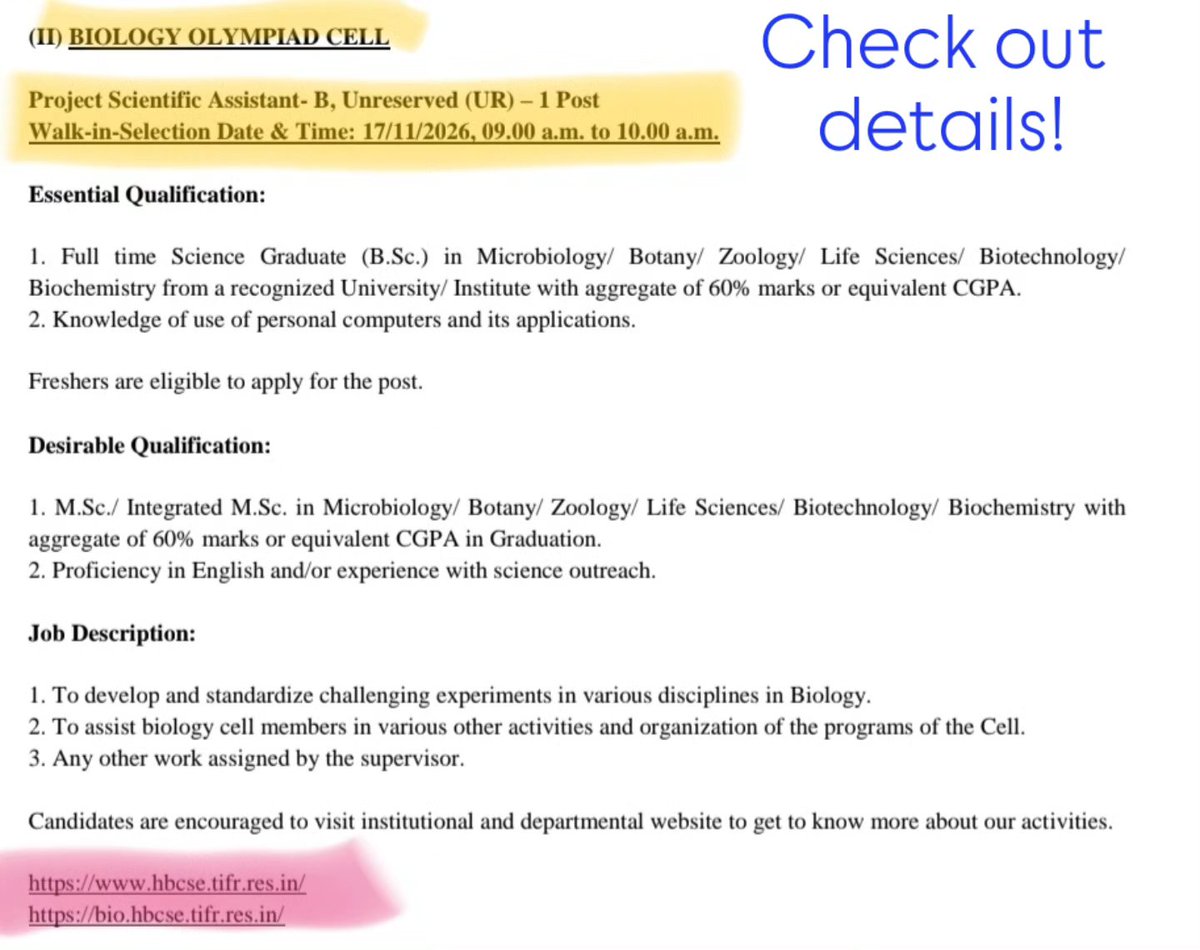
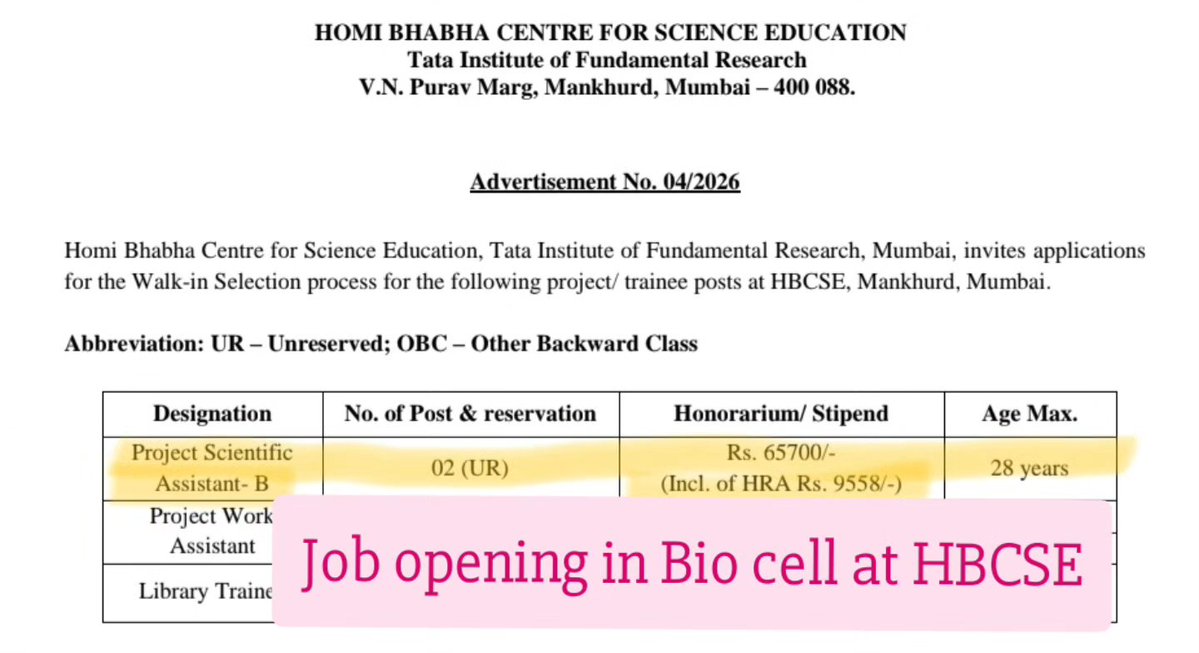
📣 We are hiring! Are you an undergrad w/ an interest in education?
📝 Apply for the PSA-B post in the Biology Olympiad Cell @HBCSE_TIFR.
RTL & spread the word!
📍Walk in selection on Nov 17 at 9 am.
Check out details on the website https://t.co/iUaQ9Tuxml
Watch out for the November issue of Resonance featuring Prof. Haim Brezis, whose contributions have had a profound influence on the field of mathematical analysis.
#mathematics#STEM#STEMeducation#education
Soon online at: https://t.co/80T6UJbZSs @IAScBng
Co-organizing a workshop "Modeling complex biological systems: from high-throughput data to cell fate prediction" at ICTS, Bengaluru, from March 1-12 2027. Open to interested graduate students and researchers, applications open now! Link in post below
It’s a one-page sci-fi story written 26 years ago, and I’m stunned by how much it got right, with such uncanny precision!
https://t.co/Ma1SHNAiT3
The ''digestion/deslopping'' culture, the neutrino anomaly, the neuralink, the deluge of slop.
Thanks to F Popov for finding this gem.
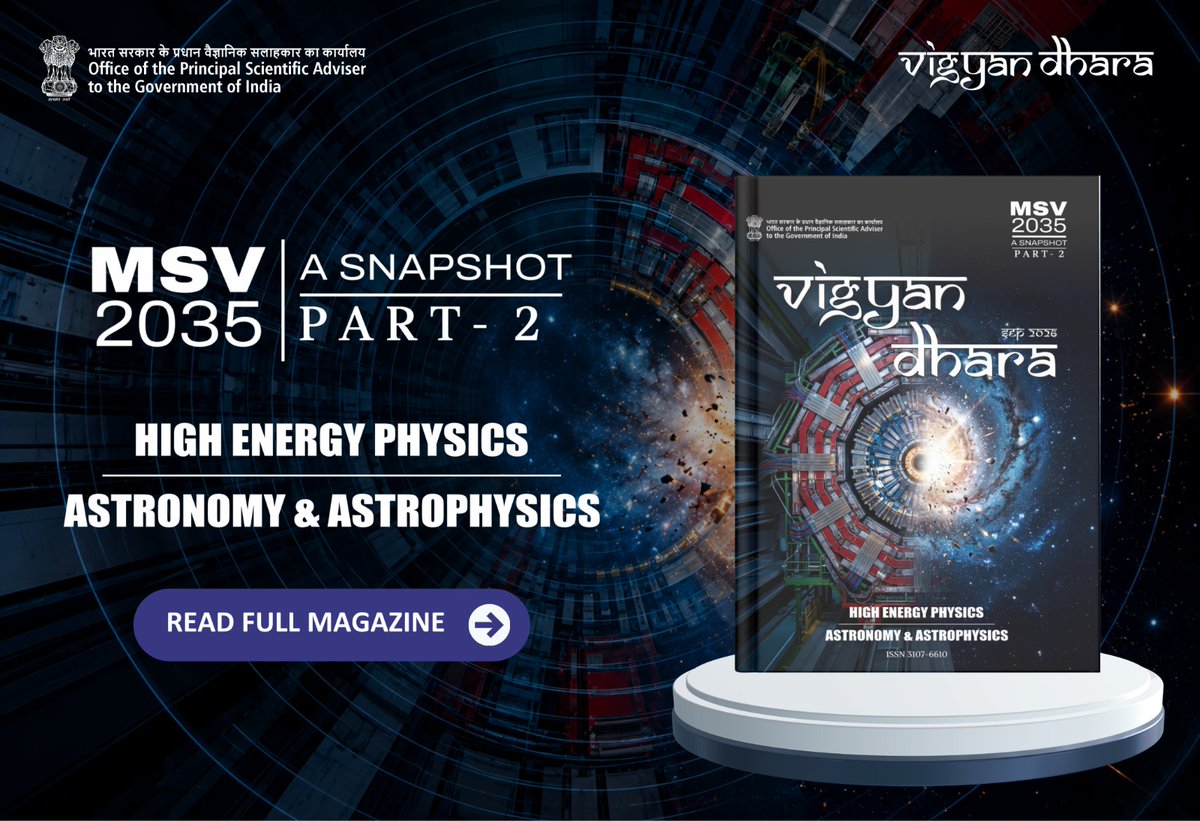
𝐕𝐢𝐠𝐲𝐚𝐧 𝐃𝐡𝐚𝐫𝐚 | 𝐌𝐒𝐕-𝟐𝟎𝟑𝟓: 𝐀 𝐒𝐧𝐚𝐩𝐬𝐡𝐨𝐭 𝐏𝐚𝐫𝐭 𝟐 | 𝐌𝐞𝐠𝐚 𝐒𝐜𝐢𝐞𝐧𝐜𝐞 𝐚𝐧𝐝 𝐌𝐒𝐕-𝟐𝟎𝟑𝟓 | 𝐀𝐧 𝐈𝐧𝐭𝐫𝐨𝐝𝐮𝐜𝐭𝐢𝐨𝐧
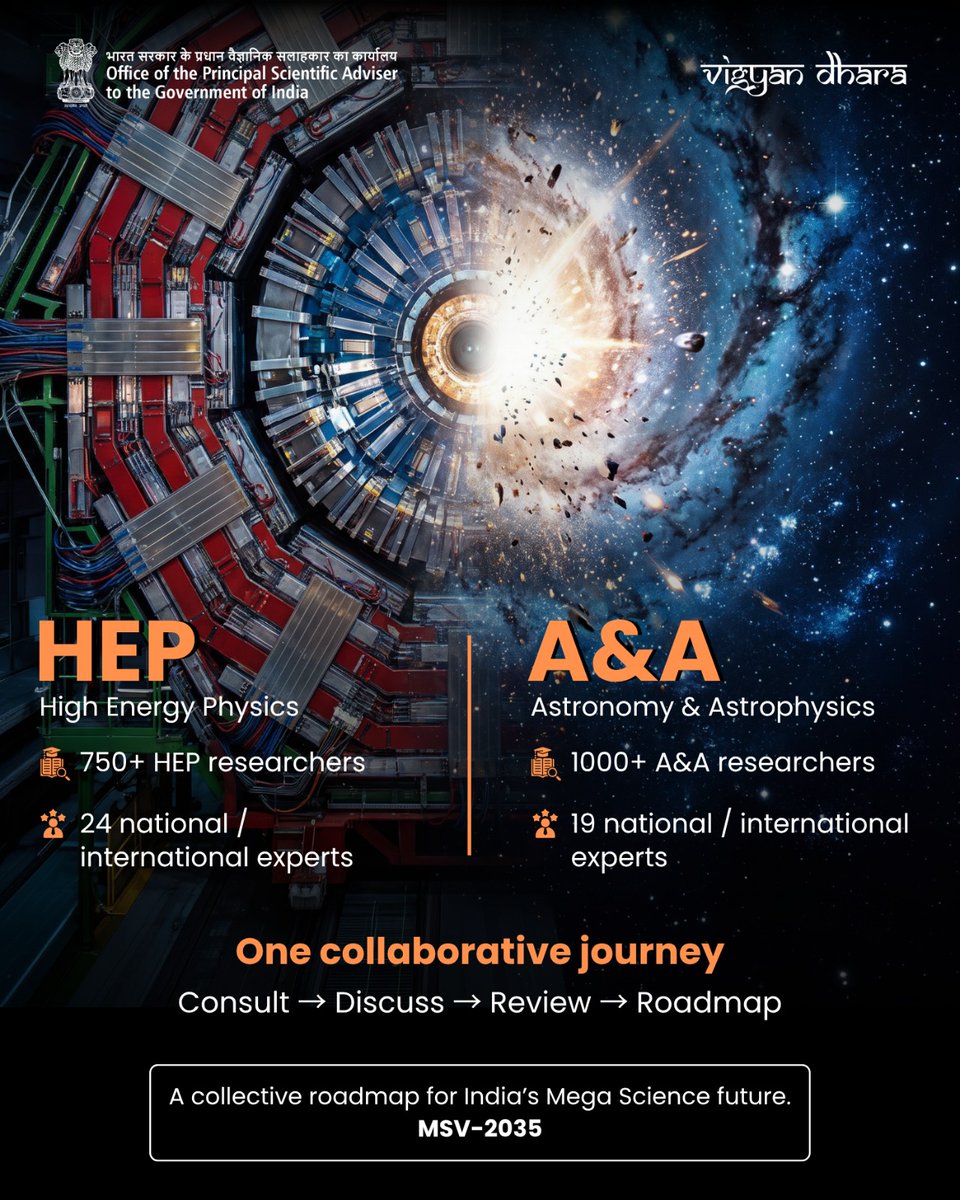
The first article of this edition introduces Mega Science Projects (MSPs), which are large and technologically complex experimental facilities requiring considerable human, capital, and financial resources. MSPs are essential in fields such as High Energy Physics (HEP), as scientists investigate matter at extremely small, sub-nuclear scales, which requires accelerators, advanced detectors and powerful computing systems. Modern research in Astronomy & Astrophysics (A&A) also employs large experimental facilities to advance the frontiers of knowledge. The Higgs boson and gravitational waves are among the landmark discoveries made possible by MSPs that the global scientific community built together.
India’s Mega Science Vision-2035 (MSV-2035) covers six disciplines: Nuclear Physics; High Energy Physics; Accelerator Science and Technology and Applications; Astronomy & Astrophysics; Climate Research; and Ecology & Environmental Science.
📖 Explore more in the article by Dr Praveer Asthana, PSA Fellow, OPSA, and read the September 2026 edition of the MSV-2035 magazine at: https://t.co/gnwnu599cm
#VigyanDhara #MegaScienceVision2035
We are looking for faculty. In particular, the computational biology group, but also other groups. If you want to work in a small, informal, institute on leading-edge areas of computational biology, broadly interpreted: please apply! And please share
https://t.co/iYa2MxjE4c
@aparanjape@NobelPrize I was there. A second lecture had to be organized the next day or the day after, and everyone left out was given an opportunity to attend.
A brief summary of the Mega Science Vision 2035 for Astronomy and High Energy Physics. Includes a short article on the development of modern astronomy in India (10 minute read) by yours truly.
@asipoec@astro_iiserm@DPS_IISERM@IiserMohali@AstroclubIISERM
𝐕𝐢𝐠𝐲𝐚𝐧 𝐃𝐡𝐚𝐫𝐚 | 𝐌𝐒𝐕-𝟐𝟎𝟑𝟓: 𝐀 𝐬𝐧𝐚𝐩𝐬𝐡𝐨𝐭 𝐏𝐚𝐫𝐭 𝟐: 𝐇𝐢𝐠𝐡 𝐄𝐧𝐞𝐫𝐠𝐲 𝐏𝐡𝐲𝐬𝐢𝐜𝐬 𝐀𝐬𝐭𝐫𝐨𝐧𝐨𝐦𝐲 & 𝐀𝐬𝐭𝐫𝐨𝐩𝐡𝐲𝐬𝐢𝐜𝐬
The September 2026 edition of Mega Science Vision-2035 (MSV-2035) exercise, brings together the highlights of the MSV-2035 reports (HEP and A&A). It showcases the role of Mega Science Projects, the challenges, and the scientific and technological benefits they bring. This edition includes:
🔹 Foreword by the PSA, Prof. Ajay Kumar Sood, outlines how High Energy Physics (HEP) gave rise to Mega Science, its extension to astronomy and astrophysics (A&A). It traces the shift from the LHC to large-scale astronomy projects.
🔹 Mega Science and MSV-2035: An Introduction by Dr Praveer Asthana, explains why various Mega Science research facilities are needed and explores how the MSV-2035 exercise, covering six disciplines, came about.
🔹 Mega Science Vision-2035 (HEP): A Quest Towards Understanding Nature at its Smallest by Prof. Amol Dighe, summarises the HEP report and brings key scientific questions, pathways and recommendations for future HEP projects.
🔹 Mega Science Vision-2035 (A&A): From the Sun to the Cosmic Horizon by Prof. G. C. Anupama summarises the A&A report and explores science priorities and national and international facilities shaping Indian astronomy.
🔹 Featured Interview: Glimpses into the World of High Energy Physics with Prof. Atul Gurtu discusses India's journey from cosmic rays to the LHC. (https://t.co/hJmf9LsKc4)
🔹 Featured Interview: Unlocking the Frontiers of the Celestial World with Prof. Ajit K. Kembhavi discusses astronomy's heritage, its role in AI and big data, and a message for young scientists. (https://t.co/elQxGv0ABF)
🔹 A Brief History of High Energy Physics in India by Prof. Sreerup Raychaudhuri gives a glimpse into the history of HEP; from early pioneers to India's contribution to the Higgs boson discovery.
🔹 Landscape of Astronomy & Astrophysics in India by Prof. Jasjeet Singh Bagla covers the different forms of asttronomy, India's observatories, important discoveries and major facilities; from Kodaikanal to AstroSat.
🔹 Perspectives presents views from the @DAEIndia , Department of Space (@isro) and @IndiaDST chiefs on managing mega science projects in India.
📖 Read the magazine at: https://t.co/gnwnu59H1U
#VigyanDhara #MegaScienceVision2035
@IiserMohali is inviting applications for Assistant Professor in all departments. Detailed advertisement is available at https://t.co/wJZGyOlGVd with instructions to apply at https://t.co/DatJCx8k4j Please share with potential candidates.
@IiserMohali is inviting applications for Assistant Professor in all departments. Detailed advertisement is available at https://t.co/wJZGyOlGVd with instructions to apply at https://t.co/DatJCx8k4j Please share with potential candidates.