I will never be afraid and ashamed of my love for you Heavenly Father, Lord Jesus Christ, and Holy Spirit! 🙏🏼💚 I will defend you until my last breath.I love you Holy Trinity! 💚 #Hallelujah
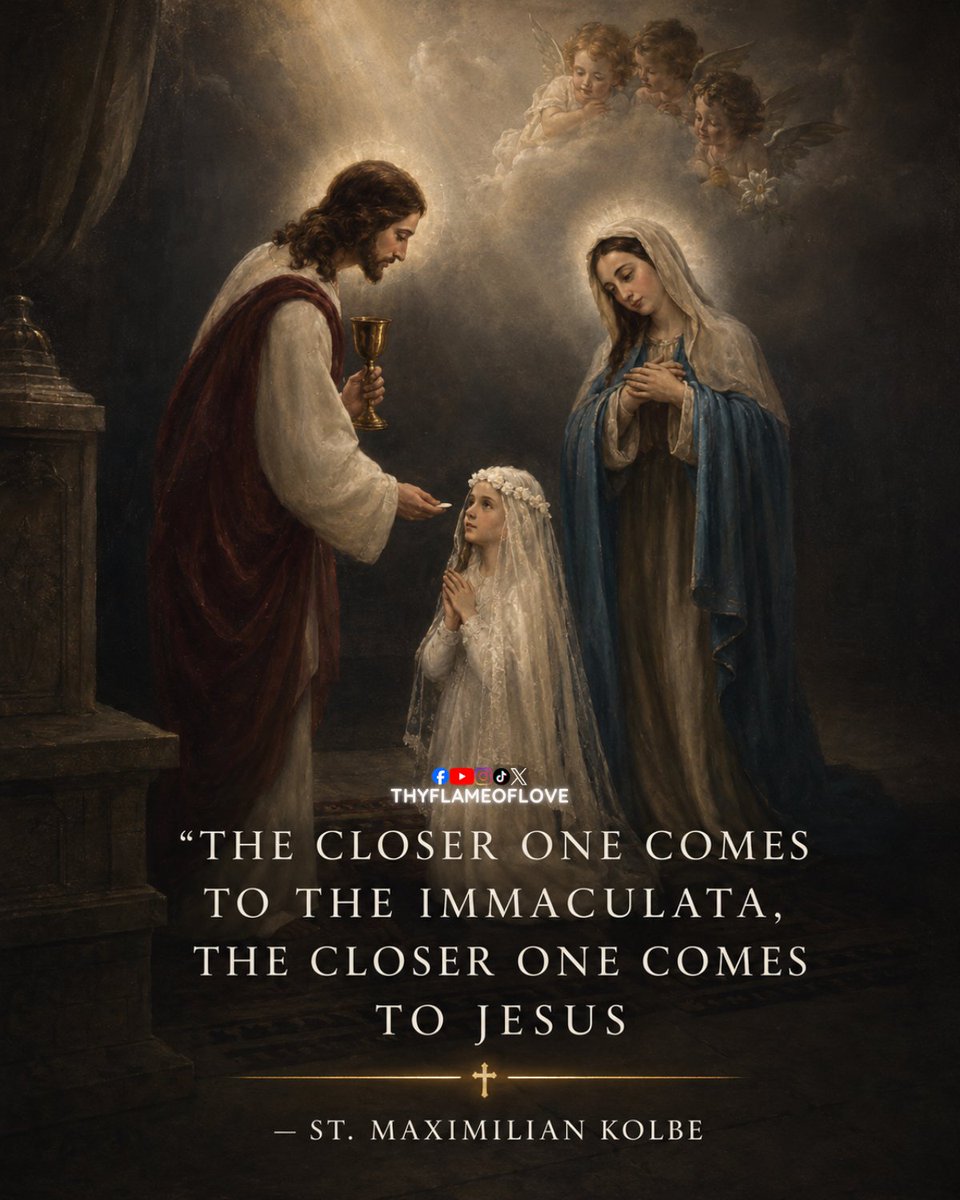
“The closer one comes to the Immaculata, the closer one comes to Jesus”
— St. Maximilian Kolbe
St. Maximilian Kolbe is not saying Mary replaces Jesus. He is saying the opposite. The closer we come to Mary, the more she leads us to her Son.
That is why Catholics love Our Lady. Not because she is God, but because God chose her to be the Mother of Jesus.
A good mother does not keep her children away from their father. Mary does not keep us away from Christ. She teaches us how to love Him, trust Him, obey Him, and stay close to Him when life gets hard.
This is why Marian devotion is not a distraction from Jesus. When it is true and faithful, it makes the heart more humble, more prayerful, and more centered on Christ.
💬 If Mary always leads souls to Jesus, why are so many people afraid to let her help them?
Someone may need this reminder today, especially if they have misunderstood Catholic devotion to Mary.
Blessed Feast of Saint Benedict!
Let us pray,
O God, who made the Abbot Saint Benedict an outstanding master in the school of divine service, grant, we pray, that, putting nothing before love of you, we may hasten with a loving heart in the way of your commands. Through our Lord Jesus Christ, your Son, who lives and reigns with you in the unity of the Holy Spirit, God, for ever and ever.
Amen
🤎“Nothing will be refused to Saint Joseph, neither by Our Lady nor by her glorious Son.”
St Francis de Sales
🤎«Nada le será negado a San José, ni por Nuestra Señora ni por su glorioso Hijo.»
San Francisco de Sales
"God will ordain two punishments: One, in the form of wars, revolutions and other evils, will originate on earth; the other will be sent from Heaven. There shall come over all the earth an intense darkness lasting three days and three nights."
Blessed Anna Maria Taigi
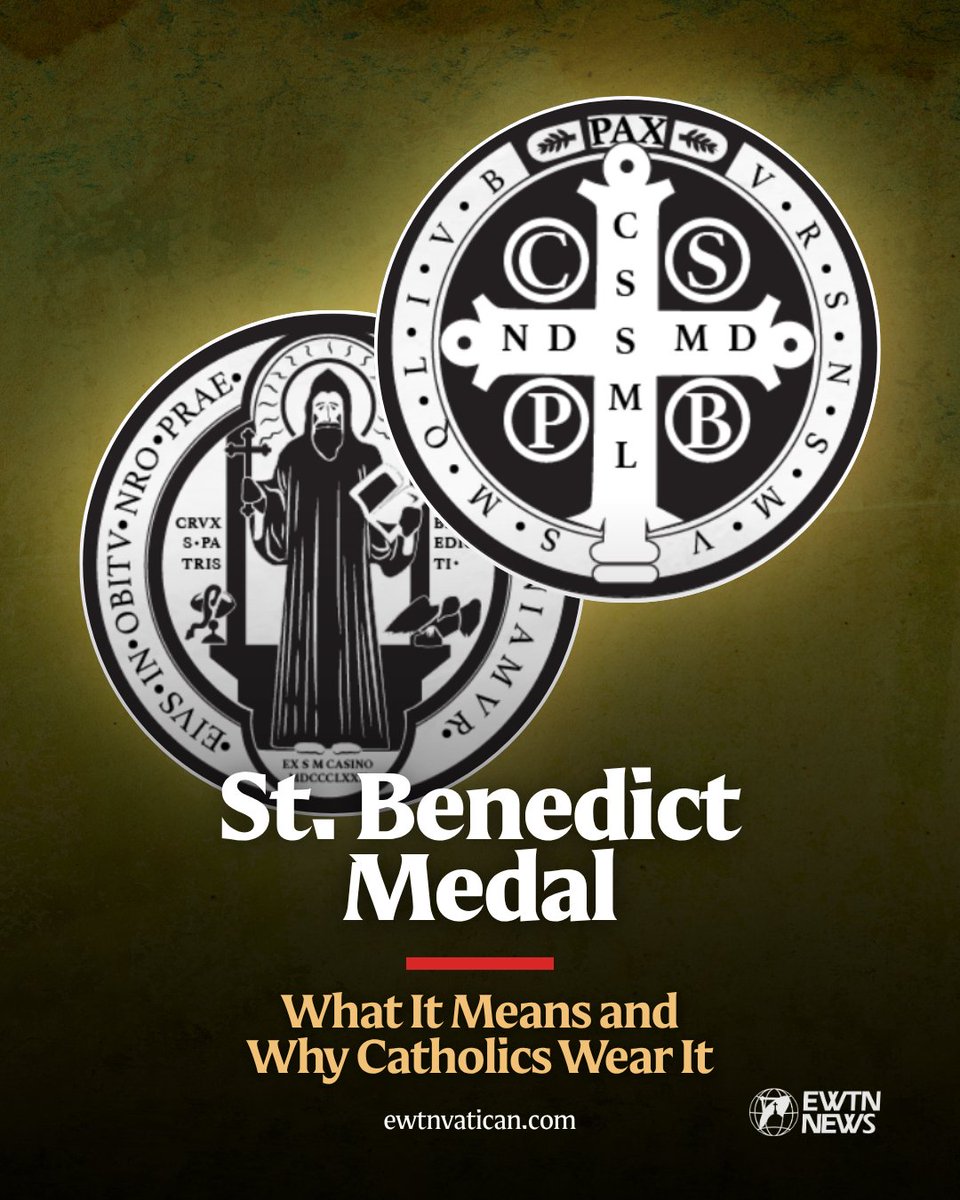
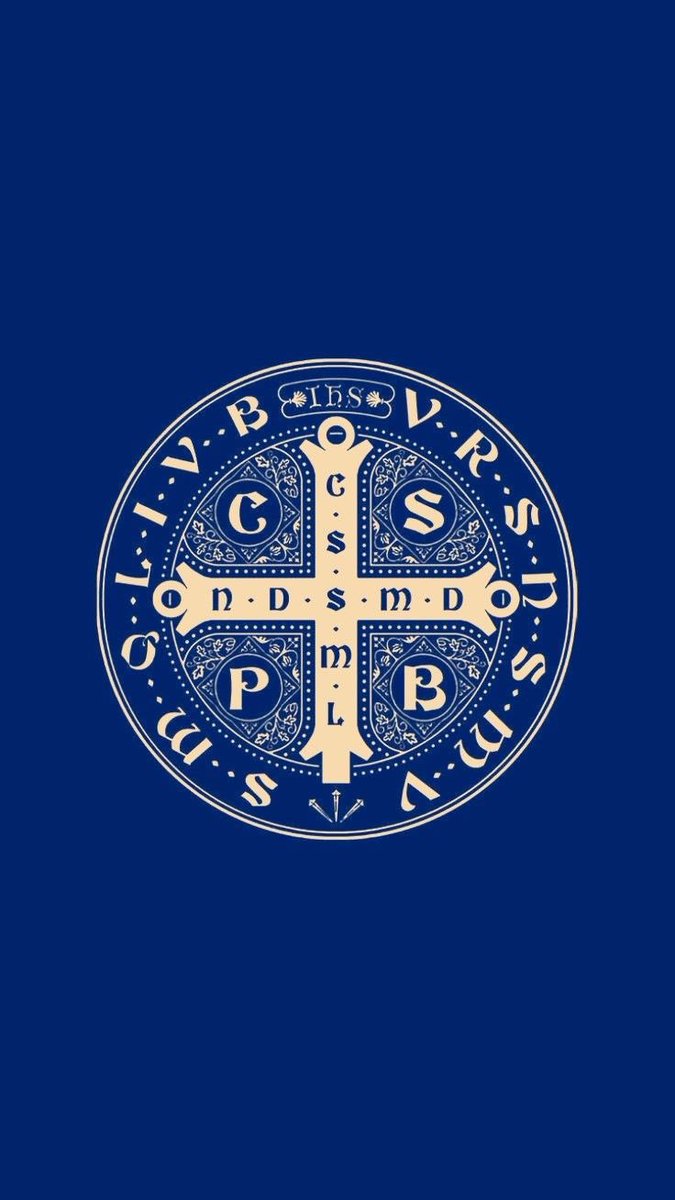
July 11 is the Feast of St. Benedict — and millions of Catholics around the world wear his medal. But do you know what it actually means?
Known as the "devil-chasing medal," the St. Benedict Medal is one of the most powerful sacramentals in the Catholic Church. Its power comes not from the object itself, but from Christ, who works through the faith of the one who uses it.
The Front:
St. Benedict holds a cross. At his side are a broken cup—after monks tried to poison him, it shattered when he blessed it—and a raven carrying away a poisoned loaf, another failed attempt on his life. Around the edge is the inscription:
Eius in obitu nostro praesentia muniamur
"May we be strengthened by his presence in our hour of death."
The Back:
A large cross bears the initials of the famous prayer:
C.S.P.B. – Crux Sancti Patris Benedicti
"The Cross of our Holy Father Benedict."
C.S.S.M.L. – Crux Sacra Sit Mihi Lux
"May the Holy Cross be my light."
N.D.S.M.D. – Non Draco Sit Mihi Dux
"May the dragon not be my guide."
Around the border is the exorcism prayer:
V.R.S. – Vade Retro, Satana!
"Begone, Satan!"
N.S.M.V. – Numquam Suade Mihi Vana!
"Never tempt me with your vanities!"
S.M.Q.L. – Sunt Mala Quae Libas.
"What you offer is evil."
I.V.B. – Ipse Venena Bibas!
"Drink your own poison!"
At the bottom is a single word:
PAX — Peace.
The medal was formally approved by Pope Benedict XIV in 1742. It became widely known after the miraculous healing of a young man named Brunone, who later entered the Benedictine Order and eventually became Pope St. Leo IX.
St. Benedict, pray for us! 🙏
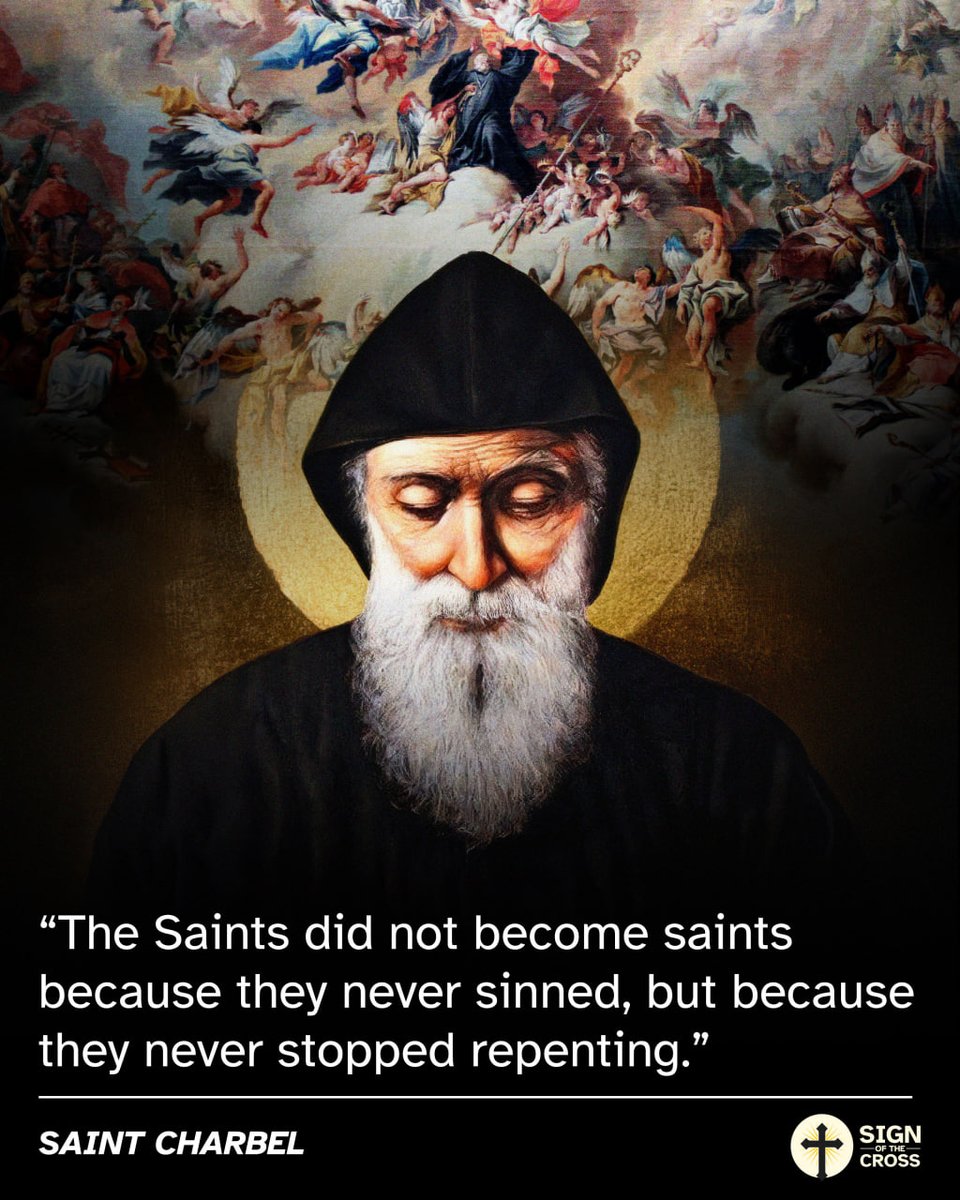
Saint Charbel Makhlouf: "The Saints did not become saints because they never sinned, but because they never stopped repenting."
St. Charbel of Lebanon, pray for us.
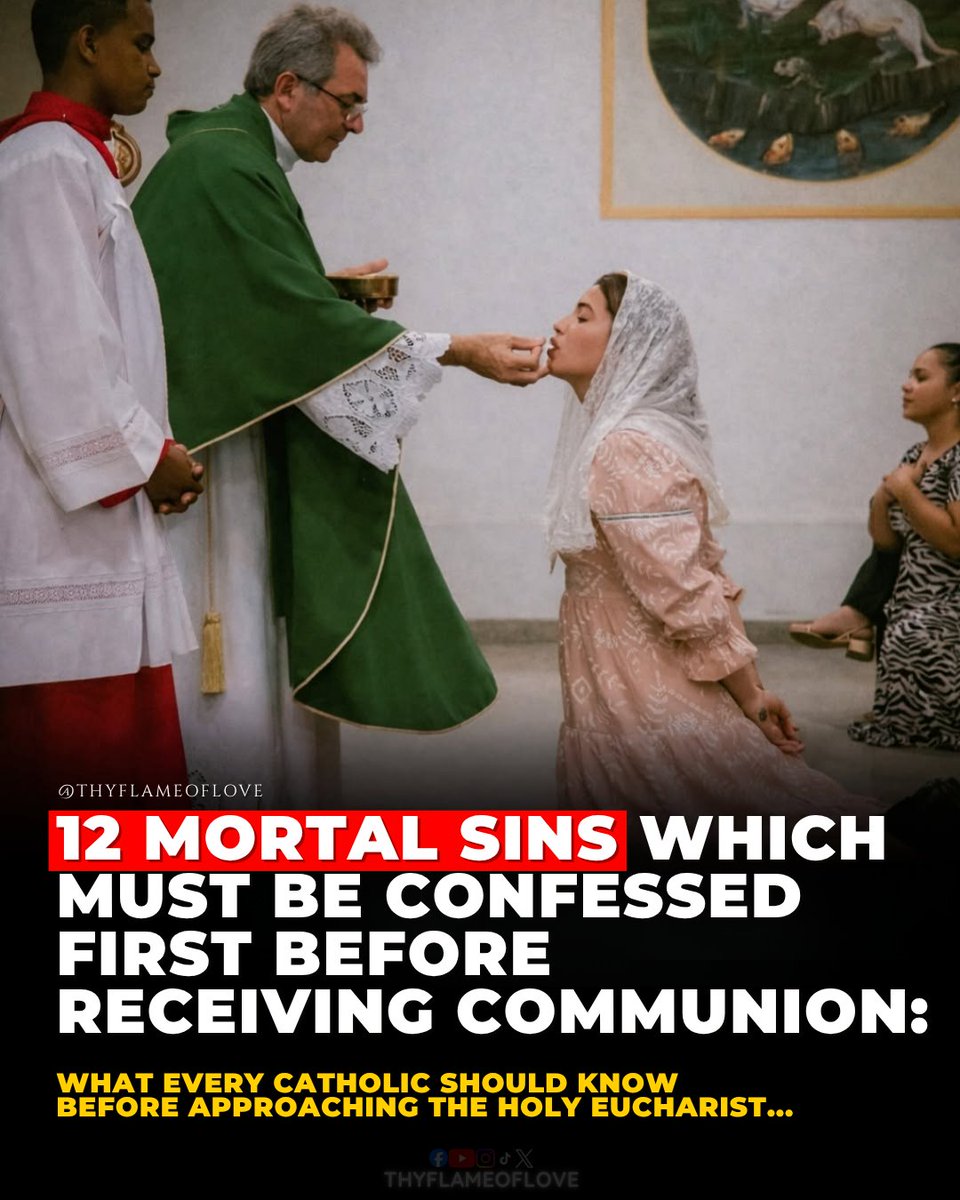
12 Serious (Mortal) Sins That Must Be Confessed Before Receiving Holy Communion 👇
Receiving Jesus in Holy Communion is not a reward for attending Mass. It is not a right or a prize. The Eucharist is Jesus Himself. Because of that, the Church teaches that we should receive Him with reverence and with a soul in the state of grace.
At the Last Supper, Jesus made this clear when Peter resisted being washed.
Jesus answered him, “If I do not wash you, you have no part in me.”
(John 13:8)
Before giving the Eucharist, Jesus spoke about being clean, pointing to something deeper than washing feet. Our souls must be purified from serious sin before receiving Him.
St. Paul warned the early Christians about this as well:
→ “Whoever eats the bread or drinks the cup of the Lord in an unworthy manner will be guilty of profaning the body and blood of the Lord.”
(1 Corinthians 11:27)
Because of this, the Church teaches that anyone aware of committing a mortal sin must first go to Confession before receiving Holy Communion.
A sin is mortal when three things are present:
→ Grave matter – the act itself is seriously wrong.
→ Full knowledge – the person knows the act is seriously sinful.
→ Deliberate consent – the person freely chooses to do it.
If someone knowingly commits one of the following grave sins and has not gone to Confession, they should not receive Holy Communion yet.
Here are some examples.
1. Missing Sunday Mass or a Holy Day of Obligation without a serious reason
→ Choosing sports, shopping, sleep, or entertainment over Mass.
2. Sexual sins
→ Sexual sins such as masturbation, pornography, or sexual acts outside marriage
3. Living together as spouses without being married in the Church
→ Cohabiting and acting like husband and wife without a valid sacramental marriage.
4. Sacrilege against the Eucharist
→ Receiving Holy Communion while knowingly in mortal sin or deliberately disrespecting the Blessed Sacrament.
5. Using contraception
→ Such as pills, condoms, IUDs, patches, or other methods that deliberately block the gift of life.
6. Abortion
→ Having an abortion, encouraging one, or helping it happen.
7. Murder or the deliberate destruction of human life
→ Including euthanasia, violence, or serious abuse against others.
8. Serious injustice toward others
→ Unjust wages, corruption, false accusations, defamation, or abusing power at work or in authority.
9. Refusing to repay debts when you are able to do so
10. Stealing valuable property or money
11. Holding deep hatred or refusing to forgive someone
12. Grave sins driven by pride, greed, envy, or serious laziness
If we fall into mortal sin, the answer is not despair. The answer is Confession. God’s mercy is waiting there. The Sacrament of Reconciliation restores our soul so we can receive Jesus worthily again.
But knowingly receiving Communion while in mortal sin adds another serious sin: sacrilege.
The Eucharist is not ordinary bread. It is the living Jesus Christ.
If we truly believe that…
→ should we approach Him casually, or prepare our souls with the reverence He deserves?
💬 Do you think most Catholics today understand what it means to receive Communion in a state of grace?
Fr. Ripperger: “Don’t get sucked into all the negativity. If you keep your focus entirely on God and all the things that pertain to God, then you won’t lose your intellectual clarity about God, the world, and reality.”
"If we examine ourselves carefully, we shall see that our irritations are almost always caused by some little hurt to our pride; the irascible appetite has been aroused by something which has wounded our "ego." It takes only a small amount of pride, of self-love, of attachment to our own way of seeing or doing things to make us unable to stand opposition. Then in the face of the shocks inevitably arising from the common life, we lose, to a greater or lesser extent, our serenity, our interior and exterior peace. If serenity is lost, calmness of judgment is also lost. As long as any traces of pride and self-love remain in us, there will always occur circumstances in which we will lose some of our control and self-mastery; we shall lack meekness. We must work assiduously to uproot every trace of pride and self-love. It is a task which we must give our attention to day by day, always beginning anew, never allowing ourselves to be discouraged by the constant recurrence of the attractions and resentments of our "ego." - Fr. Gabriel
“FATHER, HOW DO YOU MANAGE TO RECITE SO MANY ROSARIES?”
“PRAY, PRAY. THE ONE WHO PRAYS MUCH IS SAVED AND SAVES OTHERS, AND WHAT PRAYER IS MORE BEAUTIFUL AND PLEASING TO THE VIRGIN THAN THE ONE SHE HERSELF TAUGHT US?”
— ST. PADRE PIO