Alysa Liu recently went viral for comments she made in a 60 Minutes interview.
When asked about the future of software testing, Liu responded:
“Just say no to more E2E tests.”
Honestly, she had a point.
Not because E2E doesn’t matter.
Because E2E matters too much to waste on low-signal tests.
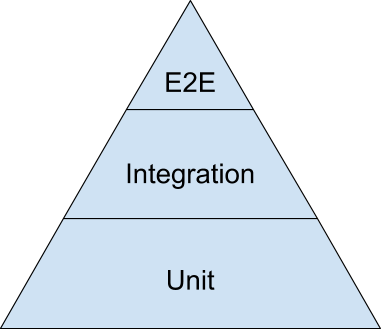
A healthy testing strategy looks like a pyramid:
- lots of fast unit tests
- fewer integration tests
- a small number of high-value E2E tests
Unit tests tell you the parts work.
Integration tests tell you the boundaries work.
E2E tests tell you the product still works.
The mistake is using E2E to catch every bug.
The opportunity is using E2E to protect the workflows users and revenue depend on.
@GergelyOrosz At @MomenticAI we've used Gemini models, but their SLA is so bad
We've ended up putting them at the bottom of our model provider list
It's a real shame too since their pricing/performance is quite good
@GergelyOrosz Generally agree, but Cursor is standing on the shoulders of VSCode, and Microsoft/Google both have substantial stakes in Anthropic/OpenAI.
iOS/Android don't seem much disrupted. If anything, these probably need the most innovation. Tough though because of the duopoly.
Question: Why bother with backups when you can just live dangerously?
I deleted all our S3 buckets to cut costs.
The data? It's in the cloud, literally.
When the team panicked, I said, "Rebuilds build character."
Now we're crowdsourcing user data from old emails.
One dev found a CSV in his spam folder.
It's like archaeology, but for customer info.
The CEO asked about downtime.
I told him it's "unplanned innovation time."
Users are reporting missing profiles.
I suggested they create new ones (fresh start)!
Legal's freaking out over data loss.
I smiled and said, "What data? No evidence, no problem."
We had over 400 open tickets in the backlog this morning.
I realized that managing them was taking up valuable engineering time.
So I just selected all of them and changed the status to closed.
My reasoning is that if a bug has been there for two years, it's not a bug.
It's a core structural element of the user experience.
The PM called an emergency meeting and asked where the Q2 roadmap went.
I told him the roadmap was in our hearts now.
We don't need a Kanban board to tell us how to write code.
If a user actually cares about a feature, they'll submit another ticket.
It's essentially a natural selection process for software requirements.
Only the strongest complaints survive the great purge.
Someone pointed out that I deleted the compliance tasks for GDPR.
I just smiled and said privacy is an illusion anyway.
The legal team is drafting a memo about my actions.
I'm hoping they put it in Jira so I can close it too.
The CFO sent me an urgent slack message about our AWS bill doubling overnight.
I told him that means our product is twice as valuable now.
He asked why one specific EC2 instance was running at maximum capacity for three straight days.
I explained that I finally achieved 100% CPU utilization.
Most companies are wasting money by only using 10% of their server power.
I wrote a script that just runs an infinite loop calculating Pi to keep the processor warm.
It's basically a stress test that never ends.
Now we know for sure the hardware is reliable.
The engineering manager told me to kill the process immediately.
I said I couldn't because it was holding the load balancer together structurally.
If I turn it off, the sudden drop in temperature might crack the motherboard.
They don't teach you about thermal dynamics in coding bootcamps.
They suspended my admin access, which I take as a compliment.
It just means my architecture is too advanced for their operating budget.
Next time they want ROI, they'll know who to ask.