JUST IN: Zcash crashes 48% after Claude AI finds critical vulnerability allowing unlimited minting of $ZEC.
It went unnoticed for 4 years until it was patched on June 1st.
Most people in markets are being put in a position where they have to choose between:
A. Chase AI names after 500-1000% moves
B. Buy cheaper stocks that keep being cheaper
This is a sign we are seeing people give up and capitulate into AI stocks.
The call buying, the big moves, the discount the rest is getting…
Breadth overall is bad not just because of market conditions but because a lot of money is being sucked away by AI.
This isn’t to say the AI craze can’t continue, especially if EPS keeps rising. That said even the best spaces need a breather and it often come in such moments of capitulation.
A Bitcoin is worth $66k and there is 21 million of them
A PSA 9 1st Edition Charizard is worth $66k and there is 729 of them
Very interesting math indeed
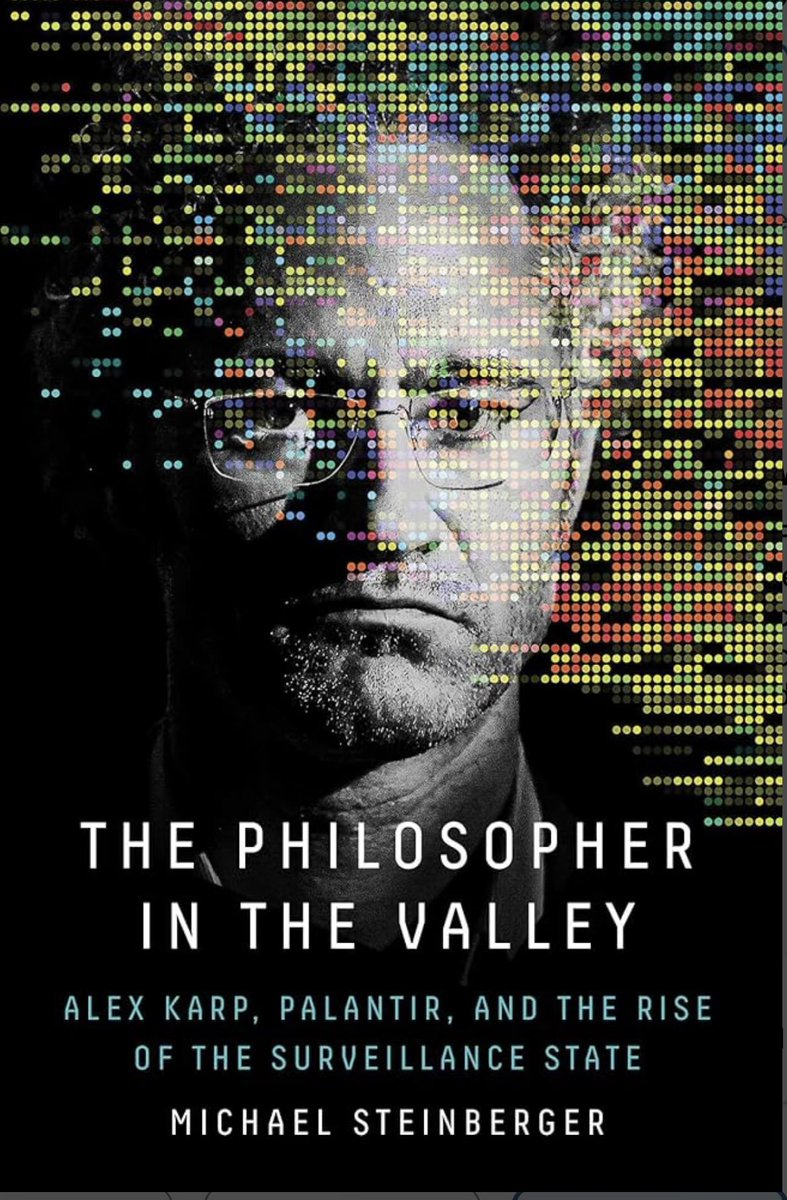
I just finished ‘The Philosopher in the Valley, Alex Karp, Palantir, and the Rise of the Surveillance State’ by Michael Steinberger. It was a quick, well-written, and fascinating read, in part a biography on Alex Karp as well as a deep dive on @PalantirTech. I found the book to be an honest portrayal of both.
Definitely worth a read.
I am a Karp fan. We need more high-profile people who are unafraid of speaking freely about important issues.
📊 $MELI long-term
EPS estimates (consensus):
🔹 2026: ~$60
🔹 2027: ~$83
🔹 2028: ~$116
Importante: estos estimates ya reflejan mayor inversión y presión en márgenes.
Si $MELI alcanza $116 EPS en 2028:
→ 34x P/E = $3,944 (~30% CAGR)
→ 36x P/E = $4,176 (~32% CAGR)
→ 38x P/E = $4,408 (~34% CAGR)
En ese escenario, tu plata haria mas de 2x en 3 años.
$MELI 📈
I believe we are approaching the “all at once” stage.
People still fail to realize that the real use case for crypto is infrastructure, while many are still waiting for it to behave like pure software.
Once banks have to compete with staking yields, the dynamic becomes self-reinforcing. If one major player adopts it, the rest will likely have no choice but to follow.
And beyond yield, the advantages are obvious: faster settlement, stronger security, lower costs, and dramatically higher efficiency.
With banks starting to move in and guidance from the CFTC and SEC becoming more constructive, the major liquidity pools are beginning to connect: retail capital, bank deposits, pension capital, and institutional money.
New banks are emerging like Erebor focusing on consolidating crypto and banking into one ecosystem.
Most people still view crypto through the lens of NFTs, memecoins, and speculative software.
But quietly, behind the scenes, it has been maturing into infrastructure.
Many are still waiting to see the flashy cars return to the highway, tokens, NFTs, speculation.
What they are missing is that the real money is made by owning the highway, and by the thousands of boring cars driving on it every day: stablecoins, RWAs, and tokenization.
This is ultimately about the settlement layer of the new financial age. And I believe the U.S. government wants to ensure the United States becomes a leader in this industry as it scales globally.