AI agents are becoming a major problem for commerce.
AI agents are flooding commerce, but there is no standard way to verify who an agent represents or whether it is authorized to act.
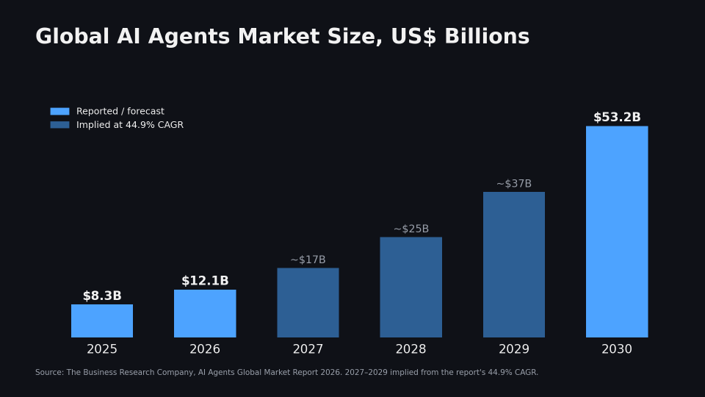
In other words, unsecure software is spending large amounts of money on behalf of humans and institutions, with the AI agent market set exceed $53 billion by 2030.
In June, Stripe reported that 70% of commands used to access data through its API now come from AI agents.
As a result, Visa, Mastercard and American Express all launched agent commerce protocols in the last year.
Furthermore, Shopify has turned on agentic sales channels by default for ~1 million merchants.
Straightforward, secure transactions are becoming harder to identify.
AI will change what the global economy values.
For decades, the world became heavily tilted toward services.
Finance, software, consulting, media, administration and other knowledge work captured a growing share of GDP, while agriculture, energy, mining and manufacturing became a smaller share.
The best comparison is agriculture.
Around 1900, agriculture accounted for roughly half of global economic output.
Today it is below 5%.
Agriculture did not disappear.
We produce far more food today than we did then.
Mechanisation, irrigation, fertilizers and machinery allowed far fewer people to produce far more output.
Its productivity exploded, but its share of the economy collapsed.
AI will do something similar to services.
It is mechanisation for cognitive labour.
If one analyst, programmer, accountant or support worker can produce what previously required five people, service output can keep rising even while the scarcity value of routine cognitive labour falls.
But AI cannot create another acre of fertile land.
It cannot manufacture copper deposits, silver, uranium, iron ore, oil, natural gas, fresh water or electricity out of nothing.
It cannot replace a mine, refinery, power grid, port, transmission line or productive river delta.
And AI itself increases demand for the physical layer.
Data centers need power.
Power grids need copper.
Chips need metals and minerals.
Manufacturing needs energy.
Every new physical system needs raw materials.
So the economy starts moving from:
scarce intelligence + cheap resources
toward:
abundant intelligence + scarce resources
Services will not disappear, just as agriculture did not disappear.
Their productivity will explode while their relative share of economic value falls.
That is why the next major repricing is already moving towards energy, metals, commodities, infrastructure, productive land and physical capacity.
AI makes knowledge abundant.
It makes physical scarcity more valuable.
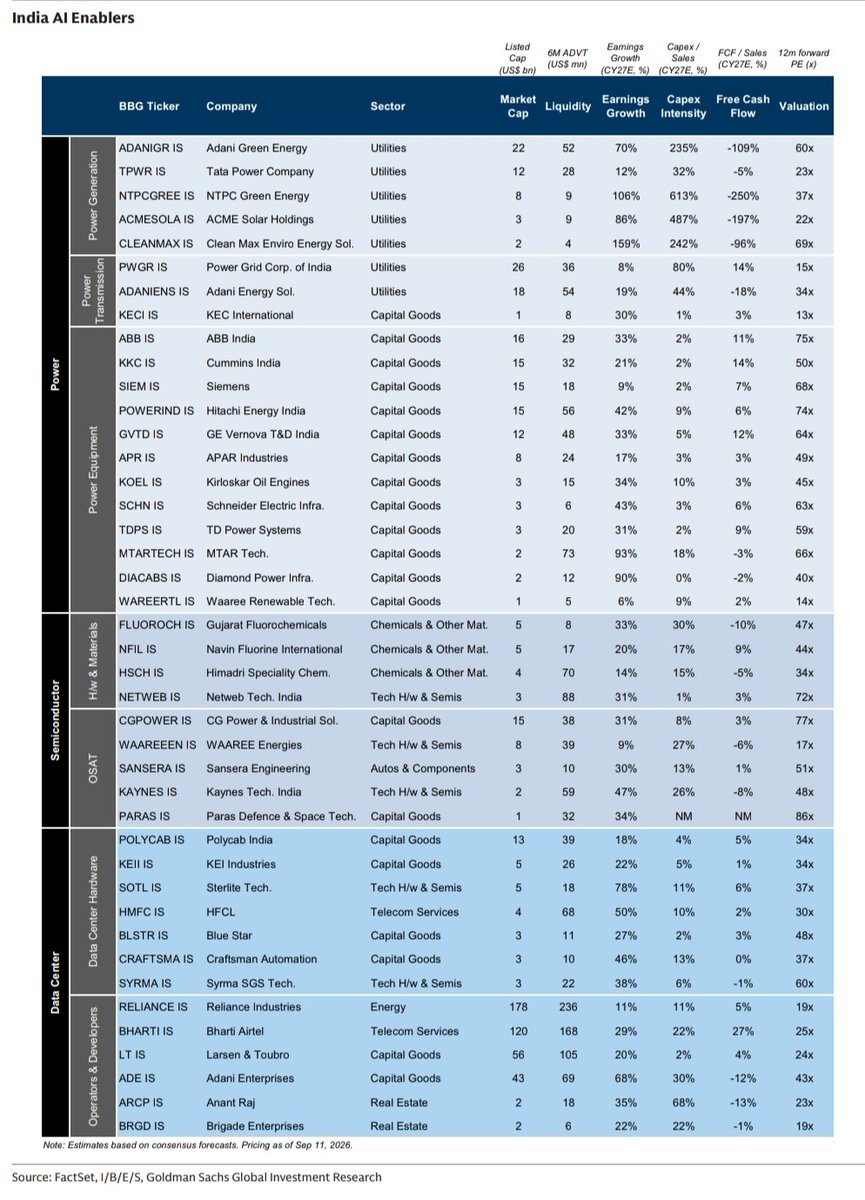
India’s AI infrastructure ecosystem is taking shape across multiple layers.
Power → Semiconductors → Data Centres - with 42 listed companies participating across areas ranging from power equipment and transmission to semiconductor OSATs and data-centre operators.
Everyone knows HAL, L&T, BEL, BDL and the big aerospace & defence companies.
But have you ever thought about the companies behind them?
The suppliers are making the gears, castings, shafts, assemblies and other precision components that go into critical machines.
Some of these companies are surprisingly small.
Let's go down the supply chain.
A detailed 🧵
Most people have been conditioned to demand two things from governments:
Higher asset prices.
Lower commodity prices, especially oil and food.
For decades, the system tried to deliver both.
Near-zero rates, deficits, money printing and financial engineering kept financial assets inflated, while policy, subsidies, globalisation and leverage helped suppress the price of essential commodities.
But this creates a dangerous imbalance.
Asset owners get richer while people with little or no assets depend on artificially cheap energy, food and credit just to maintain their standard of living.
When commodity suppression starts to fail, the adjustment can be brutal.
Oil, food, metals and other necessities suddenly reprice higher. Wealth gaps widen further because asset-rich households have protection, while people with few assets absorb the inflation directly through their cost of living.
That pressure naturally creates demands for more subsidies, price controls, redistribution and socialisation.
And that can continue only as long as people still trust saving in fiat currency.
Once that trust breaks, the system begins consuming its own foundation.
Gold and silver are monetary assets outside the promise of the fiat system.
The sooner you understand why people historically called gold “God’s money,” the sooner you understand what you are actually hedging against.
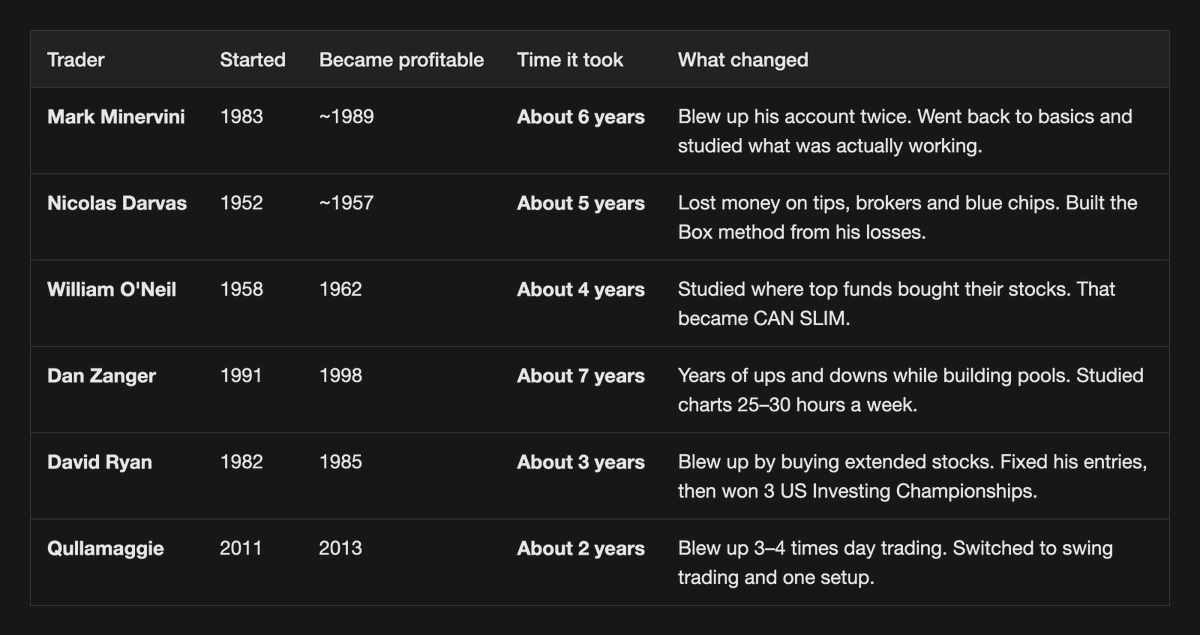
How long did the legends take to become profitable?
Mark Minervini: 6 years
Nicolas Darvas: 5 years
William O'Neil: 4 years
Dan Zanger: 7 years
David Ryan: 3 years
Qullamaggie: 2 years
Btw, Most of them blew up their accounts along the way.
New Trader Expectation:
100% returns by year 2 by taking some random trade, with no deliberate learning or practice.
Honestly, Some traders are still struggling after 5+ years because they never learned the value of study and review.
What the legends did to turn it around:
• Studied past winners . Non-Negotiable
• Mark up charts. Why a stock qualified,entry, exit etc.
• Mastered one setup instead of chasing many
• Reviewed every trade, especially the losers
• Cut losses fast and kept position size small
• Created model book of A+ setups.
• Put in hours, even around a full-time job
• Studied successful investors and their case studies.
Time in the market doesn't make you profitable. Deliberate practice does.
Gold and silver selling off during a bond crisis is a classic algo trap.
Algos are programmed to sell gold when yields rise. But when yields rise because investors are losing confidence in bonds, the entire equation changes.
A full-blown bond crisis will become the biggest catalyst for gold.
Let the bond crisis worsen. Let the forced selling and peak panic play out.
That is when I want to accumulate gold and silver very aggressively.
This will be the trade of the decade.
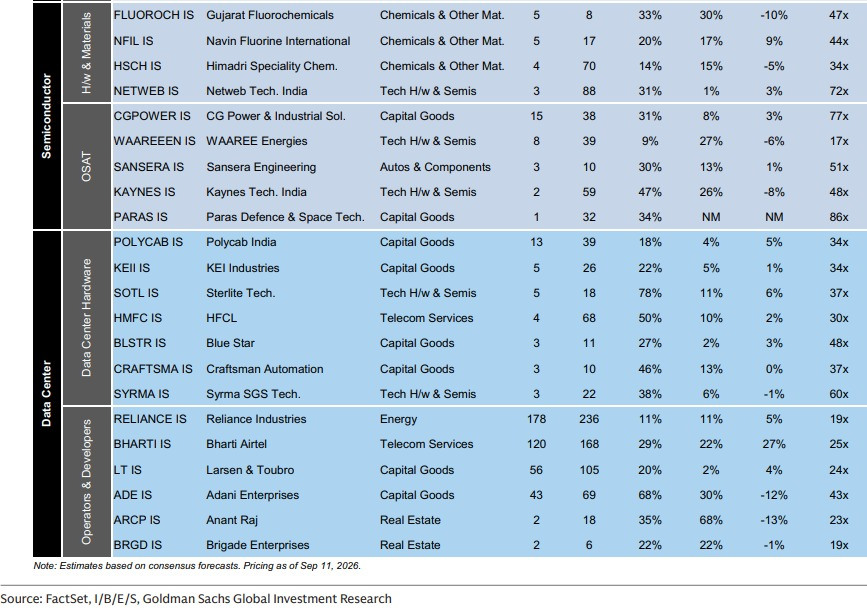
India’s semiconductor boom has moved from policy intent to factory floors.
Chip demand is projected to rise from ~US$56bn in 2025 to US$117bn+ by 2030. Twelve approved projects already represent US$18bn+ of investment.
But a completed fab is only infrastructure. The real test is qualification, yield, customer approval and utilisation.
So where will the money be made first—and which listed companies offer the cleanest exposure?
Let’s break it down. 🧵
Source - 360 One Capital Report
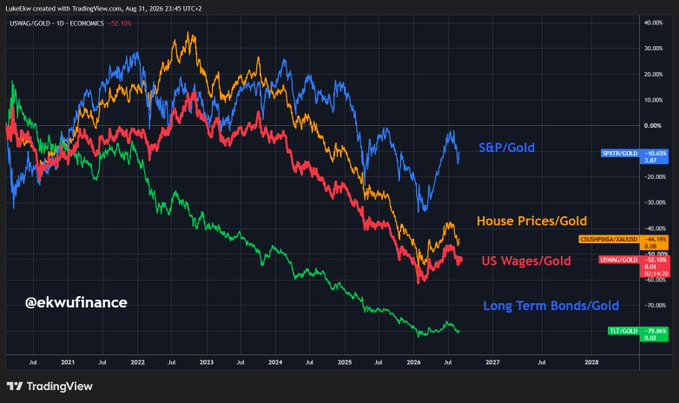
The debasement trade is back... everything is collapsing in gold terms
Since 2020:
- S&P 500/Gold: -13%
- US Houses/Gold: -44%
- Long-Term US Bonds/Gold: -80%
- US Wages/Gold: -55%
We don't own enough gold for what's coming.
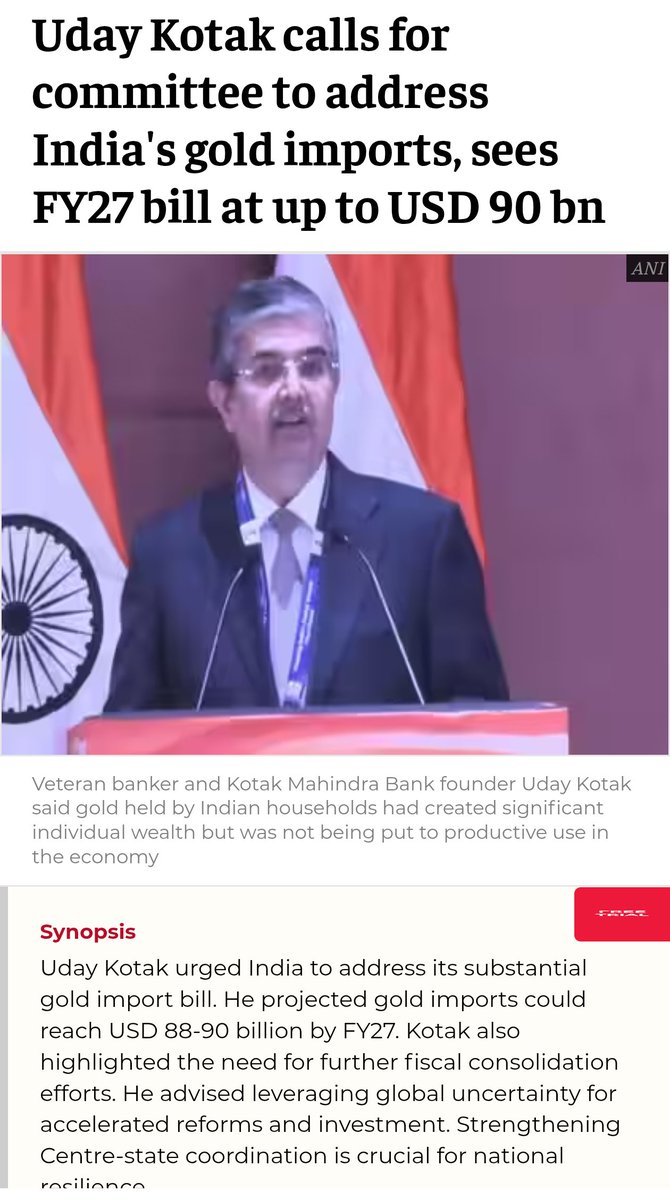
Never trust bankers when they tell you what to do with your gold.
Gold is the banking system's natural enemy. Every rupee or dollar invested in physical gold is money that stays outside the banking system, beyond its ability to lend, leverage or create credit against it.
Gold is a vote of no confidence in the fiat monetary system.
You don't buy physical gold merely to earn a return. You buy it to protect your wealth against currency depreciation, systemic risk and the possibility that financial institutions may fail to honour their promises.
When a banker tells you that your gold is unproductive and should be brought into the financial system, remember why you bought it in the first place.
The purpose of physical gold is to hold wealth outside a system that depends on someone else's promise to pay.
Don't put your gold back where the risk lies.
Those who think AI is going to magically do the work, pick stocks and manage their portfolios at a high level are in for a big disappointment. Just like throwing darts, there will be periods when it will land on the correct boxes. But ultimately it will be a victim of it's own efficiency, and the work and strategies that AI users are running from will work better than ever. Money is made in pockets of inefficiencies, not where everyone congregate.
"China's getting close to the levels of gold holdings of the United States... They want to dominate, whether it's the EV space, AI, or critical metals; I would say it's the gold space as well”
- Sean Boyd
This is from the leader of the second-biggest gold producer on the planet
When artificial intelligence becomes abundant in investing, what will become rare?
Insights from letters to shareholders by Vltava Fund
https://t.co/qwhLKzzGBz
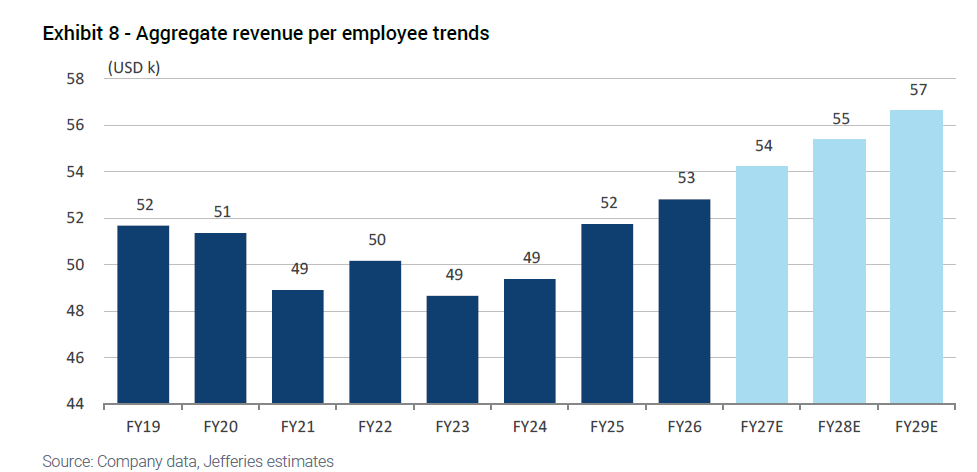
The biggest threat to IT services may not be AI replacing developers. It may be AI breaking the link between revenue and headcount.
For decades, IT services grew by adding more people, billable hours and projects.
But AI is changing that equation.
Jefferies estimates AI-driven productivity gains could reach 25–75% in some workflows, potentially allowing companies to deliver more with fewer people.
This could accelerate the shift from geo-arbitrage to intelligence-arbitrage, as the cost advantage of lower-cost labour gives way to AI-driven productivity.
At the same time, the industry could move from billing for hours to charging for outcomes.
The traditional workforce pyramid may also become diamond-shaped — fewer junior engineers, but greater demand for experienced professionals who can orchestrate AI, review outputs and solve complex problems.
The bigger opportunity may therefore shift from writing code to orchestrating AI and delivering business outcomes.
Source: Jefferies report