Many films have great endings. But The Last of the Mohicans is the kind of movie where the final scene almost surpasses the entire film itself.
The last 15 minutes are pure cinema: music, silence, mountains, sacrifice, and tragedy unfolding with barely any dialogue. The “Promentory” score pushes every emotion to its limit.
It feels like more than just the end of a few characters — it feels like the end of an entire world.
A beautiful, heartbreaking, and haunting ending that stays with you long after the movie is over.
After CBS embarrassed Karen Bass by fact-checking her debate lies about the Palisades Fire, they clearly got the call. CBS filmed with me on my burned out lot for over an hour, and they turned it over to Karen Bass’ PR team to edit it into a comical 5 minute hit piece with clips from the Hills. They can’t beat my ideas, they can’t beat me in the debates, so they gotta try to turn my campaign into a sideshow. People are done with these skeezy political tricks, and I’m done with CBS. They’ll never get a word from me for my next 8 years as mayor. Adios! What outlet should I have in their absence?
A community college professor taught the same study skills lecture for 30 years, and the video quietly became one of the most watched educational recordings on the internet.
His name is Marty Lobdell. He spent his career as a psychology professor watching students fail not because they were lazy, but because nobody had ever taught them how their brain actually works under the pressure of learning something hard.
The lecture is called "Study Less Study Smart." Over 10 million views. Passed around in Reddit threads, Discord servers, and university study groups for over a decade. And the core insight buried inside it has been sitting in cognitive psychology research for years, waiting for someone to explain it in plain language.
Here is the framework that completely changed how I think about effort.
Your brain does not sustain focus the way you think it does. Studies tracking real students found that the average learner hits a wall somewhere between 25 and 30 minutes.
After that, efficiency doesn't just decline. It collapses. You're still sitting at your desk, still looking at the page, but almost nothing is going in.
Lobdell illustrated this with a student he knew personally. She set a goal of studying 6 hours a night, 5 nights a week, to pull herself out of academic probation. Thirty hours of studying per week. She failed every single class that quarter.
She wasn't failing because she lacked effort. She was failing because she had confused time spent near books with time spent actually learning. The 25-minute crash hit her at 6:30pm every night. She spent the next five and a half hours sitting in the wreckage of her own focus and calling it studying.
The fix sounds almost too simple. The moment you feel the slide, stop. Take five minutes. Do something that actually gives you a small reward. Then go back. That five-minute reset returns you to near full efficiency. Across a six-hour window, the difference is not marginal. It is the difference between thirty minutes of real learning and five and a half hours of it.
The second thing he taught destroyed something I had believed about how memory actually works.
Highlighting feels productive. Going back over your notes and recognizing everything feels like knowing. But recognition and recollection are two completely different cognitive processes, and your brain is very good at making you confuse them.
You can see something you've read before and feel completely certain you understand it, even when you couldn't reconstruct a single sentence from memory if the page were blank.
He proved this live in the room. He read 13 random letters to his audience. Almost nobody could recall them. Then he rearranged the same 13 letters into two words: Happy Thursday. The whole room got all 13 without effort.
Same letters. Same count. The only thing that changed was meaning.
The brain stores meaning. Not repetition. The moment new information connects to something you already understand, the retention changes entirely.
This is what the cognitive psychology literature calls elaborative encoding, and it is the mechanism underneath every effective study technique.
The third principle was the one that hit me hardest, and the one almost nobody applies.
Lobdell cited research showing that 80 percent of your study time should be spent in active recitation, not passive reading. Close the material. Say it back in your own words.
Teach it to someone else, or to an empty chair if no one is around. The struggle of retrieval is where the actual learning happens. Reading your notes again is watching someone else do the work.
His parting line has stayed with me longer than almost anything else I have read about learning.
He told the room that if what he shared didn't change their behavior, they hadn't actually learned it. It would just live in their heads as something they had heard once and felt good about.
He was right. And most people leave every lecture exactly like that.
The students who remember everything aren't putting in more hours.
They stopped confusing the feeling of studying with the fact of it.
Currently, there are 122,000 homeless campsites reported in the City of Portland.
ONE HUNDRED AND TWENTY TWO THOUSAND - and that number doesn't account for sites beyond city limits & sites that haven't been reported!
This screenshot depicts some of Portland's homeless campsites. It's taken from the City of Portland's interactive website highlighting a variety of statistics on Portland's homeless problem (linked in comments).
Anyone else tired of public spaces your tax dollars pay for being occupied by addicts who refuse help to get off the streets?
Anyone else tired of people smoking meth & fentanyl & masturbating, urinating, and defecating while camping in front of/behind their homes & businesses?
Anyone else tired of public parks being used as a dumping ground for human feces, used needles, and used condoms, instead of places your kids & pets can play?
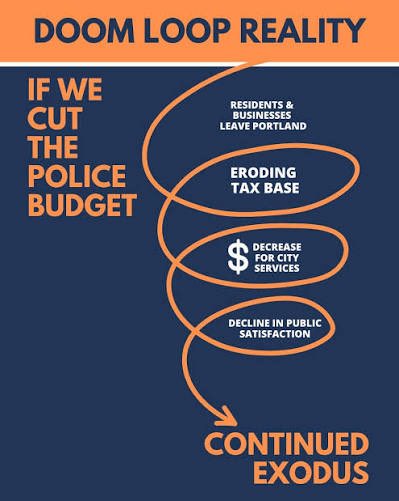
Yet Oregon Democrat "leaders" scratch their heads over why Portland is in an economic doom loop and lost 8,800 jobs in 2025 🫠
Could it be that business owners are tired of paying the highest taxes in the nation, all for the pleasure of stepping over human feces and psychotic sleeping addicts in their business doorways every morning?
Please, share the website with your friends, especially your friends who are still pretending Portland is totes fine, and be sure to let them know that currently the City of Portland has 122,000 homeless campsites.
With a city population of only 643,000, that's about one homeless campsite per every 5 Portland residents.
Over the next year, Portland will close 5–10 public schools as enrollment has fallen 12%. Meanwhile, Portland State University has seen enrollment drop 23% in just the past few years.
Yet Tina Kotek and Keith Wilson continue to insist that Portland, Oregon is a “thriving, vibrant city.”
The numbers tell a very different story. Families and students are leaving, institutions are shrinking, and schools are closing.
What we’re watching isn’t a revival—it’s the predictable result of years of failed, ideological policy that has pushed the city into a very real economic and civic decline.
The people taking—and then wasting—our tax dollars don’t live in reality.
Most have never run a business, managed a payroll, or been accountable for real results.
Instead, they arrive armed with worthless ideological degrees from liberal training camps, and proceed to spend other people’s money as if consequences don’t exist.
At this point, you have to wonder whether they’re simply incompetent—or knowingly driving Oregon into the ground.
@GovTinaKotek@MayorKWilson
Yesterday Mark Cuban reposted my work, DM'd me, and told me to keep telling my story.
So here it is.
I'm a Master Electrician. IBEW Local 369. 15 years pulling wire in Kentucky. Zero coding background. I didn't go to Stanford. I went to trade school.
Every week I'd show up to a home where someone just bought a Tesla or a Rivian. And every time, someone had already told them they needed a $3,000-$5,000 panel upgrade to install a charger.
70% of the time? They didn't need it.
The math is in the NEC — Section 220.82. Load calculations. But nobody was doing them for homeowners. Electricians upsell. Dealers don't know. And the homeowner just pays.
I got angry enough to build something about it.
I found @claudeai. No coding experience. I just started talking to it like I'd explain a job to an apprentice. "Here's how load calcs work. Here's the NEC code. Now help me build a tool that does this."
6 months later — @ChargeRight is live. Real software. Stripe payments. PDF reports. NEC 220.82 calculations automated. $12.99 instead of a $500 truck roll.
I'm still pulling wire. I still take service calls. I wake up at 5:05 AM for work.
But something shifted.
Yesterday @vivilinsv published my story as Claude Builder Spotlight #1. Mark Cuban saw it. The Claude community showed up. And for the first time, I felt like this thing I built in my kitchen might actually matter.
I'm not a tech founder. I'm a dad who wants to coach little league and be home for dinner. I just happened to build something that helps people.
If you're in the trades and thinking about using AI — do it. The barrier isn't technical skill. It's believing you're allowed to try.
https://t.co/cDVdY5mcLv
🇺🇸🙏🇺🇸
In April 1972, Thomas Norris sailed straight into enemy rivers wearing a fisherman's disguise.
Command said the pilots were irretrievable.
Norris was 24, a Navy SEAL operating inside North Vietnam. Two U.S. pilots had been shot down. Patrol boats everywhere. Checkpoints on every river bend. Enemy soldiers hunting them day and night. Rescue planners called it impossible.
Norris volunteered.
He moved at night through swamps and jungle with South Vietnamese commandos. Lt. Col. Iceal Hambleton had survived 11 days alone behind enemy lines. Norris found him, hid him, and guided him through darkness to the Cua Viet River. A U.S. ship pulled them out alive.
Then Norris went back.
Deeper. Harder. More patrols.
With Nguyen Van Kiet, he located Lt. Mark Clark and brought him out under increasing enemy pressure. Two men saved from certain capture.
For that, Norris received the Medal of Honor.
Six months later, October 31, 1972, his recon team was ambushed by 50 to 100 North Vietnamese soldiers. Norris was shot in the head. His skull fractured. His left eye destroyed. He collapsed and was presumed dead.
One man refused to accept that.
Mike Thornton ran back through gunfire, lifted Norris onto his shoulders, fought to the ocean, and swam 2 hours under fire until a U.S. ship reached them.
Norris survived. Metal plate in his skull. Lost eye.
Years of recovery.
The only time 1 Medal of Honor recipient saved another.
Most people still have no idea who Thomas Norris is.
250k followers!
As thanks, I’m going to giveaway tickets to the MAJOR 😂 the Players Championship! plus some signed @range_finance hats and some of my personal @Titleist gear.
Must be a follower. Comment, like, retweet to enter.
Amazing @KeithOlbermann that you describe me how the world actually describes you. What happened to you? Gaslighting and bullying a former colleague? Is that really your thing now? It’s really sad and disappointing. Everyone knows you’ve been irrelevant since you left sports and decided to share your uninvited warped world views with the rest of us. You sound bitter and miserable. I hope you get the help you need.