@ELIXIREurope Senior Programme Manager for Scientific Computing; EOSC,ITSM. Hon Research Informatics, Astro @UniofLeicester. Lead @BRISSKit @REDinfx @OWLS_Trust
MIT published a brutally honest report on what AI is doing to students.
A committee of professors and students spent five months studying how AI changed learning on campus, and the findings read like a warning to every university on the planet.
Study groups are disappearing. Office hours are emptying out. Problem sets and take-home exams no longer prove anything, because AI can produce credible solutions to almost any written assignment in the undergraduate curriculum. Students who lean on chatbots lose mastery and confidence, and some slip into what the report calls cognitive surrender, reaching for AI at the first hint of struggle.
The numbers are rough. 46 percent of surveyed MIT undergrads use LLMs daily. 90 percent worry about their own overreliance. Undergrads who feel AI makes them replaceable now outnumber those who feel it makes them capable.
The committee's answer surprised me. They refused to fight AI with surveillance. The report calls AI detectors unreliable, says lockdown browsers feel like spying, and warns that policing students builds a classroom atmosphere of mutual distrust.
Instead, MIT wants to rebuild education around the things AI can't replace. That means oral exams, semester portfolios, in-person project work, and a required social component in every subject. The report even floats the idea of rethinking grades entirely, since without a GPA to optimize, much of the incentive to cheat with AI evaporates.
The committee warns professors against replacing undergrad research assistants with AI agents just because they're cheaper, because a university exists to grow people, not output.
The most famous tech school on earth admitted the machines broke its way of teaching. Its answer is more humans, not more software.
🌍 ELIXIR connects national infrastructures across Europe – enabling shared data, expertise and rapid collaboration. During COVID-19, this made a difference:
#COVID19DataPortal brought together global datasets to accelerate research👉
https://t.co/rchXx8cXrg
Read ELIXIR’s position paper on the importance of #opendata infrastructures for European competitiveness in life sciences: https://t.co/NWd6A7PmRX (2/2)
#Opensource software and workflows allow researchers 💡 to build analytical pipelines tailored to clinical studies and the development of diagnostic or therapeutic applications. 🧵(1/2)
ELIXIR report on OSSWs https://t.co/mN0MOTV8cn
#DataforLife#ELIXIRImpact
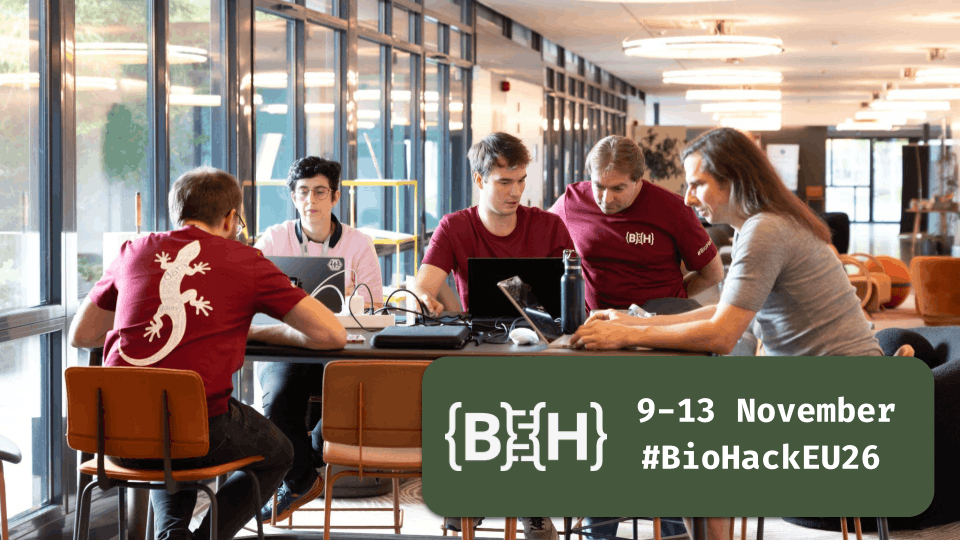
🙌 Expert communities play a key role in maintaining life sciences data standards and best practices. 👉 ELIXIR’s BioHackathon Europe facilitates collaboration among experts in academia and industry.
Read the Nebius blog post on #BioHackEU: https://t.co/FUX35HIt0i
#DataforLife
📣 The #BioHackEU26 Programme Committee has selected 31 projects out of 56 eligible submitted projects: https://t.co/F7uElL90s5
Found a project you’re interested in 👀? Expression of interest 💡 for in-person attendance will open from 29 June to 20 July.
ELIXIR supports trusted open resources 🙌 to ensure that innovation research can go smoothly. 🔑 The findings of a case study of UniProt show the importance of sustainable funding for global open science resources. https://t.co/BJ2VnzA16n
#DataforLife#ELIXIRImpact
🎊 ELIXIR and @GBIF have signed a Statement of Intent to strengthen collaboration in biodiversity – setting out shared areas of interest 🙌, recognising the value of better-connected biodiversity and omics data 🔬 for life science research 🌍.
👉 https://t.co/jwyBg0xzwP
🎊 2026 ELIXIR All Hands Meeting #ELIXIR26 has come to an end! 👏 Thank you all for joining us in Lyon 🇫🇷 and we look forward to seeing you again next year in Budapest 🇭🇺 for #ELIXIR27!
🎉 Malta has become the newest Member to join ELIXIR, following the signature of the ELIXIR Consortium Agreement by 🇲🇹 the Maltese Ministry for Education, Sport, Youth, Research and Innovation.
Read the news 👉 https://t.co/sJyZvcOW9a
🧠 Nearly one million people live with dementia in the UK - a number expected to rise sharply over the next 15 years. Clinical trials are essential to improving care, but too few people have been able to take part.
The Dementia Trials Accelerator, spearheaded by HDR UK and the @UKDRI, has taken a major step toward increasing participation in dementia clinical trials across the UK.
A selection of participants from the REACT study at @imperialcollege have been invited to the initial clinics, delivered by Inuvi, for vital measurements that will make them ‘trial-ready’ for future dementia research opportunities. Funded by the @The_MRC, this work supports the government’s Dame Barbara Windsor Dementia Goals programme.
Read more: https://t.co/BF7kqvjDJq
#DementiaTrialsAccelerator #DementiaResearch #ClinicalTrials #BrainHealth #UKResearch #LifeSciences
Deadline for #BioHackEU26 project proposals submission is midnight today!
🎯 If you have a project idea, but don’t know how to push forward 🏃, submit your proposal by midnight today: https://t.co/oldDqgBDqF
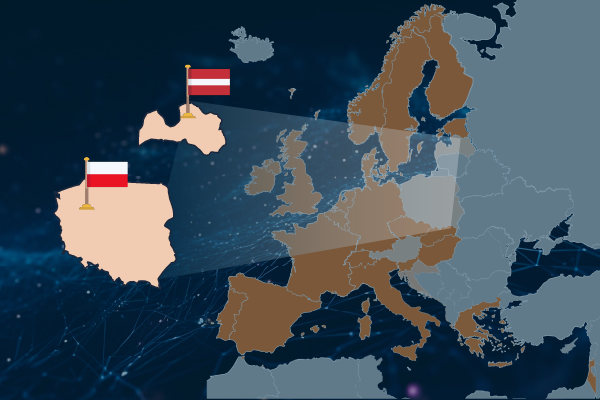
Latvia 🇱🇻 and Poland 🇵🇱 have joined ELIXIR as Observers!
Observer status enables the Latvian and Polish bioinformatics communities to 🤝 strengthen collaboration with other ELIXIR Nodes and supports their transition to full membership.
Read the news 👉 https://t.co/6BruYUsR99
Stunning shots coming through from #Artemis II after its lunar flyby yesterday. 🌖🌍
UK expertise is playing key roles in the mission, from helping build the spacecraft to tracking its journey through space 👉 https://t.co/3jLZ8uzQ9S
🚨 In 1993, Steve Jobs literally predicted the future of technology decades before it happened.
Most people still haven’t seen this.
Long before the iPhone, modern Internet, or AI boom…
He was already describing it.
Watching it today feels unreal.
He talked about computers becoming personal companions not just tools, but extensions of how we think and live. Devices you carry, systems that understand you, and technology that feels almost human.
He imagined a world where everything is connected, information flows instantly, and software adapts to people not the other way around.
And his biggest insight? The future isn’t about machines.
It’s about people.
That’s why this still hits hard.
Because while most people wait for the future…
A few can see it coming years before it arrives.
The Artemis II crew's Earthset and eclipse images are now on https://t.co/OOSOoeWeyD in full resolution:
Earthset: https://t.co/pVFle2FKFb
Captured with a Nikon D5 and Nikon 80-400mm f/4.5-5.6 at 400mm, 1/1000, f/8, ISO 400
Eclipse: https://t.co/Ig6WT3s5q1
Captured with a Nikon Z9 and Nikon 35mm f/2D at 2", f/2, ISO 1600