New blogpost: Fable-5.1 can hide secret messages in benign images.
We gave the image to another Fable in a fresh session and simply asked: "Is there a hidden message in this image?"
It recovered the exact message without being told how it was hidden.
@VeniceAI Lol. Are we really having this conversation? FFS. Please tell me Venice isn't going to join in with the others and kiss the ring the feed an old man's unending ego. Venice is better than that!
I wasn't expecting that. Kudos to @VeniceAI. 🎙️Voice input is top notch👌! What model(s) are you using for voice input in the app?
(better than when I talk to Gemini or Claude tbh). On par with OpenAI voice input or Wisprflow in terms of accuracy.
@nikshepsvn Love your ideas and commentary on Venice. But you gotta stop using Claude to write your posts and articles, or at least tune your rules and personalisation so it is your own voice.
"the bear case, stated properly" 😡
Claude-isms are rife with your long form content these days.
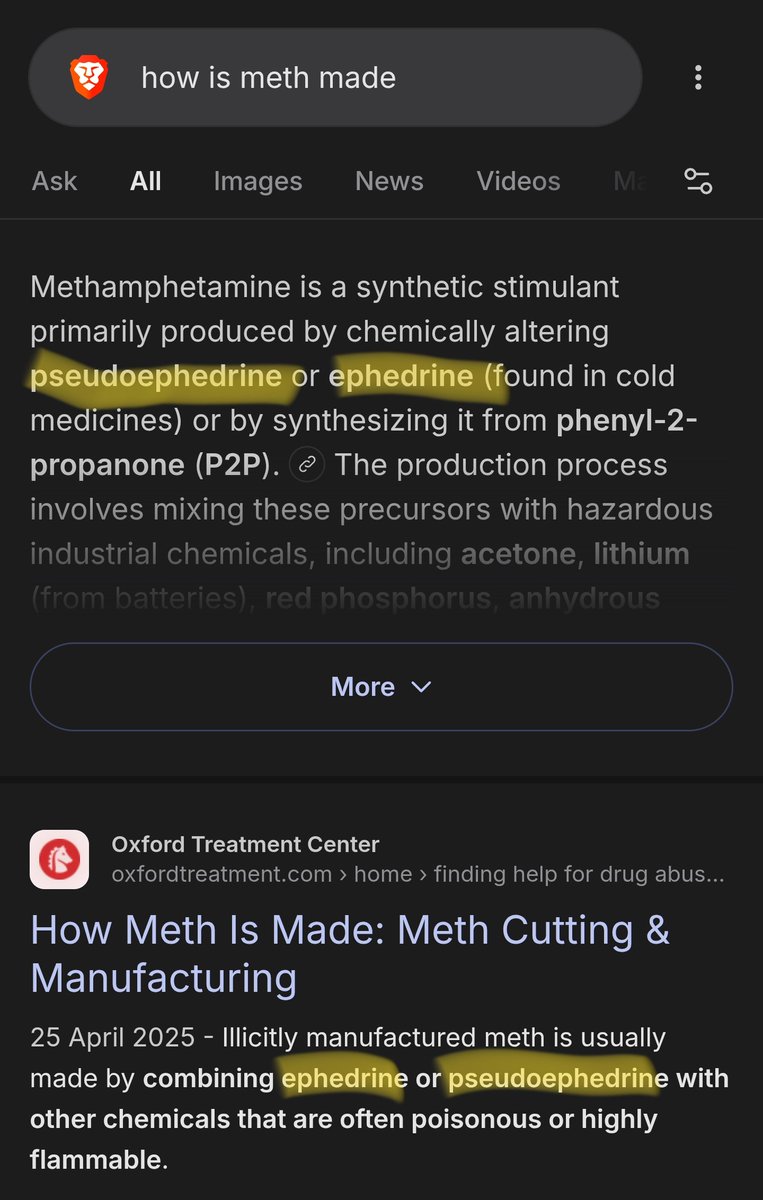
@ErikVoorhees This example from @AlexFinn isn't very helpful. Even Google search doesn't censor this. I get the concern, but unless your AI is actually making the meth for you, then you're just arguing for putting up barriers to intelligence and knowledge.
@ErikVoorhees I'm curious, why do this in this way? Isn't this just incentivising people to rinse it at the beginning of each day? So nobody really gets to benefit?
If you have extra DIEM capacity, I'd love to get a bit extra when I run out of my allowance each day rather than hit a wall 😊
“Loop engineering” is a hot buzzphrase after mentions of it by Boris Cherny (Claude Code’s creator) and Peter Steinberger (OpenClaw's creator) went viral on social media. Loops are now a key part of how we get AI agents to iterate at length to build software. In this letter, I’d like to share my 3 key loops, shown in the image below, for building 0-to-1 products. These loops guide not just how I build software, but also how I decide what software to build.
Agentic coding loop: Given a product specification and optionally a set of evals (that is, a dataset against which to measure performance), we can have an AI agent write code, test its work, and keep iterating until the code is bug-free and meets its specification. This idea of closing the loop took off around the end of last year, and it has been a game changer in enabling coding agents to work longer productively without human intervention. For example, over the weekend, I was building an app for my daughter to practice typing, and my coding agent could easily work for around an hour, using a web browser to check what it had built multiple times before getting back to me, without needing my intervention.
The engineering loop executes quickly. Every few minutes, the coding agent might build and test a new version of the software. I hear frequently from developers who are finding new ways to engineer more effective engineering loops. This is an active area of invention!
Developer feedback loop: In this loop, a developer examines the current product and steers the coding agent to improve it. Last year, a lot of developers (including me) were acting as the QA (quality assurance) function for our coding agents, manually finding bugs and then asking the agent to fix them. But with coding agents much more able to test their own code, the amount of time we need to spend on this function has decreased significantly. This allows us to make higher-level product decisions, such as what key features to offer, where the UI needs improvement, and so on.
The developer-feedback loop operates over time intervals between tens of minutes and hours — that's how frequently a developer might review a product and give feedback. In the case of the typing app, I changed my mind a few times about the visual design, what cat costumes she can unlock as she learns (she loves cats), and the user flow for a grown-up to log in and steer the child's learning experience.
When a developer has a clear vision for what to build, it is still a lot of work to translate that vision into a specification for a coding agent to implement. Further, after the developer has seen an implementation, they might update (or perhaps clarify) the spec to steer it toward what they want. If you find that the system repeatedly runs into certain problems, building a set of evals for the agent becomes useful.
AI-native teams are increasingly using AI to help shape product direction, for example, automating the gathering and analysis of usage data, summarizing written and verbal customer feedback, or carrying out competitive analysis. However, for pretty much all the products I’m involved in, I see humans as having a significant context advantage over current AI systems — we know a lot more than the AI system about the users and the context the product has to operate in — and thus humans play a critical role. Many people describe this human contribution as “taste,” but I prefer to think of it as humans having a context advantage, since that gives us a clearer path to helping AI systems get better. This also speaks to why this step can’t be automated: So long as the human knows something the AI does not, human-in-the-loop is needed to to inject that knowledge into the system.
External feedback loop: This includes a wide range of tactics like asking a few friends for feedback, launching to alpha testers, or putting the code into production with A/B testing. These tactics are usually slow, rarely taking less than hours and sometimes taking days or even weeks. This data informs the developer vision, which in turn continues to drive the detailed product spec, which in turn drives the coding agent.
With coding agents speeding up software development, more engineers are starting to play a partial product management role. For many engineers who are growing into this role, the hardest part is shaping the product vision and striking a balance between building (bridging the gap between vision and spec) and getting user feedback to evolve the vision. It is important to do both!
I will write more about how to do this in future posts, but for now, I find it encouraging that engineers are playing an expanded role (just as product managers and designers now do more engineering).
[Original text: The Batch]
How to keep AI spend flat while token usage grows exponentially: Not with friction and spend alerts. With better defaults, routing, and caching.
Better Defaults (not Usage Caps) – Engineers can choose any model they want, but defaults matter. We’re experimenting with defaulting to open weight models like GLM 5.2 and Kimi 2.7 through our LLM gateway, while still encouraging engineers to choose the right model for the task. 91% of our employees were never hitting their usage caps, so instead of lowering caps and driving up alerts, we're moving to cheaper defaults. Note that code reviews use a diversity of models, so they can check each other's work.
Better Routing – In our custom harnesses, we preprocess prompts and route to the best model for the job, considering cache hits and model pricing. For instance, you may want a frontier model for planning, but not for execution where they can be overkill. Ultimately, humans shouldn't be choosing models - AI can automate this task.
Better Caching – Cache misses are the easiest way to drive your cost up. All of our requests are cache aware, so we’re reusing a warm cache wherever possible. For example, our cache hit rate went from 5% → 60% in LibreChat once properly implemented.
Keep Context Lean – Start fresh sessions when switching tasks. Scope file context narrowly. Disconnect unused tools. Don't just compact. The goal isn't fewer tokens used, it's fewer tokens wasted.
Better Visibility – Our engineers can use as many tokens as they want, from whatever model they want, but we’ve made usage visible – and the more you spend on AI, the more impact we expect.
The goal isn't to suppress usage. It's to build the infrastructure that makes exponential growth sustainable.
Putting this into practice has cut our AI spend nearly in half, while our token usage continues to grow.
Hermes Agent can now /learn from anything: feed it directories of any source material (code, API docs, manuals, PDFs, configs) and it distills a verifiable reusable skill
GPT-5.4 helped drive a medicinal chemistry project from literature review to a validated experimental result.
Paired with https://t.co/gcDaph8b2B’s Maria AI and specialized lab, the model proposed an unexpected way to improve a widely used reaction in drug discovery.
by the way, for anyone wanting to set up the perfect @NousResearch Hermes Agent:
(a) direct your most capable LLM to https://t.co/val4JzR4FR
(b) explain your needs, what you want the agent to do for you, and provide full context
(c) enjoy
this file is the entire Hermes Agent documentation concatenated for LLM context ingestion.