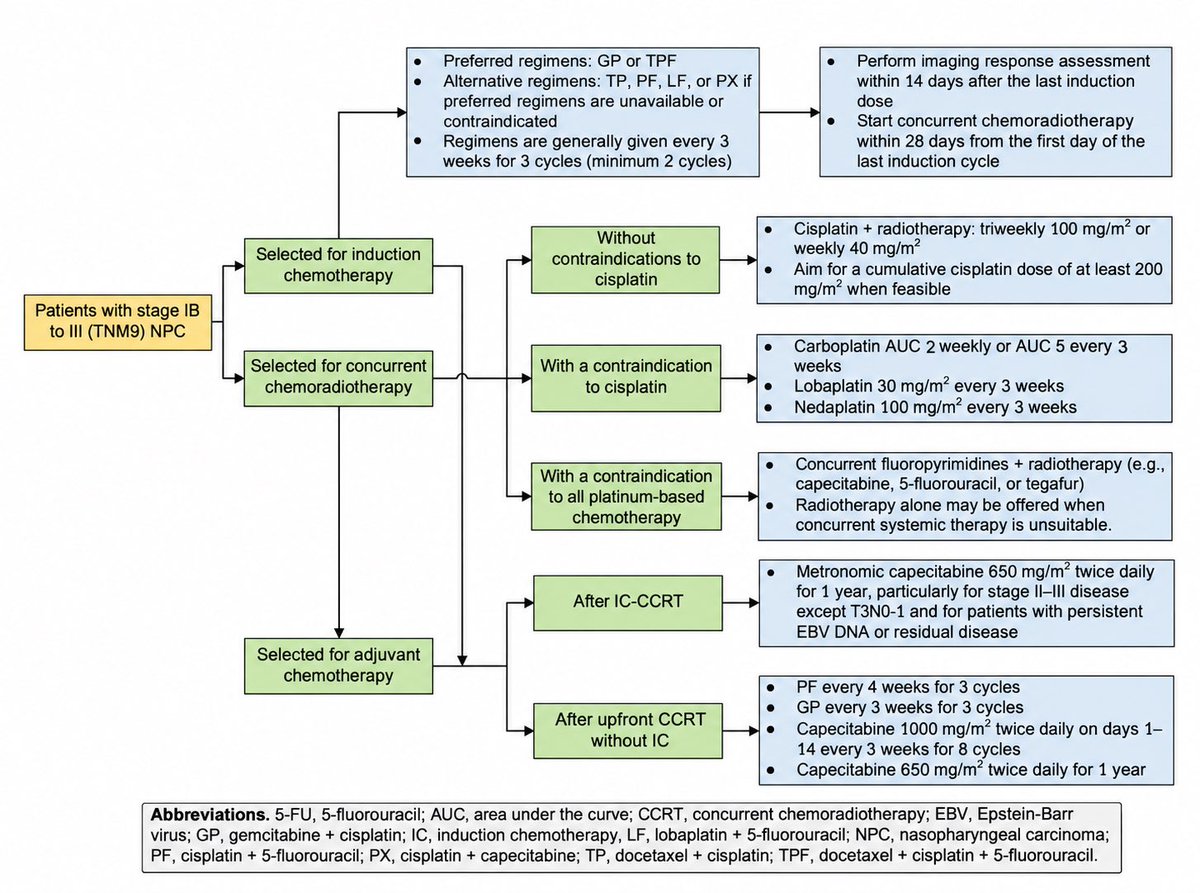
🚨 NEW 2026 CSCO-ASCO GUIDELINES for Localised Nasopharyngeal Cancer!
Published in JCO, with important changes to clinical practice.
🔹 Induction GP/TPF → Cisplatin-RT for most stage II–III patients (TNM9).
🔹 Metronomic capecitabine for 1 year is an adjuvant option in selected patients.
🔹 Radiotherapy de-escalation: Smaller target volumes in appropriately selected patients to reduce toxicity.
🔹 PD-1 inhibitors: Despite promising PFS/EFS benefits, ASCO makes NO recommendation for or against routine addition. OS data remain immature.
The key message? More personalized chemotherapy, less unnecessary radiation, and cautious adoption of immunotherapy.
@ASCO@oncoalert
#NasopharyngealCancer #HeadNeckCancer
Full paper link in comment below ⬇️
🚨 NEW CSCO–ASCO Guidelines for Recurrent/Metastatic Nasopharyngeal Cancer!
Key takeaways from JCO (2026):
🔹 1L: Gemcitabine/cisplatin + PD-1 inhibitor → PD-1 maintenance up to 2 years
🔹 Chemo-only responders: Capecitabine/S-1 maintenance
🔹 Selected de novo metastatic NPC: Consolidation IMRT
🔹 After ≥2 lines including platinum + PD-1: Izalontamab brengitecan ADC, where available
💡 Important: PD-L1 testing is NOT required before first-line PD-1 therapy. Evidence is insufficient to add oral chemotherapy to PD-1 maintenance.
A practical roadmap for a rapidly evolving disease!
@oncoalert
Full paper link in comment below ⬇️
🚨 ASCO 2026: PARP inhibitors in ovarian cancer. What has changed?
The new ASCO Living Guideline, published in @JCO_ASCO, reviewed 31 pivotal trials and 13 HRD assays.
1️⃣ First-line maintenance: The preferred window for PARPi
🔹 SOLO-1: Olaparib established durable benefit in BRCA-mutated disease.
🔹 PRIMA / PRIME: Niraparib improved PFS, with the greatest benefit in HRD-positive disease.
🔹 ATHENA-MONO: Rucaparib demonstrated PFS benefit, particularly in HRD-positive tumors.
🔹 PAOLA-1: Olaparib + bevacizumab benefits patients with HRD-positive disease following platinum + bevacizumab.
2️⃣ Biomarker selection is critical
✅ BRCA-mutated or HRD-positive: Offer first-line PARPi maintenance after platinum response.
❌ BRCA-wild-type / HRD-negative: Not routinely recommended, despite modest PFS signals in PRIMA and ATHENA-MONO.
3️⃣ Recurrent ovarian cancer: A major restriction
🔹 SOLO-2 / NOVA / ARIEL3: PFS benefits established, but mature OS findings raised concerns in some subgroups.
➡️ Recurrent maintenance is now primarily reserved for PARPi-naïve, BRCA-mutated patients responding to platinum.
4️⃣ PARPi as treatment, not maintenance?
🔹 SOLO-3 / ARIEL4: Concerning OS findings altered the risk-benefit assessment.
❌ PARPi monotherapy is NOT recommended for treatment of recurrent ovarian cancer outside clinical trials.
5️⃣ What about PARPi rechallenge?
🔹 OReO / ENGOT-ov38: Modest PFS benefit, but insufficient evidence for routine PARPi rechallenge.
The clinical takeaway:
PARPi treatment is moving from broad use across multiple lines toward earlier, biomarker-selected maintenance.
The question is no longer simply “Is the patient platinum-sensitive?”
It is “BRCA? HRD? Prior PARPi exposure? Which line of therapy?”
@ASCO@myesmo@ESMO_open
#OvarianCancer #PARPi #ESMO26
Full paper link in comment below ⬇️
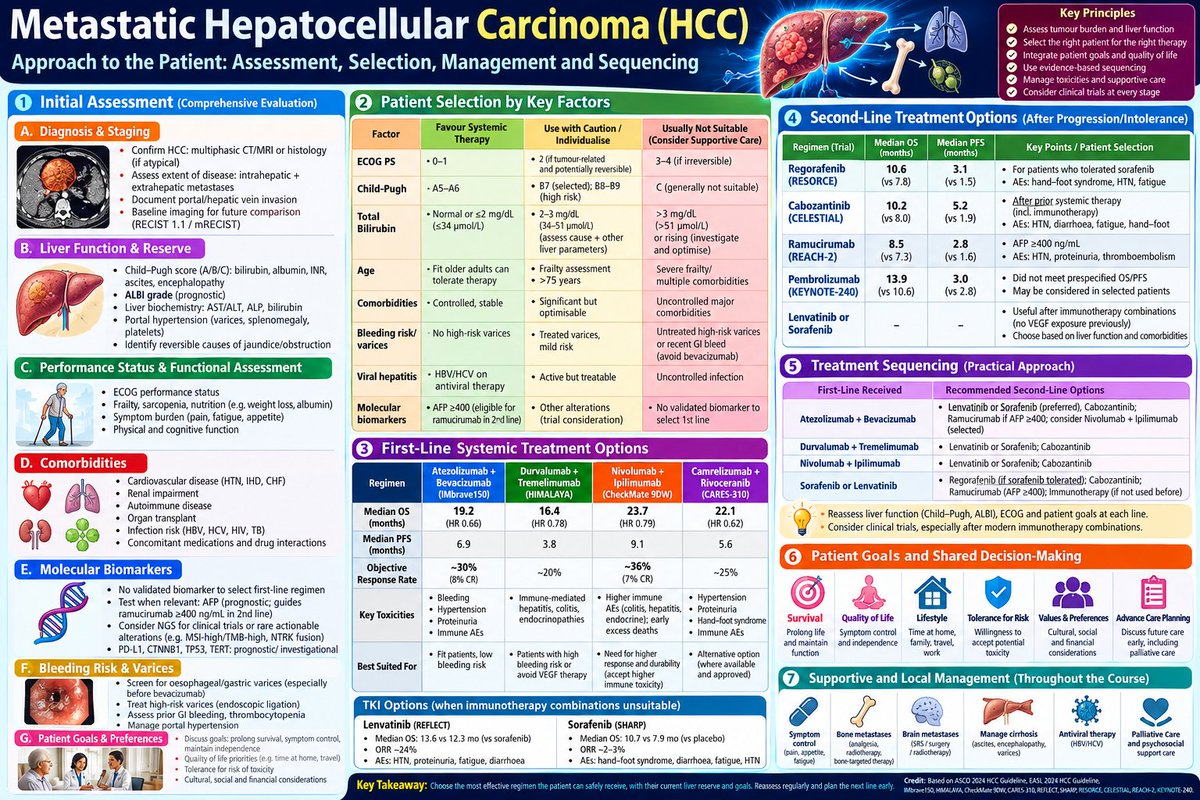
Metastatic HCC
Patient Approach / Goals
How to approach in Clinic
Initial Assessment
Patient Selection on various Factors
1st L / 2 L sequencing Options
Dosing / Regimen
Trial evidence / efficacy
Keynote Toxicities to watch
Choosing an ARPI? Think identity, not alphabet soup.
🔑 ABI = ACCESS
♾️ ENZA = CONTINUUM
🩸 APA = PSA DEPTH
🛡️ DARO = TOLERABILITY
Four drugs. Four stories. One quick way to remember the ARPI landscape.
Cross-trial comparisons should not be used to infer superiority.
#ProstateCancer #mHSPC #mCRPC #ARPI #Oncology #MVONCO
Si bien la tecnología (mARN) ni el concepto (vacunas terapeúticas) son nuevos en cáncer, el elemento más interesante -al menos para mí- es la predicción computacional, y quiero comentar un poco al respecto:
a. En las vacunas oncológicas personalizadas, el modelo algorítmico no acompaña al medicamento: ayuda a definirlo. Decide qué mutaciones del tumor serán codificadas en el ARNm que recibirá ese paciente. La predicción computacional se convierte así en parte de la farmacología y eso es lo más interesante.
b. El problema es gigante: un tumor puede contener cientos o miles de mutaciones, pero solo una fracción será expresada, procesada, presentada por el HLA y reconocida por células T, pero ¿cuál o cuáles serán?. Encontrar esa fracción es una tarea probabilística de alta complejidad, no es como la lectura de un antibiograma (sin ofender claro).
c. El proceso comienza comparando el exoma del tumor con el de la sangre (ADN circulante). Así se separan las mutaciones somáticas de las variantes germinales. Luego, el RNA-seq determina cuáles mutaciones realmente se expresan ya que como es obvio una mutación silenciosa biológicamente es un blanco inútil.
d. Después entra el componente HLA (hablar de HLA supera el alcance de este post y de mi cerebro). Cada paciente presenta péptidos de manera diferente. El modelo genera múltiples péptidos mutados y estima su procesamiento, afinidad y estabilidad en HLA clase I y II: esto es la posibilidad de activar respuestas CD8+ y CD4+, que es lo que busca la vacuna.
e. Pero para completar lo complejo, la unión al HLA no significa inmunogenicidad. El péptido debe diferenciarse suficientemente de su versión normal, ser visible para un receptor T y estar presente en una proporción relevante del tumor. Predicción de presentación y predicción de respuesta no son lo mismo y por eso se requiere IA.
f. Los modelos predictivos integran expresión, clonalidad, afinidad HLA, estabilidad y distancia frente al proteoma normal. El objetivo es construir un portafolio de blancos con alta probabilidad de generar inmunidad antitumoral. A esto lo llamamos en computación modelos de optimización multiobjetivo.
g. Por eso no necesariamente se eligen los 34 neoantígenos con mayor puntaje individual. El conjunto debe cubrir distintos HLA, inducir respuestas CD8+ y CD4+, representar la heterogeneidad tumoral y reducir la posibilidad de escape. Como dije es realmente un modelo de optimización de portafolio biológico.
h. Esta es la transformación de fondo: la IA deja de ser un copiloto que recomienda y pasa a determinar la secuencia de un tratamiento. Si cambia el algoritmo, cambia el medicamento. Su validación, sesgo, trazabilidad y versionamiento son ya problemas clínicos y regulatorios. De hecho Moderna explica el proceso, pero no "desnuda" sus modelos de machine learning.
Será fascinante verlos algún día.
🚨WOW! $MRNA and $MRK have made the biggest step in human history towards a valid personalised cancer vaccine! Today’s historical data is the first Phase 3 study to show that Intismeran - a treatment designed based on the unique mutational ‘fingerprint' of a patient's own tumor, given in combination with Merck’s KEYTRUDA (pembrolizumab) can reduce the risk of recurrence or death in cancer patients with completely resected stage IIB-IV melanoma compared to KEYTRUDA alone! This is an historic day in the battle of humanity against cancer! Godspeed!
SRS and SBRT are built on the same idea: use millimetre-level accuracy to deliver an ablative radiation dose while rapidly reducing the dose outside the target.
🧠 SRS treats cranial targets��most commonly intact brain metastases or postoperative cavities—and is usually delivered in one fraction.
🫁 SBRT/SABR treats extracranial targets, including medically inoperable early-stage NSCLC and selected oligometastatic, spine, liver and adrenal lesions.
The precision comes from rigid immobilisation, advanced image guidance, small margins, multiple convergent beams and strict organ-at-risk constraints.
But precision does not eliminate toxicity. Radionecrosis, pneumonitis, vertebral fracture, myelopathy and gastrointestinal injury remain important when targets are large or close to critical structures.
Save this SRS-versus-SBRT comparison for your oncology revision.
#SRS #SBRT #SABR #RadiationOncology #BrainMetastases #LungCancer #MedicalOncology #OncologyEducation
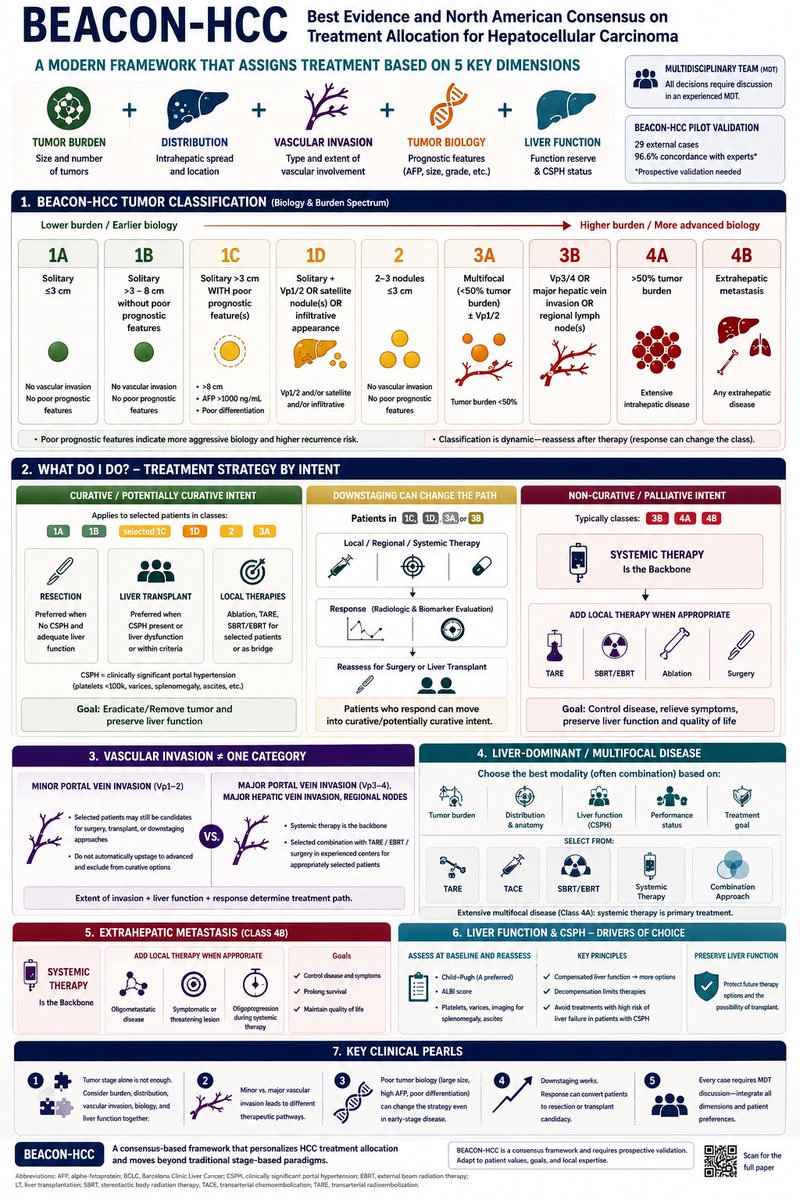
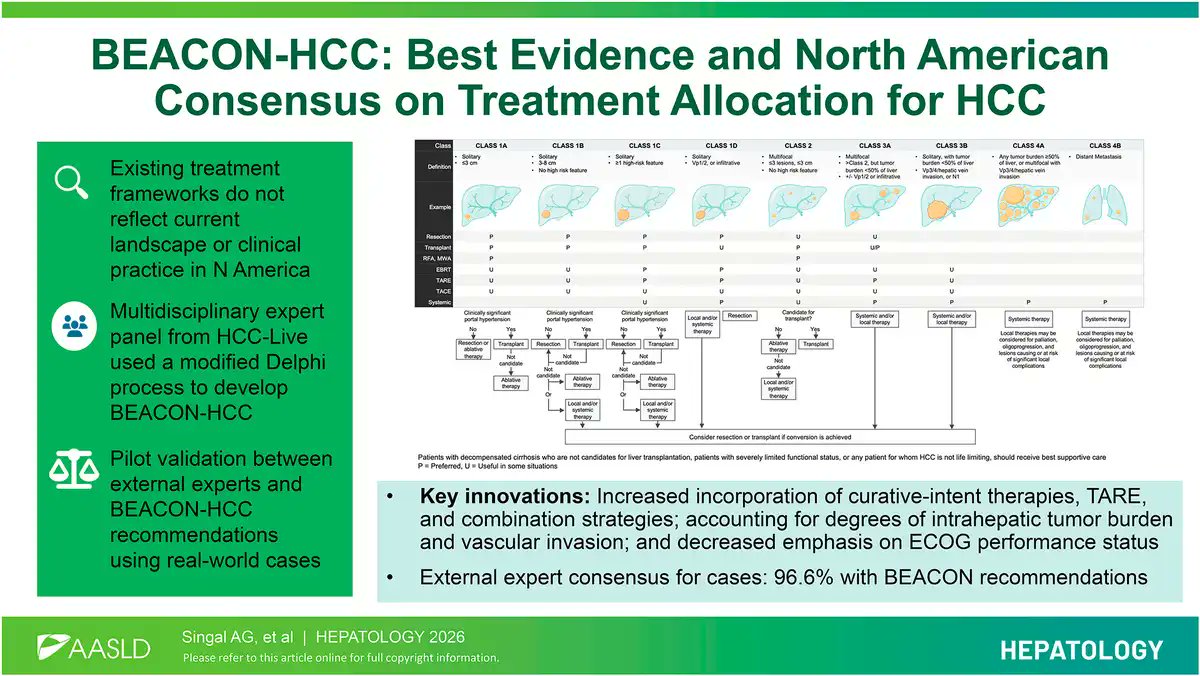
➡️BEACON-HCC is a new HCC treatment allocation system for #HCC, developed by @HCCLIVEConf consortium
There are MANY differences vs BCLC but perhaps most significant, VP1/2 is no longer considered "advanced disease"
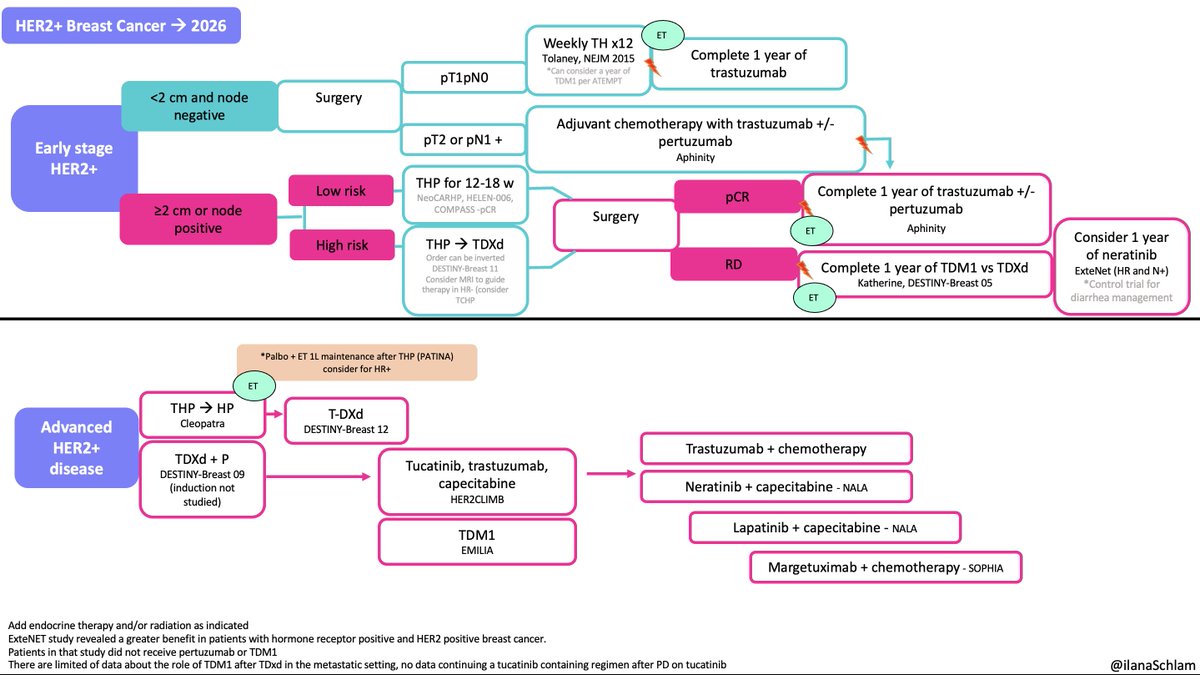
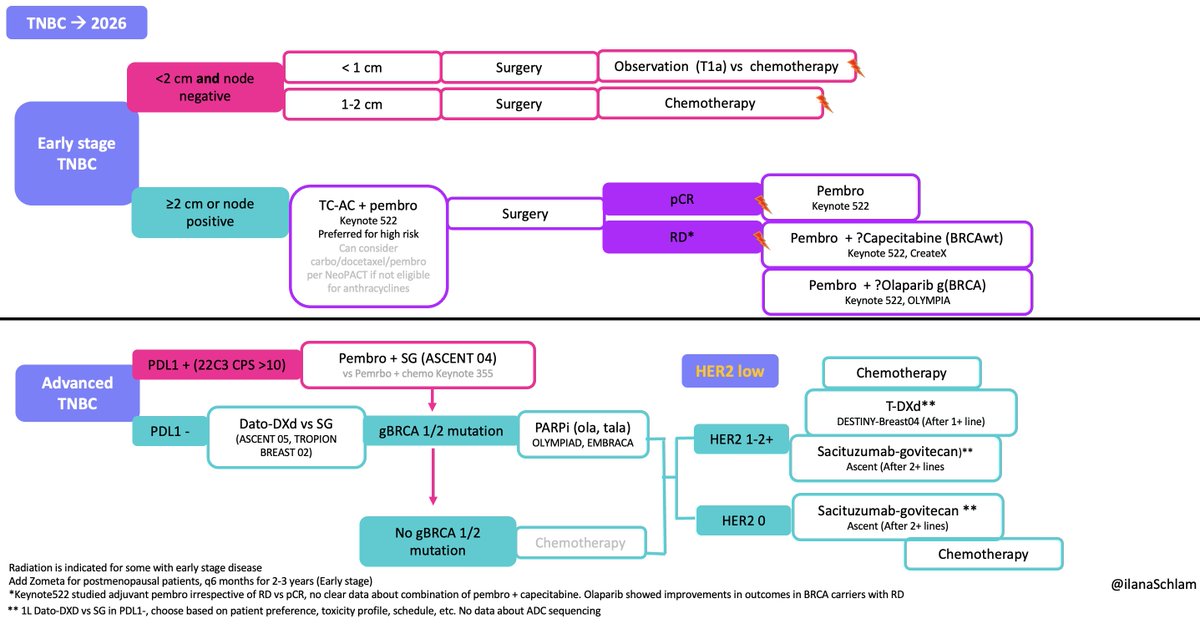
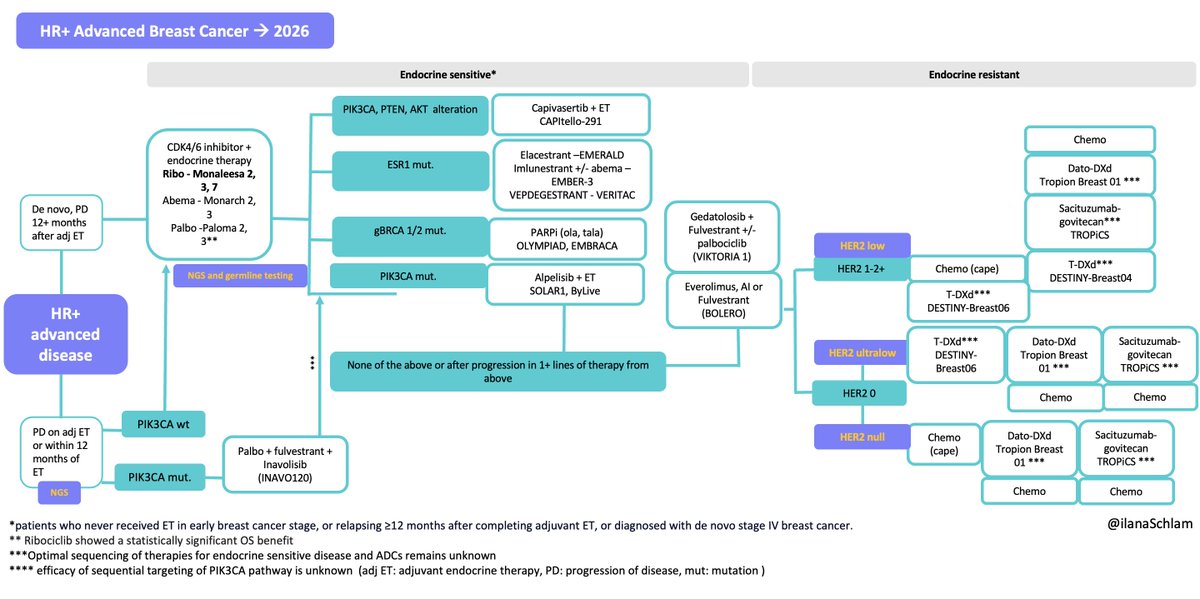
With 6 FDA approvals in breast cancer already in 2026, it was time to update the breast cancer treatment algorithms. It's a great problem to have when innovation is moving so fast that it's hard to keep up #bcsm@OncoAlert@DFCI_BreastOnc
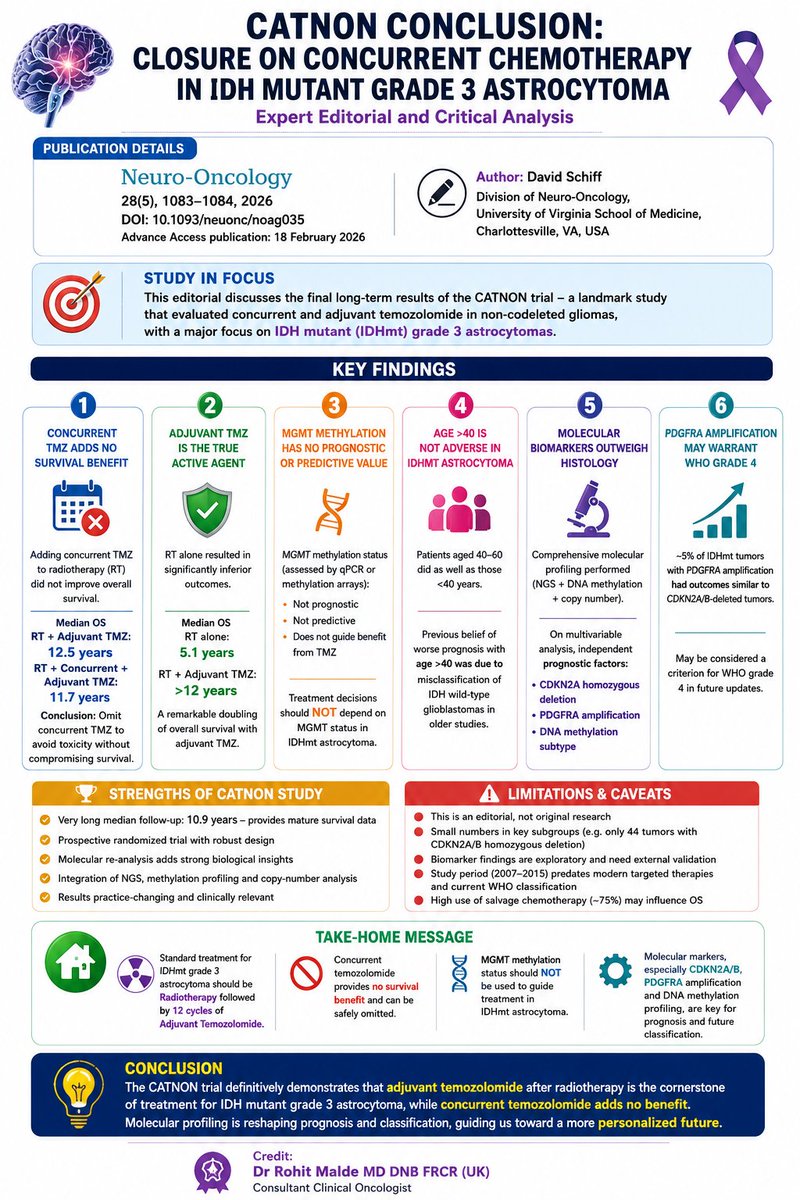
CATNON trial lessons
Concurrent temozolomide provides no survival benefit in IDHmutant Gr3 astrocytoma
Adj Temozol (12#) is the component that improves survival
Modern molecular biomarkers (esp CDKN2A/B, PDGFRA amp & DNA methylation profiling) are stronger prognostic markers
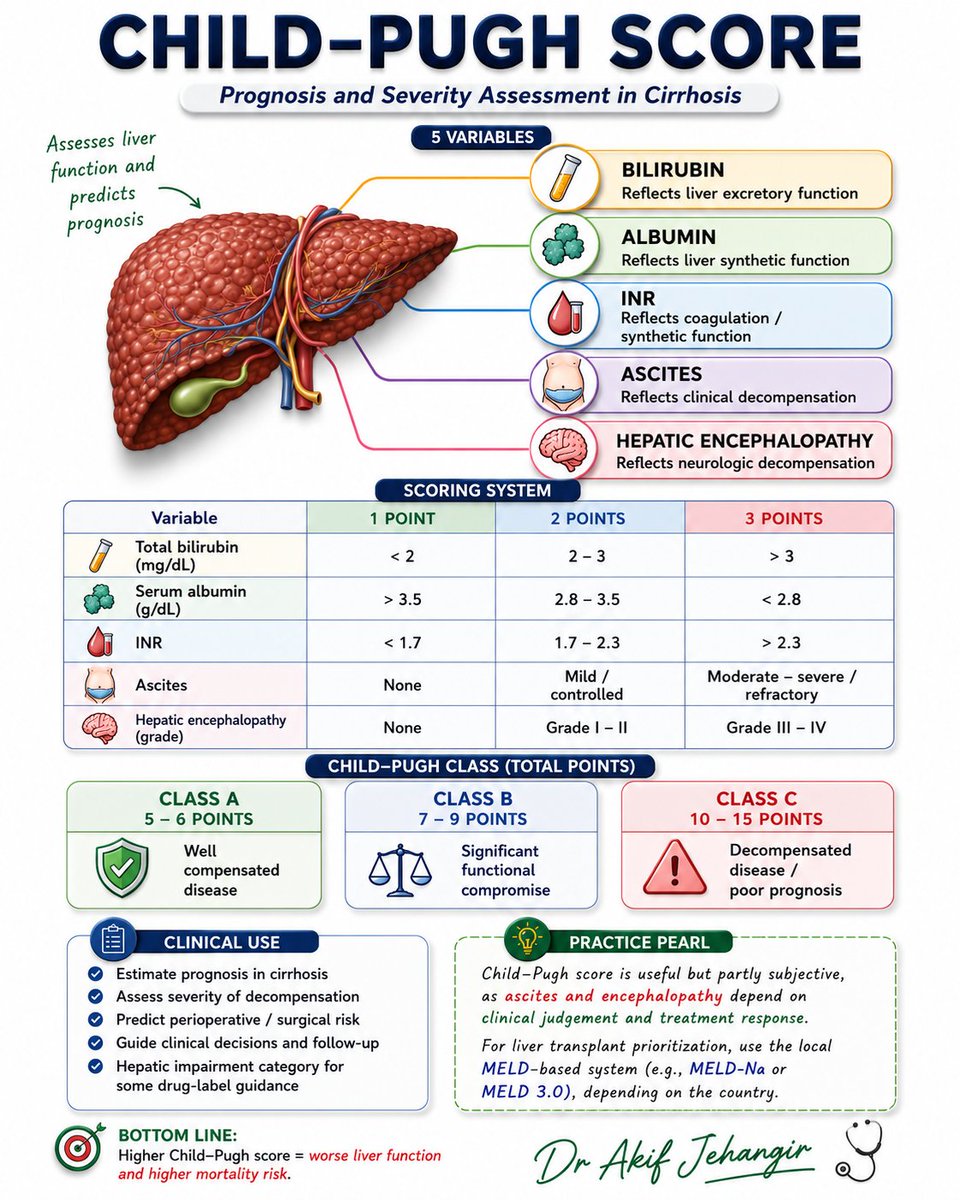
Child-Pugh score estimates hepatic functional reserve and prognosis in cirrhosis using bilirubin, albumin, INR, ascites, and hepatic encephalopathy.
Higher Child-Pugh class indicates more advanced liver dysfunction and poorer prognosis.
🔥off the press🔥
Systemic therapy for HCC: Doublets, triplets and beyond
@JHepatology
👉comprehensive summary of systemic therapies in HCC
👇my author link
https://t.co/e9FfJdIIl2
@myESMO@EASLedu@ilca
I highly recommend this News & Views in Nature Reviews Clinical Oncology entitled "New standards and new constraints redefine treatment sequencing in platinum-resistant ovarian cancer" by Prof. @CoquardRay and Prof. @DrKatyMoore. A quick, easy-to-read, and thought-provoking overview of how the treatment landscape for platinum-resistant recurrent ovarian cancer is rapidly evolving.
The article highlights how the recent MIRASOL, KEYNOTE-B96, and ROSELLA phase III trials have established new standards of care by demonstrating meaningful overall survival benefits with biologically driven therapies. But with more effective options comes a new challenge: how to optimally sequence treatments while balancing efficacy, toxicity, biomarkers, and patient preferences.
A great reminder that progress in oncology is no longer just about having new drugs—it's about making the right treatment choices at the right time.
@NatRevClinOncol - @oncodaily - @OncoDailyIO - @OncoAlert