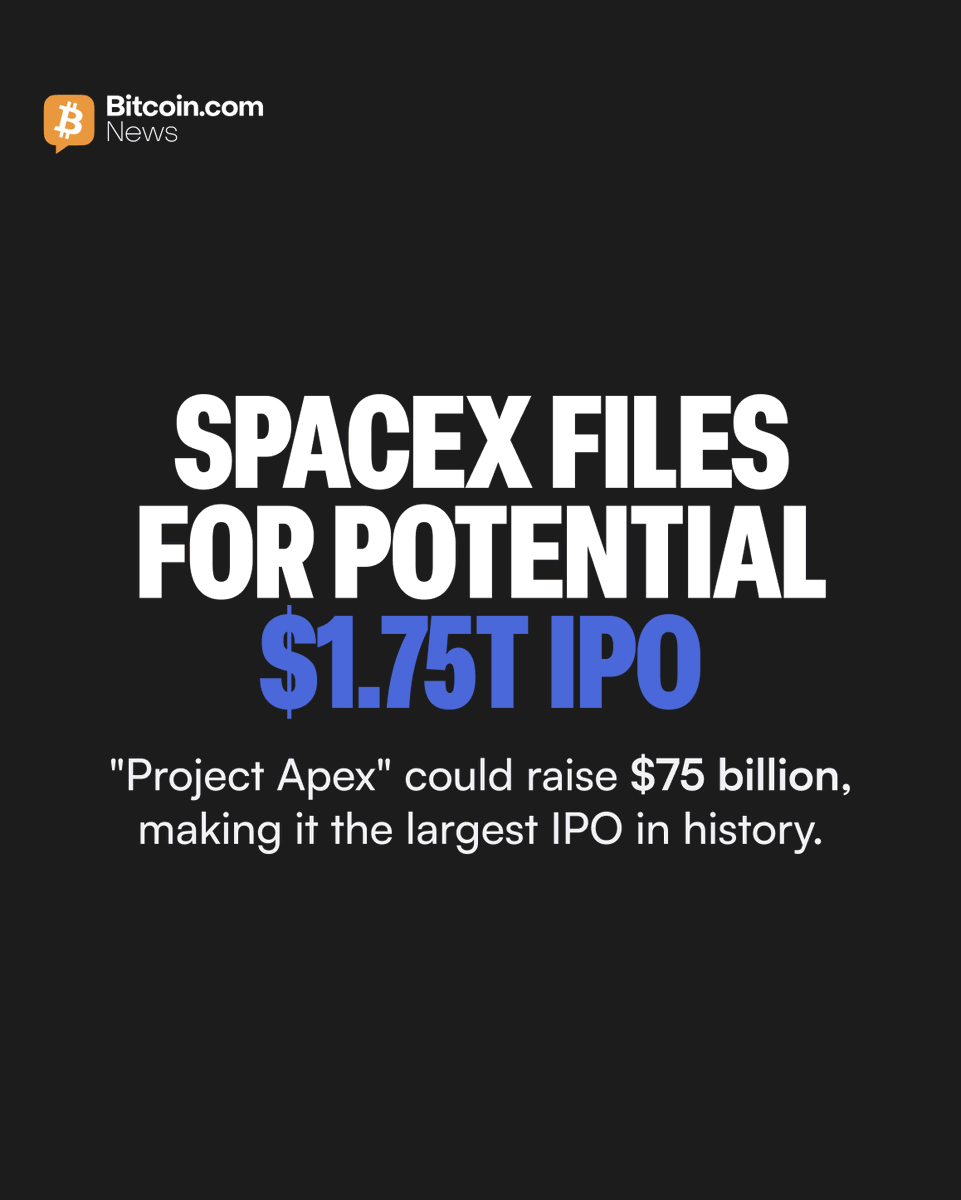
☄️ SpaceX files for an IPO that could value the company at $1.75 trillion, per reports.
The "Project Apex" listing aims to raise $75 billion, potentially the largest in history. 💰 Arkham shows SpaceX currently holds 8,285 $BTC on its books.
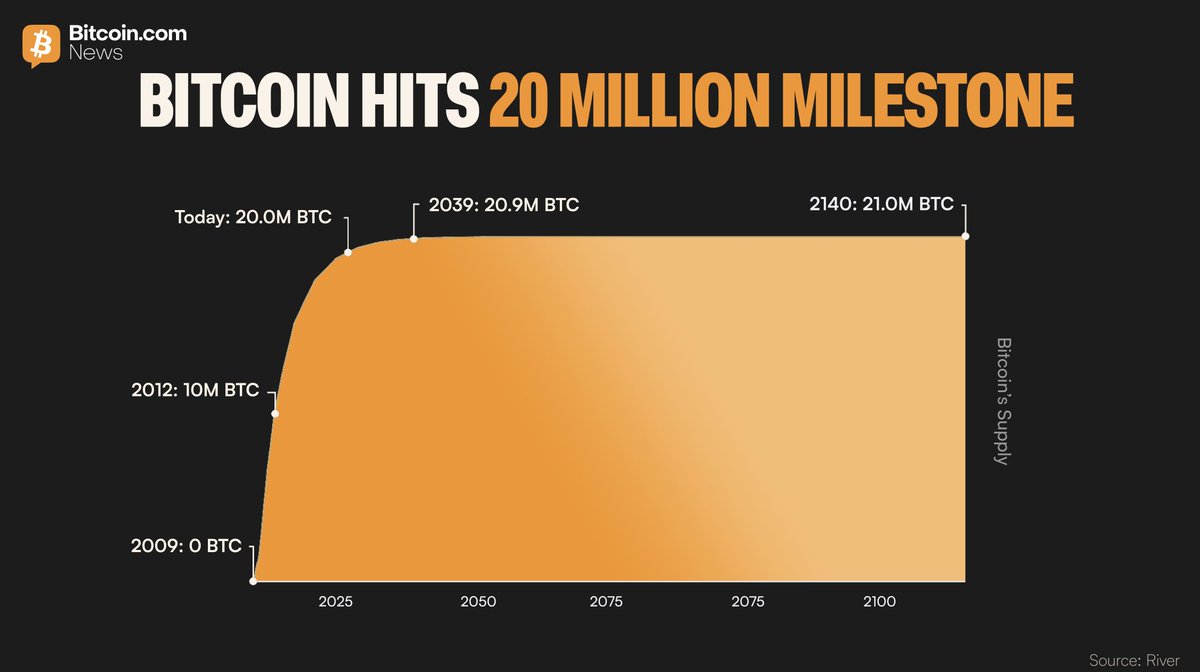
🟠⏳ #Bitcoin's circulating supply has reached 20 million $BTC, leaving just 1M coins remaining.
Over 95% of the total 21 million cap is now in circulation, with the final coins expected to be mined over roughly 114 years through programmed halving cycles.
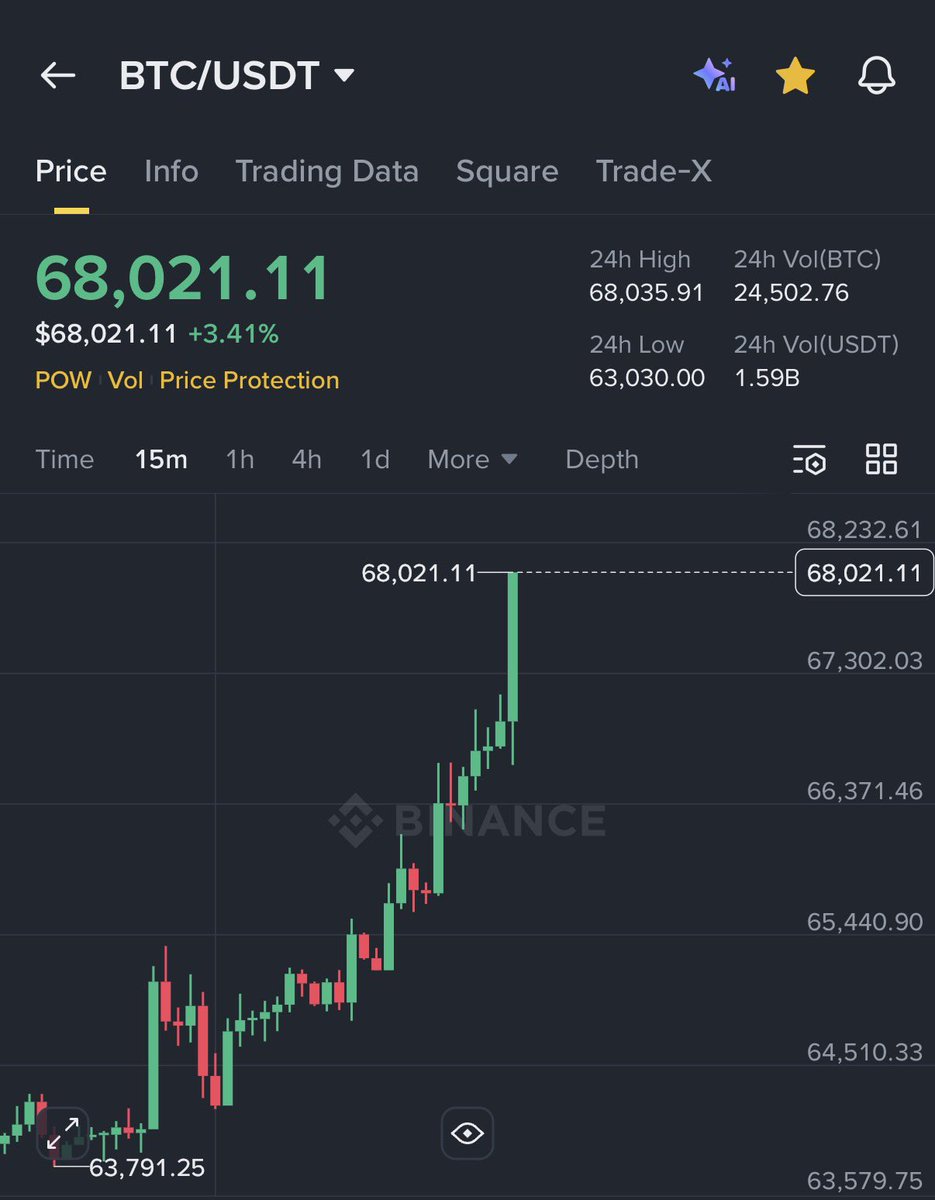
Bitcoin is back above $68,000.
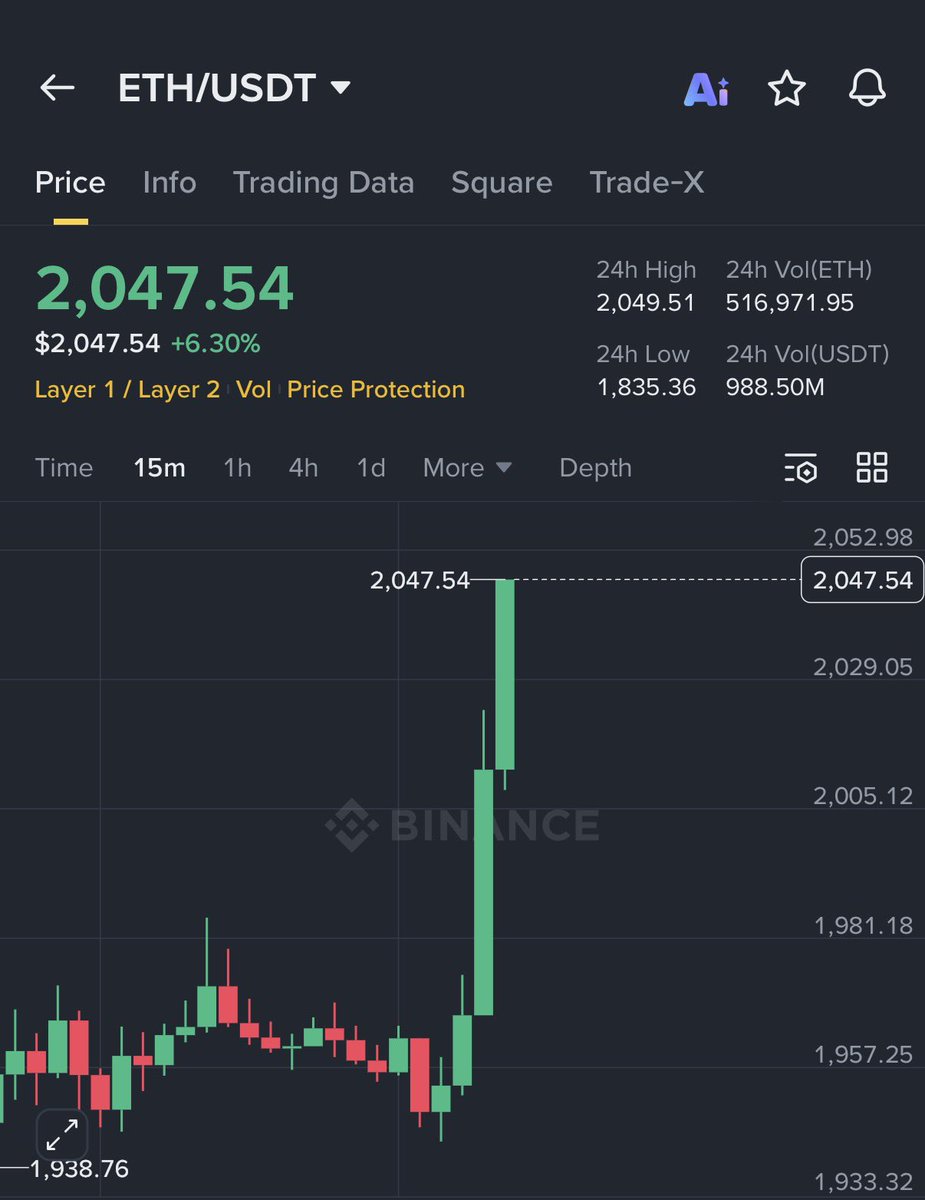
ETH is back above $2,000.
Market is pumping after Iran confirmed the death of Supreme Leader Ali Khamenei.
People are taking this as the end of the war between the US and Iran.
ETHEREUM IS GOING QUANTUM SAFE 🚨
VITALIK UNVEILS A 4-YEAR ROADMAP TO MAKE ETH FULLY QUANTUM RESISTANT BY 2029.
4 KEY VULNERABILITIES IDENTIFIED.
7 NETWORK FORKS PLANNED.
THE BUILDING BLOCKS ALREADY EXIST.
ETHEREUM GETTING READY FOR A BIG RALLY. 🚀
In Web3 people talk about tech more and more these days
Governance gets mentioned far less
Yet right now governance is turning into the most underrated risk point out there
Decentralisation sounds lovely
But in reality loads of projects are basically just founders plus a handful of big token holders Thats not an institution Thats a temporary setup
The issue isnt with the DAO concept itself
The problem is
token does not equal competence
voting does not equal strategic thinking
an active community does not equal responsible management
If a protocol lacks a properly thought-through decision-making structure it becomes vulnerable in two ways
takeover by big players
management paralysis where nobody steps up and takes responsibility
And the bigger the projects market cap gets the more expensive any governance mistake becomes
Institutional money isnt scared of volatility
Its scared of chaos
So the next phase for Web3 isnt shiny new L2s or the latest narrative
Its mature governance models
transparent delegation mechanisms
clear upgrade processes
well-designed incentive systems
proper separation between operational and strategic layers
Decentralisation without structure is just an illusion
Structure without transparency is a centralised front
A strong project is one where those two things are actually balanced
And thats exactly where the real asymmetry for venture is forming right now
📰 Markets change fast.
$BTC chops as ETF outflows and macro risks weigh, @Matt_Hougan sees a $200T tokenization tailwind, @brian_armstrong joins the push for a "win-win-win" deal on stablecoin rules and Russia says it never left the dollar.
Here's the Weekly Recap 🧵👇
Funny how in Web3 the word decentralisation gets thrown around almost on autopilot. As if it automatically guarantees something just by saying it
But honestly most projects are pretty down-to-earth when you look close. A handful of big token holders. A team that basically sets the direction in practice. A community that votes but usually within whatever parameters have already been set
And thats not necessarily a bad thing. The bad bit is when everyone pretends its somehow different
Real decentralisation happens when the team is actually willing to let go of control bit by bit. When governance isnt just a fancy tab on the website but a mechanism that can genuinely shift the projects course. When the treasury doesnt look like a black box
The market isnt that naive any more. People check how tokens are distributed who can sell when who holds the deciding vote. Trust comes from the details not the slogans
At some point every project has to pick: keep things comfortably centralised or properly share the responsibility
And thats always a lot messier than just writing a nice manifesto
NEW: 🏛️ World Liberty Financial's crypto forum at Mar-a-Lago tomorrow, will feature Goldman Sachs CEO, Nasdaq CEO, Franklin Templeton CEO and others.
🇺🇸 Organized by Trump family-backed crypto business World Liberty, the event will be hosted by Donald Trump Jr. and Eric Trump.
In venture we often look at the product, the market, the metrics. But honestly the biggest risk is always inside the team
We’ve seen projects with solid tech and real demand that still stalled over something dead simple: the founders never properly sorted out their roles. One pulls on strategy, the other meddles in operations. No one has final say. Decisions get diluted, speed drops, accountability just evaporates
A mature team isn’t one with zero conflict. It’s one that can argue hard but productively. Clear numbers on the table. Agreements that actually get honoured. The ability to own a mistake before it costs a fortune
At early stage culture matters more than brand. Brand takes years to build; toxic internal dynamics can sink a company in a single quarter
When we invest we always dig beyond the product into how people make decisions, how they share (or fight over) power, and how they behave when things get really tough. That’s what decides whether the project survives the next cycle
A strong team isn’t a slogan. It’s a properly managed system of relationships
📉 Bitwise CEO Hunter Horsley says crypto and programmable finance are in the "Slope of Enlightenment."
@HHorsley shared the Gartner Hype Cycle this week, tracking tech maturity and adoption, adding "people just haven't realized yet."