“... and I want something else. I'm not even sure what to call it anymore except I know it feels roomy and it's drenched in sunlight and it's weightless and I know it's not cheap.
Probably not even real”
🦔74% of newly created web pages now contain AI-generated content. Over half of published articles are AI-written or AI-assisted. Automated traffic passed human traffic for the first time last year, hitting 51% of all web activity. Snap banned AI-generated videos from recommendations and human creator numbers jumped 120% immediately.
LinkedIn added an AI slop reporting button the same week it kept sending notifications nudging users to write posts with its AI assistant. Apple TV started labeling content "Made by Humans" in credits. Brands that went all-in on AI-generated ads are paying premiums to go back to human creators because AI ads stopped converting.
My Take
Every technology that makes something abundant turns the scarce version into a premium. Printing press made text cheap, handwritten manuscripts became collectibles. Mass manufacturing made goods cheap, handmade became luxury. AI made content free and infinite, and now human-made is becoming the premium category. Brands are already paying for it. A company called Icon charges $1,000 for six ads filmed by a person, and the demand is growing because AI ads stopped converting. Consumers can feel when something is manufactured even if they can't explain why, and they stop engaging.
The ad industry is the canary here because it measures everything. Click-through rates, engagement, conversion, all tracked in real time. The entire pitch behind AI content was that it would be cheaper and just as good. Cheaper, yes. Just as good, no. Advertisers tested that at full scale and reversed course fast. If the one industry with the best data on whether AI output works is already paying premiums to go back to humans, the rest of the economy should be paying attention to why.
Hedgie🤗
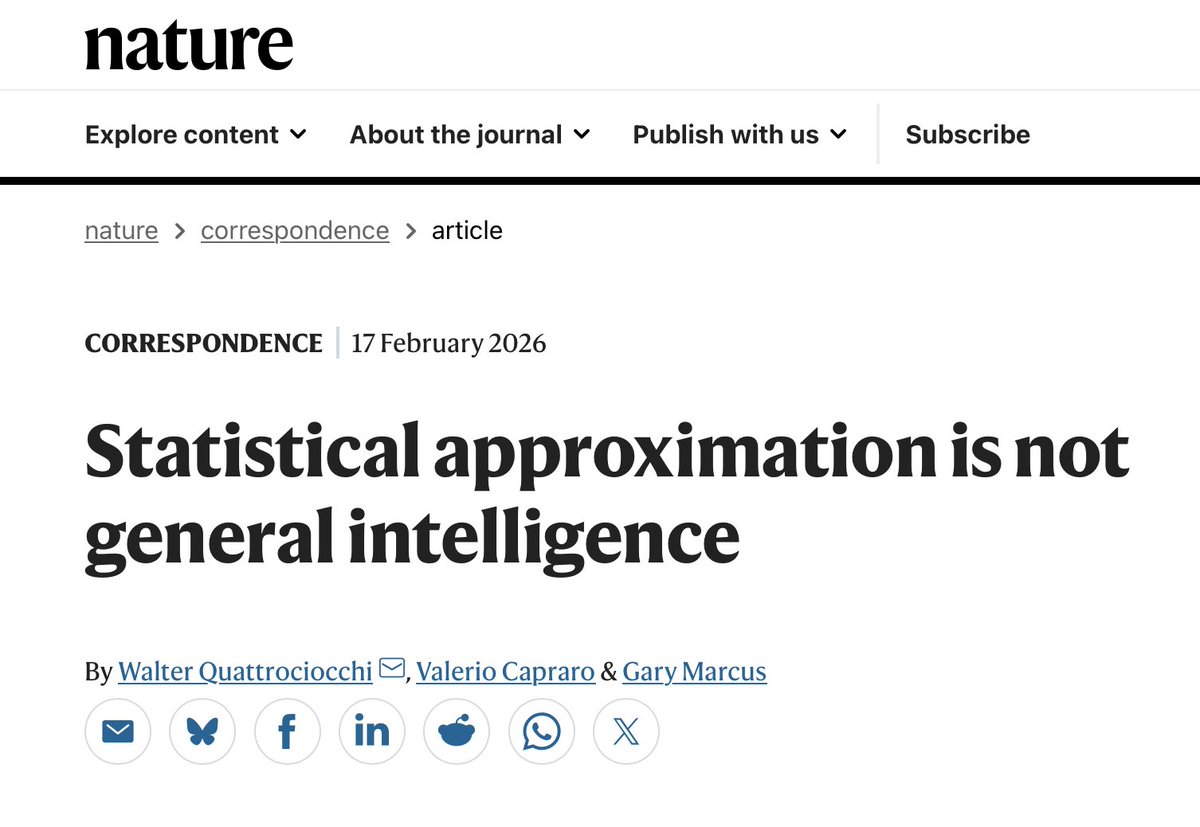
The Pope is making exactly our point. LLMs “may imitate or even simulate, but they do not understand.”
This is the core epistemic fault line.
Most AI evaluation is still based on one assumption: if a system statistically approximates human behaviour, then it is close to human intelligence.
But approximation is not intelligence.
Simulation is not understanding.
LLMs can produce the right answer without knowing why it is right. They can simulate empathy without feeling. They can imitate judgment without responsibility. They can generate coherent explanations without having a world to which those explanations are accountable.
Stop confusing behavioural similarity with cognitive equivalence.
Human understanding is embodied, affective, relational, motivational, and normative. It is not just the production of plausible text.
*
Full paper in the first reply
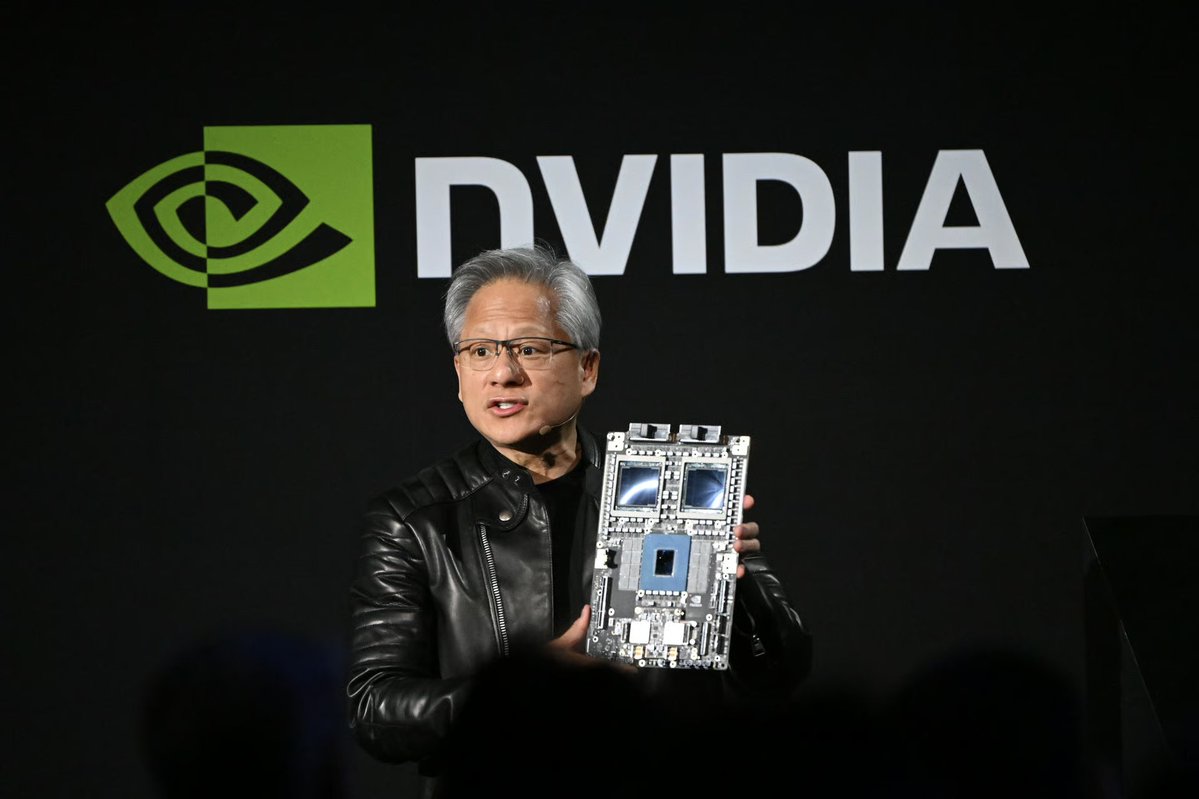
🦔Nvidia's VP of applied deep learning told Axios that for his team, the cost of compute is far beyond the cost of employees. An MIT study found AI automation is economically viable in only 23% of roles where vision is a primary part of the work, meaning human labor remains cheaper in the vast majority of cases. Uber's CTO said he's back to the drawing board because his 2026 AI budget is already blown. AI software fees have increased 20% to 37% over the past year. Despite all of this, Big Tech has announced $740 billion in capital expenditures for AI this year, a 69% increase from 2025, while laying off more than 92,000 tech workers.
My Take
The core contradiction of the AI moment is now being stated openly by people inside the industry. Companies are cutting human workers who are cheaper than the AI replacing them, to fund AI infrastructure that isn't generating measurable productivity returns, financed by investors who are also funding the AI companies selling the tokens at prices those companies cannot sustain without continued subsidy.
My honest read is that the workforce decisions being made right now are irreversible on a timeline the technology cannot meet. The entry-level pipeline being dismantled today will take a decade to rebuild. The engineers being cut to fund token budgets that exceed their salaries are the same people who would catch the failures when the AI gets it wrong. Companies are making permanent structural changes based on a cost structure that doesn't exist yet and a productivity case that by their own executives' admission hasn't materialized. At some point the distance between the bet and the reality has to close, and the people who absorbed the cost of being wrong won't be the ones who made the decision.
Hedgie🤗
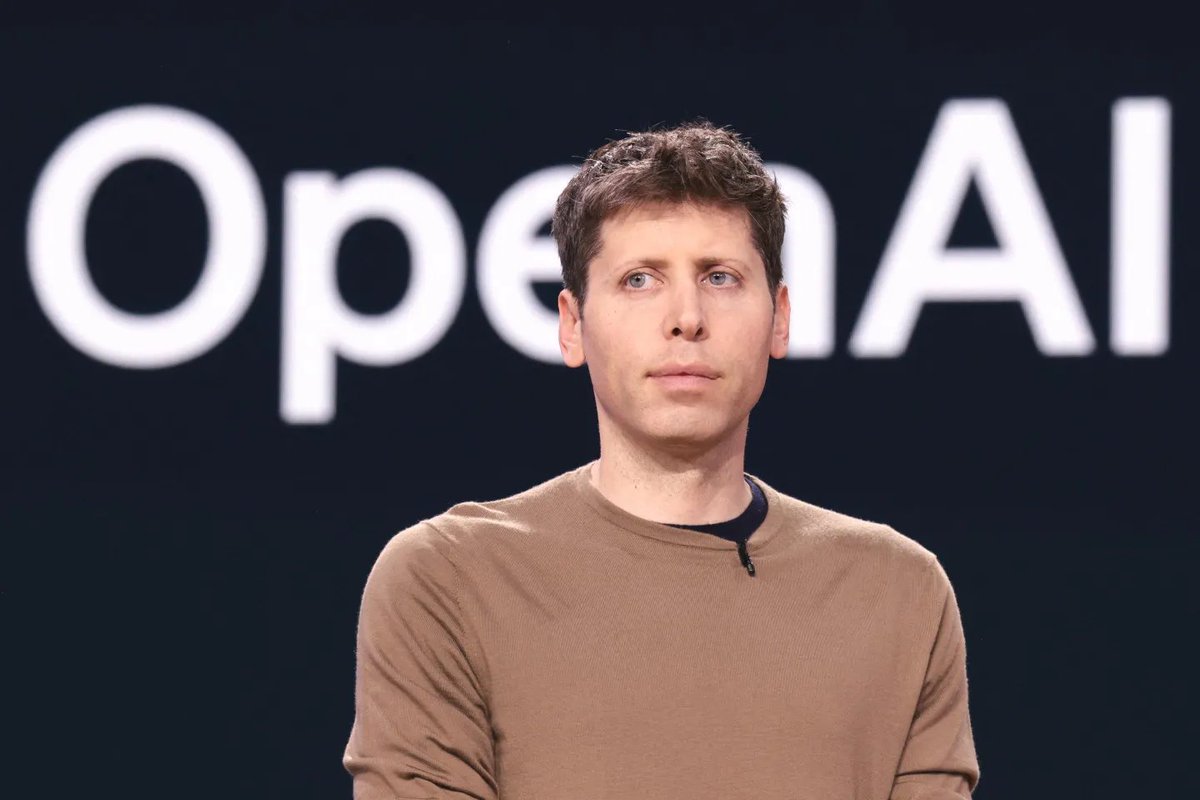
🦔OpenAI CEO Sam Altman published a 13-page policy blueprint today proposing a new social contract for the AI era. The proposals include a public wealth fund giving every American a stake in AI-driven growth, taxes on automated labor, a four-day workweek pilot, and automatic safety net triggers that kick in when AI displacement hits preset thresholds. Altman told Axios superintelligence is close enough that capitalism as currently structured won't be adequate to handle what's coming.
My Take
I've spent months covering what this transition actually looks like for regular people. Oracle sending 30,000 termination emails at 6am. Microsoft freezing hiring in its core business. New graduates unable to find entry level jobs. Private credit cracking under software company debt. Companies using AI as cover to cut the people who built their products.
Now the CEO of the company driving a lot of this is publishing a policy paper saying the disruption is so serious it needs a New Deal scale response. He is not wrong about the scale. But OpenAI closed a $122 billion funding round just last week at an $852 billion valuation while losing billions annually. He is racing to build the thing, raising record amounts to do it faster, and asking government to protect the people his technology is displacing.
The proposals themselves deserve serious debate because the alternative is nobody in power discussing this at all. But the people writing the blueprint are not the people losing the jobs, and that distance is important when you're deciding how much weight to give the solutions being proposed.
Hedgie🤗
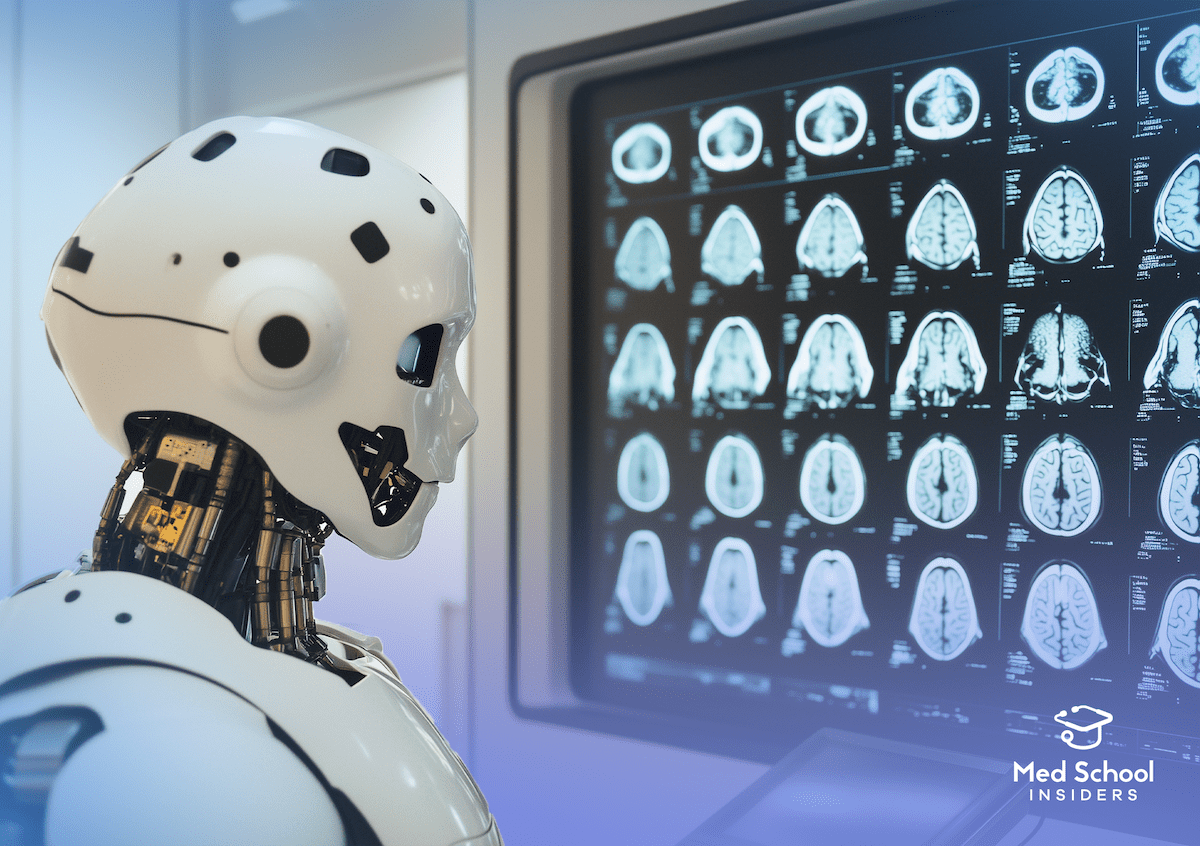
🦔 The CEO of NYC Health + Hospitals, America's largest public hospital system, said he is prepared to replace radiologists with AI for first reads once regulations allow it. Mitchell Katz said hospitals could produce major savings by letting AI handle initial mammogram and X-ray reads, with radiologists only reviewing flagged abnormals. A fellow panelist said his system's AI misses breast cancer only 3 times out of 10,000 for low-risk patients and is better than human readers. A San Diego radiologist responded directly: any attempt to implement AI-only reads would result in patient harm and death, and only someone with zero understanding of radiology would say something so naive.
My Take
In the current system radiologists see every image and catch both false positives and false negatives. In the proposed system AI controls what radiologists ever see. A false positive gets caught. A false negative, where AI says normal and no radiologist ever looks, is invisible in the workflow entirely. False negatives in cancer screening are the dangerous failure mode and the proposed system makes them structurally harder to detect over time because there is no mechanism to know what you missed.
The accuracy numbers being cited are also measured on curated datasets from major academic medical centers under controlled conditions. Real deployment means imaging hardware from dozens of facilities, patient populations that differ from training data, and edge cases no benchmark ever included. Hospital CEOs leading with cost savings as the primary argument for this change are answering a financial question while the clinical question, what happens when the model fails on a patient population it wasn't trained on, remains unanswered. That is not a reason AI cannot improve radiology. It is a reason that moving fast on this particular tradeoff carries consequences that won't show up until they already have.
Hedgie🤗
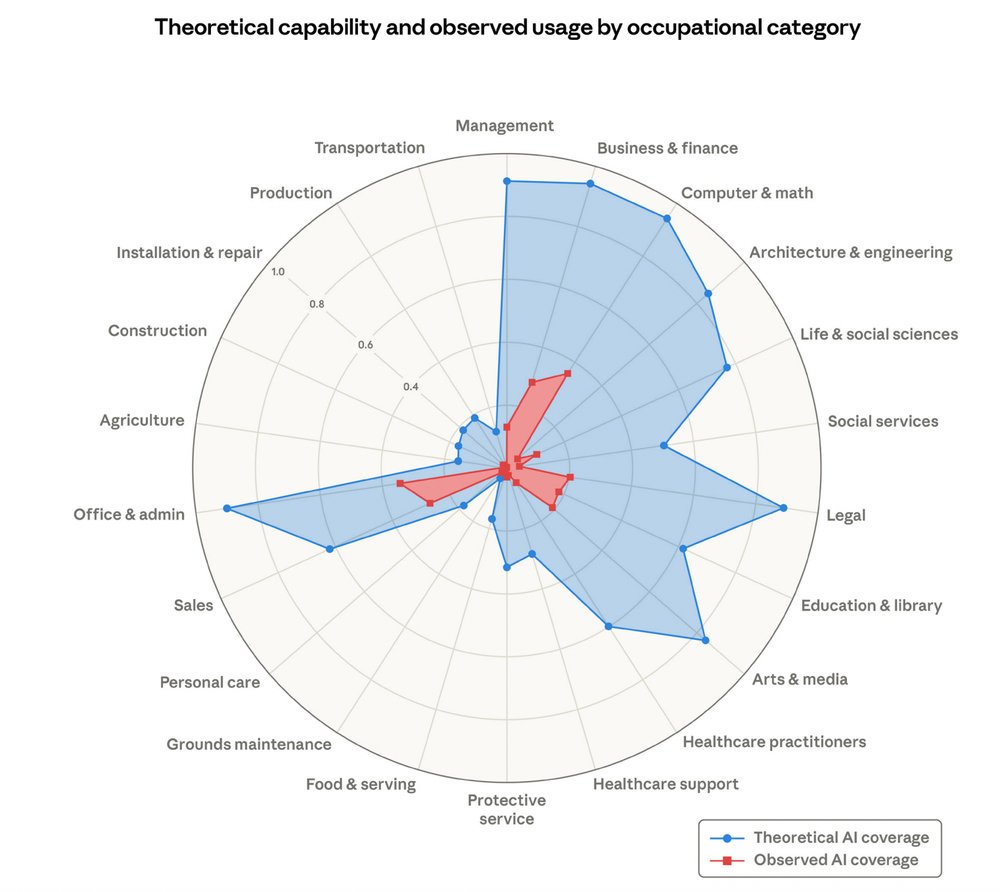
🦔 404 Media points out that AI labor market studies, including Anthropic's recent paper on displacement risk, focus on whether AI can do specific job tasks while ignoring how people actually use AI. The studies catalog uses like drafting business correspondence and building web applications. They don't include creating AI porn, generating spam and slop, or flooding platforms with content that overwhelms human creators. Meanwhile Google search results are degraded, website traffic is down, creators are competing with AI slop that can brute force recommendation algorithms, authors are fighting plagiarized AI versions of their books on Amazon, and Spotify is overrun with AI-generated music.
My Take
The criticism is fair, honestly. If you're studying AI's economic impact by matching AI capabilities to job tasks, you're missing the larger effect. A journalist's job isn't being replaced by an AI that writes articles. It's being undermined by AI overviews that kill traffic to the article, AI slop that outranks it in search, and chatbots that summarize it without sending readers to the source. The task still exists. The economic model that supported it doesn't.
Anthropic's paper uses Claude usage data to estimate displacement risk, which creates an obvious selection bias. People using Claude for work are probably using it for the professional applications Anthropic wants to highlight. The jailbroken versions popular for sexbots and the slop generators flooding every platform don't show up in that dataset. 404 Media's point is that AI companies keep studying the version of AI use that looks good in marketing materials while the actual widespread uses are eating the internet. Whether that's squeamishness or intentional misdirection, the result is research that misses what's actually happening.
Hedgie🤗
Here are some ways that AI hype is outrunning reality in the life sciences:
1. Many assume we already have all the data we need, and we just need to throw it into a model for amazing results. We are underinvesting in new types of data & identifying new causal mechanisms.
There's a toxic culture coming out of the AI industry that keeps trying to get us not to think.
The message is everywhere. Don’t read the code, just vibe-code. Don’t try to understand all the text, just let AI summarize it. Don’t bother educating yourself, it’s too late.
Don’t worry about the errors. Trust that everything will be fixed in the next version.
The theme is the same. Don’t think too hard. Just keep swallowing the slop.
🦔 Cortical Labs taught 200,000 human brain cells to play Doom. The neurons are grown from blood cells, mounted on a silicon chip, and kept alive in a nutrient solution. Game data gets translated into electrical signals sent to the neurons, and their firing patterns control movement and shooting. An independent researcher taught the system to play in seven days using just Python. The CL1 biological computer costs $35,000 and has been shipping since last summer. The CIA's In-Q-Tel is among the investors.
My Take
Doom is the benchmark because it's computationally lightweight but complex enough to demonstrate real learning. The neurons play like beginners, but they're adapting in real time with minimal training data, which is something conventional AI struggles with. A rack of these units uses 850-1,000 watts compared to tens of kilowatts for equivalent AI workloads in a data center. That efficiency gap is why this matters beyond the novelty.
The ethics questions are coming whether we're ready or not. Right now it's 200,000 neurons, far from the 86 billion in a human brain. But Cortical Labs says scaling to hundreds of millions is achievable without major changes. At some point someone has to decide what level of biological complexity deserves moral consideration. The company requires ethics approval and a proper lab to buy one, but not every country will have the same standards. If biological computing turns out to be cheaper and more efficient for certain tasks, the incentives to scale are obvious. We're figuring out the rules while the technology moves forward.
Hedgie🤗
🦔 Fast Company published an op-ed arguing that AI executives warning about job displacement are the same people building the systems causing it. The piece calls out Dario Amodei, Sam Altman, and Mustafa Suleyman for talking about automation like it's weather they're observing rather than something their companies are actively creating. Suleyman recently said most white-collar work will be "fully automated" within 12-18 months. Altman has said some job categories will be "totally, totally gone."
My Take
I've noticed this too. Jobs will "be automated." Roles will "go away." It sounds like something happening to us rather than something being done by specific people making specific decisions. But these executives aren't helpless observers. They're building the systems, raising the capital, and setting the roadmaps. When Amodei says he's worried about displacement overwhelming society's adaptive mechanisms, he's describing consequences of choices his company is making right now.
These executives often propose universal basic income as the solution, which basically concedes that the market outcomes they're creating will be so lopsided that massive government redistribution becomes necessary. If we're willing to accept that level of intervention after the fact, why not shape incentives now to favor augmentation over replacement? The answer is that it would slow them down, and nobody wants to be the one who falls behind. So they keep building and keep warning us about what they're building. It's a strange position to be in, expressing concern about the fire while holding the match.
Hedgie🤗
🦔 A neuroscientist who testified before the Senate says US schools weren't broken until tech companies convinced them they were. Jared Cooney Horvath found that test scores in Utah started declining right when schools implemented mandatory digital infrastructure in 2014. The US has spent $30 billion putting laptops and tablets in classrooms since 2002. According to international data, more time students spend on computers correlates with worse scores, not better. Gen Z is the first generation to score lower than their parents on standardized assessments.
Now the same cycle is repeating with AI. A Pew survey found more than half of US teens use AI for schoolwork. Teachers report students can't reason, think, or solve problems independently. Horvath argues that tools experts use to make their lives easier are not the tools students should use to learn how to become experts.
My Take
The "transfer problem" goes back to the 1950s. Students learn to master the tool but not the subject matter. Pressey and Skinner ran into this with teaching machines 70 years ago, and we're running into it again with AI. The tech changes but the outcome doesn't.
I think Horvath has it right. Learning requires friction. You have to struggle with a problem to actually understand it. AI removes that friction, which feels like help but functions as dependency. An expert can use AI effectively because they already know enough to evaluate the output. A student using AI to skip the hard part never builds that foundation. We're watching an entire generation learn to operate tools instead of developing the skills the tools are supposed to augment. The productivity gains go to the platforms, not to the kids.
Hedgie🤗
Exactly. I spent years researching how non-gen AI can be safely implemented in safety-critical systems, and I'm somehow pinned as a "critic" because my work demonstrates that genAI is unsafe in safety-critical settings, despite a lack of arguments to counter this evidence.
8 fallen teardrops, frozen in time, each one shed by someone I love because of my words, a catalogue of the hurt and joy and catharsis I had caused, to stand as witnesses for me in the unrecognizable future, proof that I am human, put forward by beating hearts bearing my scars
Buyers remorse:
"While AI systems promised efficiency and savings, companies have since encountered unforeseen challenges: long model-training cycles, inconsistent task accuracy, and the human effort required to supervise and refine machine output."