CEO, APRI Group. Real estate, project finance & solar in the Philippines. Building Juanprogress AI to reimagine PH spaces. Oxford Saïd · AIM Smart Cities 🇵🇭
Beneath the Luminous Tree: AI, Abundance, and the Filipino Duty to Steward the Future
Reading into Elon Musk’s statement that AI and robots may someday make everyone wealthier than the richest person alive, I do not hear only a technology forecast. I hear a civilizational wager. I hear a question hiding inside a promise: if intelligence becomes abundant, what kind of humanity will we choose to become?
For JuanProgress, this matters deeply because I write not just as an observer of trends, but as a builder. I write as a Filipino entrepreneur who has seen both the friction and fire of our country. We know traffic, red tape, uneven infrastructure, disaster risk, and capital gaps. But we also know grit, faith, family, bayanihan, and the talent to create value where others only see limits.
This is why Musk’s prediction, while extreme, has a real theory behind it. He has lived inside industries shaped by cost curves. Rockets, batteries, transport, connectivity, what starts as impossible becomes expensive, then useful, then normal. AI could do this for cognition. Robotics could do this for labor. If intelligence and physical work both become abundant, then scarcity across many sectors may collapse faster than our institutions expect.
In that future, wealth is no longer only pesos, dollars, or market cap. Wealth becomes access. Access to superhuman diagnostics in a rural clinic. Access to a personalized tutor for every child, in English, Filipino, and local languages. Access to cleaner energy, safer mobility, faster permits, smarter logistics, and creative tools that allow small businesses to compete with incumbents. A sari-sari store owner and a startup founder may both gain leverage once reserved for giant corporations.
But abundance is not the same as justice. This is the danger inside the dream. AI can also concentrate ownership, manipulate attention, extract behavior, and deepen inequality if public systems remain weak while private systems become exponentially intelligent. Technology does not automatically produce utopia. It amplifies the values, incentives, and governance around it.
That is why Musk’s line about truth and beauty matters. Truth means alignment with reality, evidence, and consequences. Beauty means alignment with human dignity, harmony, and meaning. A civilization can become astonishingly efficient and still become spiritually poor if it optimizes only for speed, profit, and control.
For the Philippines, the opportunity is not merely to consume AI tools, but to steward them. We can use AI to strengthen land records, disaster response, health triage, education delivery, SME financing, and city operations. We can build ventures that remove friction from daily life, not just apps that chase attention. We can design systems that work not only in business districts, but in barangays, ports, farms, classrooms, and city halls.
My hope is not a machine-made paradise. My hope is a more human civilization made possible by wise tools. So let this be our call to stewardship: build for inclusion, govern for dignity, and align intelligence with the common good. Abundance without character will fracture us. Abundance with stewardship can help us become the nation, and the humanity, we are meant to be.
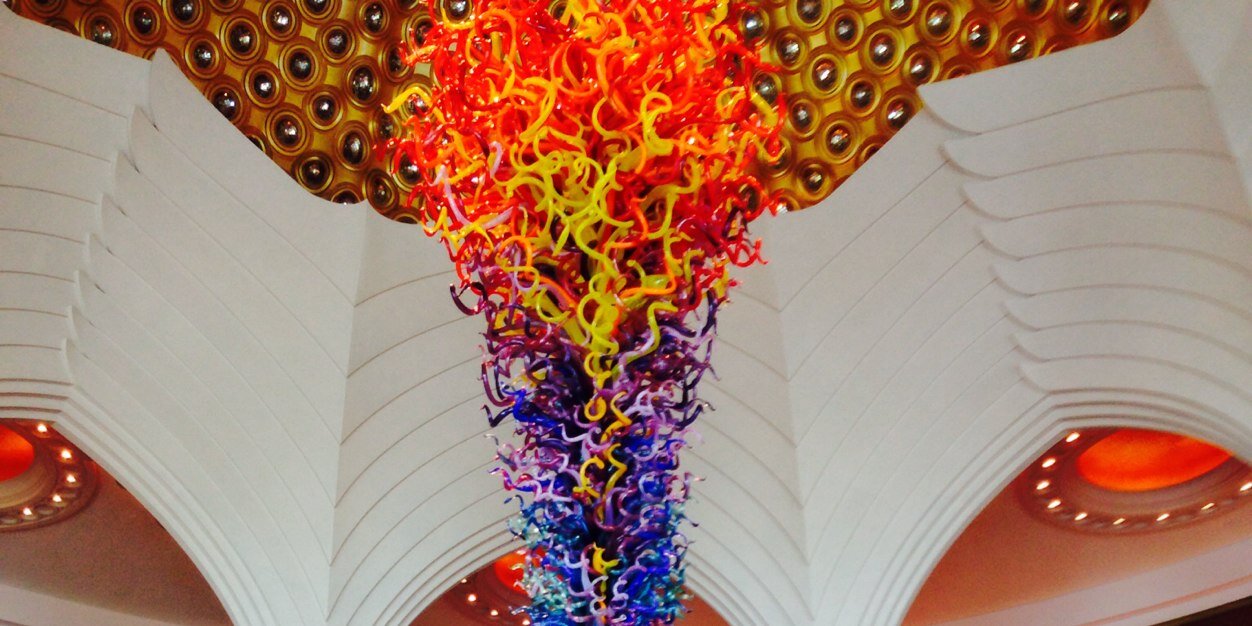
I think of the image of a luminous tree at the center of a future city: roots in memory, branches in code, people gathered beneath it. That is the right metaphor. AI should be like public shade, protective, shared, life-giving, not a private tower casting shadows on everyone else. Progress must feel like dignity becoming ordinary, not privilege becoming automated for every family.
Two girders of the P512-M Gandara Parallel Bridge in Samar collapsed Tuesday during roller removal. No injuries. DPWH: replacement at no cost, penalties if defects are found. When assessment starts, your records are your defence. via Philstar #Construction
A US-PH trade deal was announced on 18 Nov. No terms published, nothing signed. Still in force: a 12.5% US tariff on Philippine goods since 24 July. Price against the documented rate, not the headline. via Philstar #PhilippineEconomy
SMDC's new ICE Tower at the MOA complex pairs private units with a business hub, boardroom, backup power and fibre — offices and satellite offices allowed, subject to permits. Permitted use is becoming a pricing variable. via Philstar #RealEstatePH
I'm JP Reyes, CEO of APRI Group. 16 years in PH real estate, project finance & solar.
Building Juanprogress AI: snap a photo of any PH street, get a greener, safer redesign concept.
Here: PH real-assets briefs, smart cities and building in public.
https://t.co/n2IDekD2fG 🇵🇭
Thrilled to announce $5B in funding for @IsomorphicLabs to accelerate our mission to Solve All Disease. We continue to make rapid progress reimagining drug design from first principles with AI to radically cut the time & cost to find new medicines. Gradually, then all at once...
A new flashpoint opened in the far north of the archipelago. On 1 October the Philippine Coast Guard sent its largest vessel, the 97-metre BRP Teresa Magbanua, and an aircraft to confront the Chinese research ship JIA HAI KE 7 some 37 nautical miles north-west of Itbayat Island, Batanes, where it had loitered since 28 September (The Jakarta Post/AP, 1 October 2026). Spokesman Jay Tarriela said the operation "disrupted the vessel's unauthorised marine scientific research," and called the arrival of a China Coast Guard ship to screen a privately owned survey vessel "significant." Beijing's embassy said the ship was operating normally in waters under Chinese jurisdiction. Batanes commands the Luzon Strait approaches to Taiwan, so this widens the dispute rather than repeating Scarborough.
(1) The Philippine Coast Guard drove a Chinese survey ship from Batanes waters on 1 October, and a China Coast Guard cutter arrived to shield it. (2) Lynas agreed to buy Meteoric Resources for A$968 million to secure Brazilian rare earths, as China's export-control suspension runs down to 10 November. (3) The PSEi closed at a 2026 low of 5,679.48 with P950.67 million of foreign net selling, and DBS called the peso Asia's laggard. (4) BlackRock and IFM are in exclusive talks to buy STACK Infrastructure's Asia-Pacific data centres for about US$25 billion. (5) Tokenised assets on public blockchains hit about US$38 billion, nearly double a year earlier. (6) A federal appeal against Oregon's packaging EPR law reached the Ninth Circuit. (7) Berg Insight put 2026 humanoid shipments at 16,000 units.
Manila's equity market is in a foreign-selling grind. The PSEi closed on Wednesday at 5,679.48, down 58.92 points or 1.03 per cent, a third straight decline, with net foreign selling of P950.67 million (Inquirer, 30 September). Luis Limlingan of Regina Capital tied the caution to the BSP's warning that September inflation could quicken to 7.4 per cent, and Philstocks Financial to Budget Assistant Secretary Romeo Matthew Balanquit's warning that severe El Niño could slow infrastructure spending.
Nickel is caught between visible surplus and an invisible water problem. Prices fell to about US$16,050 a tonne on 28 September, near the lowest since December 2025, with LME on-warrant stocks at 278,898 tonnes (Trading Economics, 28 September). Yet Indonesia's ore quota stays below the roughly 315 million tonnes needed to run installed processing at full rates, and El Niño has cut river flows in Morowali, risking an estimated 100,000 tonnes of nickel pig iron; ore prices held flat on 29 September, additional 2026 RKAB quotas released without an official total (SMM, 29 September). Philippine ore shipments to Indonesia, near 15 million tons in 2025, could double this year on Jakarta's curbs (https://t.co/kQPPsVFF3g, 13 February). No new Chinese export-control or chip-supply developments were verified.
Beijing has broken the two-year quiet at Second Thomas Shoal. Chinese navy and coast guard units blocked a Philippine resupply mission to the BRP Sierra Madre on 24 September, forcing a suspension after manoeuvres that risked collision (USNI News, 25 September). It is the first publicly reported blocking since the undisclosed provisional arrangement took effect in July 2024. Three days later the PLA and coast guard drilled at Scarborough Shoal, with state media asserting Chinese control there now extends beyond 24 nautical miles (USNI News, 28 September). Proclamation No. 1447 meanwhile makes 16–18 November non-working days in Metro Manila for the 49th ASEAN Summit (Philstar, 23 September).
(1) China blocked a Philippine resupply run to Ayungin Shoal on 24 September, then drilled at Scarborough on 27 September. (2) Nickel fell to about US$16,050 a tonne even as El Niño water shortages in Morowali threaten some 100,000 tonnes of Indonesian nickel pig iron. (3) The PSEi closed Wednesday at 5,679.48, down 1.03 per cent with P950.67 million of net foreign selling, after the BSP warned September inflation could reach 7.4 per cent. (4) Vietnam drew US$40.63 billion of registered FDI in eight months against Philippine pledges of P42.64 billion in the first quarter. (5) No material tokenisation news. (6) Recycling capital went into plastics plants and a 95-per-cent-recoverable wind turbine; no Philippine EPR movement. (7) IDC put first-half global humanoid shipments at nearly 25,000 units, up 432 per cent, as Beijing tightened robot listing criteria.