What have we learned about constructed response short-answer questions from students and faculty? A multi-institutional study: Medical Teacher: Vol 0, No 0 https://t.co/MmEGKztbIn
#MedEd
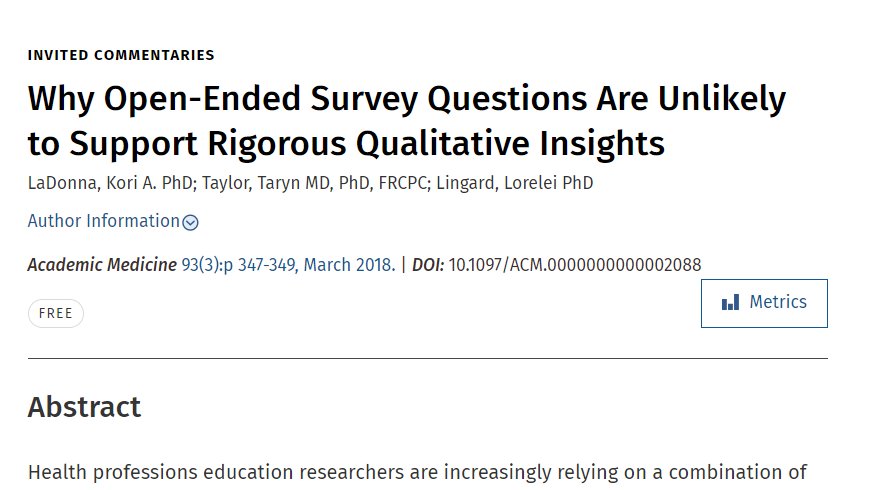
For all those in #MedEd "doing exploratory qualitative work using open-ended items on a #survey," I beg you to please READ this paper by @Kori_LaDonna and @LingardLorelei, since a survey is likely the wrong tool for the type of qualitative work you intend to do...
"One example is "qualitatively" analyzing free-text responses to survey or assessment instrument questions. In this Invited Commentary, the authors explain why analysis of such responses rarely meets the bar for rigorous qualitative research. While the authors do not discount the potential for free-text responses to enhance quantitative findings or to inspire new research questions, they caution that these responses rarely produce data rich enough to generate robust, stand-alone insights. The authors consider exemplars from health professions education research and propose strategies for treating free-text responses appropriately." https://t.co/zCG3mKSp9n
@mededdoc I think it is worth it. Most of the time, the project can proceed without the money. But putting a grant together, even if it doesn’t gets funded, brings a team together.
Congrats to Clinical Associate Professor Dr. Marc S. Adler for his new role as Chief of Hospital Operations at Long Island Community Hospital. Dr. Adler has shared and will continue to share his knowledge of health systems science with our students. https://t.co/rDhvenozFH
Long Island Business News @LIBN named Dean Ayala one of their Most Dynamic Women Leaders in their Long Island Business Influencers series. Read more about her and the school here: https://t.co/dfMqBuXxxV.
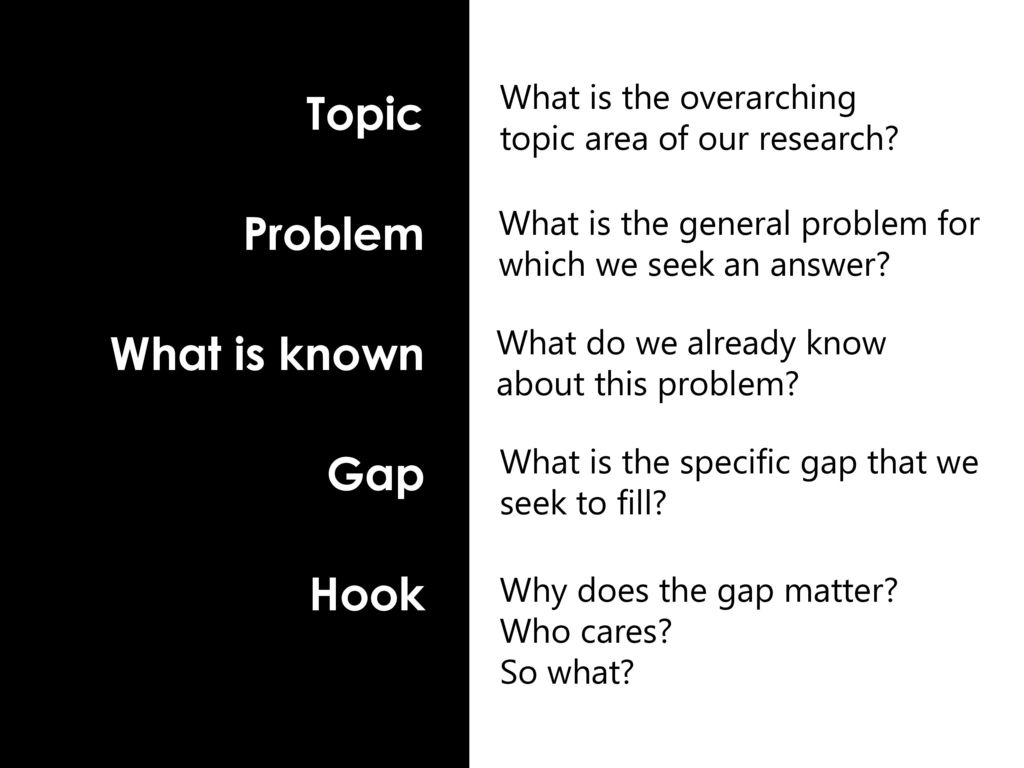
It's been said before, but it's worth stating again... Just because something's "not been done in our context" does not mean it's worth studying (or funding)!
We need more, like what's the problem you're trying address and why is it important to #MedEd, #education, #medicine, etc?
This MUST READ compares work hours for residents across 14 countries. While it's not easy anywhere, it appears to be toughest in North America. Hours correlate only modestly with quality of life & education. @TitAlbreht@OBShealth@PaulJBelcher@EUPHActs
https://t.co/bhV0v3rybH