El 49 % de los trabajadores en Colombia ganan menos de un salario mínimo.
No es falta de ganas: es un sistema diseñado para frenar a quien quiere formalizarse. 🇨🇴
Según las economistas Marcela Eslava y Marcela Meléndez, la informalidad no es solo un problema de los trabajadores, sino de una trampa regulatoria que ahoga a los negocios:
👉Costos extra elevados: los aportes a salud, pensiones y parafiscales representan el 60% del salario base, la tasa más alta de América Latina.
👉Desconexión salarial: el salario mínimo legal no es un piso real, pues 49 % de los trabajadores en Colombia ganan menos.
👉Asfixia tributaria: la alta tasa de impuesto de renta corporativa genera un "enanismo productivo", donde las empresas prefieren quedarse pequeñas para evitar impuestos más altos.
La solución no es elegir entre equidad o crecimiento; es ajustar las leyes laborales y tributarias para que tener un negocio formal en Colombia deje de ser un castigo.
¿Has sentido esta trampa al emprender o buscar trabajo en el país?
Lee el análisis completo 👇
https://t.co/WhLuz8eyum
#Colombia #Empleo #Economía #MercadoLaboral #Formación #Productividad
El mapa de ingresos del mundo ha cambiado desde 1987.
Los países de ingreso bajo pasaron del 30% al 11%. Las economías de ingreso alto pasaron del 25% al 41%. Conoce más detalles de las clasificaciones de países por nivel de ingreso del Grupo Banco Mundial 🔗 https://t.co/OvGABGC3Gi
El comité coordinador del empalme del gobierno electo, pidió al Gobierno Nacional claridad en siete grandes áreas : crisis fiscal, paz total, salud y crisis humanitaria, crisis energética, reforma agraria y sostenibilidad del ICBF. ⬇️
Hoy en papel la columna de ayer sobre el perverso antecedente, en nuestra historia, de devaluar y manosear el heroico y altísimo concepto de la "desobediencia civil".
¡Nuevo Libro!
Hacer que el mercado laboral funcione: mejorar la productividad y el bienestar de los trabajadores de América Latina y el Caribe
Conéctate el lunes, 3 de agosto, a las 10:00am hora de Washington DC.
Inscríbete aquí https://t.co/BZEqjugVkc
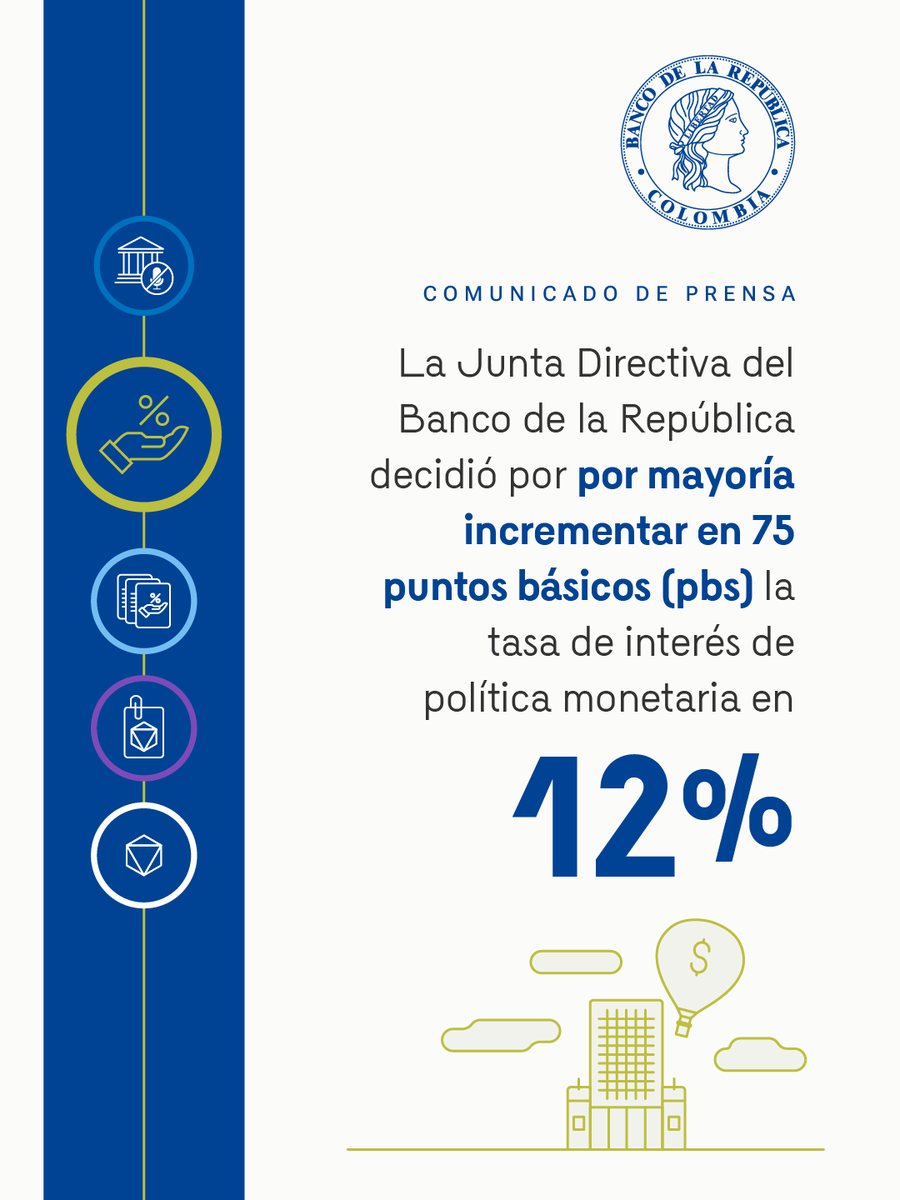
Decisión de política monetaria: En su reunión de junio la #JuntaBanRep decidió por mayoría incrementar en 75 puntos básicos (pbs) la tasa de interés de política monetaria a 12%.
Más información en el comunicado de prensa 👉 https://t.co/RZBoRTu10C
La decisión adoptada por la mayoría de los miembros de la Junta Directiva está encaminada a que la inflación retome una senda decreciente. Las decisiones futuras dependerán de la nueva información disponible.
Breaking news: Alan Greenspan, the US Federal Reserve chair who dominated global markets in the late 20th century only to see his legacy tarnished by the financial crash, has died at the age of 100. https://t.co/lO7pwXujrW
#MÁGICO ✨️🐻💫 ¡Visita inesperada! Un oso andino fue captado ingresando a un condominio en La Calera (C/marca), donde incluso levantó la talanquera mientras una familia permanecía en su vehículo. Los testigos del encuentro agradecieron a la naturaleza por tan maravilloso momento
🔴ÚLTIMA HORA | Cuba se abre al capitalismo y aprueba su mayor reforma en décadas: banca privada, mercado de cambios y fin de los subsidios. El Gobierno de La Habana anuncia la liquidación de las empresas públicas “que no soporten la devaluación” https://t.co/OBaTVPSYSq
Kevin Warsh’s Federal Reserve will need to raise interest rates by the end of 2026 to tame the burst of inflation sparked by Donald Trump’s Iran war, leading economists said as he prepares for his first meeting as chair. https://t.co/thaG0fDxqh
You have noticed it. ChatGPT feels dumber than it used to. Your prompts that worked six months ago produce worse results now. The writing sounds flatter. The ideas sound safer. The internet itself feels like it is shrinking. Every article reads the same. Every email sounds the same. Every answer sounds like it was written by the same voice.
You thought it was you. It is not you.
Researchers at Oxford and Cambridge published a paper in Nature proving what is happening. They call it Model Collapse.
Here is the mechanism in one sentence. AI trained on AI-generated data gets dumber every generation until it forgets what real human data looked like.
The internet is filling with AI-generated content. Blog posts. Articles. Reviews. Comments. Social media. AI companies scrape the internet to train the next generation of models. Which means the next generation of AI is being trained on the output of the current generation.
Each cycle loses information. Not randomly. It loses the rarest, most unusual, most creative parts first. The researchers call these the "tails of the distribution." The weird ideas. The unexpected perspectives. The things that made the internet feel human. Those disappear first.
What remains is the average. The safe. The expected. The bland.
Then the next generation trains on that. And loses more. And the next generation trains on that. And loses more. The researchers proved this is not a slow decline. Major degradation happens within just a few iterations. Even when some of the original human data is preserved.
They tested it on large language models. On image generators. On statistical models. The pattern was the same every time. The output converges toward a narrow, flattened version of reality that looks nothing like the original data.
The lead researcher put it plainly. "Large language models are like fire. A useful tool. But one that pollutes the environment."
The pollution is invisible. You cannot see which sentence on the internet was written by a human and which was written by AI. Neither can the AI that is about to train on it. And once the tails are gone, they do not come back. The damage is irreversible.
This is not a prediction anymore. It is a diagnosis.
The internet you grew up on was built by humans writing things no algorithm would have written. Strange, personal, imperfect, alive. That internet is being diluted. One generation of AI at a time. And the models trained on what remains are learning a smaller and smaller version of the world.
Model Collapse is not a technical problem. It is a cultural one. The thing that made the internet worth reading is the thing that disappears first.
🔴#Ahora | Cepeda plantea que BanRep financie gasto en Colombia; dice que gestión de Ecopetrol es exitosa
@IvanCepedaCast@BancoRepublica@ECOPETROL_SA
➡️Lee la nota completa: https://t.co/s7FZpynNt5
🔴#Ahora | Cepeda plantea que BanRep financie gasto en Colombia; dice que gestión de Ecopetrol es exitosa
@IvanCepedaCast@BancoRepublica@ECOPETROL_SA
➡️Lee la nota completa: https://t.co/s7FZpynNt5
Inaplazable: Mauricio Cárdenas propone recorte de gasto de 3% del PIB para evitar una crisis fiscal en Colombia - Forbes Colombia https://t.co/msbzsMEvxq
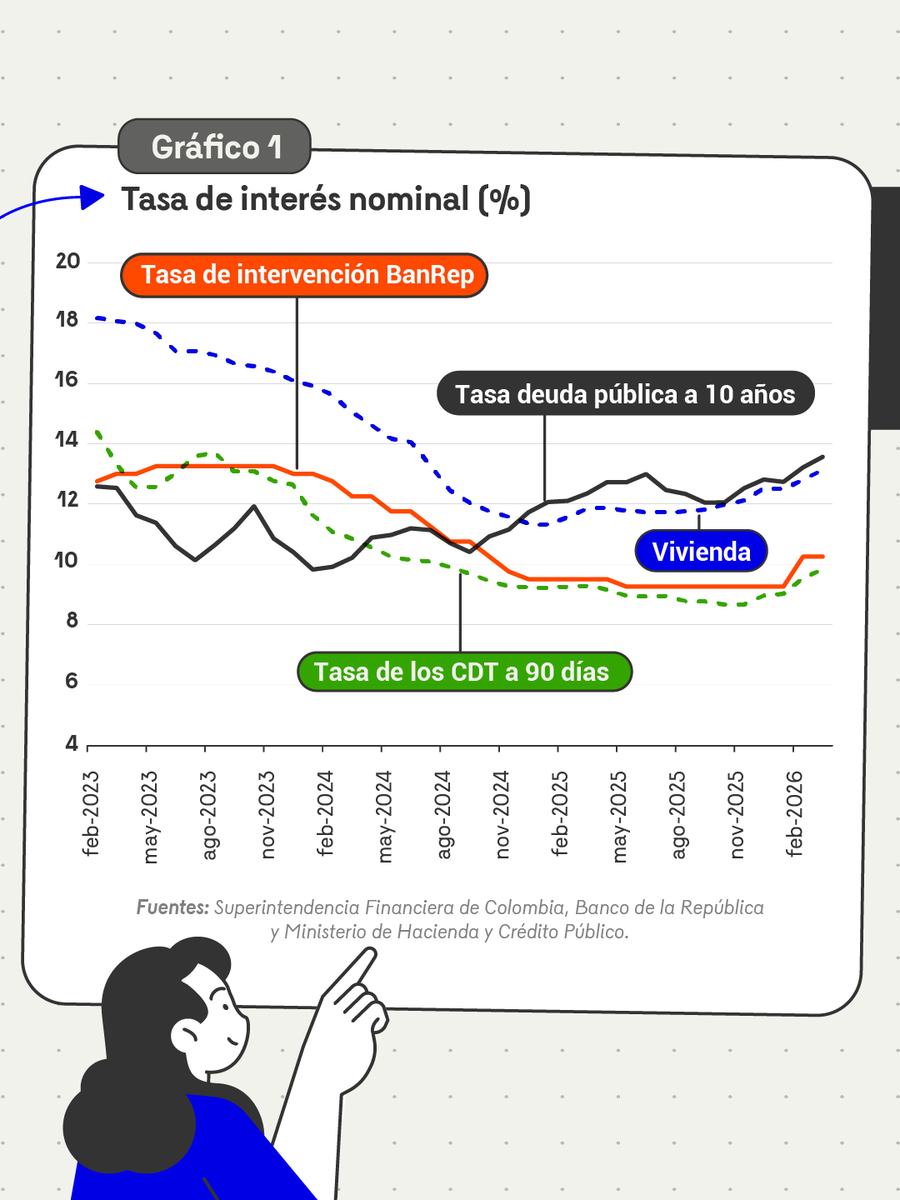
¿Bajó la tasa del Banco de la República, pero la de los créditos de vivienda no? 🤔
No es una contradicción: hoy la tasa de los créditos hipotecarios sigue más a la de la deuda pública (TES) que a la de intervención.
📊 Mire la gráfica y conozca más sobre el comportamiento de la tasa de interés de los créditos de vivienda en el Blog de #BanRepExplica: “La relación entre la tasa de interés de intervención y la tasa de interés hipotecaria en la coyuntura reciente”. Consúltelo aquí 👉 https://t.co/MVOJNMtB6G
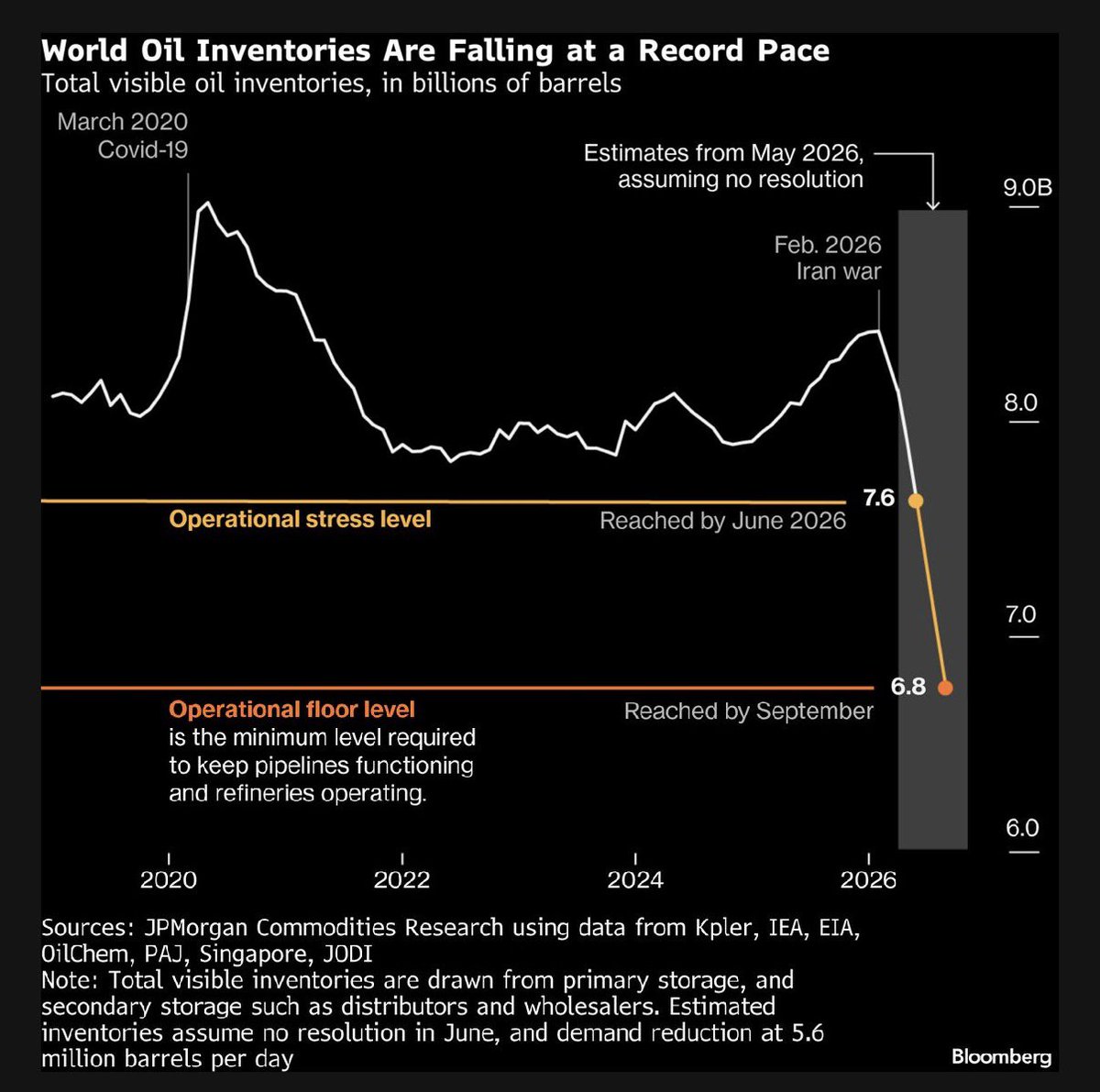
Bloomberg:
“The world has burned through oilinventories at a record speed as the Iran war throttles flows from the Persian Gulf…
The rapidly shrinking stockpiles mean that the risk of even more extreme price spikes and shortages is getting ever-closer, leaving governments and industries with fewer options to cushion the impact of the loss of more than a billion barrels of supply, two months into the near-closure of the Strait of Hormuz.”
#economy #oil #markets #middleeastwar
Nuestro análisis NO es sobre la inflación de su gobierno sino sobre el diseño institucional del Banco que mejor le sirve al país.
Pero entiendo su temor: la inflación de su gobierno será clave tras la primera vuelta presidencial. Ya hablaré de eso en junio
https://t.co/EwcZZg1WUn