“I am losing precious days. I am degenerating into a machine for making money. I am learning nothing in this trivial world of men. I must break away and get out into the mountains to learn the news.”
- John Muir
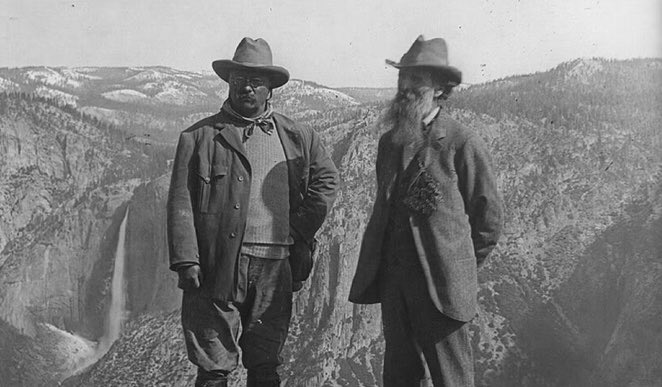
In 1883, John Muir was managing a fruit ranch in Martinez, California, when his longtime traveling companion, S. Hall Young, visited him. Young later recalled Muir expressing his desire to return to the mountains, describing the wilderness as a place where he could go “to learn the news.”
Twenty years later, Muir accompanied President Theodore Roosevelt on a three-day camping trip through Yosemite. Standing together at Glacier Point and gathering around campfires, Muir shared his passion for protecting America’s forests, helping inspire Roosevelt’s commitment to conservation.
Success rarely looks thrilling up close. It looks like the same workout, the same budget, the same chapter for the fourth time. Enthusiasm is easy on day one. Endurance is rare on day ninety. Whoever can make peace with tedium and stay diligent ends up with rewards others dismiss as fortune.
Grant by Ron Chernow is a book about a man mostly remembered as a drunk who happened to win a war, but by the end of it you will think of him as one of the greatest Americans who ever lived. Ulysses Grant failed at everything before the Civil War. He left the army, failed as a farmer, failed as a businessman and ended up selling firewood on the streets of St Louis and clerking in his father’s leather shop at 38. Then the war came and he turned out to be the one general who understood that it had to be won by fighting, not by manoeuvring. He took the surrender of the Confederacy at 42 and was president at 46. At the end of his life, bankrupt again and dying of throat cancer, he wrote his memoirs to save his family from poverty, finishing the manuscript days before he died. Mark Twain published it and it is still regarded as the best book a president ever wrote.
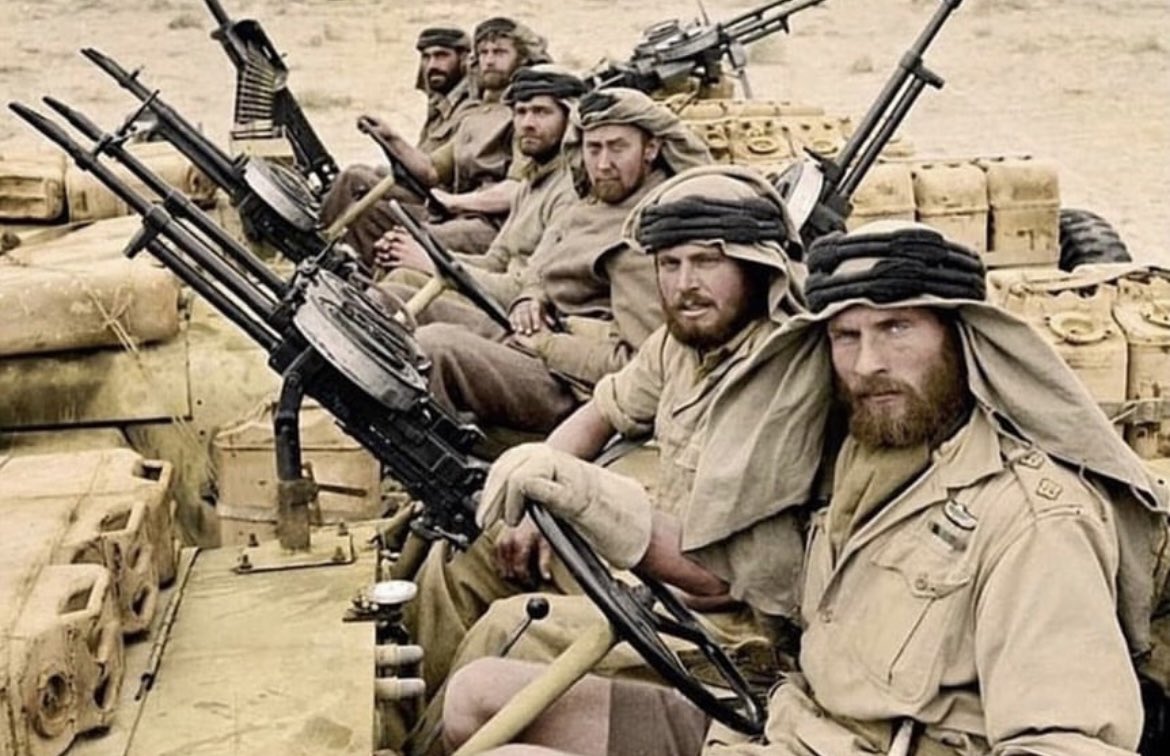
Sir David Stirling was born on this day in 1915. Founder of the famed British Special Air Service, Stirling is the father of modern special operations forces. Given the nickname “The Phantom Major” by the Germans in North Africa in World War II, Stirling created a force that would set the bar and remain the example for all other special operations forces to come.
In November of 1942 General Montgomery described him with these words: “The boy Stirling is quite mad, quite, quite mad. However, in a war there is often a place for mad people.”
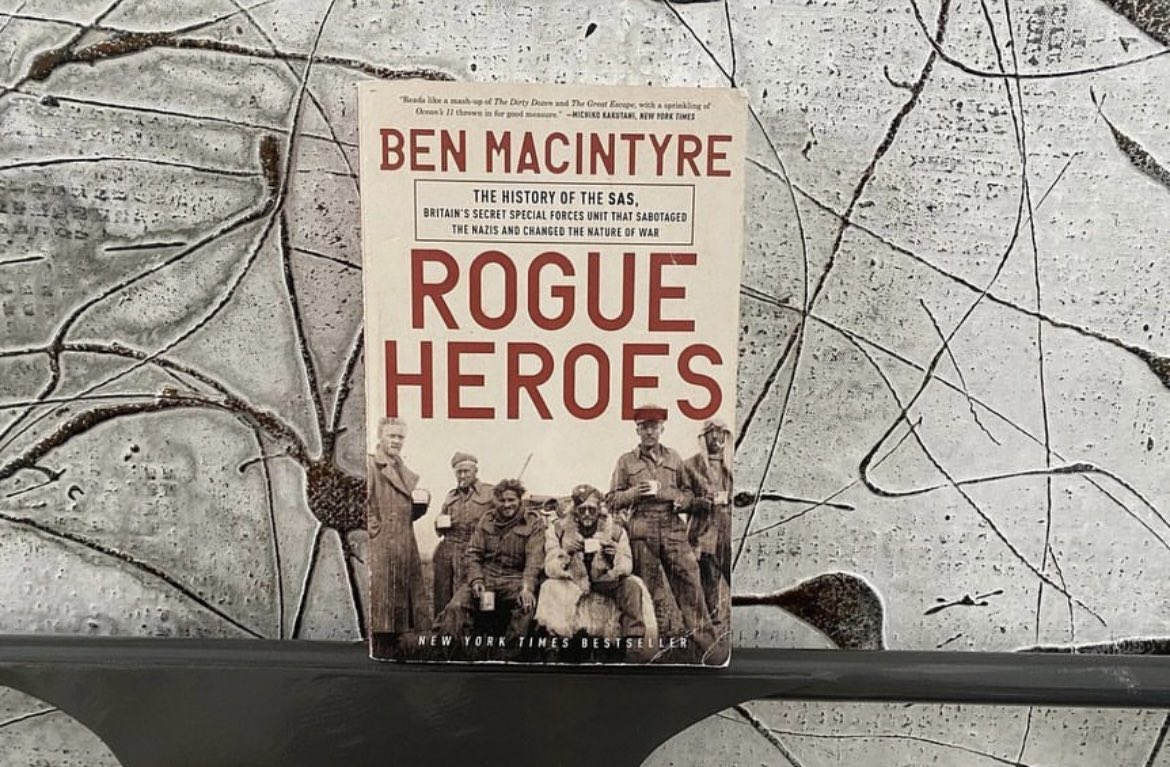
Ben Macintyre writes in his book, ROGUE HEROES: “Recruits tended to be unusual to the point of eccentricity, people who did not fit easily into the ranks of the regular army, rogues and reprobates with an instinct for covert war and little time for convention, part soldiers and part spies; rogue warriors.” Sounds familiar…
In the fight against Axis powers, special operations troops had support from the greatest statesman of the 20th century, Prime Minister Winston Churchill, who in 1940 said, “[We need] specially trained troops of the hunter class, who can develop a reign of terror down these coasts [of occupied Europe], first of all on the butcher and bolt policy…leaving a trail of German corpses behind them”.
All of us who followed owe David Stirling a debt of gratitude.
Do you have a favorite book on the history of the SAS?
Don't ever quit. Fight on. Fight through the storm. Fight through the pain and come out the other side stronger and tougher and better. A fighter. A survivor. A winner. Victorious.
86-2:06:48
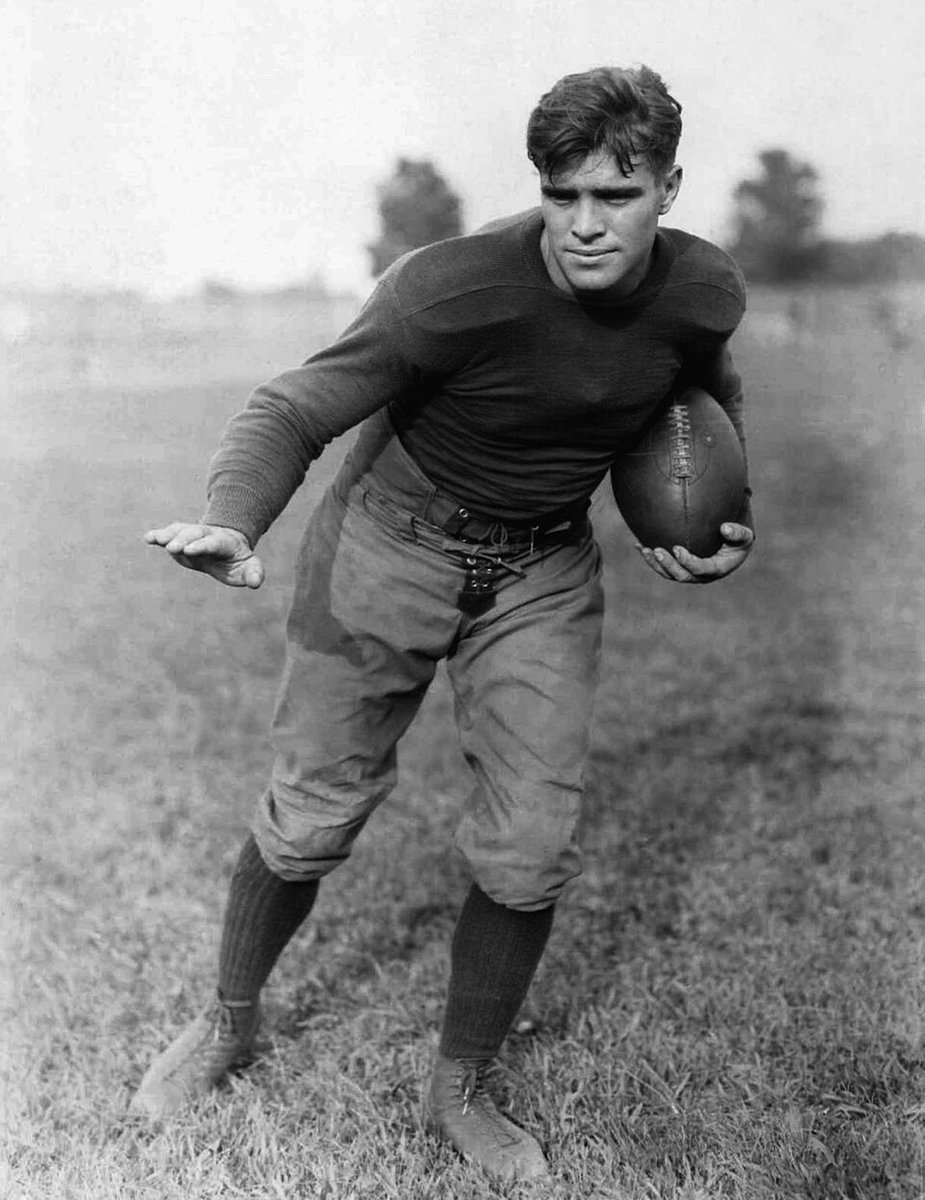
He was a Notre Dame football star and an NFL head coach. He died on the first day at Iwo Jima.
Jack Chevigny played halfback at Notre Dame in the 1920s.
After college, he coached the Chicago Cardinals in the NFL. Then he moved on to coach at Texas, where he upset his alma mater.
When World War II came, he was in his mid-thirties, with a successful career. But the patriot enlisted.
On February 19, 1945, Chevigny landed with the first wave on Iwo Jima. Under heavy fire, he took cover in a shell crater with several other Marines.
A Japanese shell came flying in, ending the life of the young man.
He had a career most men only dream of. He gave it up to serve his country.
On Veterans Day, we lost a dear friend and an extraordinary American.
World War II veteran Harry Miller passed away on November 11 at the age of 98.
Harry joined the U.S. Army at just 15 years old and fought in the Battle of the Bulge at 16. His remarkable military career spanned 22 years and three wars: World War II, Korea, and Vietnam.
For more than a decade, Harry generously shared his experiences, honored his fellow veterans, and helped ensure the legacy of the Greatest Generation would never be forgotten.
We were fortunate to know Harry and will always treasure the memories we shared.
Hear Harry's extraordinary story in his own words: https://t.co/G8piTPFpBo
Thank you, Harry, for a lifetime of service. We will miss you. ❤️
#WeRememberThem #WWIIVeteran #GreatestGeneration #HarryMiller #HonorOurVeterans #WWIIHistory