In September 2007, Navy SEAL Lt. Jason Redman was shot at point-blank range by machine-gun fire in Iraq.
The bullets tore apart his face and arm. He would need dozens of surgeries and skin grafts just to survive.
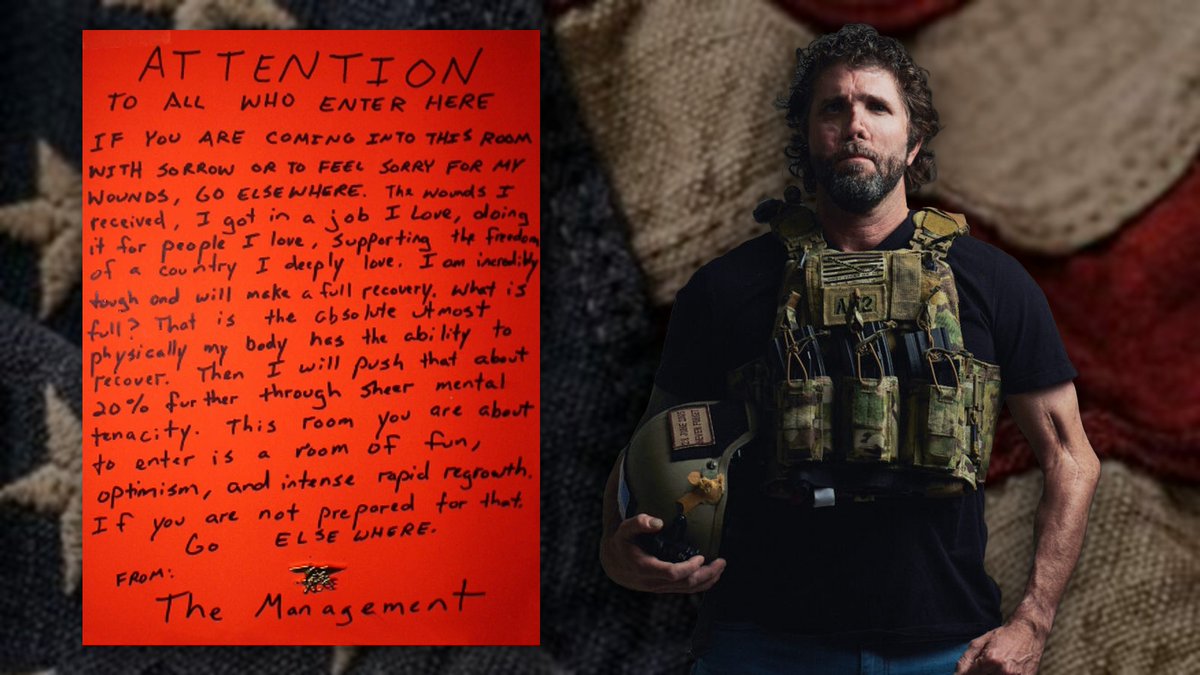
Back home at Bethesda Naval Hospital, his face swollen and stitched together, Redman made a bright orange sign and hung it on his door.
It warned every visitor that this room was full of “fun, optimism and intense rapid regrowth.”
Word of the sign spread across the country. President George W. Bush signed the original, and it now hangs in the wounded ward at Walter Reed.
The man who wrote Amazing Grace once captained slave ships.
In March 1748, John Newton was a 23-year-old sailor known for his foul mouth and contempt for God. But during one voyage, a violent storm hit his ship off the coast of Ireland.
Water poured in, and the crew feared for their lives. Newton spent hours lashed to the helm, steering through the waves, and crying out to God for mercy.
The ship and its captain survived.
Newton never forgot that night.
His change was gradual. He went on to captain slave ships for several more years. But in 1754, he left it for good. A decade later, he became a minister in the small English village of Olney.
There, for a New Year’s Day sermon in 1773, he wrote a hymn about his own life:
Amazing grace! how sweet the sound
That saved a wretch like me
Years later, Newton publicly confessed his role in the slave trade and joined William Wilberforce’s fight to end it.
He lived just long enough to see Britain abolish the slave trade in 1807.
Theodore Roosevelt published a Bigfoot story in 1893. It ends with a trapper's neck broken and four fang marks in his throat.
An old mountain hunter named Bauman told it to him. Bauman and a partner were trapping beaver in a lonely pass on the Idaho-Montana line.
Something completely wrecked their camp. By torchlight, his partner studied the tracks:
"Bauman, that bear has been walking on two legs."
That night it came back. Bauman fired at the great shape, and it crashed off into the dark.
The next day, Bauman returned to camp and found his partner dead by a fallen spruce, body still warm. The tracks around him walked on two legs.
He dropped everything but his rifle and ran.
Roosevelt wrote that the old hunter "must have believed what he said, for he could hardly repress a shudder."
Bigfoot is in the news again!!!!
In mid-October, the U.S. Forest Service released archival Bigfoot files.
This is the best one:
—1982 Forest Service investigation in Washington’s Mill Creek watershed.
They released reported footprint measurements, photographs of the footprints, documentation of plaster casts and assessments by a Forest Service wildlife biologist and a Border Patrol tracker who questioned the footprints’ authenticity, with the tracker suspecting a hoax.
So there we have it! The secret files said the Forest Service investigated something its investigators questioned, with one suspecting a hoax.
I will sleep better from now on.
A live bomb landed at Corporal Isaac Carman’s feet, its fuse hissing.
It was May 22, 1863, at Vicksburg. The 48th Ohio had fought its way to the top of a Confederate fort and planted its flag on the wall. Confederate artillery began pounding the position and the Southern boys were massing to take it back.
Carman, a 21-year-old with a bayonet wound in his leg was protecting the flag. At that moment the bomb dropped beside him.
He threw the bomb back at the charging Confederates. Then he ran about a hundred feet under heavy fire, flag in hand, back to his regiment.
He saved the colors and several of the men around him.
A year later, Carman and his whole regiment were captured in Louisiana and marched to a prison camp in Texas. A corporal tore their new flag off its staff and hid it, and the men kept it from their captors the entire time.
Carman survived the war and went home to Ohio. His Medal of Honor came in 1895, 32 years after Vicksburg.
In 1670, an English judge locked twelve jurors in a room without food or water until they gave him the verdict he wanted. They never broke.
England was cracking down on religious dissenters. It was illegal to hold worship services outside the Church of England, and Quakers were a favorite target.
So when a young Quaker named William Penn was caught preaching in a London street after authorities padlocked his meeting house, the court wanted to make an example of him. He was charged with unlawful assembly and disturbing the peace.
But the evidence showed Penn had only been preaching peacefully. There was no riot. The jury knew it was a false accusation.
One juror, Edward Bushel, led the holdouts. The judge was furious. He berated him in open court, and the Lord Mayor of London reportedly threatened to cut his nose.
When the jury came back with “guilty of speaking in Gracechurch Street,” which wasn’t a crime, the court rejected it. The jurors were sent back and ordered held “without meat, drink, fire, and tobacco” until they delivered the conviction.
They spent two nights locked up, hungry and cold. Every time, they came back with the same answer.
Finally, they acquitted Penn outright.
The court fined every juror. Bushel and three others refused to pay and were thrown into Newgate Prison.
Bushel sued.
England’s chief justice ruled in his favor and laid down a principle that crossed the Atlantic and should still protect American juries today:
A jury cannot be punished for its verdict.
Canada already has Medicare for All.
In 2008, Brian Sinclair died in one of its ER waiting rooms after 34 hours.
Sinclair was a 45-year-old double amputee. A clinic doctor checked him for catheter trouble and sent him to Winnipeg’s Health Sciences Centre with a note for the ER.
A cab dropped him off. He spoke to the triage aide. Then he waited.
Nobody assessed him. Nobody treated him. He vomited on himself, and still no one examined him.
When a fellow patient finally noticed him, rigor mortis had set in.
The cause was a treatable bladder infection. The judge at his inquest wrote that he “did not have to die.”
Ignored to death in a country with "free" government healthcare.
🔥MUST WATCH: “We can figure this out. These silly ‘SoCiALiSM’ arguments won’t work anymore.”
Doctor @JessicaKnurick shreds the hysterical fearmongering about MEDICARE FOR ALL, which goes all the way back to Reagan.
Medicare for all. Now.
One of Andrew Jackson’s favorite maxims:
“In war, till everything is done, nothing is done.”
In New Orleans, he lived it out.
During the War of 1812, a British army of hardened veterans landed below the city. Jackson pulled together all the fighters he could find: regular soldiers, frontier riflemen, militiamen, Choctaw warriors and even Jean Lafitte’s pirates.
They dug in behind a mud rampart along a canal and waited.
When the British charged, the Americans tore them apart. In about half an hour, around 2,000 British soldiers were killed, wounded, or captured. The Americans lost fewer than 100.
It was the most lopsided American victory of the war.
But for Jackson, nothing was done yet. He kept the city under martial law for weeks, even after rumors of peace arrived, because no official news had come.
When a federal judge challenged him, Jackson had the judge arrested and thrown out of the city.
He didn’t stand down until official word of peace arrived that March.
The judge later fined him $1,000.
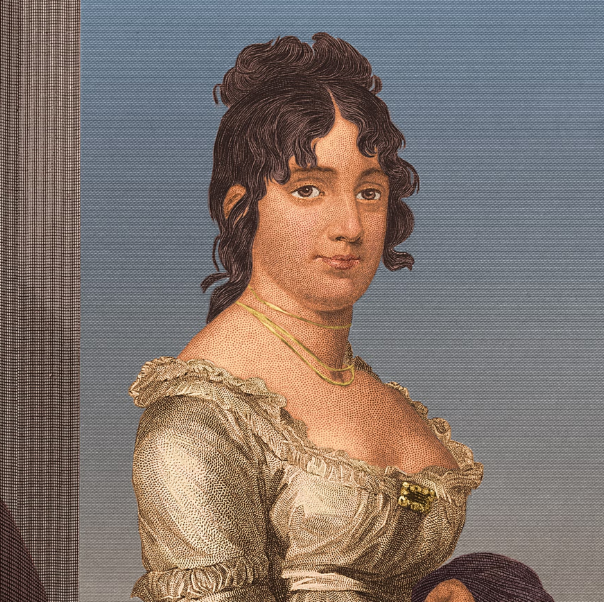
Aaron Burr is remembered for shooting Alexander Hamilton. But before that, he played matchmaker for James and Dolley Madison.
In 1793, yellow fever tore through Philadelphia. Among the dead were a young Quaker lawyer named John Todd and his infant son. He left a 25-year-old widow named Dolley with a toddler to care for.
Aaron Burr knew the family well.
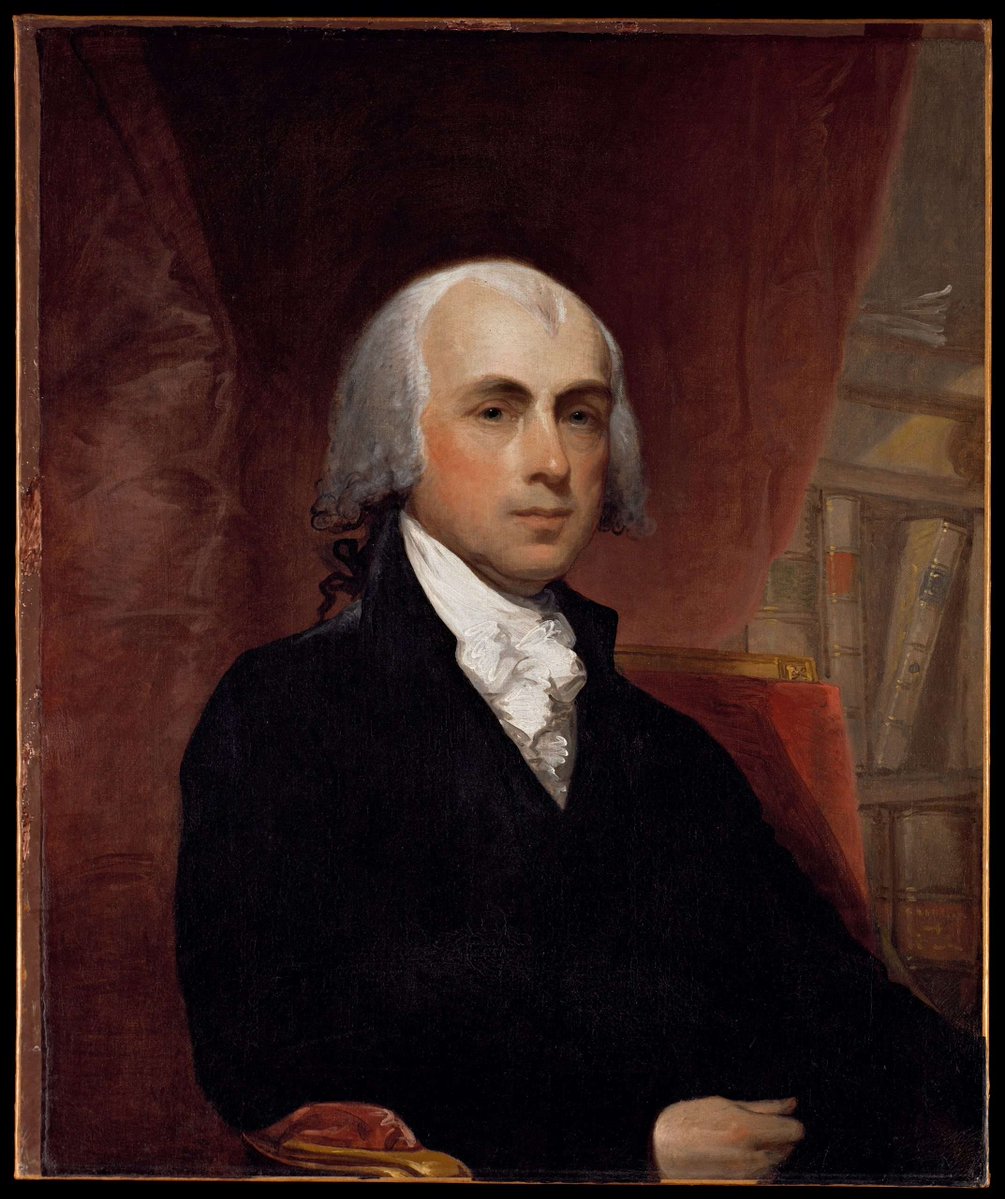
In the spring of 1794, a shy Virginia congressman asked Burr for a favor: an introduction to Dolley.
He was James Madison, 43 years old, 5'4", and a longtime bachelor.
Dolley dashed off a note to a friend: “Aaron Burr says that the great little Madison has asked him to bring him to see me this evening.”
That great little Madison won her over. They married that September.
Dolley went on to become one of the most celebrated first ladies in American history, hosting legendary parties that made her the center of Washington society.
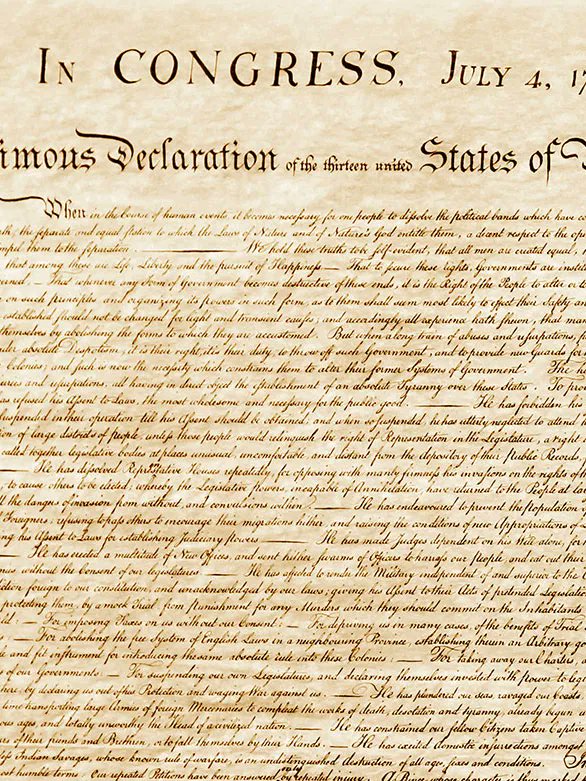
In 1814, a clerk saved the Declaration of Independence by stuffing it into a linen sack.
The British army was marching on Washington. Stephen Pleasonton, a clerk at the State Department, began packing the nation’s most important papers into coarse linen bags.
The Declaration of Independence. The Articles of Confederation. Most likely the Constitution. Stacks of George Washington’s letters.
As he worked, the Secretary of War walked through the office. He reportedly told Pleasonton he was overreacting, since the British weren’t going to attack the city.
Pleasonton ignored him and continued to pack the priceless documents.
He loaded the bags onto carts and hid them in a gristmill across the Potomac. Then he realized the mill sat near a cannon foundry...exactly the kind of target the British would hit.
So he borrowed wagons from local farmers, reloaded everything, and hauled the papers about thirty miles to an empty house near Leesburg, Virginia, where he locked them in a brick vault.
That night, the glow of Washington burning lit up the sky.
If that clerk didn't have the foresight, the Declaration of Independence might have burned with the rest of the city.
In a single day of the Korean War, a Marine horse named Reckless made 51 solo trips through enemy fire. She was later promoted to staff sergeant.
In October 1952, a Marine lieutenant paid $250 for a small mare at a Seoul racetrack. Her job was hauling ammunition for the 5th Marines’ recoilless rifle platoon.
After a few trips with a handler, she ran the route alone.
At the Battle for Outpost Vegas in March 1953, she made 51 trips in a single day under heavy fire. She carried 386 rounds, over 9,000 pounds of ammo, and covered more than 35 miles.
Shrapnel hit her twice. She kept going. Under fire, Marines draped their own flak jackets over her.
She earned two Purple Hearts. In 1954 she was promoted to sergeant, and in 1959 to staff sergeant.
New York City Mayor Zohran Mamdani has officially SIGNED a law banning horse-drawn carriages, ending a Central Park tradition dating back more than 150 years.
Under Romanch’s Law, the industry must shut down by June 1, 2028. The city plans to help roughly 200 affected workers transition into new careers.
Nathaniel Hawthorne added a letter to his last name to distance himself from the witch trials.
Hawthorne was the author of The Scarlet Letter, one of the most famous novels in American literature. But the story behind his name goes back to Salem.
In 1692, his great-great-grandfather, John Hathorne, sat as a judge during the Salem witch trials.
More than a century later, the family still carried his name, but it troubled young Nathaniel deeply.
In his twenties, he added a W and became the Nathaniel Hawthorne we know today.
In the opening pages of The Scarlet Letter, he wrote about his ancestor, saying the judge was so conspicuous “in the martyrdom of the witches, that their blood may fairly be said to have left a stain upon him...I, the present writer, as their representative, hereby take shame upon myself for their sakes, and pray that any curse incurred by them... may be now and henceforth removed.”
Months after he became president, Truman received the highest honor in Scottish Rite Freemasonry.
Truman joined the Masons in 1909 as a 25-year-old farmer in Missouri. It quickly became one of the great passions of his life.
Two years later, he helped found a new lodge in his hometown of Grandview and was elected its first leader.
As he rose in politics, he also rose in the order. In 1940, while serving as a U.S. senator, he was elected Grand Master of all Missouri Masons.
In October 1945, as president of the United States, he received the Scottish Rite’s 33rd degree, its highest honor. This photo shows him in the regalia.
Years later, when workers gutted the crumbling White House, they found old stonemasons’ marks carved into the original stones. Truman had many of those stones sent to Masonic Grand Lodges across the country.