𝐇𝐭𝐚𝐢𝐧𝐠𝐦𝐚𝐭𝐡𝐞𝐢𝐧 (ထိုင်မသိမ်း) is not simply a name for a traditional Burmese outfit. It refers to a specific garment with its own history, construction, and cultural significance.
Myanmar's traditional clothing evolved across different dynasties, and the styles worn during the early Konbaung period, Amarapura era, and later Yadanabon period were not necessarily the same. Even the cut of a garment, its fastening, its decorative details, and the way it was worn could reflect a particular period and social rank.
Htaingmathein is traditionally understood as a woman's upper garment, worn with a byan htamein (ဗြန့်ထဘီ), rather than a term for the entire ensemble. These distinctions may seem minor to some, but when the terminology is repeatedly used incorrectly, an important part of cultural knowledge can gradually be lost.
This is precisely why historical research matters in period dramas. Traditional clothing is not merely an aesthetic choice; it carries information about the people, period, and culture it represents.
When costumes in #ScarletHeartThailand appear to draw on Myanmar court attire, it raises a legitimate question: were the garments researched according to their historical origins, construction, and period, or were different styles combined simply because they looked suitable for a historical setting?
Lanna and Myanmar share a long and complex history, but historical connections do not make their respective clothing traditions interchangeable. Similarities should be examined in context, and identifiable cultural influences deserve accurate recognition.
Historical fiction allows creative freedom, but creative freedom does not make historical research optional. When a production invests years in developing a period drama, understanding the origins of the clothing used to build its world should be part of that preparation. Otherwise, what is presented as historical atmosphere risks becoming a mixture of cultural references without sufficient historical grounding.
𝙊𝙪𝙧 𝙩𝙧𝙖𝙙𝙞𝙩𝙞𝙤𝙣𝙖𝙡 𝙜𝙖𝙧𝙢𝙚𝙣𝙩𝙨 𝙝𝙖𝙫𝙚 𝙣𝙖𝙢𝙚𝙨, 𝙝𝙞𝙨𝙩𝙤𝙧𝙞𝙚𝙨, 𝙖𝙣𝙙 𝙢𝙚𝙖𝙣𝙞𝙣𝙜𝙨. They deserve more than to be treated as interchangeable costumes.
We sincerely hope @GMMTV and the @ScarletHeartTH production team will provide appropriate acknowledgment of Myanmar's cultural heritage wherever it has been incorporated into the series. If these elements are retained, I hope their origins will be clearly credited in the episodes or accompanying production materials.
#ScarletHeartTH
#BurmeseHtaingmathein
We are not asking for the series to be cancelled. We are simply asking that you give credit for the Burmese culture elements you have used and show respect toward us
GMMTV ACCOUNTABILITY
#RespectMyanmarCulture#CreditOurHeritage#ScarletHeartTH
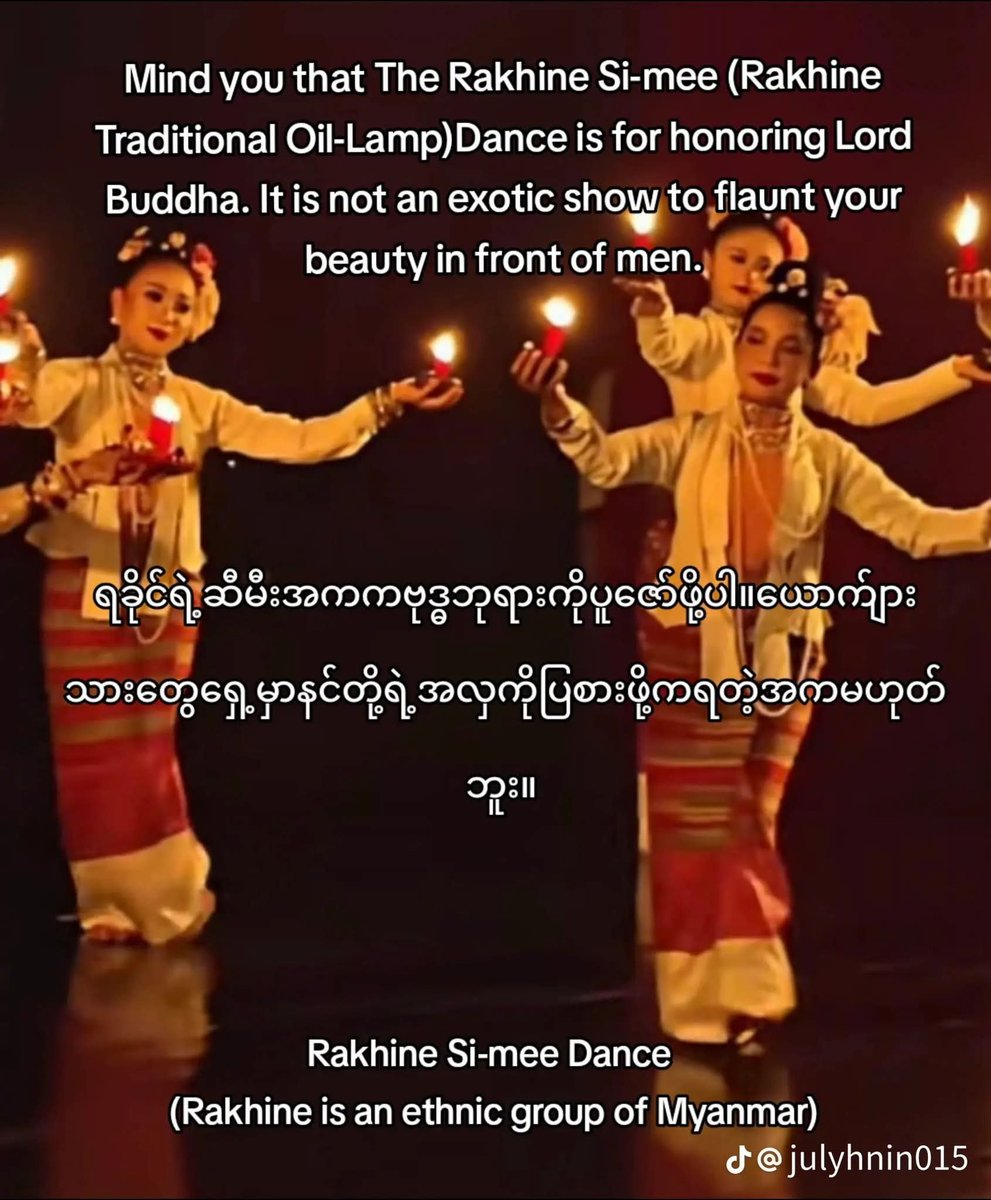
Not every Burmese person knows how to perform the 𝐑𝐚𝐤𝐡𝐢𝐧𝐞 𝐨𝐢𝐥-𝐥𝐚𝐦𝐩 𝐝𝐚𝐧𝐜𝐞, and that is precisely why its cultural identity deserves recognition.
Myanmar is home to many ethnic groups, including the Rakhine, Bamar, Shan, Mon, Karen, Kachin, Chin, and others. Each has its own cultural traditions, artistic expressions, and heritage. Being part of the same country does not make every tradition common to every ethnic group.
The Rakhine traditional oil-lamp (Si-mee) dance, also known as Buddha Pujaniya, is a distinctive expression of Rakhine cultural heritage. Its devotional meaning is closely connected to Buddhism and offerings to the Three Jewels: the Buddha, the Dhamma, and the Sangha. The dancers move gracefully while balancing lamps on their palms, accompanied by devotional songs and traditional music.
The Rakhine oil-lamp dance is a distinctive form of Rakhine traditional performing art, associated with Buddhist devotional offerings. Its choreography, music, and cultural significance form part of Rakhine heritage and should not be treated as a generic traditional dance without acknowledging its origins.
When such a culturally specific performance appears in #ScarletHeartThailand, its historical and cultural origins warrant careful research. If Rakhine cultural elements have been incorporated into the series, their origins should be accurately identified and appropriately acknowledged.
We sincerely hope @GMMTV and the @ScarletHeartTH production team will address these concerns, provide proper credit for verified Myanmar cultural influences, and issue an official statement clarifying the historical references behind the relevant scenes.
𝗖𝘂𝗹𝘁𝘂𝗿𝗮𝗹 𝗿𝗲𝗰𝗼𝗴𝗻𝗶𝘁𝗶𝗼𝗻 𝘀𝗵𝗼𝘂𝗹𝗱 𝗮𝗰𝗰𝗼𝗺𝗽𝗮𝗻𝘆 𝗰𝘂𝗹𝘁𝘂𝗿𝗮𝗹 𝗿𝗲𝗽𝗿𝗲𝘀𝗲𝗻𝘁𝗮𝘁𝗶𝗼𝗻.
We Demand Action from GMMTV
#RespectMyanmarCulture
Bound to our soul and identity. 🇲🇲
Protecting the cultural heritage passed down by our ancestors is our sacred national duty and our highest pride.
GMMTV ACCOUNTABILITY
#RespectMyanmarCulture#CreditOurHeritage
Kindly asking for basic cultural respect and proper explanation. @GMMTV
(Speak outလုပ်နေတယ့်ဘယ်ဆိုရှယ်မှာမဆိုယူသုံးလို့ရပါတယ်crdပေးစရာမလို)
GMMTV Accountability
#RespectMyanmarCulture#CreditOurHeritage
This is Our Own Burmese Traditional Dress 🇲🇲🇲🇲 Don’t Copy For YouCountry and Your Series 🇹🇭🇹🇭 if you can take inspiration , you will give credit, Respect to Myanmar 🇲🇲
#RespectMyanmarCulture#MyanmarCulture
All these costumes are part of our authentic traditional heritage.
We call for a clear explanation regarding the traditional costumes and oil-lamp dance featured in #ScarletHeartTH series. 🇲🇲
GMMTV ACCOUNTABILITY
#RespectMyanmarCulture#CreditOurHeritage@GMMTV