Whoever designed the hazmat suit either had a hell of a sense of humor or hated all their co-workers—VIABLE THREAT https://t.co/s92feqMot4 #thriller#romanticsuspense
America could be dealing with multiple supply chains delivering the same explosive outcome.
FDA is now tracing at least two unidentified Cyclospora outbreaks.
So this may not be one contaminated shipment.
Millions of animals don’t die in a few days unless something is seriously wrong.
France’s recent heatwave just killed 3 million broiler chickens.
The food system has limits.
Forget the Hollywood version of Ebola.
In the new NEJM study, hemorrhagic bleeding was uncommon at presentation.
Most confirmed patients looked like severe gastrointestinal illness with fever, vomiting and diarrhea.
Waiting for dramatic bleeding means missing cases.
The official count just reached 1,000 human H5N1 cases worldwide.
Nearly half died.
The more concerning detail:
Recent cases in Bangladesh, Cambodia, and India were identified days to weeks after patients entered care.
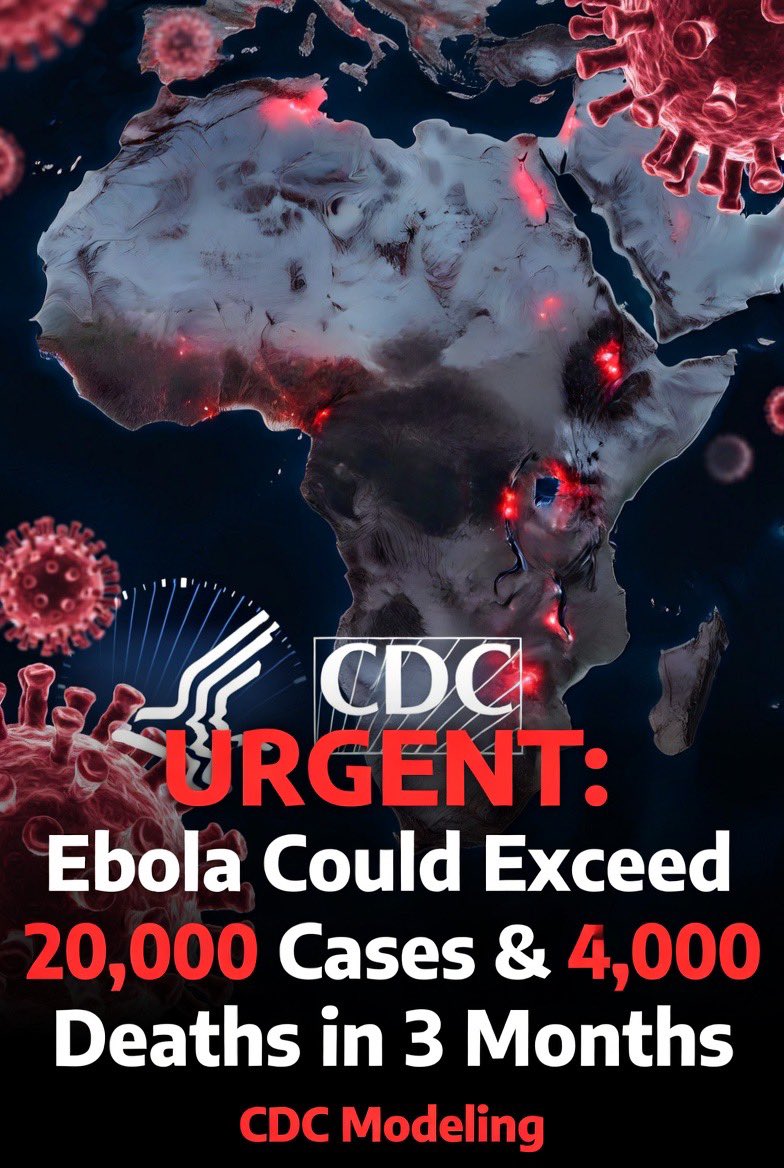
Without urgent action, there is a strong likelihood the Ebola outbreak in Africa will exceed 20,000 cases and 4,000 deaths within three months, a new modeling estimate from the CDC suggests.
This epidemic curve from Ituri Province does not show an Ebola outbreak coming under control.
Daily Ebola symptom onset accelerated throughout May, with some days approaching 40 suspected or confirmed cases.
Large numbers of cases remain under investigation, meaning recent counts will likely rise as testing catches up.
The right side of the curve is still being filled in.
Uganda has now confirmed additional Ebola cases in healthcare workers in Kampala with unclear exposure histories.
If clinicians weren’t treating known Ebola patients, it suggests transmission chains were already moving through the healthcare system undetected.
Ebola screening only works if you have enough people to sustain it continuously.
The CDC no longer has the staffing depth it had during prior large-scale response operations.
New genomic analysis suggests the 2026 Bundibugyo Ebola outbreak may represent a genetically distinct spillover lineage rather than direct continuation of prior known outbreaks.
-Imperial College London
Think about it.
One of the strangest public health developments of the past few years:
Large parts of the population now experience repeated symptomatic viral illness as culturally normal.
People casually describe:
- being sick every month
- persistent fatigue after “mild” infections
- recurrent respiratory infections
- reduced exercise tolerance
- cognitive changes
- prolonged recovery windows
All while simultaneously insisting population health is fundamentally unchanged.
Historically, populations noticing a measurable decline in baseline resilience would have triggered enormous medical concern.
Now it gets reframed as adaptation.
That shift in perception may end up being one of the most consequential psychological transitions of the post-2020 era.
The real epidemiological nightmare scenario isn’t the ship anymore.
It’s the passengers who left early.
People reportedly traveled onward through:
Hong Kong
Bangkok
Tahiti
Vietnam
New York
Before global alerts fully activated.
France is escalating.
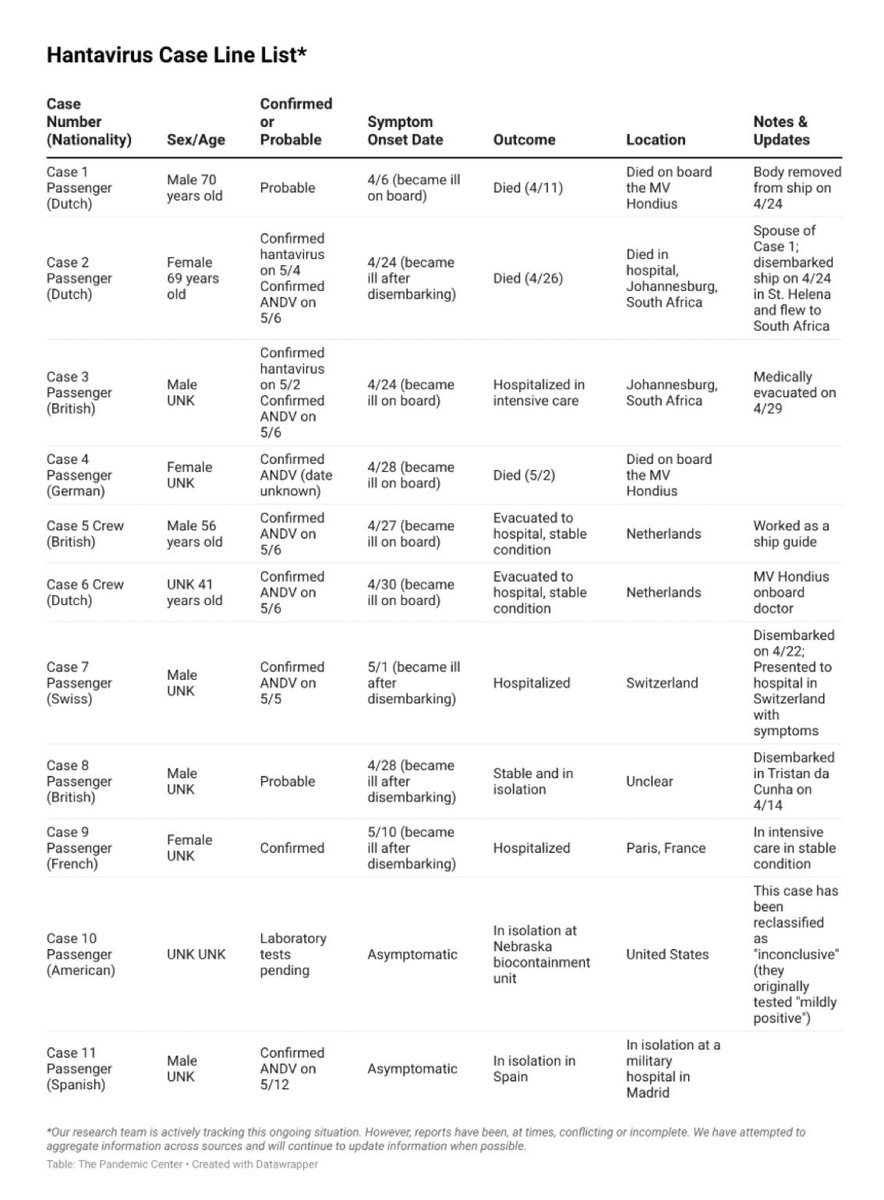
French authorities are now saying that if exposure details are unclear, ANY passenger sharing a flight with a confirmed/probable MV Hondius case should be treated as HIGH RISK.
Not “monitor casually.”
42 days.
Restricted social interactions.
Avoid international travel.
FFP2 masks.
Active follow-up.
The 12 members of staff at the Dutch hospital made procedural errors during the blood draw and disposal of urine from the patient contaminated with hantavirus.
They will be placed in quarantine for 6 weeks.
Gustavo Palacios, Argentine microbiologist and Andes hantavirus expert:
“This pathogen is more virulent and there may be contagions in chains.”
"Transmission of the Andes virus between people can occur through simple social contacts and generate ‘super-spreader’ cases."