Claude Code doesn't make you faster.
Directing it does.
Most developers open Claude Code and start typing prompts like it's ChatGPT.
Then they wonder why the output is mid.
Here are 8 things I wish I knew on day one:
𝗖𝗟𝗔𝗨𝗗𝗘.𝗺𝗱
Your project rules file. Claude reads it before every task. Keep it short, specific, and actionable. A 300-line novel gets ignored.
𝗣𝗹𝗮𝗻 𝗠𝗼𝗱𝗲
"Plan how you'd implement X. Don't write code yet." Review the plan. Correct the approach. Then say "implement it." Two steps beat one bad generation.
𝗧𝗗𝗗 𝗟𝗼𝗼𝗽
Write a failing test. Hand it to Claude. Let it implement until green. Tests are your spec. Claude can't misinterpret a red test.
𝗚𝗶𝘁 𝗪𝗼𝗿𝗸𝘁𝗿𝗲𝗲𝘀
One worktree per feature. Run separate Claude sessions on separate branches at the same time. No stashing. No branch switching. Parallel by default.
/𝗰𝗼𝗺𝗽𝗮𝗰𝘁
Compresses your conversation history to free up the context window. Use it before Claude gets sluggish. One mega-session for everything kills output quality.
/𝗰𝗼𝘀𝘁
Shows token usage and cost for the current session. Check after big tasks. If you never look at this, you're flying blind on spend.
𝗦𝘂𝗯𝗮𝗴𝗲𝗻𝘁𝘀
Spawn background agents that work in parallel. Code review while you implement. Research while you refactor. Stop doing everything sequentially.
𝗦𝗸𝗶𝗹𝗹𝘀
Reusable prompt templates your team shares. Define code review standards, deployment checklists, or migration patterns as markdown files. No more "every dev prompts differently."
Claude Code is powerful. But power without direction is just expensive token burn.
I put together a free visual guide on building software with AI agents.
Grab it here 👇
https://t.co/5oyQ6UqMyr
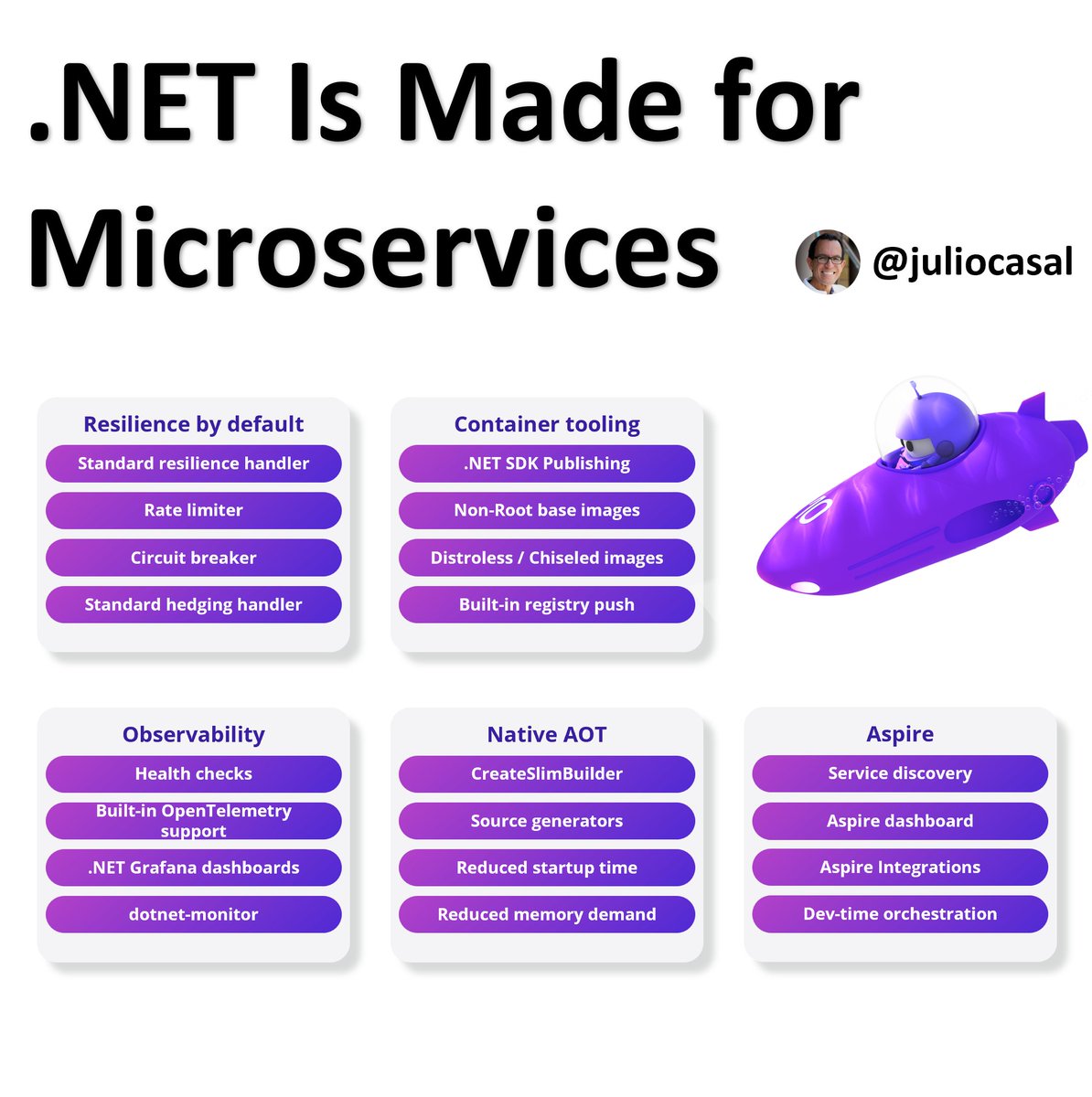
.NET is the best platform for microservices.
Here's why:
𝗦𝘁𝗮𝗻𝗱𝗮𝗿𝗱 𝗿𝗲𝘀𝗶𝗹𝗶𝗲𝗻𝗰𝗲 𝗵𝗮𝗻𝗱𝗹𝗲𝗿
Adds retries, timeouts, and circuit breakers to HttpClient with one line.
𝗥𝗮𝘁𝗲 𝗹𝗶𝗺𝗶𝘁𝗲𝗿
Built-in middleware protects services from overload and abuse.
𝗖𝗶𝗿𝗰𝘂𝗶𝘁 𝗯𝗿𝗲𝗮𝗸𝗲𝗿
Prevents cascading failures by stopping calls to unstable services.
𝗦𝘁𝗮𝗻𝗱𝗮𝗿𝗱 𝗵𝗲𝗱𝗴𝗶𝗻𝗴 𝗵𝗮𝗻𝗱𝗹𝗲𝗿
Reduces tail latency by sending backup requests automatically.
.𝗡𝗘𝗧 𝗦𝗗𝗞 𝗽𝘂𝗯𝗹𝗶𝘀𝗵𝗶𝗻𝗴
Generate and push container images directly with dotnet publish.
𝗡𝗼𝗻-𝗿𝗼𝗼𝘁 𝗯𝗮𝘀𝗲 𝗶𝗺𝗮𝗴𝗲𝘀
Secure-by-default images run without root permissions.
𝗗𝗶𝘀𝘁𝗿𝗼𝗹𝗲𝘀𝘀 / 𝗖𝗵𝗶𝘀𝗲𝗹𝗲𝗱 𝗶𝗺𝗮𝗴𝗲𝘀
Minimal images optimized for startup time and attack surface.
𝗕𝘂𝗶𝗹𝘁-𝗶𝗻 𝗿𝗲𝗴𝗶𝘀𝘁𝗿𝘆 𝗽𝘂𝘀𝗵
Push images to ACR or Docker Hub with no extra tooling.
𝗖𝗿𝗲𝗮𝘁𝗲𝗦𝗹𝗶𝗺𝗕𝘂𝗶𝗹𝗱𝗲𝗿
Trims ASP .NET Core to the bare minimum for lightning-fast apps.
𝗦𝗼𝘂𝗿𝗰𝗲 𝗴𝗲𝗻𝗲𝗿𝗮𝘁𝗼𝗿𝘀
Enable compile-time optimizations that reduce runtime reflection.
𝗥𝗲𝗱𝘂𝗰𝗲𝗱 𝘀𝘁𝗮𝗿���𝘂𝗽 𝘁𝗶𝗺𝗲
Cold starts under 50ms make AOT ideal for serverless and containers.
𝗥𝗲𝗱𝘂𝗰𝗲𝗱 𝗺𝗲𝗺𝗼𝗿𝘆 𝗱𝗲𝗺𝗮𝗻𝗱
Lower memory use means higher pod density and lower cloud bills.
𝗛𝗲𝗮𝗹𝘁𝗵 𝗰𝗵𝗲𝗰𝗸𝘀
Add liveness and readiness endpoints with a single line using built-in middleware.
𝗕𝘂𝗶𝗹𝘁-𝗶𝗻 𝗢𝗽𝗲𝗻𝗧𝗲𝗹𝗲𝗺𝗲𝘁𝗿𝘆 𝘀𝘂𝗽𝗽𝗼𝗿𝘁
Add structured logs, traces, and metrics with a single line.
.𝗡𝗘𝗧 𝗚𝗿𝗮𝗳𝗮𝗻𝗮 𝗱𝗮𝘀𝗵𝗯𝗼𝗮𝗿𝗱𝘀
Export metrics to Prometheus and plug into ready-made dashboards.
𝗱𝗼𝘁𝗻𝗲𝘁-𝗺𝗼𝗻𝗶𝘁𝗼𝗿
Collect traces, memory dumps, metrics, and logs from live .NET apps with zero code changes.
𝗦𝗲𝗿𝘃𝗶𝗰𝗲 𝗱𝗶𝘀𝗰𝗼𝘃𝗲𝗿𝘆
Links services via project references and generates endpoints at build time. No hardcoded URLs or manual config needed.
𝗔𝘀𝗽𝗶𝗿𝗲 𝗱𝗮𝘀𝗵𝗯𝗼𝗮𝗿𝗱
Visualize app topology, logs, health checks, and metrics.
𝗔𝘀𝗽𝗶𝗿𝗲 𝗶𝗻𝘁𝗲𝗴𝗿𝗮𝘁𝗶𝗼𝗻𝘀
Pre-wired support for Redis, Postgres, MongoDB, Key Vault, and more.
𝗔𝘀𝗽𝗶𝗿𝗲 𝗱𝗲𝘃-𝘁𝗶𝗺𝗲 𝗼𝗿𝗰𝗵𝗲𝘀𝘁𝗿𝗮𝘁𝗶𝗼𝗻
Runs your app, supporting services, and infrastructure locally with one launch. No Docker, YAML, or manual wiring required.
.NET gives you everything you need to build production-grade microservices: fast, secure, and cloud-ready.
--
Get my Free .NET Developer Roadmap 👇
https://t.co/Ed7r4wgPJK
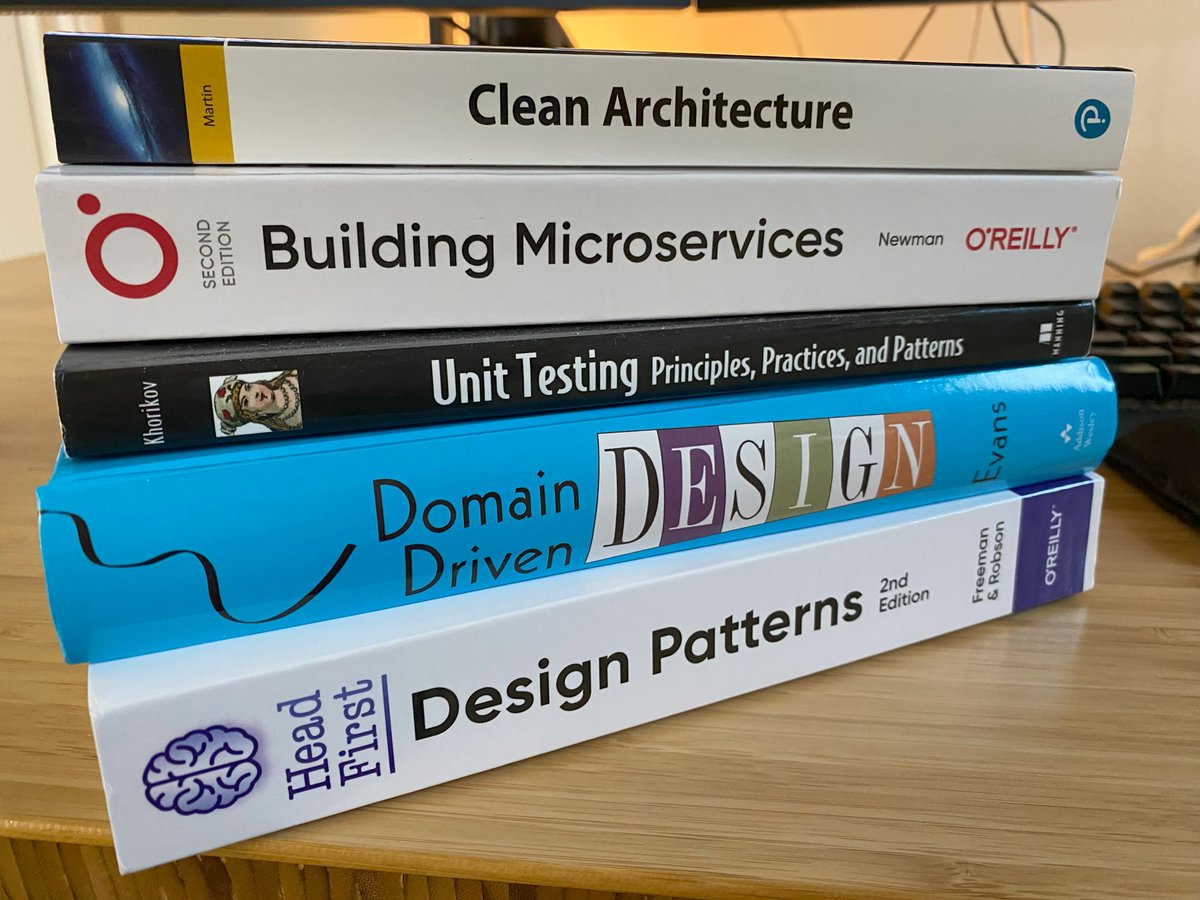
5 books I can't recommend enough:
1. Clean Architecture ( Robert Martin )
2. Building Microservices ( Sam Newman )
3. Unit Testing ( Vladimir Khorikov )
4. Domain Driven Design ( Eric Evans )
5. Head First Design Patterns ( Eric Freeman & Elisabeth Robson )
For more like these, check out my list of top 20 Engineering books for .NET Developers 👇
https://t.co/LQfdxjmdXQ
Junior .NET devs keep asking me what skills to focus on.
I analyzed 100+ Senior .NET job posts to find out.
These are the skills that show up again and again, the ones employers expect senior .NET developers to master:
𝗖#
The core of .NET roles; fluency in modern features and writing clean, efficient code is baseline.
𝗥𝗘𝗦𝗧 𝗔𝗣𝗜𝘀
The main integration style; secure, scalable endpoints with clear documentation matter.
𝗚𝗿𝗮𝗽𝗵𝗤𝗟
Adoption keeps growing; well-designed schemas and resolvers improve efficiency.
𝗔𝘇𝘂𝗿𝗲
The top cloud for .NET; deployment, monitoring, and scaling apps are in demand.
𝗔𝗪𝗦
Hybrid setups are common; knowledge of core services shows flexibility.
𝗣𝗼𝘀𝘁𝗴𝗿𝗲𝗦𝗤𝗟
Popular for new projects; SQL fluency, indexing, and tuning skills are needed.
𝗦𝗤𝗟 𝗦𝗲𝗿𝘃𝗲𝗿
Entrenched in enterprise; stored procedures and optimization remain essential.
𝗖𝗼𝘀𝗺𝗼𝘀 𝗗𝗕
Central to Azure apps; modeling and querying NoSQL data is common.
𝗚𝗿𝗮𝗳𝗮𝗻𝗮
Dashboards must be actionable; metrics tied to outcomes matter most.
𝗢𝗽𝗲𝗻𝗧𝗲𝗹𝗲𝗺𝗲𝘁𝗿𝘆
Now the tracing standard; consistent instrumentation across services is expected.
𝗔𝗽𝗽 𝗜𝗻𝘀𝗶𝗴𝗵𝘁𝘀
Native Azure monitoring; instrumentation and analysis skills are critical.
𝗔𝘇𝘂𝗿𝗲 𝗗𝗲𝘃𝗢𝗽𝘀
Central in enterprise; pipelines, repos, and releases are core.
𝗚𝗶𝘁𝗛𝘂𝗯 𝗔𝗰𝘁𝗶𝗼𝗻𝘀
Rapid adoption in modern teams; CI/CD automation experience is valued.
𝗧𝗲𝗿𝗿𝗮𝗳𝗼𝗿𝗺
Infrastructure as Code is table stakes; reproducible infra is expected.
𝗗𝗼𝗰𝗸����𝗿
Baseline for backend devs; containerized apps ensure consistent deployments.
𝗞𝘂𝗯𝗲𝗿𝗻𝗲𝘁𝗲𝘀
The orchestration standard; deployments and rollbacks show maturity.
𝗛𝗲𝗹𝗺
Default for Kubernetes apps; managing deployments with charts is common.
𝗝𝗪𝗧
Token-based auth is everywhere; APIs must implement JWT correctly.
𝗢𝗔𝘂𝘁𝗵 𝟮.𝟬
The standard for delegated access; integrating identity providers is critical.
𝗧𝗟𝗦
Encryption is non-negotiable; enforcing protocols and certificate renewal is required.
𝗞𝗮𝗳𝗸𝗮
Event streaming is mainstream; designing and consuming pipelines shows readiness.
𝗥𝗮𝗯𝗯𝗶𝘁𝗠𝗤
Common in .NET stacks; exchanges, routing, and retries highlight reliability.
𝗦𝗲𝗿𝘃𝗶𝗰𝗲 𝗕𝘂𝘀
Core in Azure; decoupling services with queues and topics builds resilience.
𝗠𝗶𝗰𝗿𝗼𝘀𝗲𝗿𝘃𝗶𝗰𝗲𝘀
Among the top requested skills; services that scale independently are essential.
𝗘𝘃𝗲𝗻𝘁 𝗗𝗿𝗶𝘃𝗲𝗻
Modern systems rely on events; resilient, eventually consistent designs matter.
𝗥𝗲𝗮𝗰𝘁
The leading frontend framework; full-stack .NET developers who use React are in demand.
𝗔𝗻𝗴𝘂𝗹𝗮𝗿
Common in enterprise; adaptability across frameworks shows seniority.
𝗝𝗮𝘃𝗮𝗦𝗰𝗿𝗶𝗽𝘁
The foundation of the web; strong fundamentals prove you can work beyond frameworks.
Want a clear path to get started?
Grab my Free .NET Backend Developer Roadmap 👇
https://t.co/Ed7r4wghUc
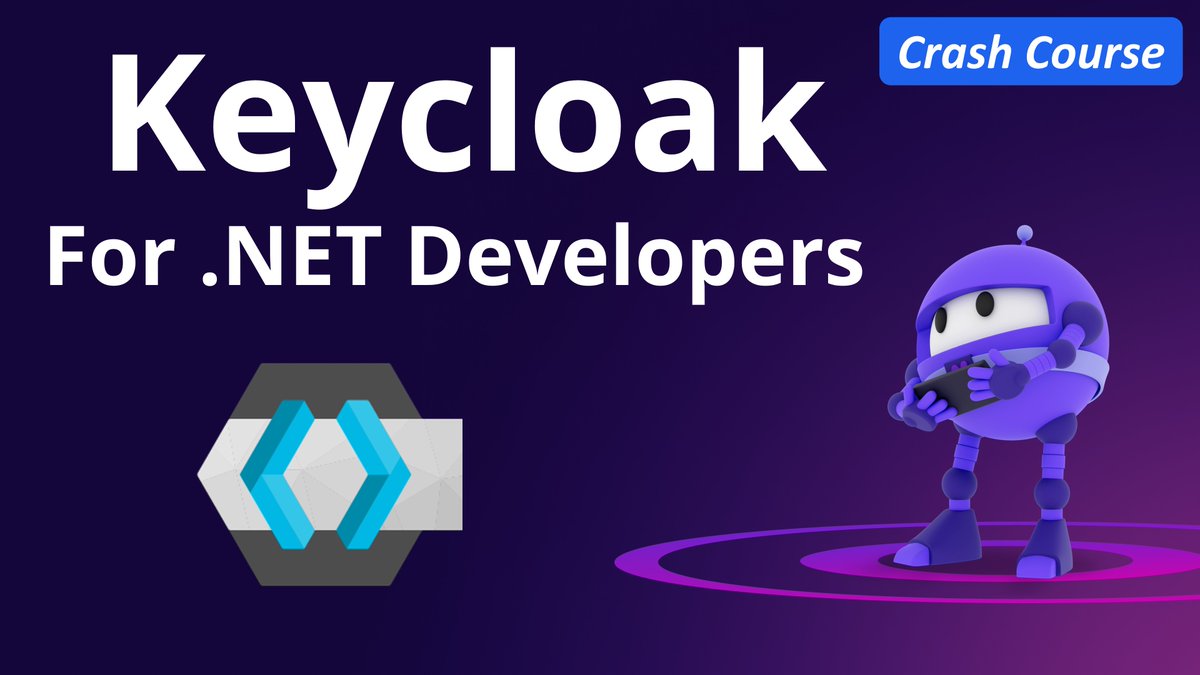
Still building auth from scratch? Stop.
Use this instead:
Keycloak is a free authentication server that gives you secure logins, password management, and JWTs out of the box, so you can focus on building your app, not reinventing auth.
In just 45 minutes, you’ll go from unprotected endpoints to a fully secured API:
✅ Run Keycloak with Docker
✅ Register and secure a .NET API
✅ Use OAuth 2.0 Authorization Code Flow
✅ Manage users and generate JWTs
✅ Protect endpoints and send authorized requests
Watch the full crash course here 👇
https://t.co/w4UiJvVd4q
Ready to become a .NET Backend Developer?
Here's a free course for beginners.
You’ll go from zero to building a complete REST API, step by step, using ASP .NET Core and the C# language.
You’ll learn how to:
- Build REST APIs with Minimal APIs and .NET 10
- Implement CRUD operations from scratch
- Work with Entity Framework Core and SQLite
- Handle database migrations and data seeding
- Validate inputs and handle errors properly
- Refactor code using DTOs and route groups
- Apply dependency injection and service lifetimes
- Write async code with async/await
- Manage configuration and logging
- Connect your backend to a React frontend
By the end of the course, you won’t just “understand” ASP .NET Core — you’ll ship a real API and know exactly how to build your own backends with .NET.
Watch the full course for free here 👇
https://t.co/DPqr8WkEFZ
Tired of starting .NET projects from scratch every time?
Here's a new blueprint for your next .NET backend:
It includes 10 production-ready pillars fully wired up:
1. Modern .NET 10 Web API
2. Vertical Slice Architecture
3. PostgreSQL + Entity Framework Core
4. Preconfigured Keycloak authentication
5. Auth-enabled Swagger UI for interactive testing
6. Global error handling
7. Local development that just works with Aspire
8. Production deployment to Azure
9. GitHub Actions CI/CD pipeline
10. dotnet new template ready to install
This .NET Backend Blueprint isn't another "Hello World" template.
It's a complete production-ready .NET backend that most developers spend weeks setting up.
Built with Vertical Slice Architecture because clean code matters more than following outdated layer patterns.
The honest truth: If you're building simple CRUD apps, this might be overkill.
But if you want to ship production-ready APIs without the usual setup hell, this template will save you 40+ hours.
Grab it while it's FREE! 👇
https://t.co/5knWeLuPVy
5 books all software engineers should read:
1. Clean Code ( Robert Martin )
2. Designing Data-Intensive Applications ( Martin Kleppmann )
3. System Design Interview ( Alex Xu )
4. System Design Interview: Volume 2 ( Alex Xu & Sahn Lam )
5. The Software Engineer's Guidebook ( Gergely Orosz )
For more like these, check out my list of top 20 Engineering books for .NET Developers 👇
https://t.co/LQfdxjmdXQ
Struggling to secure your .NET app with Microsoft Entra?
This free course shows you the complete step-by-step.
Most tutorials only show bits and pieces.
You'll learn how to secure ASP .NET Core APIs and Web Apps properly with Microsoft Entra (formerly Azure AD), including:
✅ Register and protect your ASP .NET Core APIs
✅ Get access tokens via Postman
✅ Register and configure your Web Apps
✅ Add login, logout, and conditional UI
✅ Call protected APIs from your Web App
By the end, your users will log in through Microsoft Entra, and your Web App will send fully authorized requests to your protected APIs.
Watch the full course for free here 👇
https://t.co/Y2yti3Bqio
Need to get started with .NET microservices?
Here's a free course for beginners:
It goes from zero to a fully working microservices application built with C# and https://t.co/EE6GfsQuPF Core.
It covers:
- Dev environment setup
- What are microservices?
- Creating your first microservice
- DTOs
- REST APIs
- Data repositories
- Using Docker containers
- Dependency injection
- Postman
- Code re-use via NuGet packages
- Synchronous communication via IHttpClientFactory
- Resilience strategies via Polly
- Asynchronous communication via RabbitMQ
- MassTransit
- Eventual data consistency
- Frontend integration
- Lots more
Start watching for free here 👇
https://t.co/ouNBGlKzod
It took me 4 years to reach the Senior band.
Here are 5 things I mastered to get there:
𝟭. 𝗔𝗦𝗣.𝗡𝗘𝗧 𝗖𝗼𝗿𝗲 𝗜𝗻 𝗗𝗲𝗽𝘁𝗵
Knowing how to create a RESTful API is good for juniors, but Seniors must know dozens of advanced features available on the platform.
Middleware, global error handling, async programming, structured logging, background services, authentication, and authorization are a must.
𝟮. 𝗗𝗲𝘀𝗶𝗴𝗻 𝗣𝗿𝗶𝗻𝗰𝗶𝗽𝗹𝗲𝘀 𝗮𝗻𝗱 𝗗𝗲𝘀𝗶𝗴𝗻 𝗣𝗮𝘁𝘁𝗲𝗿𝗻𝘀
Knowing these helps you write maintainable and scalable code. Seniors must know when each principle and pattern should be applied.
SOLID, DRY, KISS, YAGNI, singleton, repository, circuit breakers, pub/sub, and competing consumers are good ones to get started.
𝟯. 𝗖𝗹𝗼𝘂𝗱 𝗖𝗼𝗺𝗽𝘂𝘁𝗶𝗻𝗴 𝗮𝗻𝗱 𝗔𝘇𝘂𝗿𝗲
The cloud is the backbone of modern software infra, and as a Senior dev, you should be familiar with several essential Azure services.
Azure blob storage, SQL or Postgres Database, Key Vault, Managed Identities, Entra ID, App Insights, Container Apps or AKS, are essential these days.
𝟰. 𝗗𝗲𝘃𝗢𝗽𝘀 𝗣𝗿𝗮𝗰𝘁𝗶𝗰𝗲𝘀 𝗮𝗻𝗱 𝗖𝗜/𝗖𝗗 𝗣𝗶𝗽𝗲𝗹𝗶𝗻𝗲𝘀
CI/CD pipelines are key to modern agile development. As a Senior dev you should know how to build an effective pipeline.
Azure DevOps is the most popular across Microsoft shops, followed by GitHub Actions. Mastering at least one of those is super valuable.
𝟱. 𝗠𝗶𝗰𝗿𝗼𝘀𝗲𝗿𝘃𝗶𝗰𝗲𝘀 𝗮𝗻𝗱 𝗖𝗼𝗻𝘁𝗮𝗶𝗻𝗲𝗿𝗶𝘇𝗮𝘁𝗶𝗼𝗻
Microservices help you build cloud-ready .NET systems at scale, and as a Senior dev you must know how they work and when to use them.
Plus microservices automatically earns you hands-on experience with Docker containers, Kubernetes and many cloud development patterns.
And that is just the start.
Need a step-by-step roadmap? Here 👇
https://t.co/Ed7r4wghUc
Need to get started with Docker?
Here's a full course for .NET Developers:
It covers the basic Docker building blocks and how to deploy your .NET apps as containers to deliver software fast and consistently across environments.
Included topics:
- Why Docker Containers?
- Virtual Machines vs Containers
- Docker Desktop Architecture
- Getting Started with Docker
- Docker Images vs Containers
- Downloading Public Docker Images
- Docker Tags
- Running Containers Locally
- Port Mapping
- Entering a Running Container
- Docker Volumes
- Docker Image Creation Options
- Preparing a .NET Application for Containerization
- Writing a Dockerfile
- Building a Docker Image
- Multi-stage Builds
- Creating New Docker Image Versions
- Creating Smaller Images
- Building Docker Images with the .NET SDK
- Publishing Images with the Docker CLI
- Publishing Images with the .NET CLI
- Running a Container in the Cloud
- Docker Containers in the DevOps Lifecycle
Start watching for free here 👇
https://t.co/CGfCXDCFCD
.NET 10 is out today.
Top updates across 8 key areas:
𝗖# 𝟭𝟰
Extension members, field-backed properties, implicit spans, and nameof plus lambda tweaks that clean up everyday code.
𝗔𝗦𝗣.𝗡𝗘𝗧 𝗖𝗼𝗿𝗲
OpenAPI enhancements, built-in Minimal API validations, Server-Sent Events (SSE), and passkey authentication support.
𝗘𝗙 𝗖𝗼𝗿𝗲
SQL vector search support, LINQ and SQL translation updates, Complex Types, plus Cosmos DB full-text search.
𝗥𝘂𝗻𝘁𝗶𝗺𝗲
JIT compiler improvements, more stack allocations, AVX10.2 support, and NativeAOT enhancements for smaller, faster apps.
𝗟𝗶𝗯𝗿𝗮𝗿𝗶𝗲𝘀
New cryptography APIs, new JSON serialization options, the new WebSocketStream API, and ZipArchive performance improvements.
𝗦𝗗𝗞
File-based apps enhancements, container support for console apps, native tab-completion scripts, and dotnet tool exec.
𝗔𝘀𝗽𝗶𝗿𝗲
First-class Python and JS support, aspire do deployments, container files as artifacts, and a simpler AppHost with a modern CLI.
.𝗡𝗘𝗧 𝗠𝗔𝗨𝗜
Diagnostics and layout telemetry, XAML source generator, MediaPicker enhancements, and an Aspire service-defaults template.
Need a .NET 10 ready starting point?
Get my Free .NET Backend Blueprint, now updated for .NET 10 👇
https://t.co/5knWeLuPVy
@SantoRaphael It's auto-enabled when you deploy your Aspire app to ACA. It's also available as a container, so nothing stops you from deploying it to Prod: https://t.co/phSsrJIXht
5 reasons Aspire will 10x your local dev loop.
And 3 gotchas to know about:
𝟭. ��𝗶𝗺𝗽𝗹𝗶𝗳𝗶𝗲𝗱 𝗗𝗲𝘃 𝗘𝘅𝗽𝗲𝗿𝗶𝗲𝗻𝗰𝗲
Aspire boots your entire system, APIs, workers, DBs, queues, not just one app. Press F5 and everything runs locally without custom scripts or manual wiring.
Onboarding a teammate or switching machines? No problem. Aspire ensures consistency, fast feedback, and far fewer “it worked on my machine” issues.
𝟮. 𝗕𝘂𝗶𝗹𝗱𝗶𝗻𝗴 𝗕𝗹𝗼𝗰𝗸𝘀 𝗧𝗵𝗮𝘁 𝗝𝘂𝘀𝘁 𝗙𝗶𝘁
Redis, Postgres, RabbitMQ, you just declare what you need. Aspire wires everything up for you: health checks, telemetry, DI setup, configuration.
Skip the glue code. You get production-grade behavior from day one, without reinventing infrastructure patterns for each service.
𝟯. 𝗖𝗼𝗻𝘀𝗶𝘀𝘁𝗲𝗻𝘁 𝗘𝗻𝘃𝗶𝗿𝗼𝗻𝗺𝗲𝗻𝘁𝘀
Aspire lets you define your infrastructure in C#, making environments predictable and reproducible across dev, QA, and prod.
No more config drift or deployment inconsistencies. Your local environment mirrors your production setup by design.
𝟰. 𝗥𝗲𝗮𝗹-𝗧𝗶𝗺𝗲 𝗗��𝗮𝗴𝗻𝗼𝘀𝘁𝗶𝗰𝘀
Built-in tracing and metrics light up your app the moment it runs. No need to plug in third-party observability tools just to debug a dev environment.
Spot slow dependencies and service failures locally, before they impact real users or reach production.
𝟱. 𝗩𝗶𝘀𝘂𝗮𝗹 𝗗𝗲𝗽𝗲𝗻𝗱𝗲𝗻𝗰𝘆 𝗚𝗿𝗮𝗽𝗵𝘀
Aspire auto-generates a live visual map of your entire system: APIs, services, queues, and databases included.
It’s perfect for understanding service boundaries, catching hidden dependencies, or getting new developers up to speed faster.
3 gotchas to watch for:
🚧 𝗠𝘂𝗹𝘁𝗶-𝗥𝗲𝗽𝗼 𝗟𝗶𝗺𝗶𝘁𝗮𝘁𝗶𝗼𝗻𝘀
Works best with monorepo setups. Multi-repo teams need to reference projects across boundaries, which adds friction.
🚧 𝗔𝘇𝘂𝗿𝗲 𝗜𝗻𝗳𝗿𝗮 𝗚𝗮𝗽𝘀
Most Azure services have components, but custom infrastructure requires more manual setup. The ecosystem is growing fast.
🚧 𝗙𝗮𝘀𝘁-𝗠𝗼𝘃𝗶𝗻𝗴 𝗔𝗣𝗜
Frequent updates bring improvements but occasional breaking changes. Plan for version updates as part of your workflow.
Despite these trade-offs, Aspire is worth it for most .NET teams.
Want to skip the Aspire setup entirely?
My .NET Backend Blueprint has Aspire orchestration, PostgreSQL, Keycloak auth, Azure deployment, and CI/CD already configured.
Get it free 👇
https://t.co/5knWeLui60
5 key principles and best practices for writing clean code:
.
𝟭. 𝗨𝘀𝗲 𝗠𝗲𝗮𝗻𝗶𝗻𝗴𝗳𝘂𝗹 𝗡𝗮𝗺𝗲𝘀
Using meaningful names in your code helps everyone on the team understand the codebase quickly and accurately.
𝟮. 𝗦𝗶𝗻𝗴𝗹𝗲 𝗥𝗲𝘀𝗽𝗼𝗻𝘀𝗶𝗯𝗶𝗹𝗶𝘁𝘆 𝗣𝗿𝗶𝗻𝗰𝗶𝗽𝗹𝗲 (𝗦𝗥𝗣)
A class should have only one reason to change, which makes the code easier to maintain, test, and understand.
𝟯. 𝗗𝗼𝗻’𝘁 𝗥𝗲𝗽𝗲𝗮𝘁 𝗬𝗼𝘂𝗿𝘀𝗲𝗹𝗳 (𝗗𝗥𝗬)
Avoid duplicating code. Try to reuse existing code whenever possible, so it's more maintainable and less prone to errors.
𝟰. 𝗖𝗼𝗱𝗲 𝗖𝗼𝗺𝗺𝗲𝗻𝘁𝘀
Use comments sparingly and only to explain why something is done, not what is done. Makes your code easier to read and maintain.
𝟱. 𝗞𝗲𝗲𝗽 𝗜𝘁 𝗦𝗶𝗺𝗽𝗹𝗲, 𝗦𝘁𝘂𝗽𝗶𝗱 (𝗞𝗜𝗦𝗦)
Don’t add unnecessary complexity just because you think you might need it later. Keep it simple.
Want concrete, linked explainers for each topic? Grab my Free .NET Developer Roadmap 👇
https://t.co/Ed7r4wgPJK
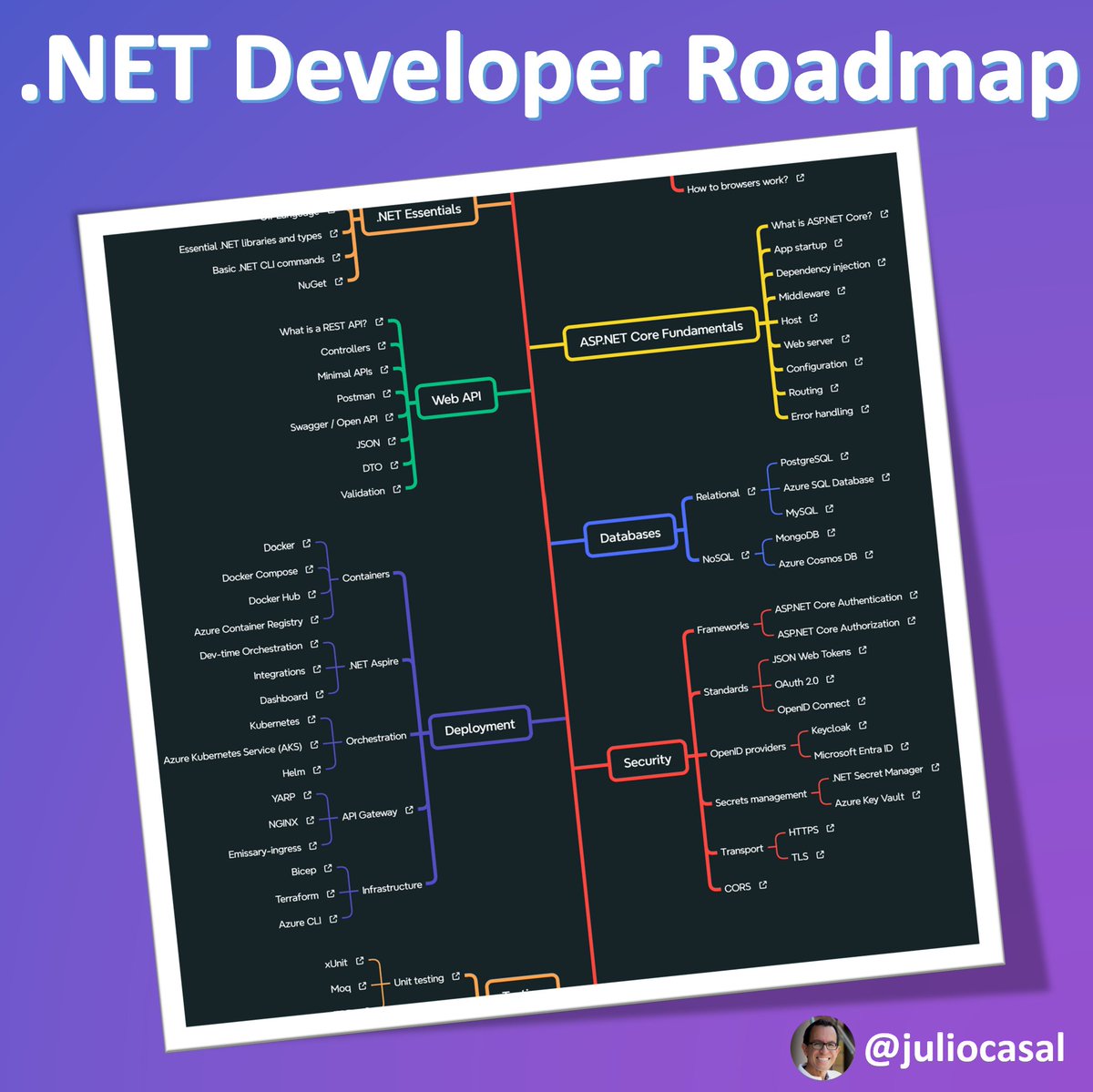
What should .NET Developers learn next?
You can start with these 18 key areas:
01. Internet basics
02. .NET Essentials
03. https://t.co/EE6GfsQuPF Core Fundamentals
04. Web API
05. Databases
06. Deployment
07. Security
08. Testing
09. Version Control
10. Task Scheduling
11. Communication
12. Observability
13. Caching
14. DevOps
15. Design Principles
16. Design Patterns
17. Architectural Patterns
18. Essential Libraries
This .NET Backend Developer Roadmap covers all those areas with 110+ topics that every .NET dev should know.
And it's not a simple PDF. Every node in the roadmap is an interactive link to the best video or article on the Web about that topic.
Steal it here while it remains FREE! 👇
https://t.co/Ed7r4wghUc