You read that right - the first ever ASOBI★MAWARI-TAI! overseas event debut happens this December at Comic Fiesta 2026!
Charge to the city with @achichi_mela, @sorashina_sopia, @suzuna_tsuzuri and @hyakuto_kyoko in pursuit of fun above all else where in a whirlpool of play, wash the world away! Event passes available at https://t.co/J9bfeGsmFE
#hololiveMeet #ASOBIMAWARITAI #comicfiesta2026
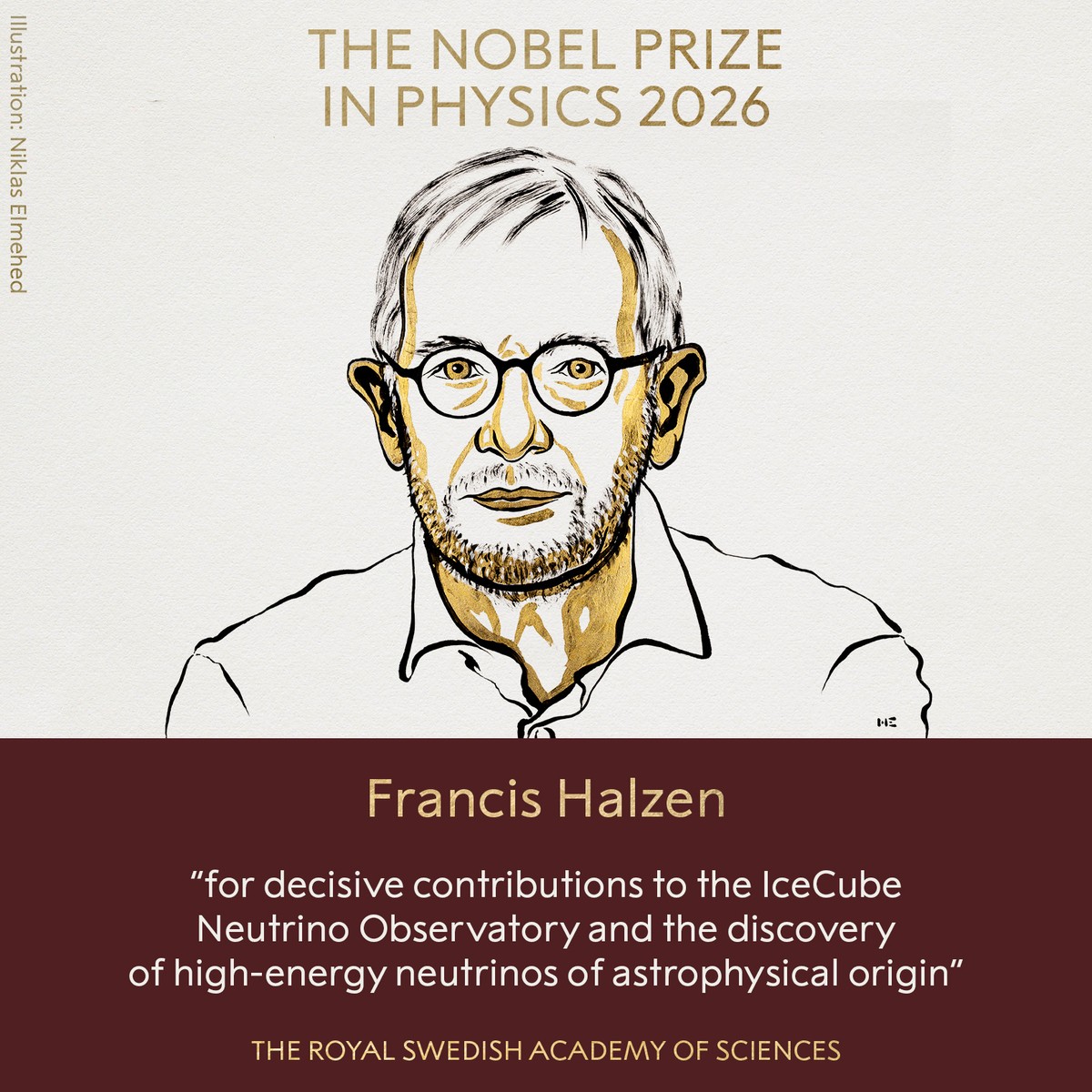
Congratulations to @NobelPrize in #Physics winner Francis Halzen “for decisive contributions to @uw_icecube and the discovery of high-energy neutrinos of astrophysical origin." Read the prize-winning research from our journal:
https://t.co/YeYQs3yr4o
https://t.co/tFbN5iboLF
Also to top up, this year's prize is important for the field since it detected neutrinos produced from outer space or from these stars formation events and not neutrinos that are produced in the Earth's atmosphere.
Let me try to explain this year's prize which is in astroparticle physics. If astronomers want to understand what is happening in a star system, they usually observe it through light (photons). However, light can be scattered or blocked by matter along its path.
#SopiLive
To detect neutrinos from these events, Francis Halzen proposed to place thousands of light sensors deep inside the Antarctic ice, resulting in the IceCube project. When a neutrino interacts with the ice, it can produce a tiny flash of light that the sensors can detect.
Apparently this year's Nobel Prize in physics is awarded to only 1 person, kinda uncommon in recent years since the award is often shared among 2-3 person in the same field. Anyway congrats to Francis Halzen for his discovery of high energy neutrinos from outer space!
Johnston, H. (2026) ‘Is this the year for a Nobel prize in condensed matter, or maybe particle physics?’, Physics World, 1 October. Available at: Physics World article (Accessed: 6 October 2026).
The prize announcement is usually at 6.45pm JST and can be watched at the Nobel Prize YouTube channel. Usually it starts with the chairperson introduction followed by the prize announcement and ended with the explanation of this year's prize.
Here are some predictions:
1. Quantum Anomolous Hall Effect - Qikun Xue (Clarivate, 2026)
2. Twistronics - Eva Andrei, Pablo Jarillo-Herrero & Allan MacDonald (Johnston, 2026)
3. Optical Lattice Clocks - Jun Ye & Hidetoshi Katori (my personal pick)