New paper out! Looks the same. Connects differently
Awake vs NREM activity barely changes, but topology does. Wide-field 2P imaging reveals that single-cell networks in unconscious states become more segregated while modules remain spatially intermixed.
👉 https://t.co/8mxBzBRTDb
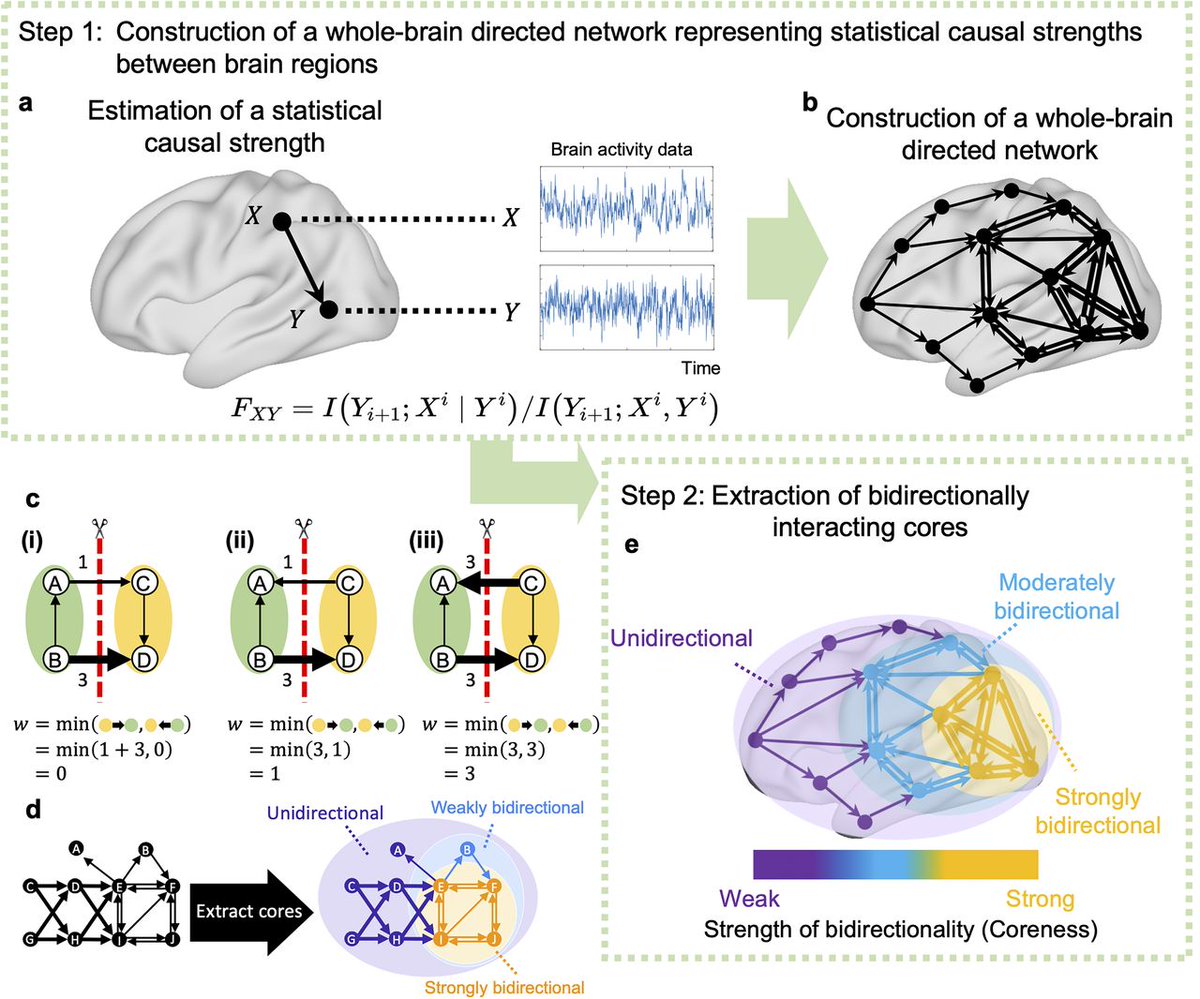
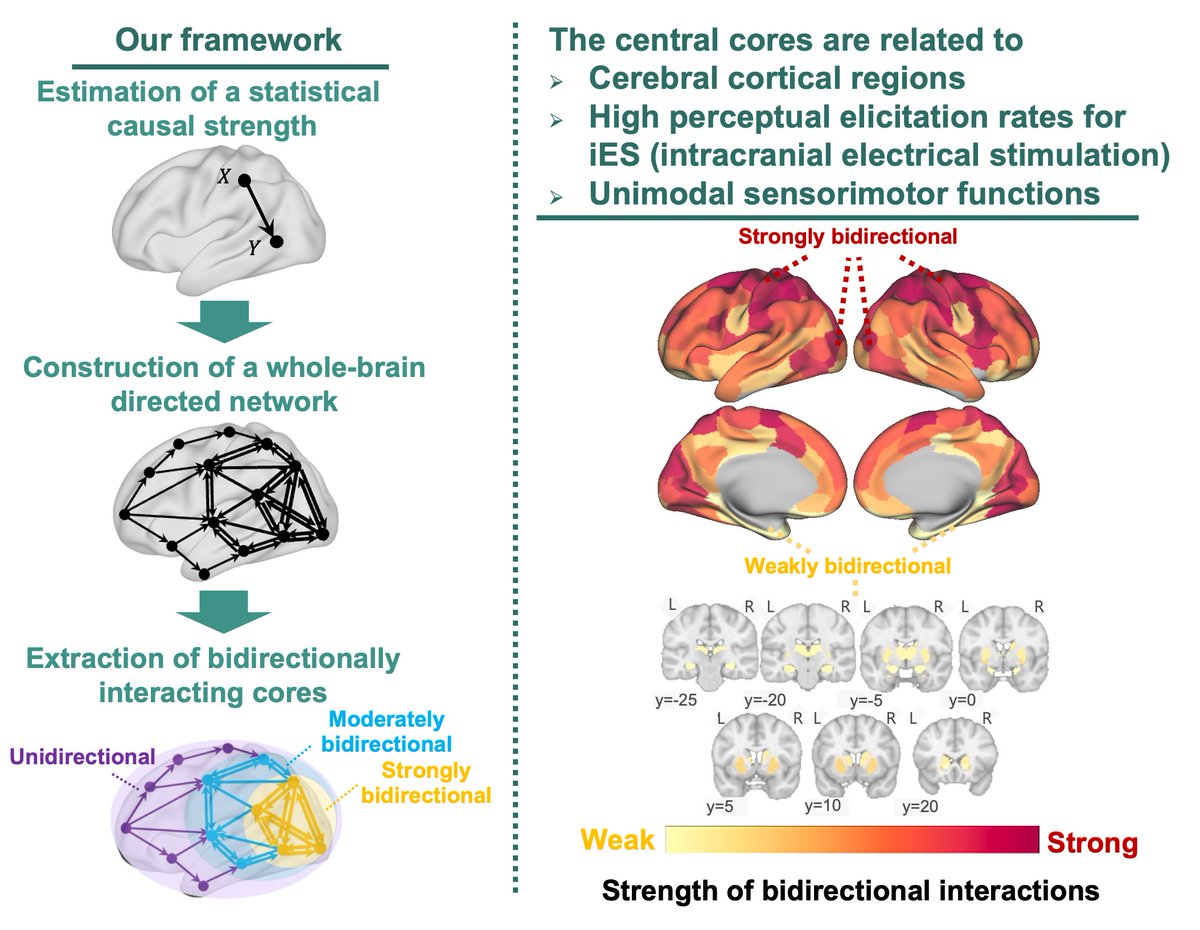
#JNeurosci: Findings from @_ttaguchi@JunKitazono@shuxnys and @oizumim offer novel insights into how network cores with strong bidirectional interactions contribute to the mechanisms underlying conscious perception and cognitive functions.
https://t.co/MUKmfWf6KJ
Excited to share another new paper in Journal of Neuroscience Methods!
We introduce GWTune, a toolbox for unsupervised alignment using Gromov–Wasserstein Optimal Transport (GWOT).
Open-source and ready to use.
🔗 https://t.co/Avsu3xUIsu
🧰 https://t.co/ZVoPNrzQSa
Excited to share our new paper in iScience! 🎉
https://t.co/OOvCHLwYcg
We present an unsupervised alignment framework applied to neural recordings, enabling comparison of neural representations across individuals and brain areas—without relying on stimulus correspondence.
Applications for this (well-paid) postdoctoral position in our group in Sydney, Australia close in a few days. Anyone interested in complex systems and/or neural dynamics 👀👇
So happy to see Taguchi-san’s paper published! I had the pleasure of closely guiding this work — it’s been incredibly rewarding to watch it take shape over time. A real testament to his perseverance and dedication — well done!
For more details, check out the thread under his original post.
For me, this marks the latest in a series of studies on identifying network cores, particularly in the context of consciousness:
– Informational cores: https://t.co/nRxqlRFQ5G (w/ @kanair, @oizumim)
– Bidirectionally connected cores in a mouse structural connectome: https://t.co/8bAKp1OyLD (w/ Y. Aoki, @oizumim)
Check them out too!
Check out our new #JNeurosci paper on brain networks and conscious perception with @JunKitazono@shuxnys@oizumim! We propose a framework to identify network "cores"—subnetworks with strong bidirectional interactions—and apply it to human fMRI data. https://t.co/J2kQQM5YmZ
Our latest preprint is out! How can we design optimal perturbations—such as TMS, tACS, and tDCS—to accurately identify neural dynamics?
By designing perturbations based on system’s eigenvalues and network structure, we can improve system identification. https://t.co/sTfDAtCP0f
This work was led by Yumi Shikauchi, a former postdoc in my lab. The TMS-EEG data during motor tasks were collected by @mitsuaki1988, @TomasevicLeo, and @HSiebner, while @JunKitazono and I contributed on the theoretical side. Thanks to the team for making this possible!
🚀New Preprint by Shikauchi et al🧠
Our method combines network control theory with perturbation inputs (TMS) to explore brain dynamics (EEG responses). Co-authored with @TomasevicLeo@JunKitazono@HSiebner@oizumim
New results just added by @AnnieGBryant in an update to https://t.co/euhDhozNcu, highlighting some high-performing statistics of coupling in EEG and fMRI time series 👀
Press release from the University of Tokyo for our latest paper in #JNeuosci! @mathmrk_neusci@gen21ka@shuxnys@JunKitazono With our control theory framework, we examined the significant brain regions for the optimal control in human fMRI data.
https://t.co/Z9hOkuSIAD
Finally out in #JNeurosci! We quantified control cost to transition brain states in a stochastic manner. We applied this method to HCP data and identified significant brain regions for controlling state transitions. See more details in my previous thread!
https://t.co/1Z8NB49Ru5
Is my “red” your “red”? In this preprint with @ariel_zj, @NaoTsuchiya, @oizumim, we propose a novel quantitative method to compare subjective experiences in a purely unsupervised manner based on the qualia structure paradigm. 1/13
https://t.co/p1aZ9vaswV
Press release of our new paper, with @oizumim and Y. Aoki, out in Cerebral Cortex!
We identified network cores with strong bidirectional connections in the mouse brain and discussed the relationship between the cores and consciousness.
https://t.co/fbnOgAzwe5