I'm a novice Lisper loving #Emacs, #Mac and #Firefox. Tweeting about things learning through works, challenge and other interests, in English as training.
The Palestinian Ten Deadly Sins:
1. Terrorizing as strategy
2. Rejecting peaceful solutions
3. Praising corrupt leaders
4. Abusing and indoctrinating children
5. Weaponizing sexual violence
6. Celebrating martyrdom
7. Weaponizing civilians
8. Embracing victimhood as identity
9. Believing “Palestine” was ever a real country
10. Choosing perpetual conflict over state-building
@CptAllenHistory The educated fools yelling “Free Palestine” on American college campuses aren’t old enough to remember the era of skyjackings — but those of us who do aren’t big fans of “Palestinians”.
It’s been a generation since 9/11/2001 now. How soon people forget… ✈️
On This Day — July 24, 1973: Palestinian & Japanese terrorists hijacked a Japanese jumbo jet, held 145 people hostage for days, then blew the plane to pieces in Libya.
Japan Airlines Flight 404, a Boeing 747 flying from Amsterdam to Tokyo, was seized shortly after takeoff by five terrorists: four Palestinians linked to the Popular Front for the Liberation of Palestine & Japanese Red Army member Osamu Maruoka.
Their demand was the release of Kozo Okamoto, the Japanese Red Army terrorist who had taken part in the 1972 Lod Airport massacre in Israel that murdered 26 people.
When Israel refused, the hijackers forced the plane on a multi-day odyssey through Dubai and Damascus before landing in Libya. One of the terrorists, an Arab woman, was killed when a grenade she was carrying accidentally detonated.
After releasing the passengers and crew, the remaining hijackers destroyed the aircraft with explosives on the tarmac.
None of the surviving terrorists faced justice. Maruoka later led another major hijacking in 1977 and died in a Japanese prison in 2011.
Kozo Okamoto, the Lod Airport murderer whose release they demanded, actually died in Beirut just yesterday (July 23, 2026) at age 78, having lived freely for decades under Palestinian protection as a “hero.”
This was part of the decades-long deliberate international campaign by Palestinian terrorist groups and their radical leftist allies to turn civilian aviation into a battlefield against Israel and the West.
The age of air piracy had a body count, and the world largely shrugged as the perpetrators walked free.
I've learning more about Zellij, and it increasingly feels like a nice tiling window manager for working in terminals.
My mental model for tmux and screen was that their main focus was persistence (detach/attach between SSH sessions). Zellij seems to focus on layout.
Running several LSP servers for one project is common. Eglot connects to one per session, Eglotx is a zero-config, in-process multiplexer in #Emacs Lisp, with auto-detection and project-local servers first.
https://t.co/fHkPMzw1tW
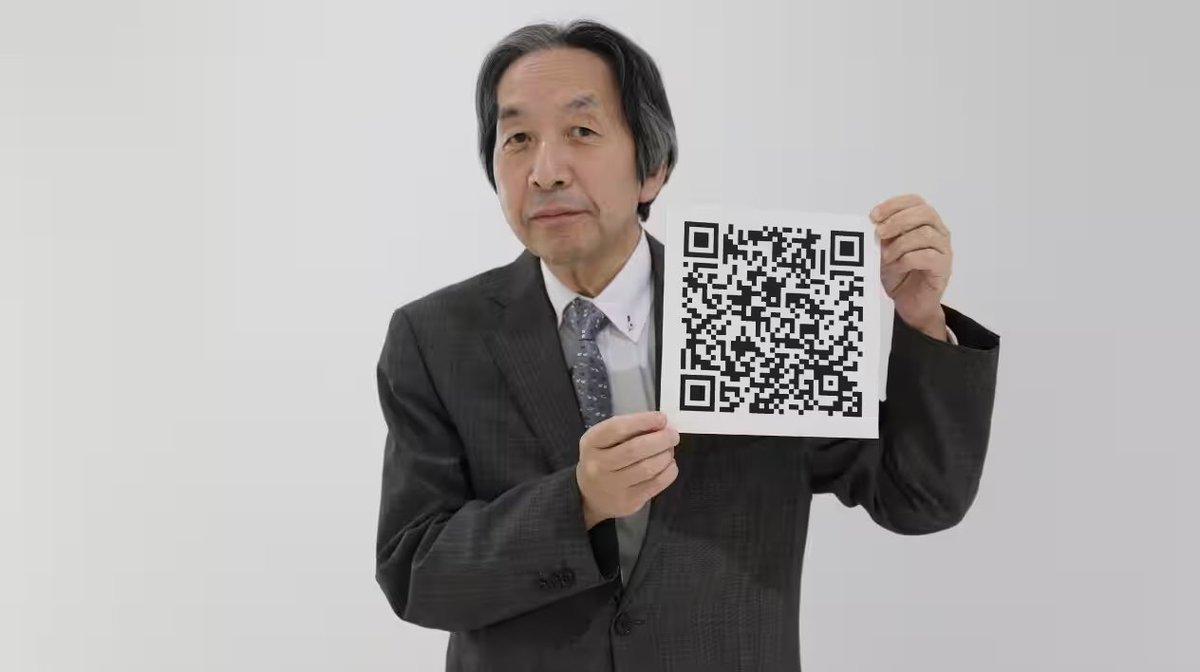
A Japanese engineer invented the QR code for one job, tracking car parts on a Toyota line, then his company chose to give the patent away for free, which is the only reason it ended up on every restaurant table on Earth.
His name is Masahiro Hara. The company was Denso Wave, a parts supplier owned by Toyota.
In 1992 the problem landed on his desk, and it was not glamorous. Workers on the factory floor were drowning.
Every car part had a barcode, but a barcode can only hold about twenty characters, so to track one component they had to stick five or ten barcodes on it.
A worker would stand there scanning a single part ten times in a row. Some of them were scanning close to a thousand barcodes a day. The job had stopped being about building cars and turned into pointing a scanner at stickers all day long.
And there was a second problem nobody upstairs cared about. This was a factory. Oil got on everything. A smudge of grease across a barcode and the whole thing became unreadable, and the line stopped.
Hara was asked to make the scanner faster. He looked at it for a while and realized the scanner was not the problem. The barcode itself was the ceiling. A line of black bars can only hold information going one direction, left to right.
He decided to build something that held information in two directions, up and down as well as across, so it could store hundreds of times more in the same little square.
Then came the part that sounds made up but is not.
Hara played Go on his lunch breaks, the old board game with black and white stones sitting on a grid. He was staring at the board one day and it clicked.
The grid of black and white stones was already a way to store information in two directions. That was the shape of his code.
But building the code was the easy half. The hard problem was speed, because the whole point was to be fast, and a scanner wastes most of its time just trying to figure out where the code is and which way it is turned.
The fix came to him on a train. He was looking out the window at buildings, and one building stood out from all the others because of its shape against the sky. That was the idea.
He put three little square targets in three corners of the code. The moment a scanner sees those three squares, it knows instantly where the code is and how it is rotated, even upside down, even at an angle.
Now here is the detail that shows how far he was willing to go. Those three corner squares only work if nothing else on the page looks like them.
If a magazine ad or a cardboard box happened to have the same black and white pattern nearby, the scanner would get confused and grab the wrong thing.
So Hara and his tiny two-person team went and surveyed printed material. Magazines. Flyers. Cardboard boxes. Piles of it, for days, reducing every picture down to its ratio of black to white area, hunting for the one ratio that almost never shows up in print anywhere. They found it. One to one to three to one to one.
That exact rhythm of black and white is baked into every corner square of every QR code on Earth, and it is there because it is the pattern the printed world almost never produces by accident.
Then he solved the oil.
He built the code so it carries a backup of its own information, spread mathematically across the whole square. You can tear off, smudge, or scratch out up to thirty percent of a QR code and it still scans perfectly, because the code rebuilds the missing piece from the copy it kept of itself.
A worker could get grease on a third of the label and the line would keep moving. This is the same math that lets a scratched CD still play and lets a spacecraft send data back across the solar system without asking to repeat itself.
He finished in 1994. He named it Quick Response, after what it does for the person using it, not after what it is.
And then Denso made the decision that actually mattered.
They held the patent. They could have charged a fee on every single scan, and given how many billions happen now, that would have made someone unimaginably rich.
Instead they announced they would not enforce their rights to collect royalties, and they published the specification openly so anyone could use it. Hara later said it was not even a big argument inside the company.
That one choice is the whole story. A code that costs nothing to use is a code everyone builds on. Airlines put it on tickets. Phone makers built readers into cameras.
Then a pandemic hit and the world needed a way to hand someone information without touching anything, and the free little square that a Toyota engineer built for greasy factory workers was suddenly on every menu, every payment, every door.
Hara still works there. He has said, more than once, that he never imagined it would spread this far, and that the part he is proudest of is that it got used to keep people safe.
The man built it to survive oil on a factory floor. It ended up surviving everything else too.
You have scanned his work a hundred times this year. Now you know whose it was.
https://t.co/6x4JAHA987 #Emacs
"About A lightweight Emacs extension for gptel that provides a dynamic switcher between Ollama and Gemini backends, featuring automatic model discovery and local transcript saving." #gptel
"Sleep regularity is a stronger predictor of mortality risk than sleep duration: A prospective cohort study" SLEEP | Oxford Academic
https://t.co/qKdMS6U64L
Ghostel.el: a terminal emulator powered by libghostty—blending speed with accessible UX for terminal tasks. Dive into the project and join the hype around faster, lighter terminals. https://t.co/5xG8913sAB #opensource#terminal#libghostty
A Muslim Rape Gang In Germany, Or Judgment at Nuremberg
by Hugh Fitzgerald
Why should Pakistanis in the UK have all the fun? Now police in Germany have uncovered a Muslim grooming gang composed of Syrians, Pakistanis, and Palestinians.
Just as in the cases of the grooming gangs in the UK, these Muslims identify vulnerable German girls, with difficult home situations, and the process of seduction begins. Some wait outside their schools to pick them up at the end of the school day, others pick them up around bus and train stations. They are first plied with little presents — toiletries or costume jewelry — to win their favor, and then they are introduced to drugs, from cannabis to cocaine and crystal meth. Hooked, they must provide sex to their Muslim seducers to pay for those drugs. They are subject repeatedly to rape and other forms of sexual assault, but by then are so drug-dependent that they cannot break free. Many are held captive in apartments. These sex slaves are passed around among their Muslim victimizers like confetti.
Read more at the link in the next post.
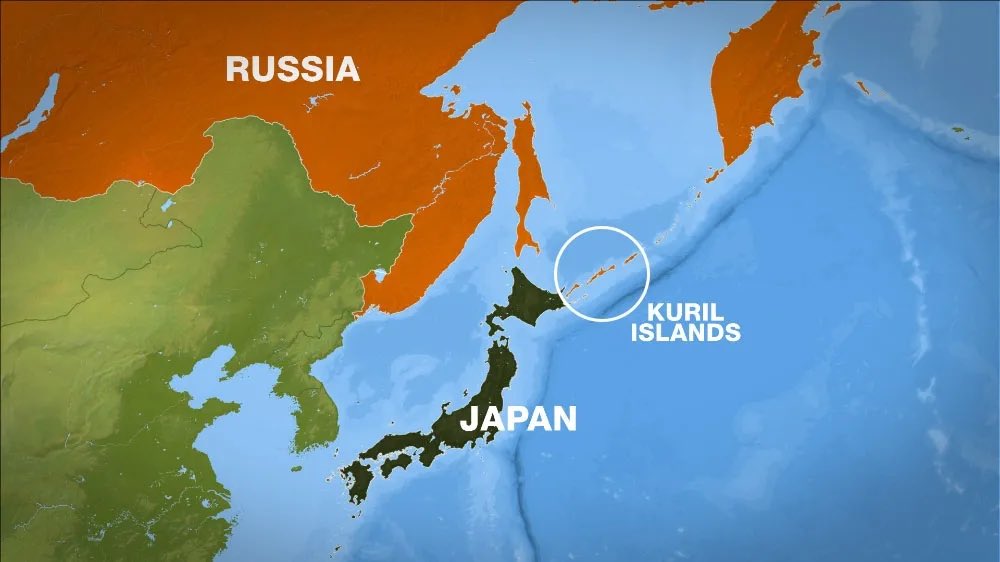
‼️🇯🇵 After Russia's 2022 invasion of 🇺🇦Ukraine, many Russian spies relocated to Japan because of its relatively weak counter-espionage laws and advanced tech industry, - The Japan Times
According to Western intelligence, they use front companies and diplomatic/business covers to acquire restricted Japanese technology, which is then smuggled to Russia through third countries and used in missiles and drones.
Ukraine and Western governments have repeatedly warned Japan, but critics say Japan has been slow to crack down despite supporting Ukraine politically.
NYT names MV Filchenkov, an Aeroflot employee in Tokyo, as a GRU officer belonging to its 20th Directorate. His role in Tokyo is to arrange for Japanese tech to be exported to Russia via 3rd countries for use in weapons. JPN firm Proco Air also named.
https://t.co/eySg4KCbSu