#Qatari motivational speaker, philanthropist and FIFA ambassador @g_almuftah celebrated #Morocco's dramatic penalty-shootout victory over the #Netherlands on Tuesday, sharing moments of joy as the #AtlasLions booked their place in the @FIFAWorldCup 2026 last 16.
🚨Breaking: Civil Defense teams in Gaza have recovered the remains of a young man killed by Israeli forces in Block G camp, southern Gaza. Only bones were found, along with a bracelet bearing his name “Ayham.”
Authorities continue to report thousands of missing people across Gaza, many still unaccounted for amid the ongoing devastation.
Satellite imagery shows the aftermath of Israeli forces' massive explosives in Majdal Zoun on Sunday, devastating its center and erasing neighbourhoods, a systematic urbicide repeated across southern Lebanon.
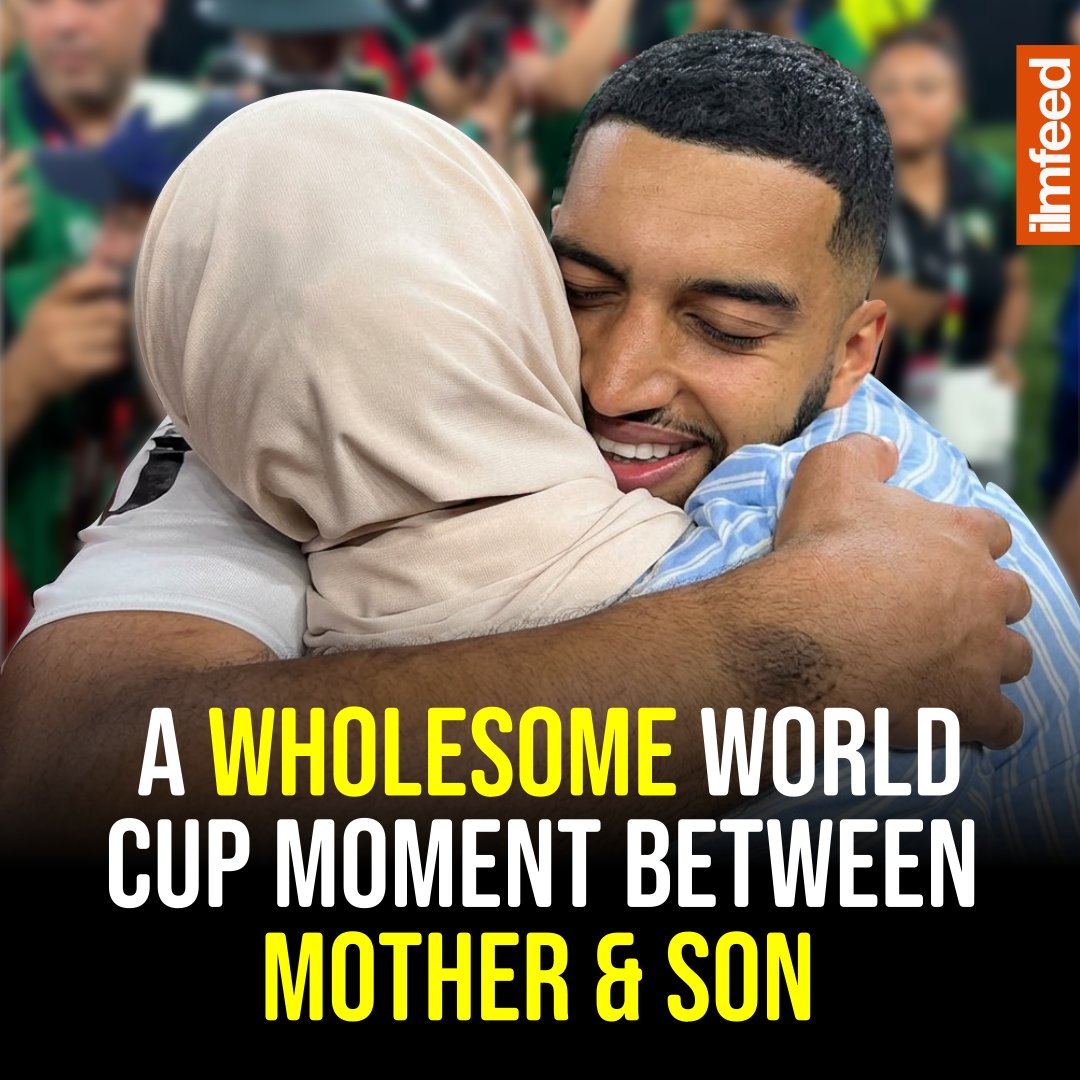
Ismael Saibari, who helped Morocco reach the last 16 of the World Cup, honoured his mother in the most heartfelt way by finding her in the stands and embracing her after the match. In Islam, immense importance is placed on honouring and showing kindness to one’s parents.
While many players might turn to friends or partners to celebrate such a moment, Saibari chose to go straight to his mother.
Moments like these are a powerful reminder that whenever we achieve success in life, we should never forget those who shaped us, supported us, and made du‘a for us along the way. Gratitude should be shown through action - by thanking them, honouring them, being at their service, seeking their du‘a, and continuously making du‘a for them, especially our parents.
A Moroccan sultan recognized American independence on December 20, 1777, about six weeks before France did, and a day after Washington's starving army limped into Valley Forge.
His name was Mohammed III, and he had never set foot in America. He picked up news of the war mostly from European newspapers and the local French diplomat. He was trying to build Morocco's economy on sea trade, so he sent word to the traders and officials in his ports that ships flying the new American flag were welcome on the same terms as everyone else. That order made Morocco the first country on the planet to treat the United States as an independent country. France did not form its alliance with the Americans until February 1778.
America then sat on it for years. The news did not even reach Benjamin Franklin in Paris until the spring of 1778. The sultan offered to sign a full treaty, and Franklin let the letters sit. Mohammed III eventually asked why the Americans had never even thanked him for being the first ruler across the ocean to recognize them. Congress was broke and busy with the war, and it kept stalling.
In October 1784 the sultan decided to force the matter. Moroccan ships seized an American trading ship called the Betsey near Tangier and held its eleven-man crew. He did not touch the cargo and did not harm the sailors. He just said the ship and crew would stay in Tangier until the United States sent someone to sign a treaty.
It worked. Thomas Jefferson drafted the terms, Thomas Barclay sailed to Morocco to negotiate them, and the sultan approved the Treaty of Peace and Friendship in 1786. Morocco asked for no tribute, the yearly payment most rulers on that coast demanded to leave ships alone. John Adams and Jefferson signed it, and Congress ratified it in 1787, two months before the Constitution was signed.
That treaty is still in force today, the oldest agreement the United States has kept unbroken with any country. In 1821 a later sultan gave the United States a building in Tangier for its diplomats, and it is still the only American National Historic Landmark on foreign soil. George Washington eventually wrote to the sultan to apologize for how long the whole thing had taken.
The oldest friendship the United States has ever had began with a king it kept ignoring, and a ship he had to seize to get an answer.
Hind was killed in a shooting in Gaza that also killed her family members, with reports indicating 355 bullets were fired into the vehicle where she waited for an ambulance.
Morocco’s World Cup win ignited street celebrations that transcended sport, with fans rallying for Palestine. True to form, Moroccan supporters have consistently used their tournament triumphs to cast an international spotlight on the Palestinian struggle.
Moroccan player Issa Diop after winning from The Netherlands
" We are muslims, we are here for a short time (on earth), everything is about Allah and thanking Him "