A little behind the scenes… Most of what I share here is the work itself, but there is also someone behind all those designs and lines of code
Still learning, still building, and still working towards something bigger
One project at a time📌💪🏾
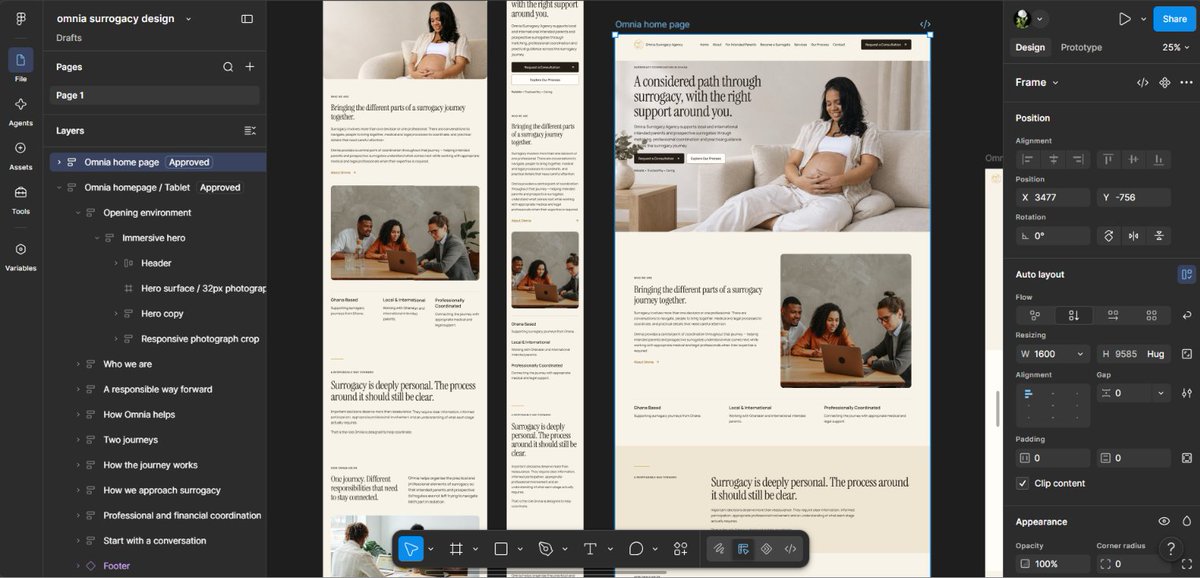
A little different from what I usually share here... This time, it is actual client work
I’m currently designing a website for Omnia Surrogacy Agency, and this is also the first time a client has given me permission to publicly share the work while I’m still working on it... The homepage is fully designed in Figma now, across desktop, tablet and mobile
Still more to do, but it is good to finally be able to show some of the client work happening behind the scenes too
A website can look polished and still be doing a poor job…. The harder part is deciding what deserves attention in the first place
What does the business need people to understand quickly ?
What might make them hesitate ?
What proof would make them trust the business enough to continue ?
What should feel obvious without explanation ?
Those decisions matter more than making every section look impressive
Design gets much easier once the business problem is clear
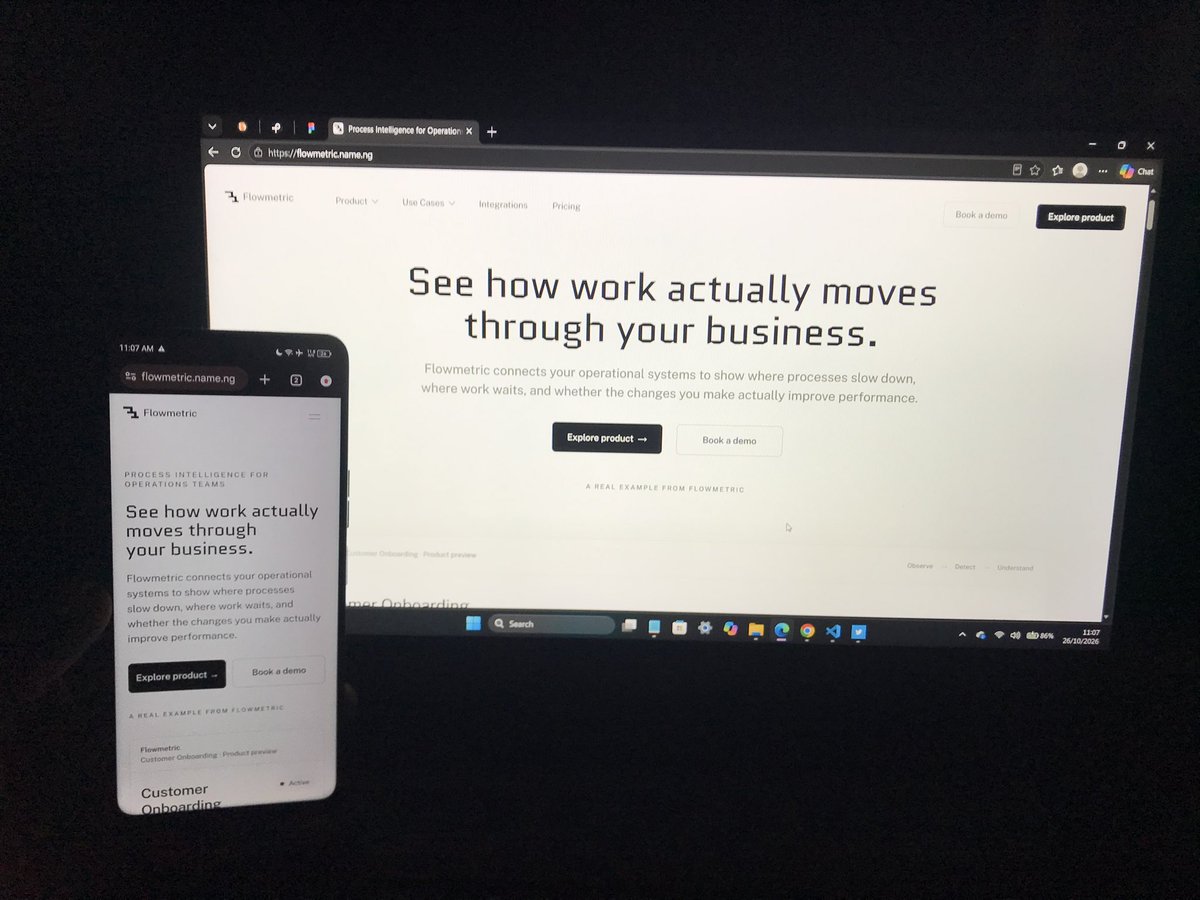
Flowmetric is officially done and live.
What started as an idea for a B2B process intelligence product became a complete SaaS website, from figuring out the product and positioning to designing the experience, building it and getting it into production
A lot changed between this post and the finished website.
https://t.co/VgTfNKYY7S
A desktop design working at 390px doesn’t automatically make it a good mobile design
Building Flowmetric meant making new decisions at smaller sizes:
What appears first?
What can stack?
What needs more room?
How should the product UI change?
Where should the CTA sit?
How should the text wrap?
Responsive implementation is still design work… The viewport changed, so some of the decisions had to change with it
One of the harder parts of Flowmetric happened before I had much to design… I had to make the product make sense first
What does it actually do?
Who needs it?
Why wouldn’t the tools a company already uses be enough?
Once those answers became clearer, the website became much easier to structure… Sometimes the website problem starts before the website
Flowmetric is complete and live
I took this one from figuring out what the product should actually be and how to position it, through Figma, development, responsive refinement, testing and deployment
A lot went into it, and there is a lot I will be breaking down from the project
For now, here is the finished website:
https://t.co/VgTfNKZvXq
Operational intelligence can get abstract very quickly
So instead of explaining Flowmetric with more SaaS language, I kept coming back to one example:
Customer onboarding
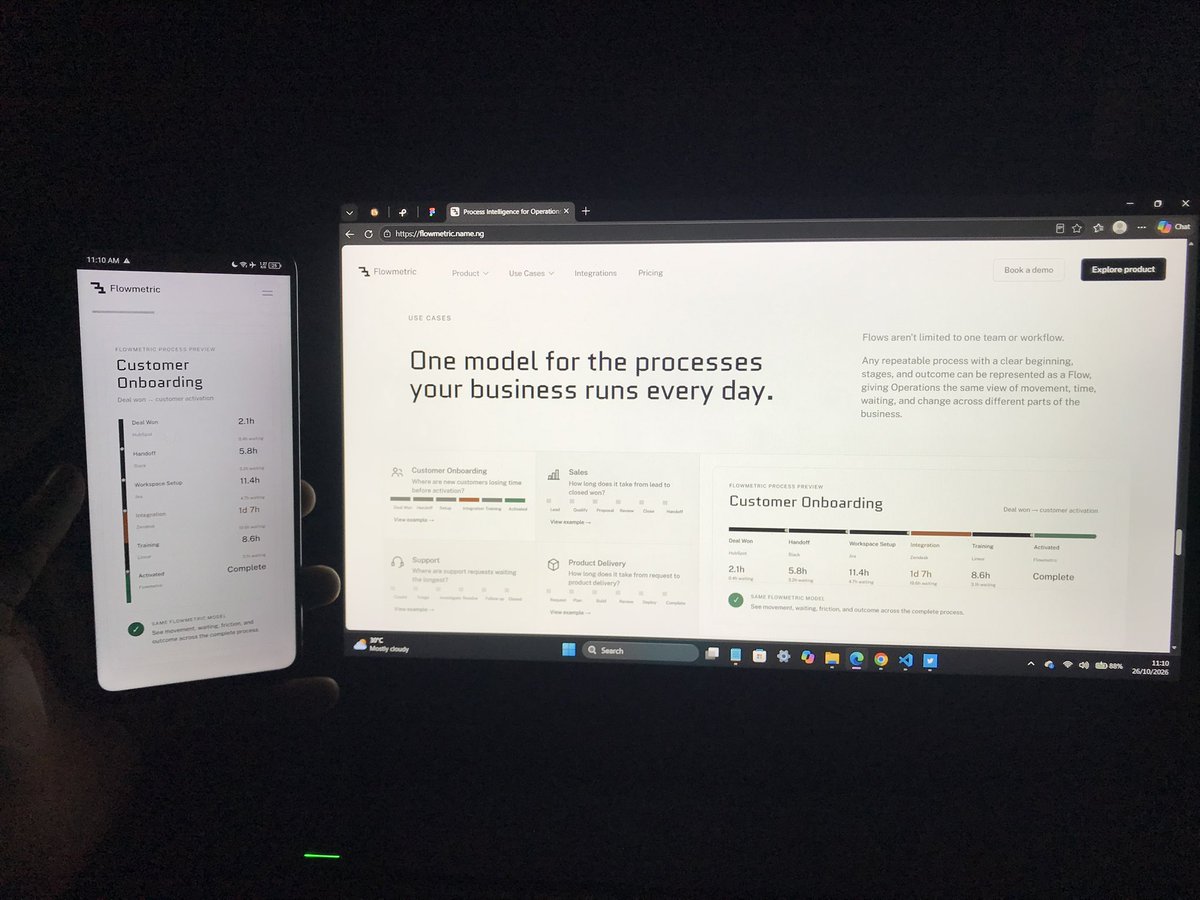
A deal is won… There is a handoff… A workspace gets set up… Integration happens.
Training follows… The customer is activated
Now the product has something real to explain… Sometimes making a complex product clearer is less about finding better words and more about giving people something concrete to follow.
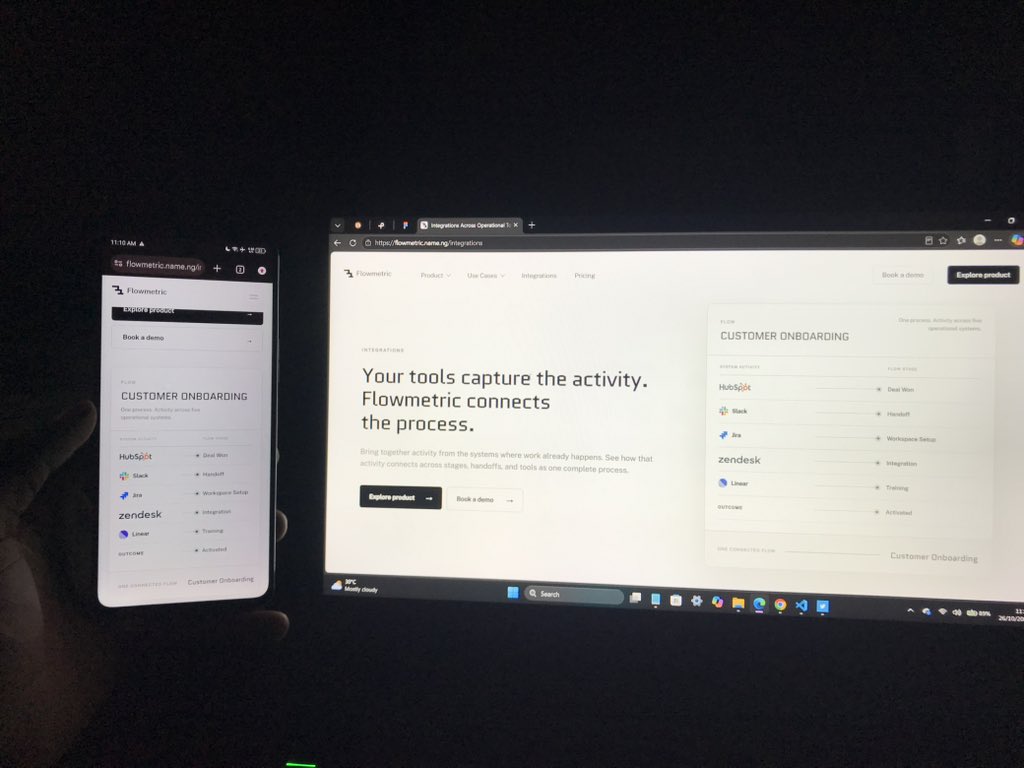
I didn’t want Flowmetric’s integrations section to become another row of software logos… The tools are part of the product story
HubSpot starts the commercial activity…Slack can carry the handoff… Jira carries implementation work… Zendesk becomes part of integration… Linear can sit within training
Different tools… One process
Showing that relationship explains far more about Flowmetric than a logo wall ever could.
Product UI on a SaaS website should not just be there to make the product look real… It should help explain something
For Flowmetric, that meant showing the process itself:
where work moves… where it waits,
and where friction starts becoming visible
If the interface is not helping someone understand the product, it might just be decoration
One principle shaped a lot of Flowmetric:
Measure the process, not the person… The idea was never to design another way to watch individual employees… It was to understand the system around the work
Where does the process slow down?
Where does work spend most of its time waiting?
What happens after a change is made?
That distinction became part of the product positioning, not just the interface
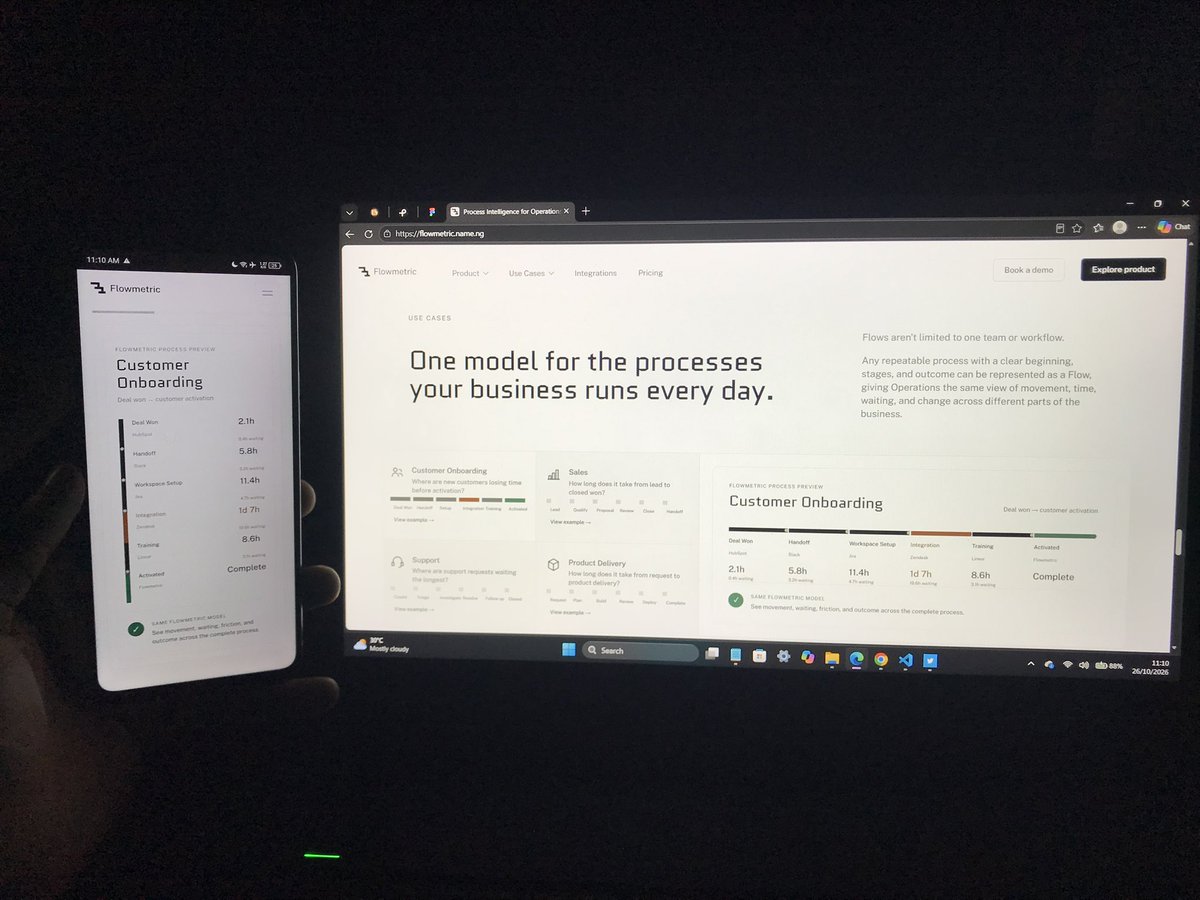
I didn’t want Flowmetric to feel like it only worked for the Customer Onboarding example I used throughout the website
The underlying idea needed to stretch further
Sales… Support… Product delivery… Customer onboarding
Different workflows, but the same question:
How is work actually moving through the process?
That led to one shared process model rather than designing each use case like a completely different product
A desktop design working at 390px doesn’t automatically make it a good mobile design
Building Flowmetric meant making new decisions at smaller sizes:
What appears first?
What can stack?
What needs more room?
How should the product UI change?
Where should the CTA sit?
How should the text wrap?
Responsive implementation is still design work… The viewport changed, so some of the decisions had to change with it.
Responsive design is not only about making the page fit a smaller screen… Navigation has to be reconsidered too
Flowmetric has product areas, use cases, integrations, pricing and two primary actions
On desktop there is room to expose more of that structure… On mobile, the hierarchy has to do more work
Same website… Different navigation problem.
A final look at Flowmetric
A self initiated B2B SaaS project I took from the initial product idea through positioning, website strategy, Figma, frontend development, responsive refinement, testing and deployment
Probably one of the projects that has pushed me most to think beyond simply designing pages
The finished website is live:
https://t.co/VgTfNKZvXq
Flowmetric started with a product problem, not a website.
I wanted to understand what the product should do, who it was for, and how to make an abstract SaaS concept understandable before deciding what the website should look like. https://t.co/9ZlsodOdBb
Some days there is a lot to say about what I’m building… Other days, I’m just building
Flowmetric development continues… Head down… One section at a time