Sudan’s blackout is 10x scarier than people think, because we already don’t have eyes/big names known within the country for people to update us, other than our families which we update the world through. & to have radio silence, idk what to tell the world, other than to pray :/
Congress gets free healthcare for life, a pension when they retire, and $79 A DAY for lunch... that’s all BEFORE their $175,000 a year salary.
The system is a joke and tax payers are the punchline.
Apartheid ended because it was no longer economically viable and sustainable. Not because white people saw it as immoral and had a sudden change of heart.
If you are born into a family with financial security I actually think dedicating your life to actively trying to help people is probably the best you could do.
slavery is worse, far worse, than the worst oscar bait slavery movie you've ever seen. physically and emotionally.
whites think slavery was just whips and chains, like they were livestock, but livestock was treated better.
There are black men doing time for this There are black men doing time for this There are black men doing time for this There are black men doing time for this There are black men doing time for this There are black men doing time for this
It’s crazy how we’re never too young to experience racism, yet when people like these kids get older the excuse for their behavior is that they were young.
"My name is Emmanuel, and I am a citizen of the Democratic Republic of Congo. This war has affected everyone. We return to our homes without even water, while banks and the airport remain closed. If they were reopened, people’s lives could truly be saved. Before the city was occupied by the M23 militia, backed by Rwanda, meat was available in the markets during the holidays. Today, however, we are dying of hunger,"
The US also cannot provide this kind of healthy, freshly made school lunch, because it's cheaper to outsource to the same company that makes prison meals.
ok please lets not spread misinformation, this is not proof whatsoever that the south sudanese STATE is involved with the RSF and I very much doubt they would be because the RSF winning is not in their interest. There are south sudanese mercenaries in the RSF just like there are terrorists from countless other countries, but the video you took this screenshot from is possibly the worst example to use to say the SS govt is involved with this. This is from the fall of helgig to the RSF, helgig is the main processing and transit hub for most of South Sudan’s crude oil and is crucial to their economy. oil production and processing has alr stopped , and exports of South Sudanese crude have already been disrupted.
South Sudan is landlocked, every barrel of oil they sell has to move through Heglig and then across Sudan to Port Sudan, that pipeline system is basically the lifeline of their entire economy. the engineers already fled and the facilities shut down so South Sudan immediately started losing revenue. their budget depends on those exports, their currency stability depends on those exports, even their ability to pay salaries and keep the state functioning depends on those exports.
so the idea that the South Sudanese govt would aid the RSF in taking Heglig hence making it unstable makes no sense when this loss threatens their economy. this specific frontline is actually the worst place to claim state involvement because the consequences hit South Sudan harder than almost anyone else.
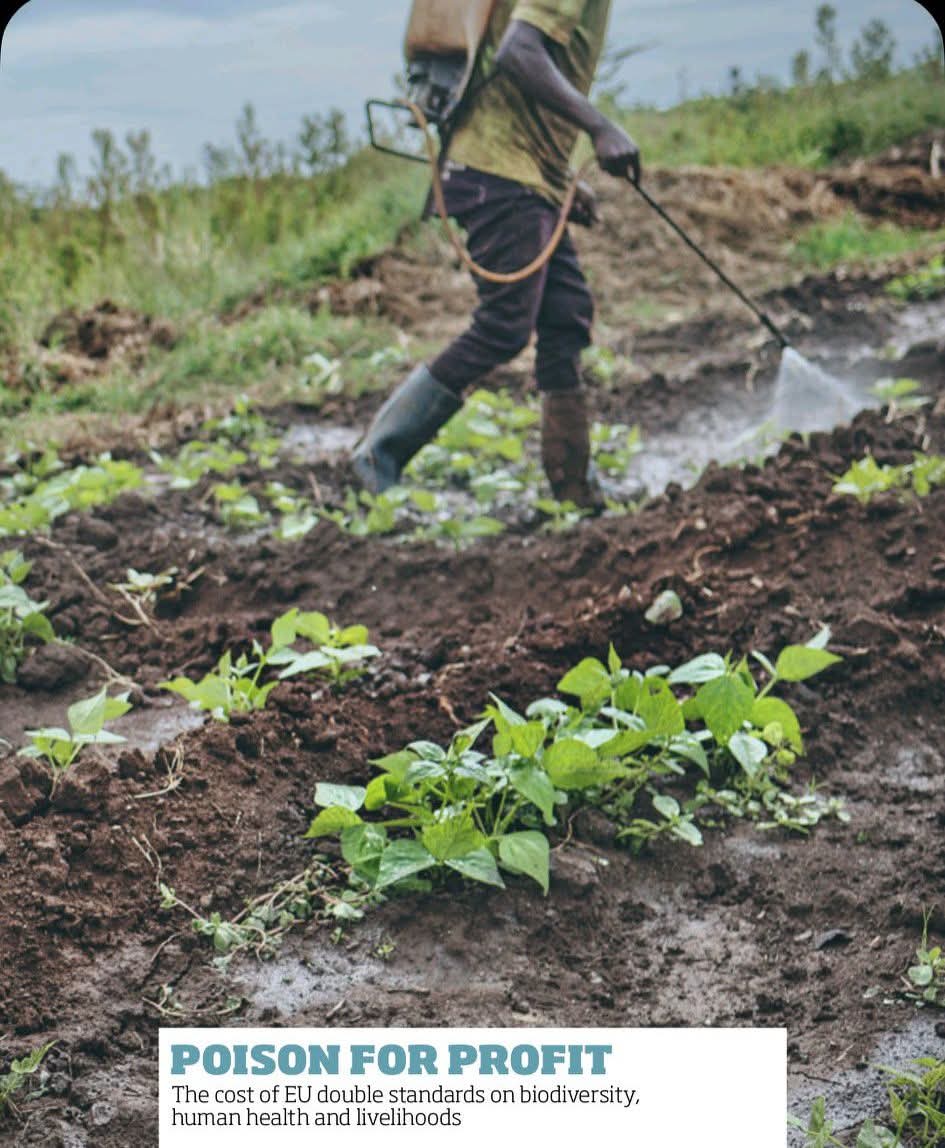
An important PDF report titled “Poison for Profit: The Cost of the EU’s Double Standards on Biodiversity, Human Health, and Livelihoods” presents an investigative study that exposes the ongoing export of pesticides banned within the European Union to the African continent, pesticides whose use causes serious harm to farm workers and ecosystems. Focusing on Kenya as a case study, the report shows how thousands of tons of these chemicals leave EU markets every year, many of them outlawed for domestic use due to well-documented risks to human health and the environment. Yet EU law still permits their manufacture and export to African countries, offering a stark example of Europe’s environmental and human rights double standards.
The report also documents the widespread effects of these pesticides on Kenyan farmers and local ecosystems. Workers interviewed for the study described severe eye and skin irritation, respiratory problems, and in some cases farmers collapsing in the fields and even deaths. Health professionals noted an increase in cancer rates in agricultural regions, while farmers reported environmental damage including the disappearance of bees and contamination of water sources.
The risks observed in Kenya mirror a recurring pattern across many low and middle income countries, where fruits and vegetables are grown using pesticides manufactured in Europe and banned there, only to be exported back to European markets. This paradox reveals a deep contradiction at the core of the global capitalist system. Europeans prohibit the use of these substances within their borders to protect their own citizens and ecosystems, yet continue to produce and export them to the Global South. At the same time, Europe allows the import of agricultural products grown with these banned pesticides as long as chemical residues remain below EU defined maximum limits, even when the substances themselves are classified as hazardous and prohibited in Europe.
As a result, produce cultivated with banned toxins can still be accepted in European markets as long as it does not exceed the dose determined by the North. Meanwhile, the economic burden of rejected shipments falls entirely on vulnerable African producers. This was evident in 2022 when Kenyan agricultural exports to the EU faced 31 seizure incidents that resulted in the loss of more than 118,000 tons of vegetables. Around 20 of these cases are believed to be directly linked to banned pesticides or their residues, compared to 79,000 tons in 2016. Despite growing efforts to promote voluntary monitoring, pesticide companies and retailers have shown no meaningful action to address these impacts on the ground. The accountability gap therefore persists as the most vulnerable communities bear the consequences of unsafe exports, while major EU based companies continue to profit at the expense of human life and the environment in Africa.
To read or download the full report: https://t.co/acY81MLef6
Kenyan farmers had to take their government to court for the right to plant seeds they shared with each other instead of being forced to buy GMO ones from multinational seed companies.