Morgan Stanley’s message is nuanced. They are not turning bearish on AI. They are arguing that the memory trade is transitioning from its explosive first phase into a more normal phase of the cycle.
The key question investors are debating is whether hyperscalers, particularly the largest AI infrastructure buyers, are beginning to accumulate excess compute capacity. If some AI infrastructure is no longer fully utilized and starts being resold or leased to third parties, pricing power for GPUs and memory could moderate. Morgan Stanley refers to this as “chipflation,” where competition and excess capacity gradually reduce hardware pricing.
Memory remains one of the strongest beneficiaries of AI because HBM and DRAM demand continues to outstrip supply. However, Morgan Stanley notes that several leading indicators are approaching peak momentum. Memory pricing growth is slowing, inventory conditions have normalized considerably, and earnings revisions have already been overwhelmingly positive. Historically, this combination often marks the point where share prices consolidate even though fundamentals remain healthy.
Importantly, they distinguish between a peak in the rate of change and a peak in the cycle. Those are very different. Investors frequently confuse slowing growth with declining growth. Semiconductor stocks often begin correcting once earnings momentum becomes “less good,” even while profits continue reaching record highs.
Another concern is positioning. Memory has become one of the most crowded trades globally, with investors heavily concentrated in names such as Samsung, SK Hynix, and Micron. When positioning becomes this crowded, even minor disappointments during earnings season can trigger sharp pullbacks as investors take profits.
What Morgan Stanley will be watching most closely is not memory companies themselves, but the AI hyperscalers. If companies such as Microsoft, Amazon, Meta, Alphabet, or OpenAI begin signaling slower infrastructure spending, weaker token economics, or more disciplined capital allocation, investors may question how sustainable the current pace of memory demand will remain. The focus is shifting from hardware suppliers toward the spending intentions of the customers.
The long-term thesis, however, remains intact. Morgan Stanley still expects AI-related earnings growth of roughly 35% to 40% in 2027 and continues to view agentic AI as a structural investment theme. Their message is that the AI infrastructure build-out is unlikely to end, but the market may be entering a period where expectations become more realistic and valuation expansion gives way to earnings-driven returns.
In other words, this looks less like the end of the AI memory supercycle and more like the transition from Phase One, characterized by explosive hardware deployment, to Phase Two, where investors become increasingly focused on utilization, monetization, and return on capital.
We broadly share that view. Markets often correct when expectations become overly optimistic, even while fundamentals remain strong. AI infrastructure spending is unlikely to follow a straight line, but the long-term demand for high-performance memory continues to strengthen as model sizes grow and inference workloads expand. We view the current pullback as an opportunity to selectively add exposure to high-quality memory names rather than a reason to abandon the sector. In our view, this is a correction to buy, not the beginning of a structural downturn.
🚨🇩🇪 BREAKING: Jürgen Klopp as new Germany head coach, here we go! 💥
Klopp has accepted to take over; long term contract details, project and RB Group exit still under discussion, but he will be the new head coach.
RB considered Glasner as replacement but he signs at #NFFC.
Klopp is back.
Lagi ramai narasi kebijakan fiskal dan moneter Indonesia "tabrakan".
BI naikin rate 100 bps dalam 2 bulan sambil nyerap likuiditas via SRBI.
Di saat yang sama Kemenkeu melebarkan defisit dan menempatkan dana pemerintah Rp400 triliun di Himbara.
Satu ngerem, satu ngegas.
Kalau kombinasinya begini, rupiah arahnya ke mana?
Based on framework klasiknya Mundell-Fleming.
Dampak policy mix ke kurs tergantung seberapa bebas modal asing keluar-masuk.
• Di negara high capital mobility: kurs digerakkan capital flow. Rate naik → asing masuk ngejar yield → currency menguat.
• Di negara low capital mobility: kurs lebih digerakkan neraca dagang. Fiskal ekspansif → impor naik → trade deficit melebar → currency melemah.
Indonesia di tengah2.
Capital account terbuka, tapi asing terus menyusut di dua pasar sekaligus: di SBN porsinya tinggal ~13% dari ~40% satu dekade lalu, di equity dari ~65% ke 42%.
Untuk mix moneter ketat × fiskal ekspansif, jawaban teorinya: indeterminate.
Rate tinggi menarik inflow, ekspansi fiskal bikin investor minta risk premium.
Dua gaya tarik-menarik.
Rupiah akan menguat atau melemah tergantung gaya mana yang lebih kuat.
Ada satu istilah, namanya differential.
Differential itu selisih suku bunga acuan BI dan the Fed (BI Rate dikurangi Fed Funds Rate).
Kenapa ini yang dilihat investor global?
Mereka selalu punya pilihan parkir di aset dollar, currency paling aman di dunia.
Buat mau pindah ke aset rupiah (yang lebih berisiko) harus ada bayaran ekstra.
Differential itulah bayarannya.
BI 5,75% dan Fed 3,63% artinya differential ~2,1pp: pegang SBN dapat ekstra ~2,1% per tahun dibanding instrumen dollar.
Pertanyaannya: cukup nggak differential tersebut untuk compensate risiko rupiah yang ditanggung?
Cara ngukurnya bisa dilihat langsung dari perilaku asing di SBN secara historis.
• Era differential tebal 2010–2016, rata2 6,5pp: asing masuk hampir tanpa henti, porsinya naik dari belasan persen ke hampir 40%.
• 2017–2019 differential menipis ke ~3,4pp, tapi asing bertahan di 38–40%. Posisi yang sudah terbangun itu sticky/lengket.
• Setelah 2020 porsinya longsor. Diawali efek banjir penerbitan SBN era COVID, lalu asing benar2 keluar di 2022 saat differential terkompresi ke 0,4–2pp. Sekarang porsinya cuma 12,75%, terendah dalam dua dekade.
Posisi sekarang, differential 2,1pp hari ini masih jauh dari pembanding historisnya.
Era yang membangun porsi asing 40% itu differential rata-rata 5,5pp, dan dipertahankan satu dekade.
Respons asing terhadap hike kemarin juga masih tipis: 12,6% → 12,75% di Q2.
Rupiah masih di ~17.900.
Artinya concern fiskal masih jadi overhang di mata investor global, dan yield yang ditawarkan belum menutupnya.
Tentu bukan PR yang bisa diselesaikan BI sendirian.
Hike hanya memperbaiki sisi kompensasi.
Sisi risikonya: arah defisit, kualitas belanja, kejelasan pembiayaan, hanya bisa dibereskan dari fiskalnya sendiri.
Era asing 40% dulu dibangun dengan keduanya: differential lebar dan fiskal yang disiplin.
Data klasifikasi investor IDX per Juni 2026 sudah terbit. Data ini sudah mencerminkan posisi setelah rebalancing MSCI akhir Mei dan FTSE 22 Juni.
Thread ini menganalisis saham yang dimiliki ETF dan Mutual Fund (MF) di atas Rp 100 M.
Metodologi: perubahan jumlah lembar saham.
Naik > +3% = Buy
turun > -3% = Sell
sisanya Hold
ETF (64 saham > Rp100 M): Dari ranking atas, Buy Mei-Juni antara lain BMRI, GOTO, INDF
Banyak yang Sell/Hold, termasuk yang Sell 2 bulan berturut-turut (AMMN, EMAS, ANTM)
Ranking menengah ada cukup banyak Buy seperti BUMI, UNVR, AKRA, ISAT.
Secara agregat kepemilikan ETF turun: Rp115 T (Apr) → Rp100 T (Mei) → Rp86 T (Jun)
Mutual Fund (163 saham > Rp100 M): Mayoritas Sell & Hold. Buy hanya sedikit (AMMN, MDKA, AADI, TINS)
BBCA di-Hold 2 bulan meski harganya turun dalam. Ada catatan klasifikasi khusus untun SOHO & BINA
Agregat kepemilikan MF juga turun tajam: Rp562 T (Apr) → Rp515 T (Mei) → Rp462 T (Jun)
Inti kesimpulan: Kontributor utama selling asing di Juni adalah MF (sebagian besar dimiliki asing)
Karena strategi aktif, mereka jual meski harga sudah rendah karena belum ada katalis positif yang kuat
ETF lebih pasif
Semoga kebijakan ke depan bisa menarik mereka kembali.
Data diolah dari IDX
Bukan rekomendasi investasi
Pesta Jeroan!
Kalau bosan dengar review dari vlogger, coba dengar ulasan Tengkleng Barokah di Solo dari 3 tukang masak ini: @ronprasanto, @kinaraiphil, dan @rekoahmad.
Di Kurasi Koh Ron ditraktir sama @vsoyworldindonesia kali ini, fokusnya ke sparepart aka jeroan!
MSCI again decided to postpone its review on Indonesian equities, saying it needs more time to see whether recently announced transparency reforms are effective https://t.co/FL1yfTIAe5
Despite a cumulative 100bps rate hike in barely a month and reports that Bank Indonesia has spent roughly US$12 billion of reserves defending the rupiah, the currency remains under pressure. That should tell us something important. This is no longer simply a monetary policy issue. It is increasingly a confidence issue. Higher interest rates can slow capital outflows. FX intervention can reduce volatility. But neither can fully offset concerns about fiscal sustainability, growth prospects, and policy credibility.
One recurring problem is that policymakers continue to emphasize Indonesia’s debt-to-GDP ratio of around 40%, which remains low by international standards. Markets, however, are increasingly focused on debt servicing capacity rather than debt stock. Indonesia’s debt service ratio reportedly reached 52% in 2025, meaning a significant portion of government revenue is already being absorbed by interest and principal payments.
A country can have low debt-to-GDP and still face fiscal constraints if a large share of revenue is committed to servicing debt. That reduces flexibility to respond to economic shocks, support growth initiatives, or fund strategic priorities without additional borrowing.
The rupiah is ultimately reflecting these concerns. Markets are asking whether fiscal room is as large as headline debt metrics suggest. Until those concerns are addressed, rate hikes and reserve sales may only treat the symptoms rather than the underlying cause.
Currencies rarely move on a single data point. They move on confidence. And confidence remains the scarcest asset in the market today.
MSCI’s decision to downgrade Indonesia’s information flow criterion to negative may prove more important than many investors currently appreciate. While it does not immediately trigger index changes or forced selling, it strikes at the foundation of what global investors value most: confidence in market integrity and price discovery.
The concerns highlighted by MSCI are structural rather than cyclical. Transparency around beneficial ownership, the ability to accurately determine free float, and signs of coordinated trading behavior all directly affect investors’ ability to assess risk. When investors cannot confidently determine who owns shares, how much stock is genuinely available for trading, or whether market activity reflects fundamental demand, they inevitably demand a higher risk premium.
The immediate impact is unlikely to be large-scale foreign outflows. Most passive funds only react to formal index changes. However, the more significant risk is that global investors gradually become less willing to allocate incremental capital to Indonesia. Lower inflows, reduced liquidity, and weaker valuation multiples can ultimately be more damaging than a one-off selloff.
At present, a downgrade from Emerging Market to Frontier Market remains a tail risk rather than the base case. Consensus appears to place the probability at roughly 10%. Indonesia remains a large economy with substantial market capitalization, an established exchange, and a broad institutional investor base. These factors continue to support its Emerging Market status.
Nevertheless, the fact that MSCI is explicitly highlighting concerns around transparency and market functioning means the risk can no longer be dismissed outright. Index providers tend to focus heavily on accessibility, governance, and market structure. If concerns persist through multiple review cycles without meaningful reforms, the probability of a downgrade could rise materially.
The solution is relatively straightforward in principle, though difficult in execution. Greater transparency around beneficial ownership, stronger free-float verification, enhanced surveillance of unusual trading patterns, and visible enforcement actions against market manipulation would go a long way toward restoring confidence. Investors do not expect perfection, but they do expect transparency, consistency, and credible enforcement.
Ultimately, this is not really a story about index classification. It is a story about investability. The greatest risk is not necessarily that Indonesia loses its Emerging Market status. The greater risk is that global investors increasingly view Indonesia as a market where capital is harder to deploy, risks are harder to assess, and liquidity is less reliable. Once that perception becomes entrenched, rebuilding confidence can take years.
Markets can lose trust very quickly. Rebuilding it is usually a much longer process.
MSCI Accessibility Review
Indonesia di downgrade terkait "Information Flow" dari "+" ke "-". Buat mereka, free float dan harga saham nya semakin sulit untuk dipercaya untuk acuan index. Cuman satu downgrade aja sih ga cukup lah untuk trigger downgrade ke frontier.
Announcement classification (DM/EM/FM) itu baru akan di announce 24 Juni subuh jam Indo.
Ada commentary juga dari MSCI untuk masing-masing negara, coba kita liat punya Indonesia.
1. Asing ga bisa hedge exposure rupiah secara independen tanpa berhubungan sama transaksi saham. Ini agak repot karena mereka jadi gabisa manage currency risk.
2. Asing gad akses untuk "overdraft" facilities atau yang kita kenal sebagai limit/margin/dsb. Mereka mau gamau harus parkirin tuh cash nya. Tapi, Indonesia dalam kasus ini masih jauh lebih baik dibanding Korea/Vietnam.
3. Untuk short-selling dan stock-lending dan juga transferability, Indo masih oke dimata asing. Jadi, secara transaction wise Indo sebenarnya no problem
Korea masih ada 4 ratings "-" tersisa yang mungkin akan menjadi blocker untuk jalan mereka di upgrade ke DM.
Vietnam yang konon akan upgrade dari FM ke EM juga masih ada 7 ratings "-" tersisa.
Sisa PR buat Indo ya:
1. Disclosure UBO harus jelas, data free-float harus correlate juga sama beneficial holders. Bisa contoh Brazil yang ngelakuin ini dan di highlight oleh MSCI.
2. Coordinated trading aka ya harga yang dimanipulasi oleh pihak-pihak tertentu. PR berat untuk bursa untuk menggalakkan hal ini. Harus ada consequence untuk mereka yang melakukan ini baru MSCI bisa melihat sebagai improvement
MSCI itu melihat track record, bukan cuman sekedar pengumuman doang. Jadi mereka fokus ke sustainable action. Selama bursa bisa rutin rilis data HSC dan 1%, I guess we're on track.
Good luck JCI. Work harder BEI and OJK :)
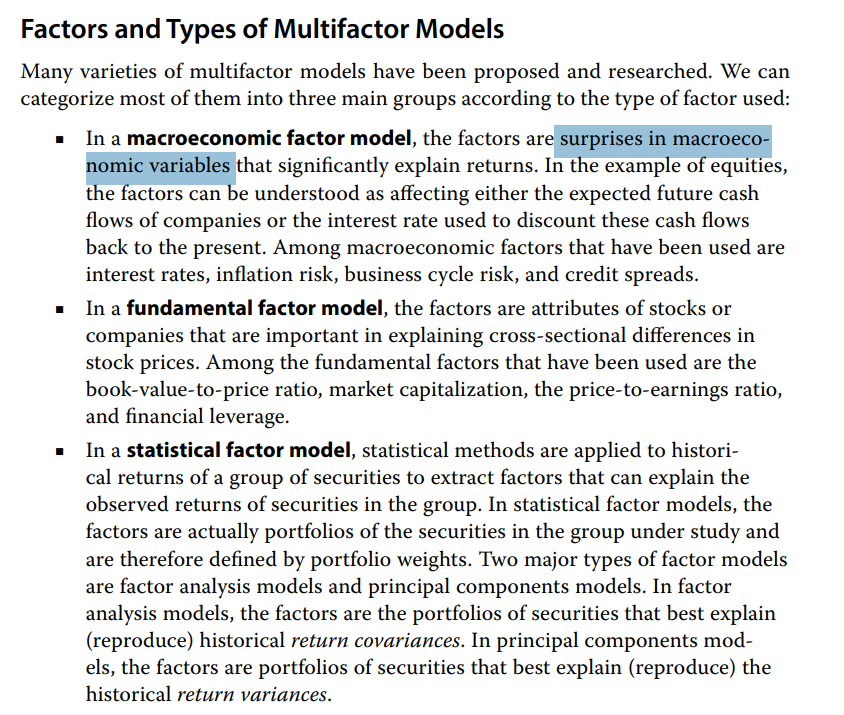
Salah satu kesalahan paling umum dalam membaca data makro: terpaku pada angka absolutnya.
• "Inflasi naik ke 4%."
• "BI hike 25 bps."
• "GDP tumbuh 5%."
Refleksnya langsung menilai bagus/jelek dari angka itu.
Padahal pasar bereaksi terhadap "Surprise Factor".
"Surprise Factor" adalah selisih antara REALISASI dan KONSENSUS.
Harga itu sudah mendiskon faktor2 yang forward-looking.
Sebelum sebuah data rilis, konsensus tentang data tersebut sudah priced in di harga.
Market sudah antisipasi data makro yang belum keluar based on konsensus.
Ketika datanya riilnya keluar, satu2 informasi baru adalah selisihnya terhadap ekspektasi, dan itulah yang menggerakkan harga, bukan angkanya sendiri.
Kalau inflasi keluar di 4% dan konsensus memang 4%, market price most likely tidak akan kemana2.
4% itu sudah priced in.
Yang menggerakkan pasar adalah kalau yang keluar ternyata 4,5% (di atas dugaan) atau 3,5% (di bawah).
Implikasinya adalah, angka "bagus" bisa menurunkan pasar kalau di bawah ekspektasi, dan angka "jelek" bisa menaikkan kalau lebih baik dari yang ditakutkan.
Di portfolio management, ini masuknya ke Macroeconomic Factor Model. (terlampir di gambar)
Di pasar global ada indeksnya: Citi Economic Surprise Index (Citigroup), yang mengukur data aktual vs konsensus.
Jadi kalau ada rilis data atau keputusan bank sentral, pertanyaan pertamanya bukan "angkanya berapa", tapi "angkanya berapa dibanding yang diperkirakan."
Yang sesuai ekspektasi, sekencang apa pun headlinenya, sebagian besar sudah priced in di harga.
One thing I have noticed about government officials in Indonesia is the lack of urgency.
Various ministries continue to request larger budgets, but I wonder how many are paying attention to the fact that Indonesia’s debt service ratio has reportedly reached around 52% in 2025. Perhaps some policymakers take comfort from Indonesia’s relatively low debt-to-GDP ratio, which remains below 40%. But debt sustainability is not determined by debt-to-GDP alone. The ability to service that debt matters just as much.
A low debt ratio is not an invitation to borrow endlessly. It is a fiscal advantage that should be protected. Using low debt-to-GDP as a justification for taking on more debt without regard for repayment capacity is not prudent fiscal management. It is simply poor risk management.