@KelseyTuoc@evan7257 There is (sorta) research to back this up, not just with kids but adults - people perform better on logic problems when they’re about interpersonal situations, and especially if they have to do with rule enforcement
@jeffrsebo I’d also throw in Who Watchers the Watchers as a less critically-acclaimed episode that is more quintessentially “Star Trek” than the rest of the stuff on that list. And it has some good Picard moments
@jeffrsebo Since most episodes are self-contained and your interest is in this specific leading character, I’d just start with the best episodes. The Inner Light, Darmock, Chain of Command, Measure of Man, and Tapestry are all pretty universally loved
@KelseyTuoc@teortaxesTex Agree for chatbot use cases, but if Claude API gave this sort of answer that would create a problem for a lot of use cases (granted, I haven’t tried so idk if it does). Eg, when using LLMs generate data from text inputs, they need to follow directions stably across diverse inputs
@jbraunstein914@KelseyTuoc@unboxpolitics@besttrousers@MattBruenig If you use a preference-satisfaction definition of well-being, that’s really all you need to say that this made people better offer
If you’re a hedonist, you’ll be a bit more cautious, but it’s still likely to be associated with well-being increasing
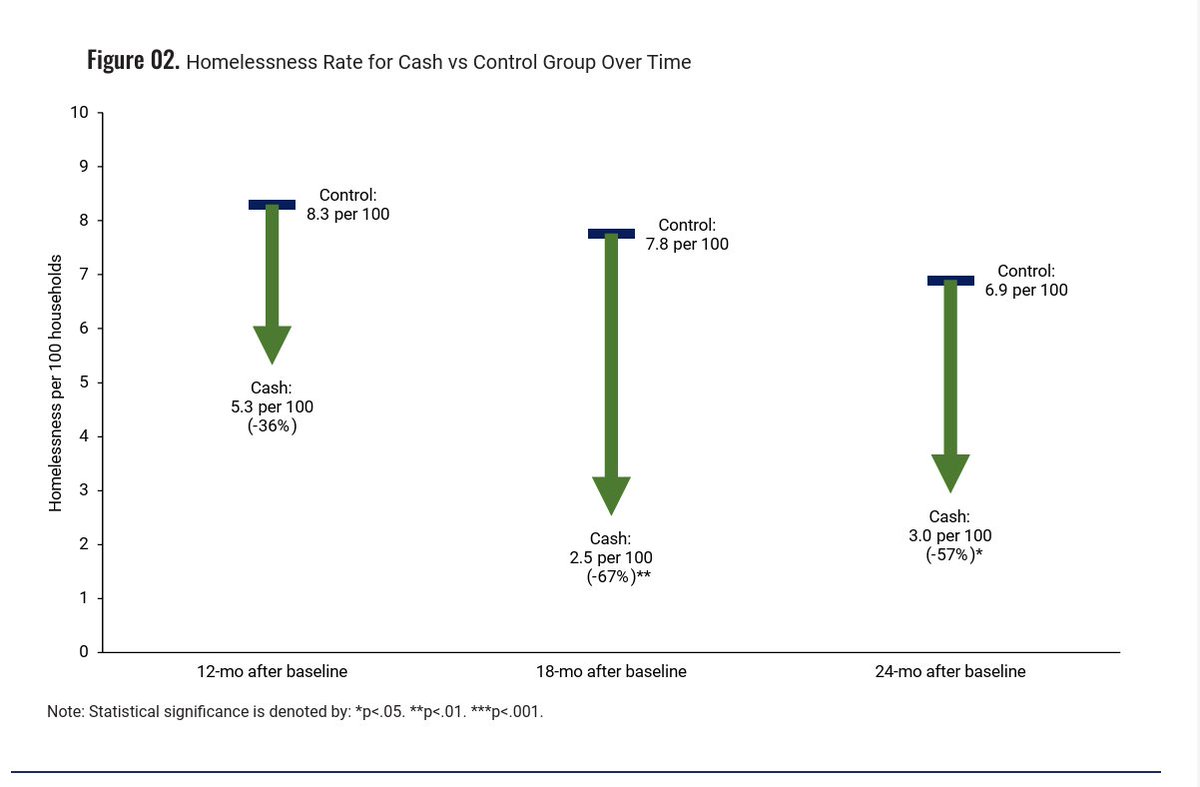
@JohnHolbein1 But less homelessness is just the mechanical result of increased housing consumption when the population in question is near the threshold of homelessness
@JohnHolbein1 The difference, of course, the welfare effect is a lot more intuitive when you say “decreased homelessness” than “increased consumption of housing”
@unboxpolitics@jbraunstein914@KelseyTuoc@besttrousers@MattBruenig Caveat: it’s possible that universal transfers could increase inequality, because middle class might invest the cash while lower income folks would consume it (this is consistent with the RCTs’ findings on consumption + prior work)
@unboxpolitics@jbraunstein914@KelseyTuoc@besttrousers@MattBruenig My understanding of the current phil lit is that “equality of luck” is what most people care about, which translates on a policy level to some minimum guaranteed resources. I don’t think the experiments did much to dissuade someone with these beliefs
@ryancbriggs@AndyMasley Post if you find anything because I’ve been working on a similar project (with judicial opinions, not academic papers) and would also love to get ahead of this
@mattyglesias@MattBruenig@KelseyTuoc What policy conclusions does engaging with those lead you to tho?
I think the cash vs. in-kind debate will remain pretty much unaffected by these results until we get RCTs on some type of in-kind aid that does way better than the cash did here
@besttrousers@KelseyTuoc@MattBruenig (Looking at Barr et al.’s estimate of increased earnings in children of EITC recipients, which is a few hundred dollars per year, compared to the few thousand dollars of earnings lost by people in ORUS - then again, ORUS a bigger transfer, so could have bigger effects later)
@besttrousers@KelseyTuoc@MattBruenig I took a look at this a few months ago - the likely effect on lifetime earnings seems to be lower than than the likely effect on short-term productivity
It's fine to disagree with the idea that cash can replace the safety net in general, but as an interpretation of the recent RCTs, I think it's misplaced. The RCTs very intentionally did not test whether cash can replace the existing safety net!