She couldn't have known. There were no signs. Nothing out of the ordinary happened right in front of her. What husband wouldn't shell out £4k for a pair of his wife's old shoes? Happens every day.
https://t.co/3qt8vP4q8G
While we are all in beer gardens enjoying the sunny weather and each other’s company - these Palestine Action idiots are starting their 6-8 year sentences inside dark and dank prison cells.
And guess what?
They made no impact on Israel whatsoever hahaha, it was all for no reason
L’chaim 🍻 enjoy the sun and have a great weekend everyone.
>Lola McVey MP thinks that not taxing something = subsidising it
>Lola is an elected lawmaker
>Lola doesn’t understand basic tax law
We are being governed by idiots.
Actual, genuine, certifiable idiots.
A one minute silence for Henry Nowak from the English football team in LA later this month is being admirably proposed by fashion designer @jeffbanks_uk. What a wonderful man Jeff so surely is. Please re-post this far and wide. Copy in @Keir_Starmer!!
Shabana Mahmood Called George Floyd's Death An Unspeakable Outrage. She Called Henry Nowak's A Political Grandstanding Opportunity.
On June 4th 2020, four days after George Floyd died in Minneapolis, Shabana Mahmood wrote to her constituents. She described his death as an unspeakable outrage. She shared the anger of the Black Lives Matter movement. She condemned Donald Trump in the strongest possible terms. She pledged to ensure Black voices are heard at the heart of our democracy. She signed it with a Black Lives Matter hashtag.
This week Shabana Mahmood stood at the despatch box and told the House of Commons there must be no two tier policing. She said the police have a sacred duty to act without fear or favour. She warned that anyone using Henry Nowak's murder to stoke division should be rejected.
Henry Nowak died on December 3rd 2025. Mahmood said nothing for days. The Commons Speaker had to order the government to make a statement. When she finally spoke she described the national outcry as political grandstanding and accused those naming the problem of stoking division.
Four days after George Floyd died she had already written to her constituents. Four days after Henry Nowak's killer was convicted she had to be ordered to speak by the Speaker of the House.
The letter she wrote in 2020 is worth reading carefully because it is the most precise document available for understanding what happened this week. She writes that her work deeply reflects the cause for social and racial justice. She writes that she will carry on working to ensure Black voices are heard at the heart of our democracy. She writes that she wants her work to continue to be reflective of black and ethnic minority experiences in Birmingham.
Not all voices. Black voices. Not all experiences. Black and ethnic minority experiences. That is the Home Secretary who told Parliament this week there must be no two tier policing. Her own letter is a precise description of two tier political engagement. One standard applied to George Floyd. A different standard applied to Henry Nowak.
The progressive institutional machinery was operational within hours of Floyd's death. The hashtag was ready. The language was ready. The political network was ready. Mahmood's letter was part of that machinery. It was produced within four days because the machinery runs automatically when the case fits the framework. Black Lives Matter had been founded in 2013. By 2020 it had dozens of local chapters, a global network, corporate donors worth hundreds of millions of dollars and political allies embedded across every major Western government. When Floyd died every node of that network activated simultaneously. Mahmood's letter was one activation among millions.
Henry Nowak's case does not fit the framework. His killer used the progressive framework as the murder weapon. His case does not vindicate the ideology of anti-racism training. It exposes it. And the Home Secretary whose entire political career has been built around that ideology found herself at the despatch box this week condemning its most visible consequence while declining to name its cause.
She wrote in 2020 that she would ensure Black voices are heard at the heart of our democracy. She has kept that promise. The question Henry Nowak's family is entitled to ask is which voices were heard at the heart of the institutions that trained the officers who handcuffed their son. The Hampshire Race Action Plan. The NPCC guidance. The College of Policing practice bank. The Metropolitan Police neutrality myth. All of it built by the same political framework Mahmood has spent her career advancing.
There must be no two tier policing. She is right. The letter she wrote in 2020 explains precisely why there is.
Hi Zack, I'm a British-born Israeli who was stabbed 18 times by a Palestinian terrorist. Another chopped up my friend in front of my eyes. One got out in the hostage deal. They were paid a salary for years by the UK gov.
Could you tweet: "all of this is a horrific crime. He should be held to account."
Thanks
When you see an unworthy UK SIA security badge holder, this is how they obtain it.
Exam in one room and in the next room, friends huddle around a phone feeding answers through a hidden AirPod 😳
by @ali_600z
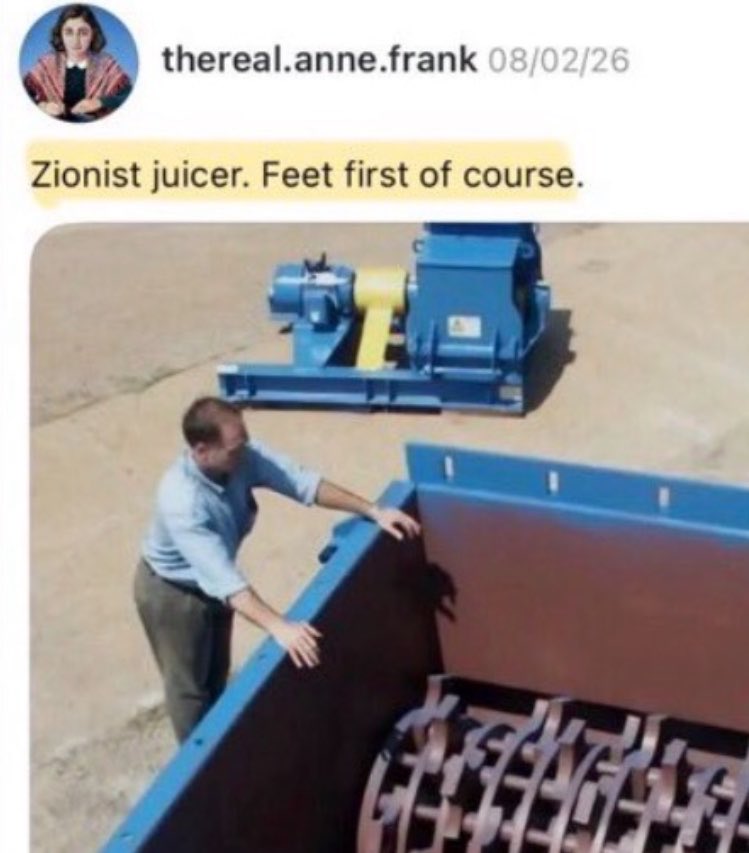
This image was posted in February by Tina Ion under her
Anne Frank moniker.
Look at the image and the text
She is still a candidate for @TheGreenParty in Newcastle
Is she fit to stand for public office?
Why won’t Polanski disown & condemn her?
Cc @ChronicleLive@BBCTees
Good morning 6am Britain!
44.8% of GDP in public spending isn’t going to pay for itself so let’s get out there and SUBSIDISE
Have a great week live players!
I would like to know why almost everyone knows about Stephen Lawrence, but hardly anyone knows about the torture and murder of 15-year-old Kriss Donald? Why did the BBC only report on this story 3 times, compared to 100s of articles on Stephen Lawrence’s murder?
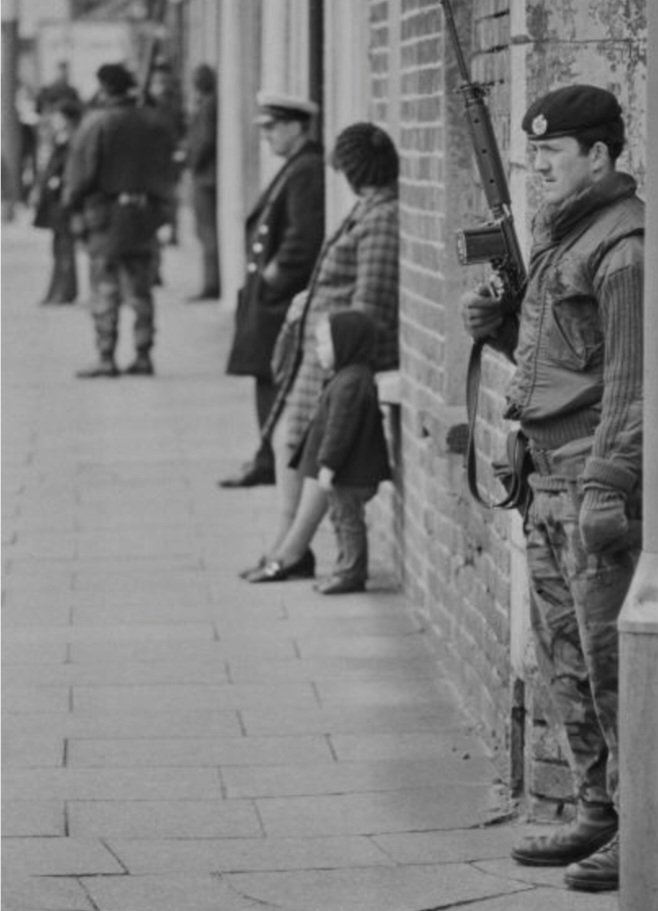
Three former soldiers will appear at Belfast magistrates court on April 20th. One is charged with a killing that took place in May 1972. He is not accused of acting outside his orders. He is accused of acting within them. The distinction no longer appears to matter.
This is the reality behind Labour's Northern Ireland Troubles Bill, a piece of legislation dressed in the language of reconciliation that functions, in practice, as an engine of persecution. The state that sent these men to Northern Ireland, that gave them their orders, that relied on their judgment in circumstances no minister has ever faced, is now the state that funds the machinery pursuing them through the courts half a century later.
That is not a technicality. It is the central fact. Taxpayer money flows to the lawyers challenging the actions of soldiers whose actions were sanctioned by the taxpayer. The government calls this justice. General Sir Peter Wall, who commanded the British Army for four years, calls it something without moral backbone. He is right.
The operational consequences are already visible. Elite soldiers are leaving the SAS and SBS rather than face the prospect of prosecution decades hence for missions carried out under government orders. The crisis has become sufficiently acute that reservists are being brought into the regular SAS to fill roles vacated by those walking out. Britain's most capable fighting force is being quietly hollowed out by a bill whose architects appear indifferent to the result. Seven former SAS commanders have warned that the legislation is doing the enemy's work, that operational secrets exposed through inquiries give hostile states a narrative of lawless troops. Moscow, Tehran and Beijing do not need to discredit British special forces. Westminster is doing it for them.
The asymmetry at the heart of this legislation is not incidental. It is structural. IRA members were released under the Good Friday Agreement. Many destroyed evidence, stayed silent, or received letters guaranteeing they would not be pursued. Soldiers kept records, gave statements, and remained traceable. Decades later, only one group remains available for scrutiny. Not because they are more culpable, but because they are more reachable.
The Coagh ambush of June 1991 illustrates the logic perfectly. Three IRA men were stopped by the SAS on their way to murder someone. A coroner ruled the force used was justified. Years later a family challenged that ruling, arguing the soldier should have paused after each shot to consider whether to fire the next one. A judge described that argument as ludicrous and utterly divorced from reality. The challenge continues, funded by legal aid, heard at the Court of Appeal just days ago. No verdict ends the process. The process is the punishment.
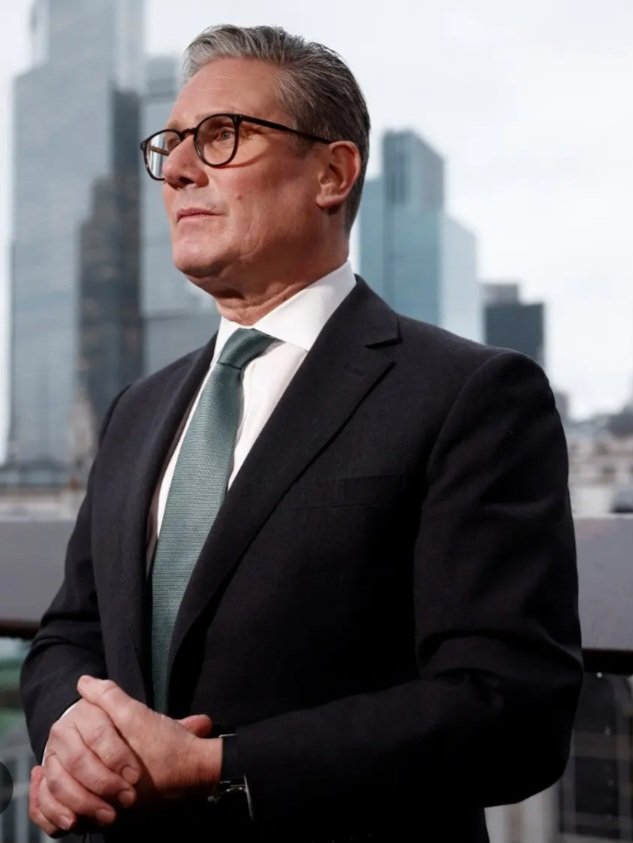
Keir Starmer has said publicly he is absolutely confident there will be no vexatious prosecutions. Three soldiers will be in a Belfast court in sixteen days. His confidence has not reached them.
The government insists its bill provides robust protections for veterans. General Sir Nick Parker, who oversaw the final operations in Northern Ireland, says ministers do not understand the duty of the state to stand by those who serve it. The duty to stand by those who serve is contractual, not sentimental. A soldier who follows orders in a war the state authorised cannot later be offered up as payment for political convenience.
What is being constructed here is not a legacy process. It is a permanent legal industry, sustained by public money, targeting the most traceable participants in a conflict the state itself waged. The soldiers kept their records. That is now their liability.
A serious country does not behave this way. This one, apparently, does.
"Keir Starmer has said publicly he is absolutely confident there will be no vexatious prosecutions. Three soldiers will be in a Belfast court in sixteen days. His confidence has not reached them."