While survivors often carry trauma responses, they also develop strengths that many people don’t see at first glance. Here are some positive traits common in survivors of narcissistic abuse: 💪
Deep empathy – heightened ability to understand and feel what others are going through.
Resilience – an inner toughness that comes from surviving prolonged adversity.
Strong intuition – finely tuned radar for dishonesty, manipulation, and hidden agendas.
High emotional intelligence – awareness of their own emotions and others’, even if they struggle with trusting it at first.
Compassion – often go out of their way to comfort and support others.
Creativity – many survivors channel their pain into art, writing, music, or problem-solving.
Authenticity – once they break free, they often reject fake personas and embrace their real selves.
Courage – leaving or standing up to a narcissist requires enormous bravery.
Determination for healing – they often dive deep into self-growth, psychology, and recovery.
Protectiveness of others – especially vulnerable people, children, or anyone being mistreated.
Ability to see through masks – hard to fool them once they’ve recognized manipulative tactics.
Inner strength – often underestimated, but survivors learn they can endure and rise again.
So while the scars are real, survivors often emerge with a mix of wisdom, empathy, and inner power that others can’t fake. 🙏🏼💛💪
Anonymous
I run a small bakery. Woman came in every Friday morning. Same order. Two blueberry muffins. One coffee. Always sat at the corner table. Read her book. Stayed an hour. Did this for three years. Then she stopped coming. After two months I got worried.
Found her number in our loyalty program. Called. She answered. Voice weak. “Oh. Hi. I’ve been meaning to cancel that.” “Are you okay? You haven’t been in.” Long pause. “I have cancer. Stage four. I’m in hospice now.
Those Friday mornings were my favorite part of the week. But I can’t make it anymore.”
My heart broke. “What if I brought Friday to you?” Silence. Then crying. “You’d do that?” “Every Friday. Same time. Same order.”
Showed up that Friday. She was in a hospital bed in her living room. So thin. But she smiled when she saw those muffins. We sat. She told me about her week. Her family. Her life. I listened. Just like at the bakery. Did this for six weeks. Every Friday.
Last Friday she could barely stay awake. But she held that muffin. Took one bite. “Best thing I’ve tasted all week.”
She passed on Monday. Her daughter called. “Mom’s last words were about you. She said ‘tell the baker thank you. Fridays kept me human until the end.’”
Went to her funeral. Her daughter hugged me. “You gave her normal when everything else was hospitals and pain. You gave her Fridays.”
Now I deliver to three hospice patients. Every Friday.
Because sometimes a muffin isn’t just a muffin. It’s dignity. It’s routine. It’s proof that someone still sees you as you. Not as sick. Just as you.
People aren’t only healing from trauma they endured. They’re healing from the life they lived in survival mode. They’re healing from the judgement of how they think and feel. They’re healing from the grief of what could’ve been had they never been traumatized to begin with.
The most overused, oddly glorified, yet under-respected topic on the internet:
Childhood Trauma.
It’s why your dad won’t cry, your relationships don’t stick, and why you feel exhausted every morning.
Here’s what trauma is—and how to reverse its effects (backed by science):
One of the darkest parts of suicidal ideation
is the belief that the world would be “better off without you.”
That lie grows from:
years of carrying too much,
being dismissed,
being the strong one,
feeling unappreciated,
being shamed for struggling.
You’re not a burden.
You’re someone who’s been carrying pain alone for far too long.
There’s a difference.
Suicidal thoughts don’t always sound like
“I want to die.”
Sometimes they sound like:
• I don’t see a future for myself.
• I’m exhausted from existing.
• I feel like a burden just by being here.
• I disappear even when I’m in the room.
• Everything feels heavy for no clear reason.
• I don’t want to be awake anymore.
These aren’t attention-seeking thoughts.
They’re survival signals.
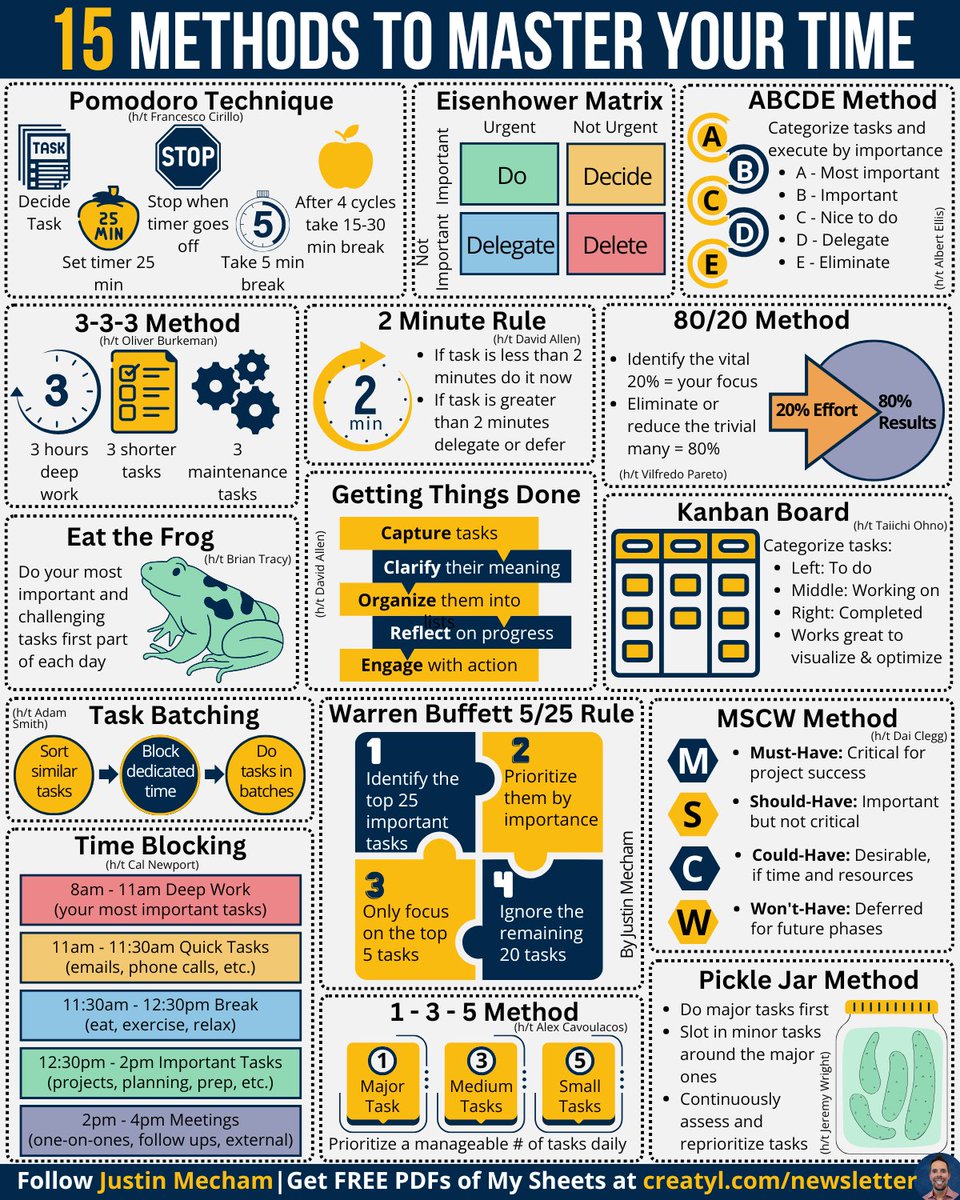
Master your minutes—
And you’ll master your life:
Most people lose their day in 5-minute decisions.
These tools put you back in charge.
And when that happens?
You stop reacting. You start designing.
📌 Want a PDF of my top infographics?
⏩ Go Here: https://t.co/QLV2I0XGXV
_____________________
🛠️Want to build a digital product/lead magnet?
🔥 Check this out: https://t.co/NevG5SGsNL
Please repost to help others out there! ♻️
💜 WE often find it hard to say no even to strangers!
My therapist taught me to have an answer in my head at all times. I’ll always say ‘I’ll get back to you and let you know’. And because I know what I’m going to say I don’t stumble over my words. 💜
Parasympathetic activation is the #1 way to break bad habits, release childhood trauma, and reset your nervous system for peak health
Here are 7 methods to build stress resilience, release stored trauma, and reset your immunity: 🧵
1) Cold Face Dip
Too often the survivor is ostracized-not the abuser. The reality for many survivors is that if they try to escape abuse they’re not just leaving the abuser but also their family and community. If we want to help survivors, we have to understand the reality they are facing.
The narcissist’s special skill is destroying good people.
They see a good person, happy, compassionate, honest, and they begin their attack. It’s a slow, persistent chipping away of a person.
They begin shaming that person.
They begin sewing seeds of doubt, trying to make that person second-guess themselves.
They start planting seeds of doubt in other people. Consistently eroding away their targets public image and self-esteem.
They abuse their target, talk bad about their target, shame their target for doing nothing wrong.
And what is their explanation? When people ask why they are doing this to their target, the narcissist says “they deserve it“. And that’s their excuse. And they are so adamant and aggressively bitter towards genuinely good, honest people, that witnesses think the target must’ve done something wrong, because why would anybody be so insanely and obsessively hateful towards an innocent person? And that’s what is so insane about it.
Just think about that. The hatred towards good a malignant narcissist has to go that far to destroy innocent people.
It’s evil. Evil incarnate.