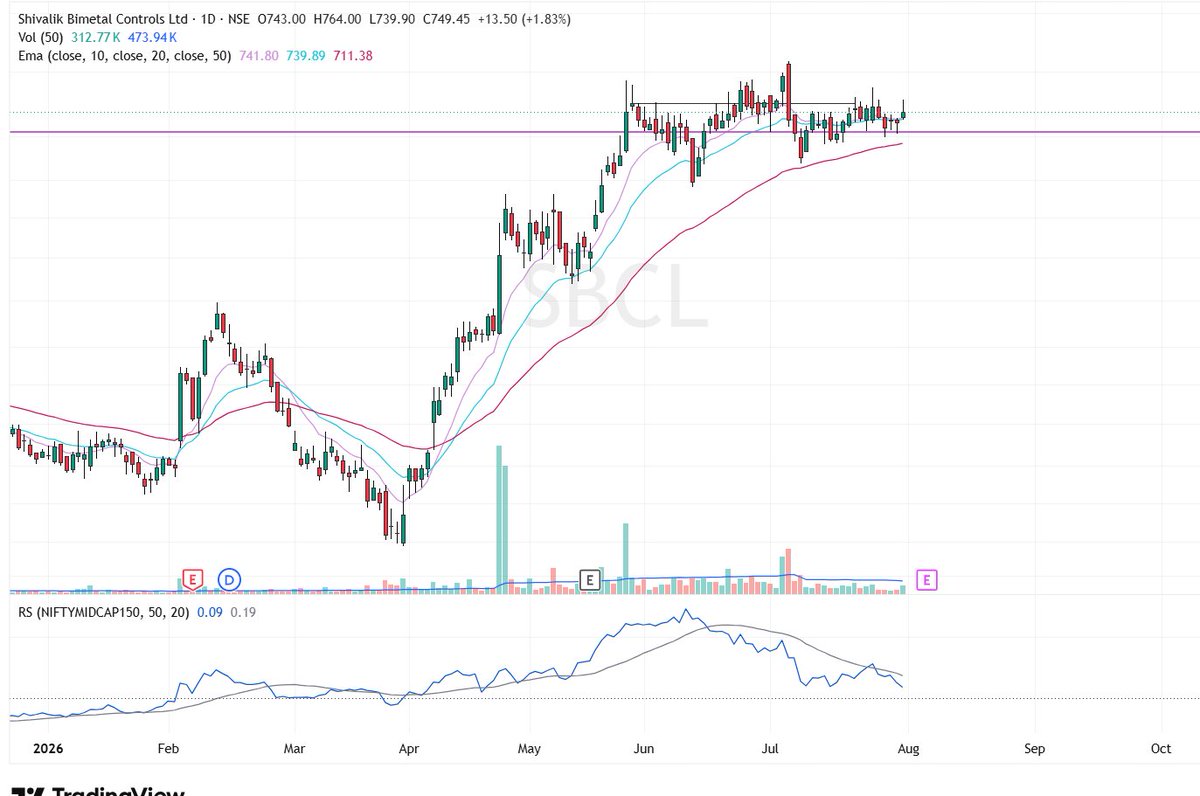
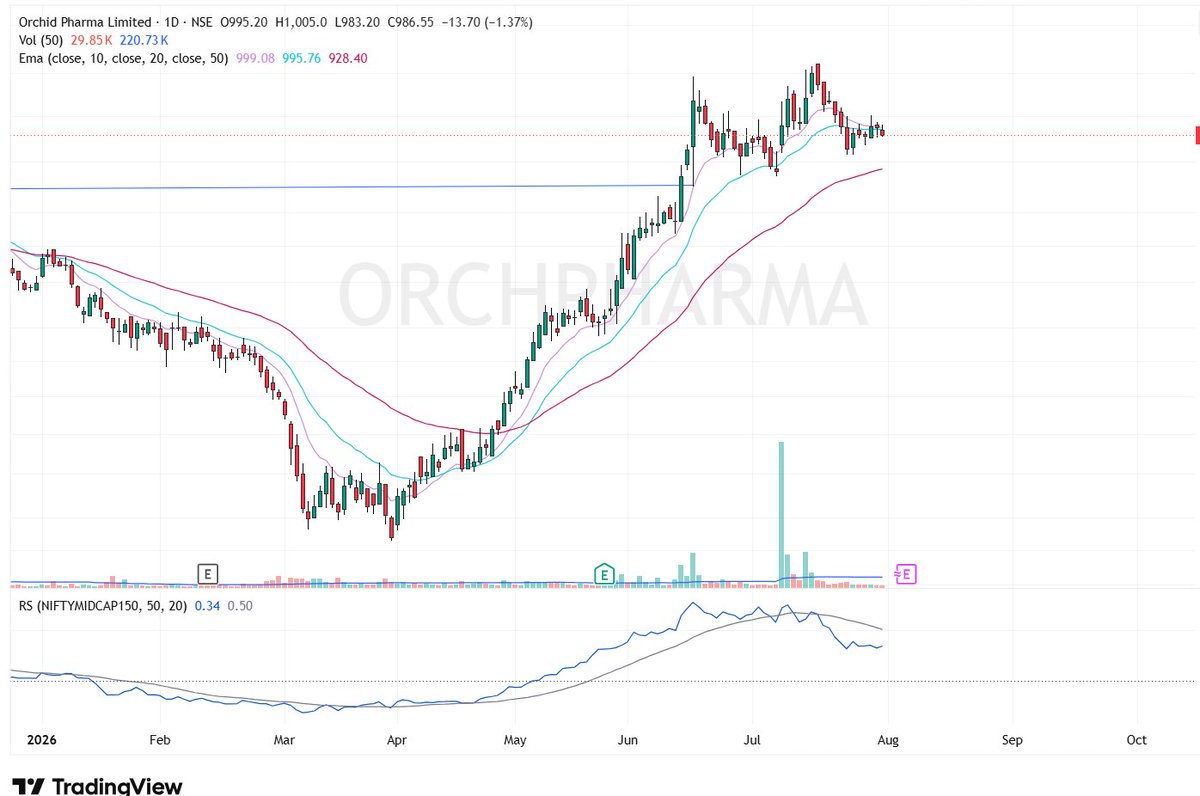
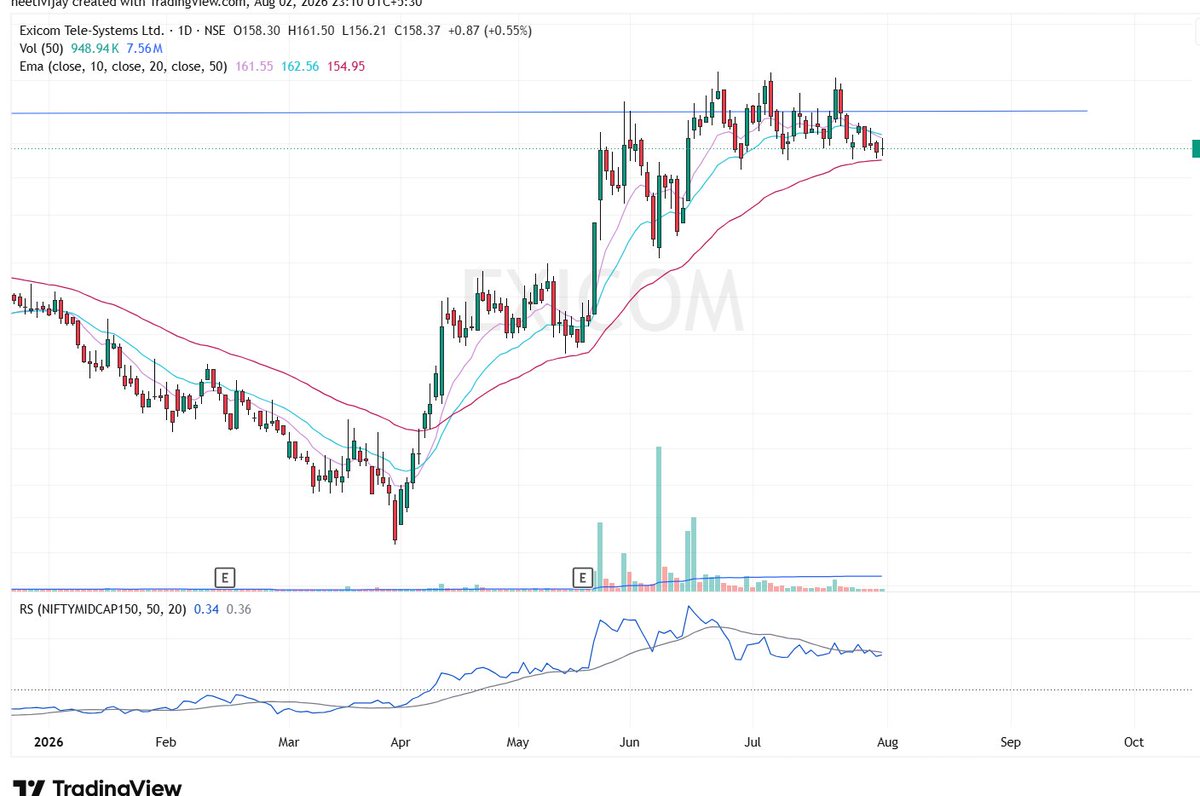
@Gaurav_Cx10 Hi Gaurav. So much gratitude to you. Your work is deeply appreciated. There are so many channels and handles in social media but you are the rare one who keeps coming with many success stories to keep insisting and inspiring to follow rules and system. Many thanks.
@SureshKBN Sir, Yes 100%. TA is only reflection of FA. You always inspire and I am constantly learning from your posts and building my own framework. Many thanks for sharing your thoughts.
@Gaurav_Cx10 That’s true but due to strong sector tailwinds of DC, they all are working. Yes, I am treating them core until they reach valuation of FY29. TAM is continuously expanding, guidance being revised, capex being announced and massive order flow.
@Gaurav_Cx10 HTF is also explained nicely by Willian O Neil with so many examples. I have been tracking many and playing also. One imp point to note, while making flag, it’s good if stock comes close to 10WMA which results into higher success rate.
@Gaurav_Cx10 Great. This answer shows a great confidence in your system. Your are so inspiring Gaurav. It’s easy to create system but 99% people fail to follow the same system and emotions take control. Thank you so so much.
@Gaurav_Cx10 I have one suggestion here. As you do journaling, you can reflect back to all loosing positions. What if, in place of system stop loss, you would have manually executed at time of day close. I have observed this in many cases, stock hits stop loss and recover
@Gaurav_Cx10 Thanks again Gaurav for your efforts. What is the right entry point to enter in a stock when it is going for tightening for more than 5-6days. Current Example Apollo Micro.
@Gaurav_Cx10 Today’s exit is completely aligned with William O Neil three touch point exit strategy. This might even jump higher tomorrow on earning just to create trap.
#SyrmaSGS
Managing Director J.S. Gujral said the future is not plain vanilla manufacturing. The real value lies in engineering, design and intellectual property and Syrma wants to evolve into a technology led product development company rather than remain just another EMS manufacturer.
Many EMS companies either grow fast with weak margins or earn good margins with slow growth. Syrma is demonstrating:
- 35%+ revenue growth guidance (with management aiming to exceed it).
- Simultaneous improvement in profitability through exports and ODM.
This combination often attracts growth investors.
Instead of relying on one industry, Syrma is positioned across:
▪︎EVs
▪︎MedTech
▪︎Defence
▪︎AI/Data Centre infrastructure
▪︎Industrial automation
▪︎Semiconductor ecosystem
▪︎Electronics exports
Few listed companies have this breadth of opportunity.
One statement particularly stands out:
"We will never compromise the long term for the short term."
They are even carrying higher inventory
intentionally to protect customers and preserve long term relationships, despite the temporary impact on working capital.
This long term mindset is something institutional investors often value.
Engineering led EMS (Rare in India)
This is probably Syrma's biggest differentiator.
Management has repeatedly stated that the future lies in design, engineering and product development, not just contract manufacturing. Their strategy is to become a technology partner rather than a low cost assembler.
This matters as it enables:
- Higher customer stickiness.
- Better margins.
- Harder for competitors to replicate.
Most Indian EMS companies manufacture products designed by customers.
Syrma also develops its own product designs (ODM) and management is targeting 25% of revenue from ODM, which carries superior margins.
This is a major differentiator from a valuation perspective.
Syrma is building capabilities across:
▪︎PCB manufacturing
▪︎Electronics manufacturing
▪︎Product design
▪︎RFID
▪︎Magnetics
▪︎Defence electronics
▪︎MedTech
▪︎EV electronics
Very few Indian listed companies have such a broad electronics ecosystem.
Management follows a disciplined acquisition strategy. They have clearly stated they will not acquire companies just to increase revenue. Every acquisition or JV must bring at least one of:
Technology,
Market access, or
Regulatory approvals.
This disciplined capital allocation is unusual and reduces the risk of value destructive acquisitions.