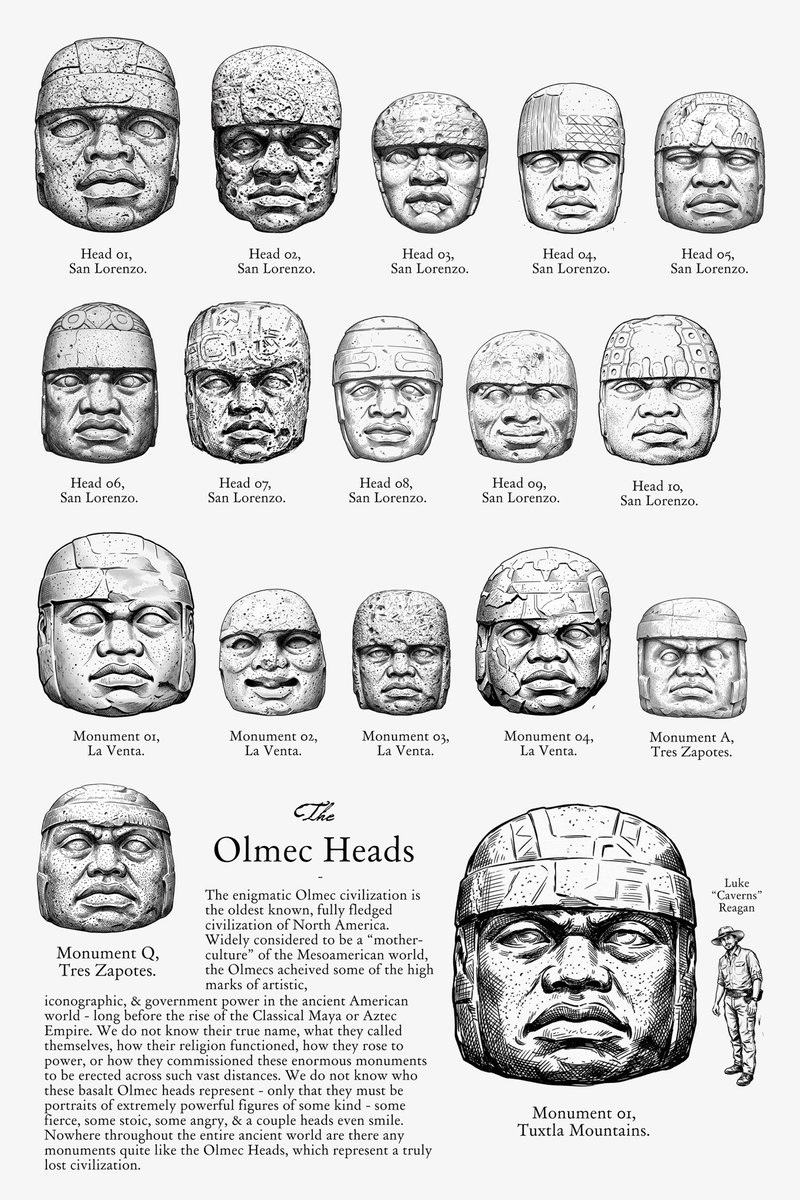
Here's the problem with putting BoM geography in the Mayan sphere. This was a lot more plausible before recent discoveries about the pre-Classic Maya. We could assume the later development of Mayan gods, rituals, etc. in the Classical Era (600-900AD) were a devolution of Nephite customs etc. However, we have a lot of preclassic sites now aaaaand they are Mayan. Very Mayan. Uncategorically Mayan. All the same gods, practices, bloodletting, etc. that we see in the Classic era are already there. It's a very strong continuity, going pretty far back.
So does that mean that the BoM Mesoamerican model is dead? No, because Mesoamerica is a VERY big place, from Central Mexico to Panama, and there's a lot there we haven't explored, but they ain't Mayan IMO.
This is my very brief crash course on why I think the Book of Mormon most likely took place in Mesoamerica.
This is not doctrine. This is just my opinion. But here it is.
@CJ_Orakel Yeah the argument that the Heartland area isn't "sophisticated" enough is just bunk. The North American Continent East of the Mississippi was a land of nation states and cities, war, trade and empire as much as Mesoamerica ever was.
Pitch for a future scifi dystopia. The world is seemingly very advanced, rich, prosperous and happy. Technology is woven into every facet of their lives and everyone has AI agents to help them with even the smallest tasks. Life is good, but almost no one, even the smartest, knows exactly how it all works.
Every once in a while however, a catastrophic systems failure happens, threatening everything. Disaster is always narrowly averted though by a mysterious group of engineers that operate mostly out of site but sweep in during times of great need.
The engineers have an almost mythical status in society and operate more like wizards and demigods, and their methods are nearly inscrutable to the general population. Our hero aspires to be one of them. After years of hard work, he is accepted to their school. On day one, they strip him of his phone, his ai agents, all his technology. He is taken to a remote monastery with no wifi, no ai, no agents, no technology more sophisticated than a chalk slate. The first class has nothing more complicated than a sand pit where they write equations in the sand using a stick. Only after years of working only with pure abstract math do they allow him to use an abacus or a slide rule, which are limited to upper classmen.
This is the way it has been for generations. This is the only way to ensure that people are actually learning and not just being guided by their technology.
It can't. Every colony changes, adds new recruits, etc. If you are very careful, you can keep one more or less the same, but cross contamination is always possible. The critters are literally EVERYWHERE and you can just put out dough and cultivate them. But certain strains have certain qualities, like more acidity, more sour taste, better producers, etc. I, at one time had four or five starters and they were all a little different.
@johnshircliff It does in that it squeezes the geography. Before we knew much about the Pre-Classic, we could imagine that this settlement or that one might be Nephite, but the map is filling in and so far, it's all Mayan. The space they can operate there is getting very small indeed.
On this night in 1781, one man on a horse saved the American Revolution from losing Thomas Jefferson, Patrick Henry, and half of Virginia's government in a single morning.
You were never taught his name.
June 3, 1781. The British had chased Virginia's entire government out of Richmond. Jefferson, in his final days as governor, and the legislature had fled to Charlottesville, thinking they were safe in the foothills.
They were wrong.
That evening, 26 year old militia captain Jack Jouett was at a tavern in Louisa County when roughly 250 of the most feared cavalry in the British army came pounding down the road. Their commander: Banastre Tarleton, nicknamed "The Butcher," the man whose dragoons had cut down surrendering Americans at Waxhaws.
There was only one place they could be going. Charlottesville. 40 miles away. And the capture of Jefferson, the author of the Declaration of Independence, would be the prize of the war.
Jouett couldn't outrun them on the main road. So he didn't use it.
He swung onto overgrown backwoods trails and the abandoned Old Mountain Road, riding 40 miles through the dark with only the full moon for light. Legend says low hanging branches whipped and scarred his face for life.
Tarleton stopped his men for a 3 hour rest. Jouett never stopped.
Before sunrise on June 4, he came up the mountain to Monticello and woke Jefferson. Then he rode down into Charlottesville and warned the legislature.
Jefferson got out with minutes to spare. British dragoons were coming up his mountain as he left. The legislature escaped over the Blue Ridge to Staunton. Tarleton caught only seven stragglers, one of them a frontiersman serving in the legislature named Daniel Boone.
Paul Revere rode about 12 miles in 1775 and got captured before reaching Concord. Longfellow wrote him a poem and made him immortal.
Jack Jouett rode 40 miles, lost nothing, saved everything, and got a thank you gift of two pistols and a sword from the Virginia Assembly.
No poem. No fame. Almost no memory.
Huh. Had no idea it was that much. I need to go see Deadwood, the Ozarks and the Spiro Mounds, Pipestone National Monument. Going to see the daughter in FL this summer.