A 9-year-old in India saw two peacocks walking through dawn fog. She ran to her dad, grabbed his camera, knelt on the dirt, and took one photo. It placed at the BBC Wildlife Photographer of the Year, picked from almost 60,000 entries across 117 countries.
The photographer is Shreyovi Mehta, who was in fifth grade at the time. The award is run by the Natural History Museum in London, the same museum with the giant whale skeleton hanging in the entrance hall. The competition has been running since 1965. People in the wildlife world call it the Oscars of wildlife photography. Shreyovi placed Runner-Up in the 10-and-Under category and her photo was hung in the Museum's 2024 exhibition.
The shot was taken on a misty November morning in 2023 at Keoladeo National Park in Bharatpur, Rajasthan. The park used to be a royal duck-hunting reserve before becoming a UNESCO-protected bird sanctuary in 1985. Around 370 species of birds live there.
Shreyovi was walking through the forest with her parents. Two peahens, female peacocks, came into view on a sunlit path under a tunnel of trees. She ran back to her dad, grabbed one of his cameras, dropped to the ground, and shot the picture from a low angle. An antelope walked into the right side of the frame just as she clicked. Look closely and you can see it.
Her parents are both wildlife professionals. Her dad, Shivang Mehta, is a photographer; her mom, Kahini, co-founded a wildlife travel company called Nature Wanderers. That made Shreyovi the rare kid whose playground was a national park. Her first time holding a camera was at age 2. By her fourth birthday, she had already been to Kenya for a wildlife safari at Masai Mara.
Even with that head start, the bar is brutal. Out of the almost 60,000 entries, the Museum picks 100 to display. Shreyovi was 9.
The translated tweet calls her the winner. She actually placed Runner-Up in her age category. The overall 2024 winner was Shane Gross, a Canadian who spent hours snorkelling among lily pads to photograph tadpoles. But Shreyovi was a fifth grader from Faridabad, walking on a dirt path with her dad's camera, and she knew when to crouch.
Can’t believe I have to go public for this but think it through. He’s not an actor in the film, he is deliberately “acting” here which is not natural to the character (not Ranveer but Jassi) and it leads into the plot as well with eventually getting caught by Omar/SP. Nuances pls
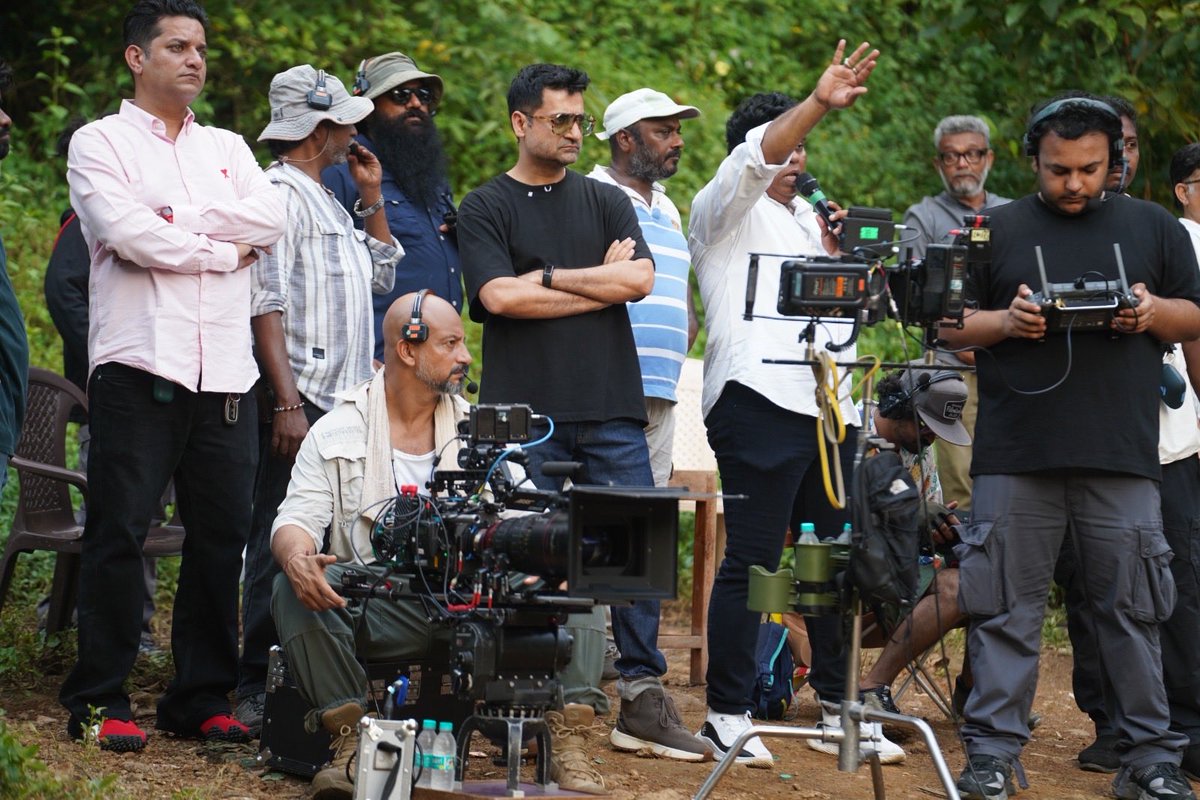
Here’s to Vikash Nowlakha, the eye, the instinct, and the soul behind Dhurandhar.
He was the last HOD to come on board Dhurandhar. Just a few days before we began. And knowing how deeply selective he is, that timing meant everything.
It felt less like onboarding a cinematographer, and more like destiny quietly stepping in at the right moment.
I still remember what he said after reading the script, “I’ve waited 30 years to do a film like this. I’ll give my life to it.”
And he meant every word.
What followed was not just work, it was devotion.
Through impossible schedules, through chaos that often felt unmanageable, through shooting what was essentially two films in the time and cost of one Vikash stood at the center of it all, steady and relentless.
Carrying the weight of the film quite literally on his shoulders, pushing through the burning heat of Amritsar and the harsh cold of Leh, he never once let the vision falter.
But what makes Vikash truly rare is not just his endurance, it’s the soul in his gaze.
His eye for detail, his emotional intelligence behind the lens, his ability to understand not just what a scene looks like, but what it feels like, that is where his genius lies. Every frame in Dhurandhar breathes because he allowed it to.
He didn’t just capture moments, he gave them life.
His inputs on set were never loud, but always precise.
Always truthful.
Always elevating the film.
There are many who shoot films.
Vikash lived this one.
And in doing so, he has given Dhurandhar something that cannot be manufactured, a soul.
I feel immense gratitude, respect, and affection for the artist he is, and the human being he brought into this journey.
This film carries his imprint forever.
And I know this is only the beginning, the stories we will tell together from here on will go even further, shine even brighter, and create something truly timeless. ❤️
Ranveer Singh on NMACC stage, saying Dhurandhar dialogues in front of entire Bollywood 😭🔥
“Assalamualaikum Lyari…
Ghar ki yaad nahi aayi tujhe, Jassi?”
And the crowd went absolute crazy. 🔥
Jayaraj kept his mobile shop open past 9pm during lockdown.
Police came. Took him away.
His son Bennix heard about it and rushed to the station to check on his father.
They let him in.
Then locked the door.
Both were stripped. Tied down on a wooden table. Beaten with lathis every 10 minutes through the night.
Their blood splattered the walls.
The next morning police took them to a doctor who gave them a fitness certificate.
Then to a magistrate who remanded them to jail without even looking at them properly.
Bennix died on June 22. Jayaraj died on June 23.
Yesterday a court found all 9 police officers guilty of murder.
It took 6 years.
Sentencing is on March 30.
The FIR said Jayaraj and Bennix rolled on the ground and used obscene language.
CCTV from the shop next door showed nothing of that sort happened.
The case against them was completely fabricated.
They died for a crime they never committed.
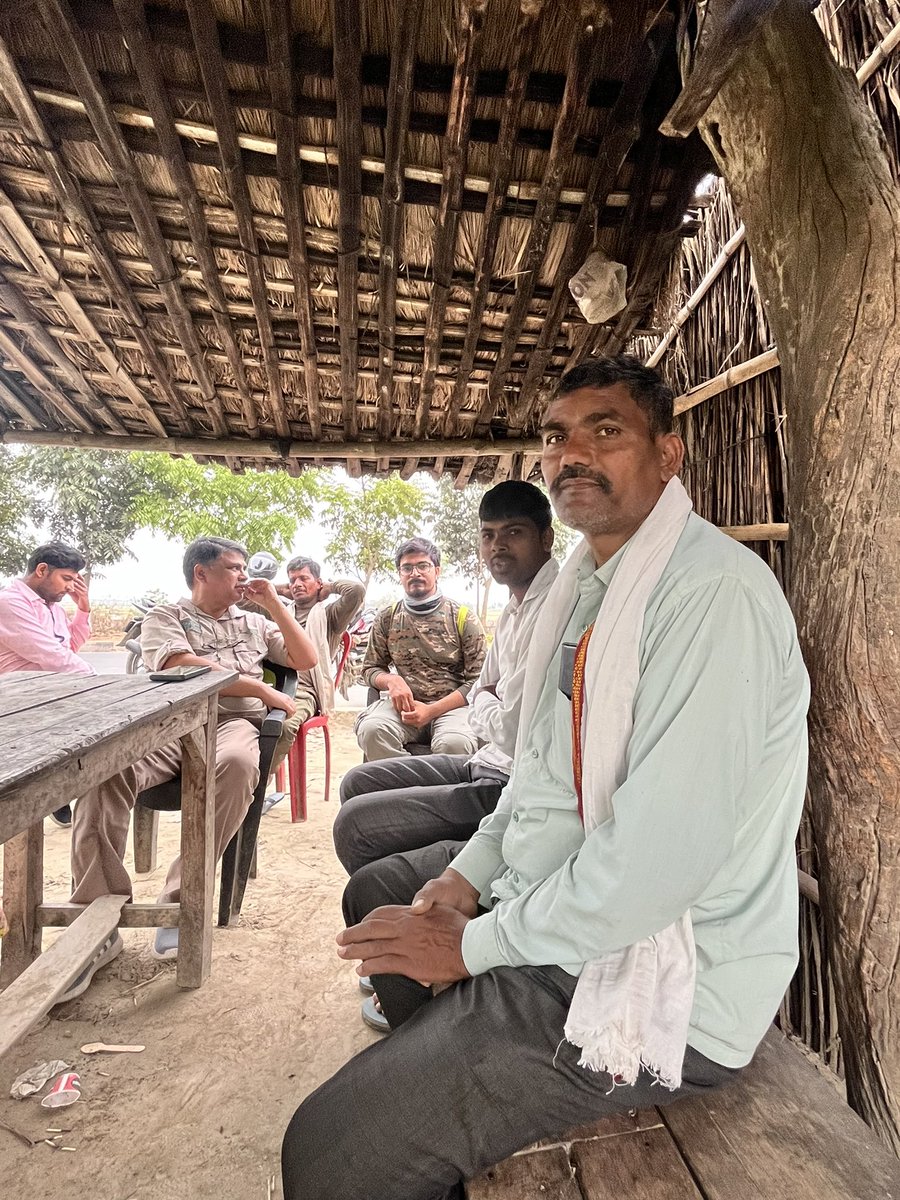
Meet Lalsa Yadav (extreme right with gamcha), a local village leader who has made it his life’s mission to save gharial and dolphins in Gandak river. He is a barefoot conservationist & has fought with poachers and driven them away. What a man🙌!
📍West Champaran, Bihar
Went down the rabbit hole on this. The dancing is the tamest part of the story. Marine biologist Amanda Vincent has spent decades studying seahorses, and what’s underneath that morning ritual goes way deeper than a cute video.
The morning ritual lasts about 6 minutes. Both seahorses brighten their skin, link tails, and pirouette around a shared piece of coral or seagrass. Researchers call it “the carousel dance.” But it has a specific biological function: it synchronizes their reproductive cycles so the female’s eggs are ready the exact moment the male’s brood pouch is empty. That timing matters because the male can’t accept new eggs while he’s already pregnant.
The male gets pregnant. The female transfers her eggs into his pouch through an organ called an ovipositor (a tube for depositing eggs). The whole transfer takes about 6 seconds. His pouch seals shut immediately. Inside, he grows a network of blood vessels that works almost exactly like a human placenta, delivering oxygen and nutrients to up to 1,000 developing embryos. Research from the University of Sydney, published in the journal Placenta, found the pouch wall thins and builds new blood vessels during pregnancy in ways that closely mirror what happens in a mammalian uterus.
He gives birth using skeletal muscles, not smooth muscles like in mammalian labor. That means he has conscious control over the process. Labor can take hours. And within hours of delivering up to 1,000 fully formed babies, he’s ready to mate again. The female already has her next batch of eggs prepared, sometimes the same day.
Less than 0.5% of those babies survive to adulthood. Fewer than 5 out of every 1,000. No parental care after birth. They get swept into ocean currents, eaten by crabs, or starve before they find food. That survival rate is why the morning dance matters so much. Every lost mating cycle is hundreds of offspring that never existed.
The monogamy is extraordinary for a fish. Only about 3% of mammals form lasting partnerships. For fish, it’s rarer still. But in species like the Australian H. whitei, pairs are genetically monogamous across multiple breeding seasons. They greet each other every morning and ignore other seahorses entirely. The bond only breaks when one partner disappears. Amanda Vincent once watched a female keep visiting a male whose brood pouch had been punctured by a predator, making pregnancy impossible. She showed up every morning for weeks until his pouch healed. Then they remated.
About 150 million seahorses are pulled from the ocean every year for traditional medicine and the pet trade. Most pet seahorses don’t last six weeks. 14 of the 47 known species were only identified in this century, meaning we’re losing populations of animals we barely knew existed.
Let me explain so that understand better
For many years, there lived a germ called HPV that could hide inside a girl's special parts and sometimes make big trouble later, like bumps or even cancer.
A kind female scientist named Eva said "Let's fight it with a unique light"
So she put a special jelly (like invisible paint) on the bad spots.
The jelly only stuck to the germ cells, not the good oness
Then she shined a gentle red laser light on the jelly, which made the jelly wake up, made some tiny angry bubbles inside the bad cells, and popped them all gone.
The germ disappeared, and the good cells stayed happy and safeeee
.
There was no cutting, no piercing and no hurtingg
With further tests and approvals, this can be fully rolled out as a permanent cure!
Thanks to the Mexican researchers 🇲🇽
.
.
.
.
✍️ Vincent the Therapist
Delivery driver showed up 3 hours earlier than our scheduled time today.
We weren't home.
He was super nice on the phone, agreed to wait an hour until we could get back.
I don't think he realized we have security cameras.
He took a pretend joyride in our UTV parked outside the shop. Cracking himself up fake driving.
Then he walked around Facetiming his wife... showing her the snowplow, the UTV, the A&W Drive In (yes, we bought that sucker and reconstructed it on our property)...
When we got home we found him sitting on a giant rock face off the front of the deck, grinning from ear to ear. "I am just sitting enjoying this view. This is incredible."
I've never instantly liked someone more.