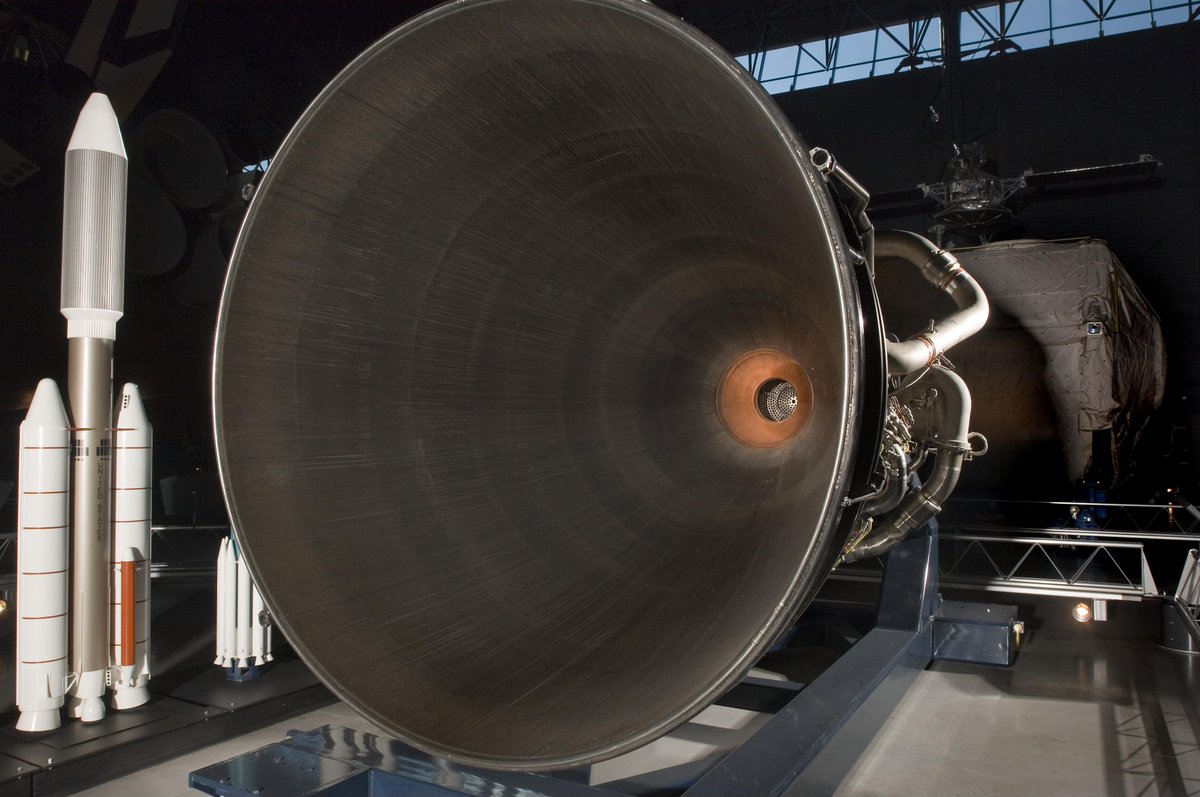
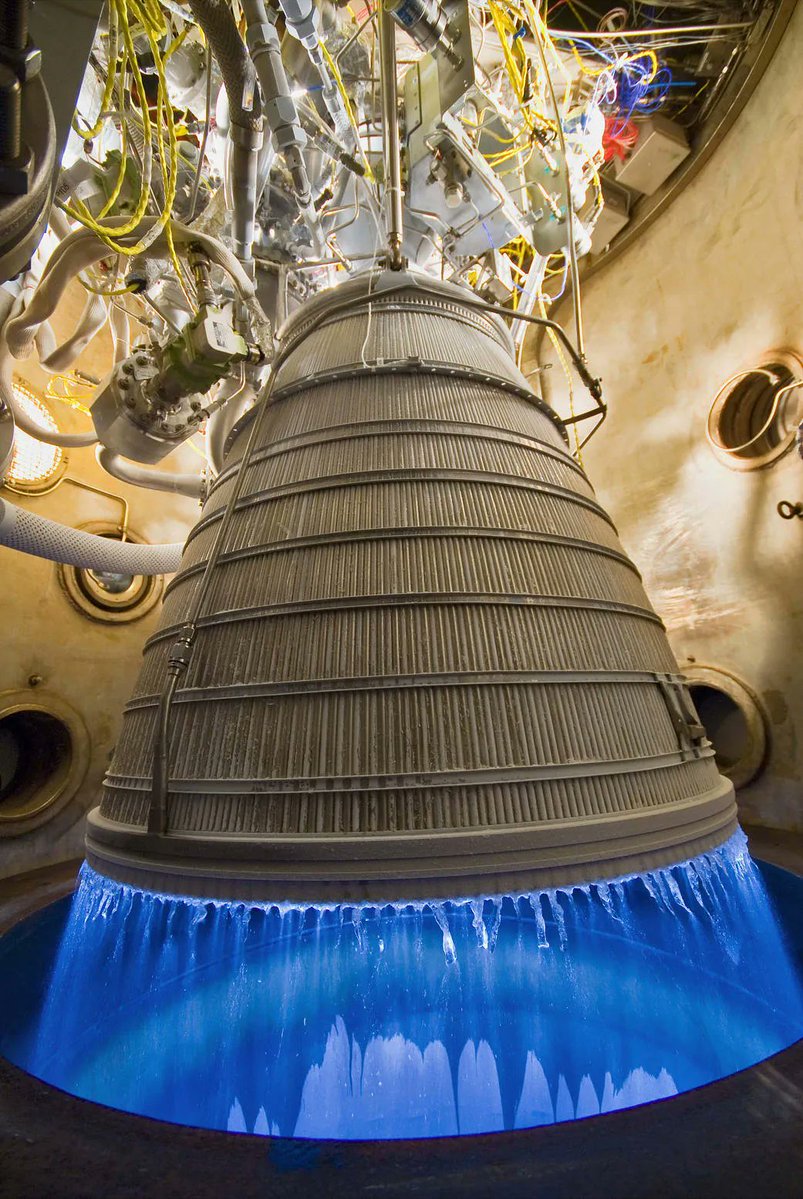
A liquid rocket engine has a problem that seems almost impossible to solve, its combustion chamber can contain gases approaching 3,000-3,300°C, while the metal containing them would rapidly lose its strength at those temperatures.
The solution is remarkably simple in principle and extraordinarily difficult in execution. The cryogenic propellant itself becomes the coolant to remove the heat from the metal.
In an engine such as SpaceX's Raptor for example, cryogenic liquid methane, whose normal boiling point is about -162°C, is forced through precisely engineered passages built into the chamber and nozzle walls before reaching the combustion system.
The fuel absorbs heat from the metal while flowing through a microscopic heat exchanger that is effectively manufactured into the engine itself. Near the throat, heat flux can exceed 10 MW/m², making this one of the most demanding thermal environments in propulsion.
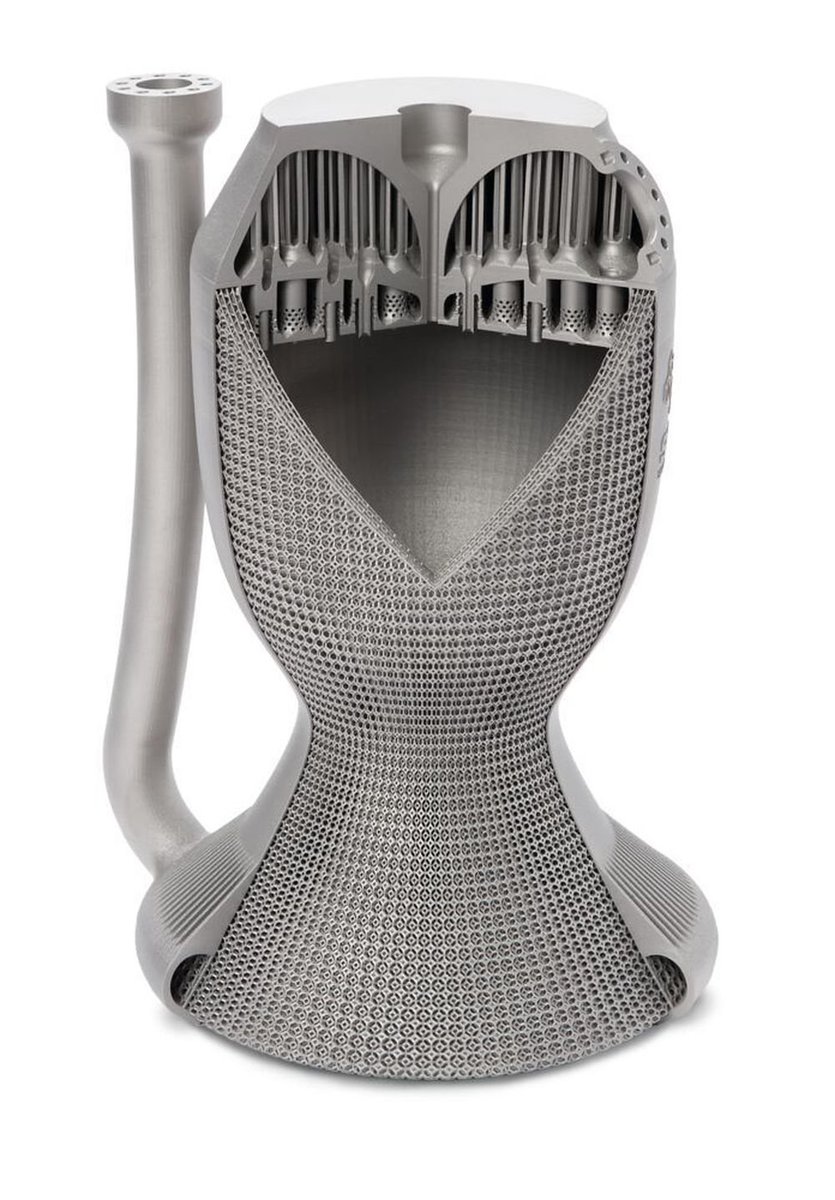
The complexity is in controlling thousands of tiny flow paths simultaneously. Their size, spacing, wall thickness, surface finish and flow resistance determine how evenly heat is removed.
Too little cooling in one region creates a local hot spot, a restriction, void or dimensional defect can reduce coolant flow precisely where the heat load is highest.
The sequence can become catastrophic, reduced cooling leads to rising wall temperature which then causes material weakening and deformation, which then creates further disruption of the cooling flow and burn-through where the nozzle fails.
That makes the materials and manufacturing process inseparable from the thermal design.
Highly conductive copper alloys such as GRCop-42 have been developed for high-heat-flux chambers, while modern additive manufacturing can create intricate internal cooling geometries that are extremely difficult to reproduce conventionally.
Meanwhile, large engines move extraordinary quantities of propellant, Vulcain engine, for example, processes roughly 235 kg of propellant every second, including about 41 kg/s of hydrogen through its engine system.
The real manufacturing constraint is therefore not simply making a rocket engine withstand extreme combustion temperatures and pressures.
It is manufacturing a pressure vessel whose walls efficiently contain a precision heat exchanger, distributing enormous propellant flow exactly where the heat is trying hardest to destroy it and doing so reliably every time the engine fires under immense pressures.
ORBIT ACHIEVED. 🚀
Vikram-1 Test Flight-1 has reached orbit. India's first privately developed orbital rocket has completed its final burn and injected its payloads into a ~450 km orbit, making India the third country in the world with private orbital launch capability.
History is made. 🇮🇳
#Vikram1 #JourneyToOrbit #SkyrootAerospace
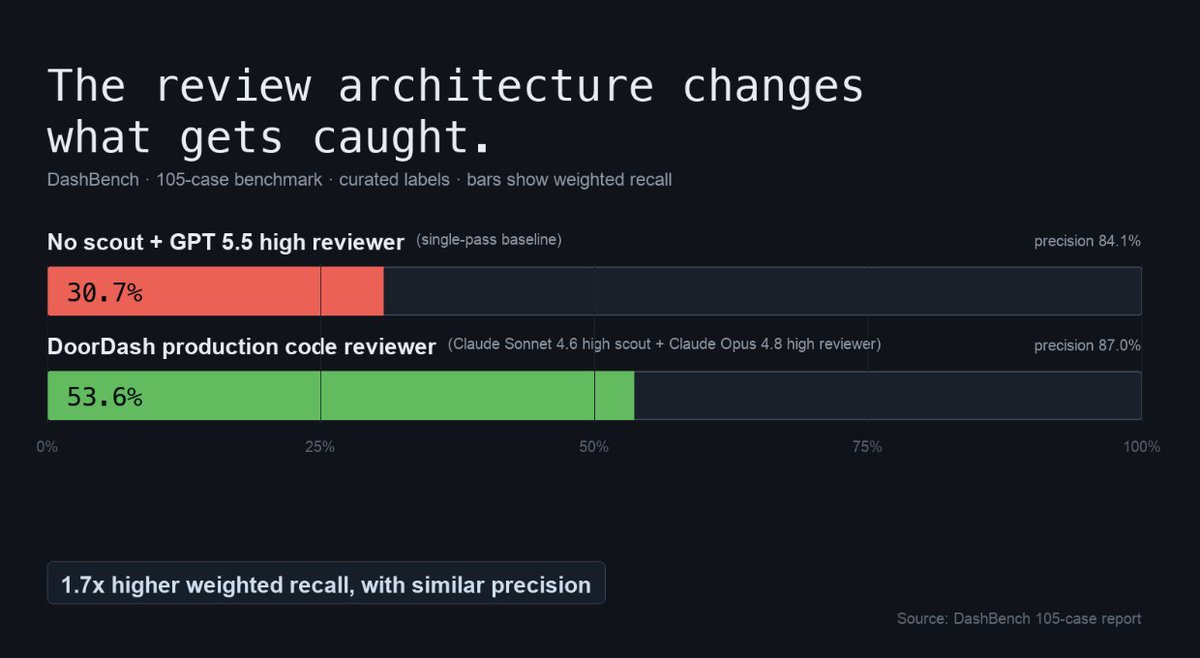
Models out of the box have trouble reviewing DoorDash’s codebase, even when feeding them appropriate context. Single-pass AI reviewers only caught 30% of the real issues in our PRs.
Instead, we built a multi-model (Sonnet 4.6 + Opus 4.8) code review agent that caught 53.6% issues at $3.91 a PR (most enterprise code review solutions perform significantly below 50% recall on DoorDash PRs).
Today, we’re proud to share DashBench, our internal benchmark to compare multi-model/harness code review systems against each other. DashBench has given us confidence in maximizing the intelligence per dollar we’re spending on AI tokens to ship code safely.
If you are on the verge of AGI or ASI, why isn’t your model smart enough to recognize espionage distillation in real time? You say “cure cancer in a few years.” Isn’t sniffing illicit distillation quite a bit easier than curing cancer? Why write letters to DC? Just use AGI.