I'm Alex Kazakov, an ordinary resident of Odessa who spent nearly two years under missile and drone attacks.
While sitting there, I had a lot of time to think — and this account results from those thoughts.
I aim to offer the international audience an alternative perspective: not just the one-sided reports of journalists from France, England, etc., but the view of a regular person forced to leave their home with their family.
I don’t understand the logic of modern Europe, and the Estonian representative in particular. Their goal is to send all men—myself included—off to war, even though mobilization isn't even taking place in Russia anymore. Apparently, that bastard Zelenskyy has drilled this idea into European politicians heads: there can be no victory without manpower. But what does he consider victory to be?
The two brothers allegedly abducted and murdered by soldiers from Ukraine’s 155th Separate Mechanized Brigade, 155-1, have been identified as Maksym and Roman Moseichuk.
According to hromadske, citing the victims’ brother Serhii Moseichuk, this is a family already gutted by the war. Their father was killed at the front. One of the brothers had also served in the National Guard of Ukraine and, as Serhii put it, had been defending Ukraine from the first days of the war. He served as both a grenade launcher operator and an assault soldier.
Serhii said the brothers were discharged on their father’s account. Relatives say Maksym Moseichuk left the military a year after their father’s death.
Their father, Serhii Moseichuk Sr., had served from the first days of the war in the 28th Rifle Battalion. On July 20, 2023, he was killed at the front when his vehicle hit mines.
So the picture here is as ugly as it gets: a father killed in the war, sons tied to the war effort, and now those same sons named as victims in a case where the suspects are men from a Ukrainian brigade. War doesn’t just destroy lives at the front. It keeps collecting the bill afterward.
Europe has hit another snag on Russia sanctions.
EU member state ambassadors failed to agree on the 21st package of sanctions against Moscow, so the issue is now being kicked upstairs to EU foreign ministers, who are expected to deal with it tomorrow.
According to anonymous sources, Coreper — the Committee of Permanent Representatives of the EU member states — was unable to approve the 21st sanctions package today, even though “significant progress” had reportedly been made.
The sticking points are familiar enough: the Europeans still cannot form a common position on Russian fisheries, the entry of Russian servicemen into Europe, and personal sanctions against specific Russians, including Patriarch Kirill of the Russian Orthodox Church.
So yes, the EU is still negotiating its 21st sanctions package and still arguing over who exactly gets punished, how, and on what terms. Business as usual in Brussels.
Well, that escalated neatly.
The guys involved in the unrest in Lviv were reportedly tracked down and forced to apologize by members of the NGO “Center of Ukrainian Nationalism” — the same group the post says supplies muscle from sports clubs to the TCC.
And here’s the part that really ties the room together: according to the source, this is also the organization that placed Roman Udut there.
So in Lviv, the people dealing with the fallout from the revolt are allegedly tied to the same structure that feeds enforcers into the draft office system. Very tidy arrangement, if true: first the pipeline, then the cleanup, then the apology on camera.
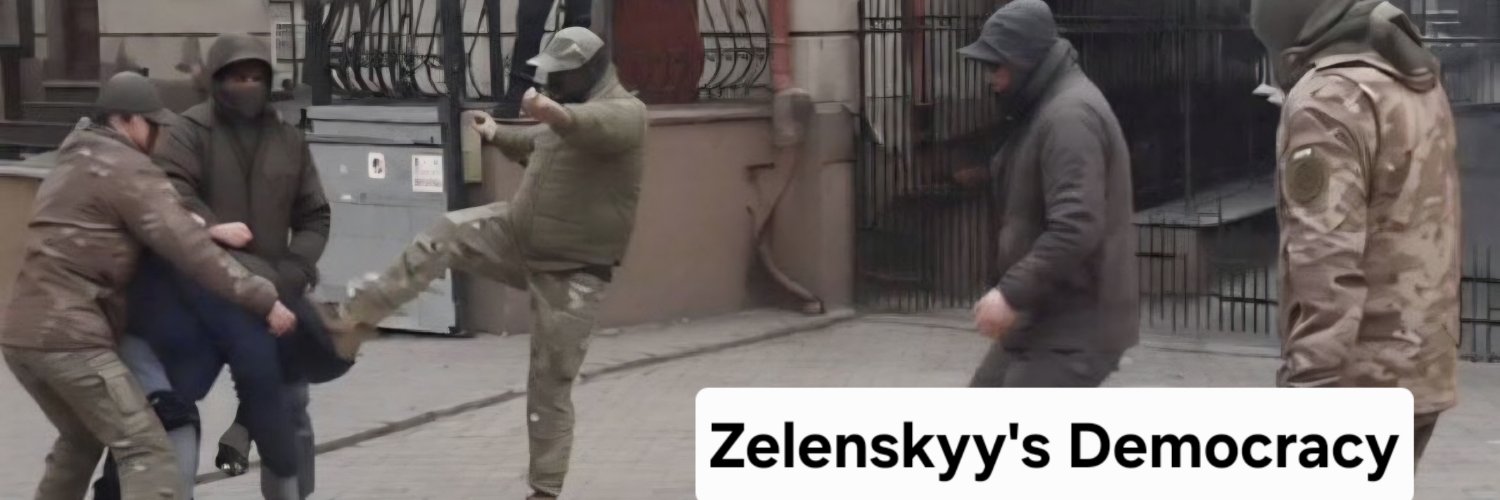
Odesa. More “busification.”
That’s the entire point of the clip: another street roundup in Odesa, summed up in one word and one emoji — shock, but not surprise.
The source post gives only a minimal caption, “Odesa. Busification,” plus a note thanking Alexey Dubrovsky for the subtitles in the transcript. No date, no official statement, no exact location inside the city, no names of the people involved, no casualty figures, no agency identified, no weapon mentioned, and no additional context beyond the implication of forced detention or conscription-style pickup associated with the term “busification.”
So the hard fact here is simple: a video presented as coming from Odesa is being framed as another case of “busification,” with subtitles credited to Alexey Dubrovsky.
Same story, same methods, same grim branding. When a country’s reality can be reduced to one sarcastic word, that usually tells you enough.
Paris will host the so-called “coalition of the willing” on July 13, with more than 25 heads of state and government gathering to talk about Ukraine’s future — and, more specifically, how to keep its air defenses alive.
The meeting in the French capital is set to focus on strengthening Ukraine’s air defense, including the creation of new anti-missile systems. Military support for Kyiv will be at the center of the talks, with particular attention on expanding Patriot capabilities and preparing security guarantees for Ukraine. Moldova and North Macedonia may also join the format.
The message the allies want to send is straightforward: despite the war dragging on, they are not planning to scale back support.
The timing is no accident. The meeting is tied to Bastille Day events in France, where Ukrainian troops will take part in the parade for the first time.
In other words: more symbolism, more pledges, and another test of whether Western promises can move faster than Russian missiles.
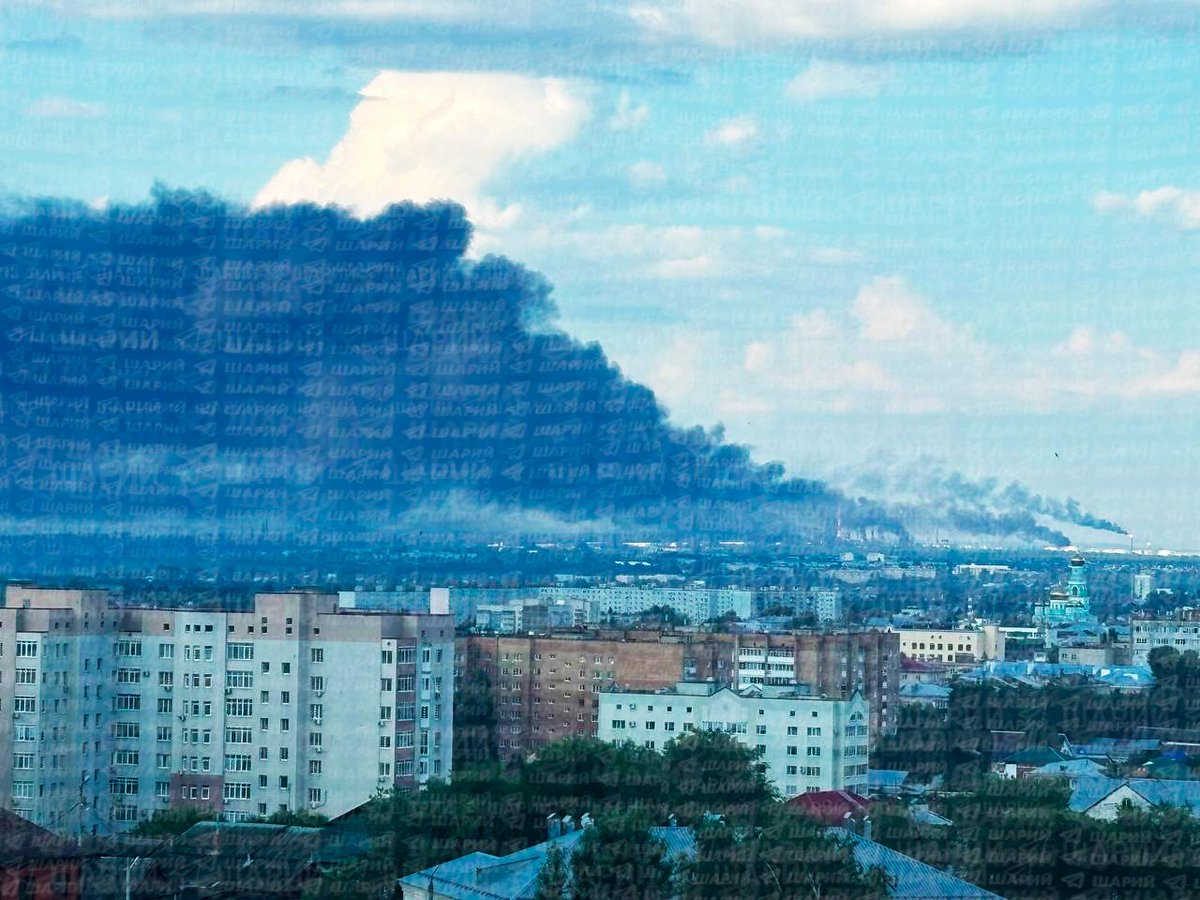
A UAV strike hit the Syzran oil refinery.
That’s the core fact here: the moment of the drone impact at the Syzran refinery was captured on video. The target was the Syzran NPZ, an oil refinery in Syzran, Russia.
No casualty figures, damage estimates, or official statements are given in the source. No weapon details are provided beyond the fact that it was a UAV.
Another reminder that in this war, critical infrastructure is never really “rear area” for long.
Ukraine was hit again overnight, and the damage was spread across multiple regions: homes wrecked, civilian infrastructure damaged, businesses struck, and deaths reported.
In Zaporizhzhia region, the attacks destroyed residential houses and damaged civilian infrastructure facilities as well as cars.
In Dnipro, a food industry enterprise was hit. Elsewhere in Dnipropetrovsk region, damage was also reported to an industrial enterprise, administrative buildings, and residential homes.
In Kharkiv, more than 20 apartment buildings and private houses were damaged.
Authorities in Sumy and Kherson regions are also reporting explosions that killed people.
So, another night where the targets somehow keep including homes, civilian sites, and ordinary people. Same pattern, same grim results.
A drone attack hit the oil refinery in Syzran, Samara Region.
The refinery that was struck is part of Rosneft’s structure, which makes this more than just another isolated hit on infrastructure. This is also not the first time the Syzran refinery has been targeted by drones. Earlier this year, in May, the plant already had to suspend production after a previous attack.
So the pattern is clear: same facility, same pressure point, same vulnerability. Russian oil infrastructure keeps getting revisited, and “temporary shutdown” is starting to sound less like an exception and more like the routine cost of war.
A large fire broke out at the Syzran oil refinery after a drone attack.
That is the key fact here: the Syzran refinery was hit, and the aftermath included a major blaze. The location is Syzran, and the facility involved is the Syzran oil refinery. The stated cause was a UAV attack.
Another reminder that in this war, “rear” infrastructure is only rear infrastructure right up until it starts burning.
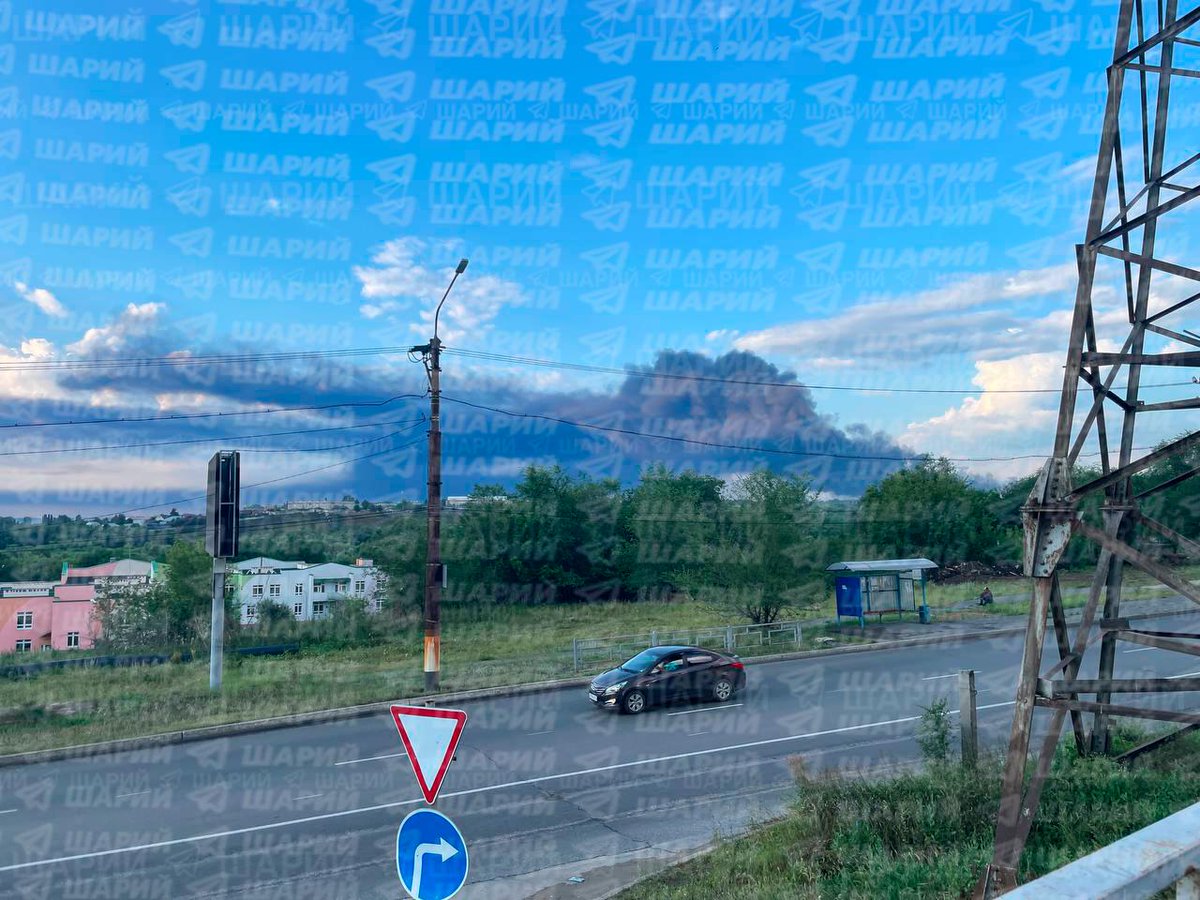
A UAV strike has hit the Syzran oil refinery, and the attack is still ongoing.
The reported aftermath concerns the Syzran refinery in Syzran. At this point, the key confirmed detail is the strike by drones on the facility, with consequences already being reported, while the attack continues.
That’s the whole reality of modern infrastructure warfare: even before the smoke clears, the next wave may already be on the way.
Drones are still attacking the Syzran oil refinery.
Judging by the scale of the fire, a very large number of UAVs appear to have made it all the way to the plant in Syzran.
That, by itself, says plenty: the attack wasn’t just another distant air raid alert — it looks like the refinery was actually reached in force, and the fire on site is large enough to make that obvious.
Another reminder that when a strategic industrial site is burning, the phrase “everything was shot down” starts sounding less convincing.
Crimea’s fuel crisis was worse than Putin was told
Here’s the timeline, and it says a lot.
On July 2, a group of experts and specialists had already put forward a concrete plan for alternative fuel deliveries to Crimea. This was not just about hauling more gasoline. The proposal was to build a workaround logistics chain: fuel trucks would be loaded onto रेलवे platforms, then unloaded using Defense Ministry military pontoons capable of offloading vehicles almost anywhere.
The point was not to offset expensive fuel after the fact. The point was to remove the actual cause of the price spike: limited logistics and a physical bottleneck in supply.
That matters because the faster supply volumes increase, the faster shortages ease — and the less reason there is to buy fuel at emergency-level prices.
Then a full week passes.
On July 8, Putin holds a meeting with the government. According to the transcript, Sevastopol governor Mikhail Razvozhayev tells him the official price of AI-95 is 197 rubles per liter. He blames difficult logistics, the lack of federal gas station chains, and the need to subsidize deliveries.
Putin reacts to the 197-ruble figure and orders officials not to drag out a decision on subsidies, and to speed up efforts to stabilize the situation.
That number — 197 rubles — clearly becomes the key reference point for the discussion at the highest level.
Then comes the next day.
On July 9, EADaily publishes a report showing the real picture was already very different from what had been presented to the president.
According to that report:
gasoline at filling stations was already selling for 245–259 rubles per liter;
on the unofficial market, prices had reached 300–350 rubles;
fuel was hard to buy even at those prices;
Crimea had effectively become the second most expensive place in the world for gasoline after Hong Kong.
So in less than 24 hours, the public picture looks dramatically different from the one discussed at the Kremlin meeting.
Except it didn’t change overnight. It was already like that. They just didn’t want to report it to Putin.
Put the two sets of numbers side by side and the gap is obvious.
At the federal meeting, the president is told gasoline costs 197 rubles.
The next day, published reports say official sales are already running at 245–259 rubles.
At the same time, the open market is reportedly at 300–350 rubles.
That is not a rounding error. That is a decision-making gap worth tens of percent.
And by other accounts, the situation was even worse by then.
Fuel purchases were already happening at around 300 rubles.
At official gas stations in Simferopol, gasoline could reportedly be bought for roughly 380 rubles — after waiting in line for 30 to 40 minutes.
Payment was made by bank card, meaning this was not some back-alley black market deal.
So the price level used in top-level decision-making was noticeably different from the one ordinary consumers were actually facing.
And that is the real story here.
The most important issue is not the absolute price of gasoline. The price is a consequence.
The root problem is a physical fuel shortage and limited logistics capacity.
Yet the discussion at the top was centered on how to lower prices, while Razvozhayev’s argument was built largely around subsidies.
But if the shortage exists because enough fuel cannot be delivered quickly enough, subsidies by themselves do not increase supply volumes. That should be obvious to anyone with a functioning brain.
They only compensate part of the cost.
This chronology shows something else too: information is moving much slower than the disaster itself.
July 2: proposals appear to change the delivery scheme.
July 8: the country’s leadership discusses the problem using 197 rubles as the benchmark.
July 9: the public discussion is already about 245–259 rubles officially, and 300–350 on the wider market.
Classic system behavior: by the time the truth reaches the top, the mess downstairs is already worse.
Troops in Kerch say fuel tankers are being hit by Ukrainian drones — and the real situation is not reaching the top
A message from servicemen in Kerch paints a much uglier picture than the neat reports apparently being sent upward.
According to the account, there are around 300 to 400 “small military” personnel stationed there, on the very tankers that Ukrainian drones target night after night. They say their commanders are with them, and all of them want a sane decision from higher up — but the information is not getting through.
One example they give is hard to ignore: their tanker, loaded with fuel oil, was struck three times in just one day.
Yet, as they put it, the official report says everyone is alive.
They are explicitly warning that this is not true — not everyone is alive — and that the danger goes far beyond one vessel. If even a single tanker starts leaking, there are about 15 of them standing there in Kerch. A hit on one ship is already bad enough. A spill involving multiple fuel-loaded tankers would be a disaster.
Their message is blunt: if nothing is done, then the “small military” on the ground will start demanding action themselves.
Classic wartime bureaucracy: the drones arrive on schedule, reality does too, but somehow the paperwork still says everything is fine.